 Apipasta with vitamins 15kg
 Beecomplet® Spring 14Kg
 Beekeeper suit with round veil
 Oxalic acid 1kg
 Beeswax Foundation 5kg
 Fresh royal jelly 20g
 Classic honey jar 1kg comb-lines TO77 - Pack of 16 units
 Promotor L Apis 1 litre

 Share in WhatsApp
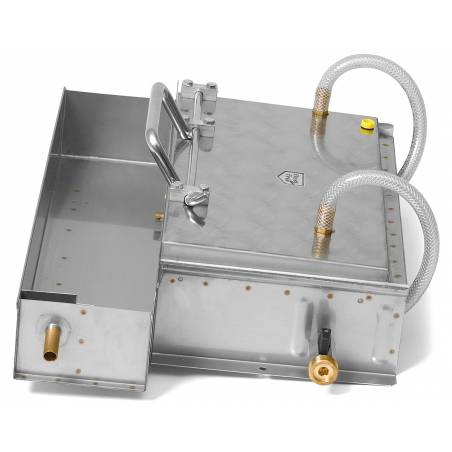
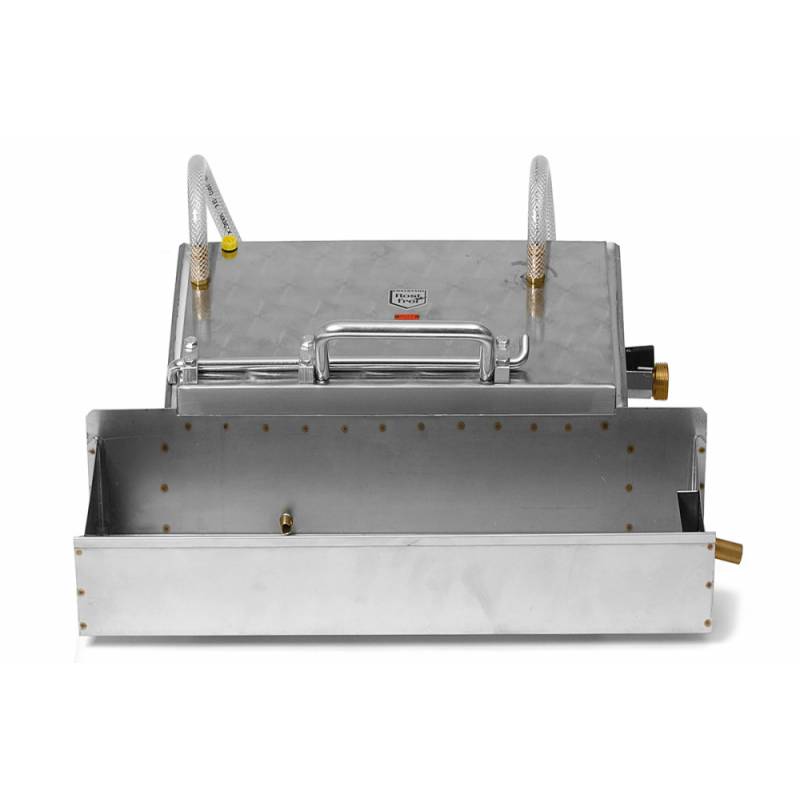
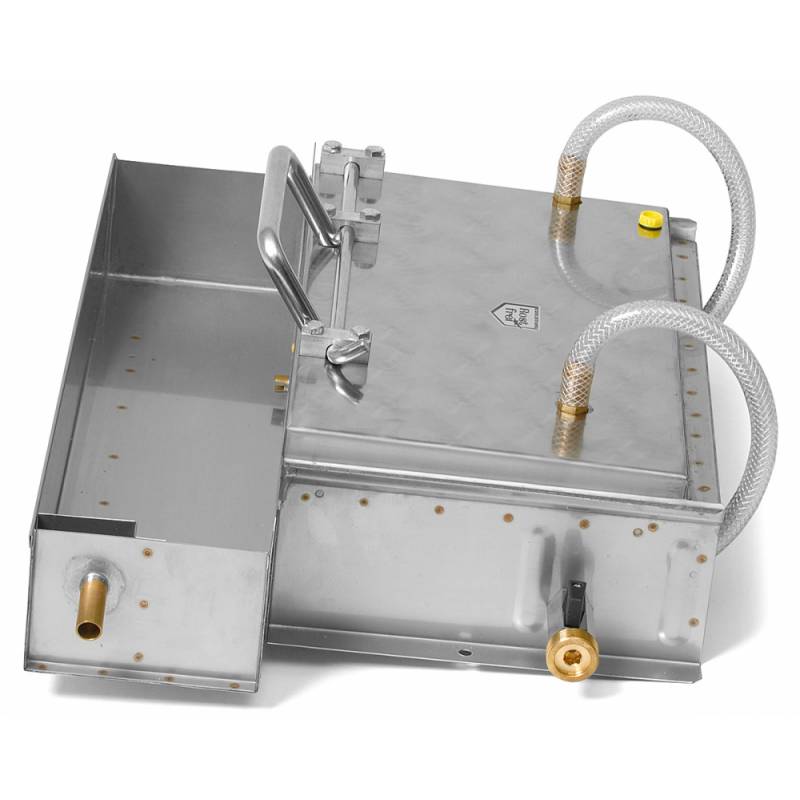
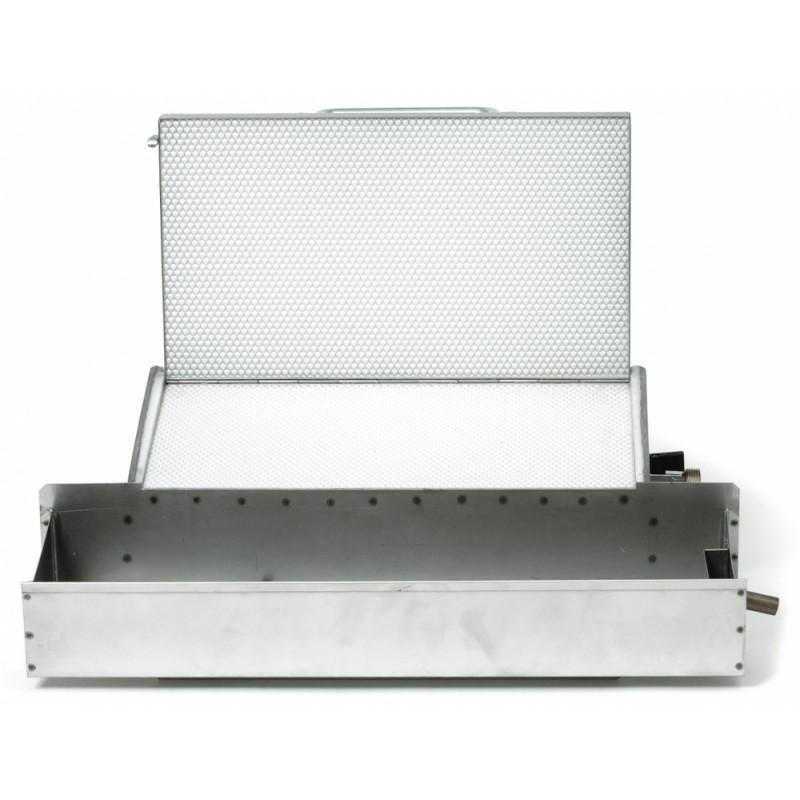
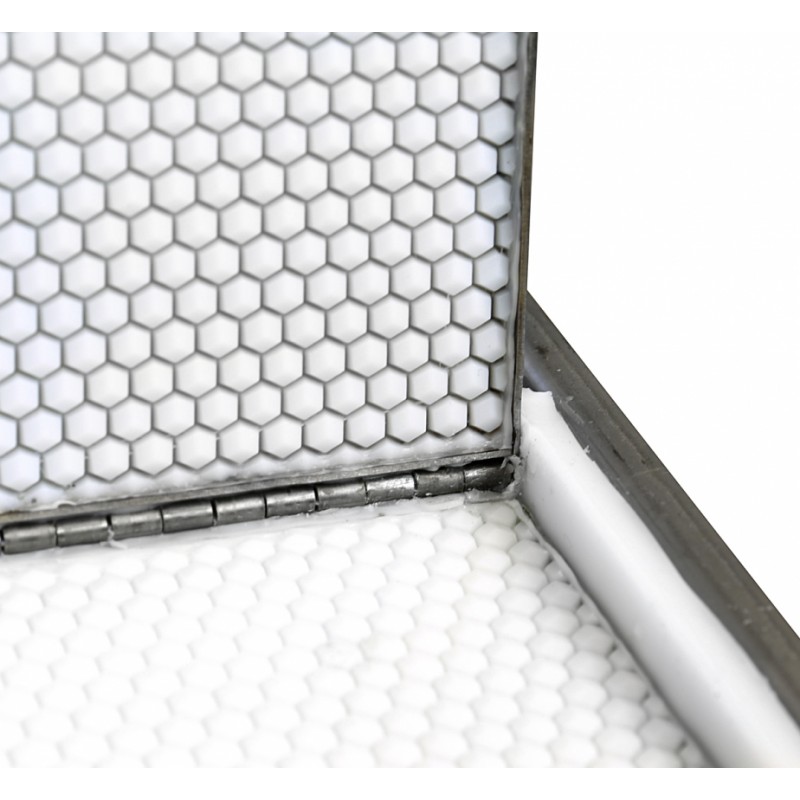
Water-cooled Puff Graz foundation mould for 420 × 202 mm Langstroth sheets with special 7 mm drone cells (470 cells/dm²) and an internal cooling circuit.
Puff Graz drone-cell foundation press in Langstroth format: 470 cells per dm² and up to 60 sheets an hour.
Drone foundation has two uses, and the datasheet told only one. It serves to raise drones of the genetics you choose — the paternal half of your future colonies — and it serves as a varroa trap, because the mite prefers drone brood. With this press you make the sheet at home, from your own wax.
01 · 7 MM CELL: 470 PER DM²
The drone cell measures 7 mm and gives 470 cells per square decimetre; the worker cell measures 5.4 mm and gives some 800. Same wax, same Langstroth format of 420 × 202 mm, larger cell.
Bees build drone comb when they can and where they can. Giving them a full drone sheet is deciding where they will do it, instead of letting them improvise in the corners of worker frames.
02 · DRONE BROOD ATTRACTS VARROA
Varroa reproduces preferentially in drone brood: the cell stays capped longer and the mite takes advantage. Hence a widespread biotechnical practice: put in a drone frame, let it be capped and remove it before it emerges, taking with it the mites inside.
It is a management practice, not a treatment: it does not replace a health plan, and it works only if the frame comes out in time — if it emerges, you have done the opposite of what you intended. Using no substances, it fits operations looking to reduce treatments.
03 · NO SOLVENT
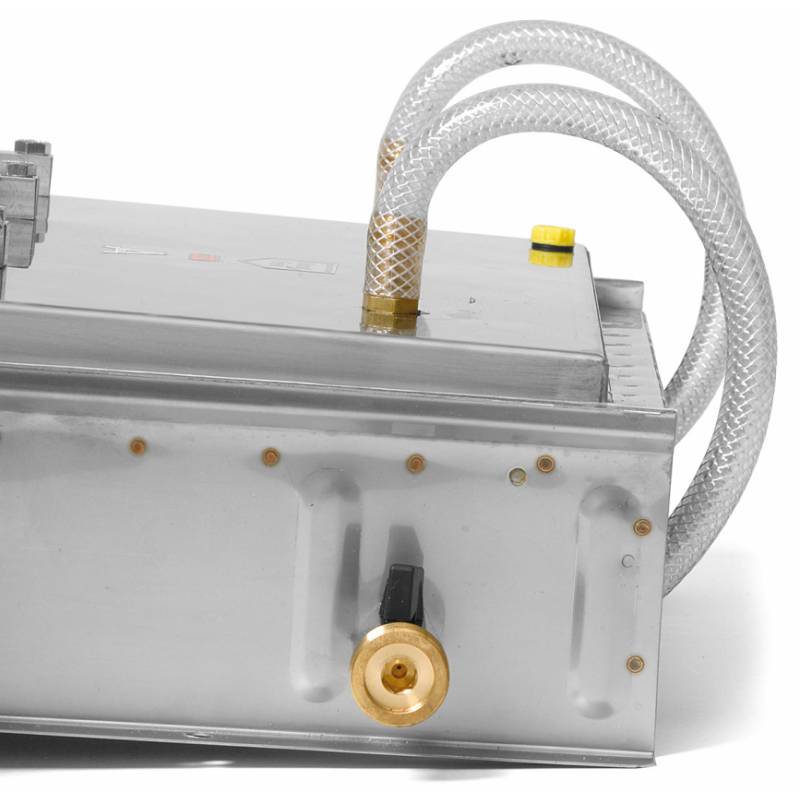
Roller mills need a release agent so the wax does not stick: a consumable with its cost and its handling. This press uses none. The upper and lower plates carry internal water cooling on a heat-exchanger principle, and the sheet comes out dry.
The water leaving the circuit is still useful: it cools the surplus wax in the collection tray. And a shut-off and regulating valve lets you match the flow to the working speed, with low water use — far from the hundreds or thousands of litres an hour of a roller line.
04 · EXACT SIZE, NO TRIMMING
The sheet comes out at the exact outer dimensions of the format, so there is nothing to trim afterwards. That is the advantage of working by press rather than by continuous band: every stroke delivers a finished sheet.
The embossing mould is resistant silicone rubber, from the maker's own compound, and the metal parts are stainless steel. Austrian built by Puff Graz.
05 · 60 SHEETS AN HOUR
Output reaches 60 sheets an hour. It is not an industrial figure and does not pretend to be: it is that of a beekeeper who wants to control their own wax and not depend on what they buy outside.
That is the underlying argument for making foundation at home. You know where the wax came from, what has been added to it and what has not, and you close the cycle with your own cappings wax.
06 · BEFORE YOU BUY
Drone foundation press, Langstroth format.
| ✓ A GOOD FIT | Rearing selected drones and biotechnical varroa management. Langstroth 420 × 202 mm. |
| ⚠ IT NEEDS A WATER SUPPLY | Cooling is by water circuit with a regulating valve. Use is low, but a supply is needed. |
| ✕ IT IS NOT WORKER FOUNDATION | The cell is 7 mm. For the ordinary brood frame you need the 5.4 mm one. |
| Type | Plate press embosser |
|---|---|
| Cell | Drone, 7 mm · 470 cells per dm² |
| Format | Langstroth, 420 × 202 mm |
| Output | Up to 60 sheets an hour |
| Cooling | Internal water in both plates, with regulating valve |
| Solvent | Not needed: the sheet comes out dry |
| Finish | Exact outer dimensions, no trimming |
| Mould | Silicone rubber |
| Metal parts | Stainless steel |
| Built by | Puff Graz, Austria |
| Reference | 441135700 |
Data sheet
1 file available
Water-cooled Puff Graz foundation mould for 420 × 202 mm Langstroth sheets with special 7 mm drone cells (470 cells/dm²) and an internal cooling circuit.
check_circle
check_circle