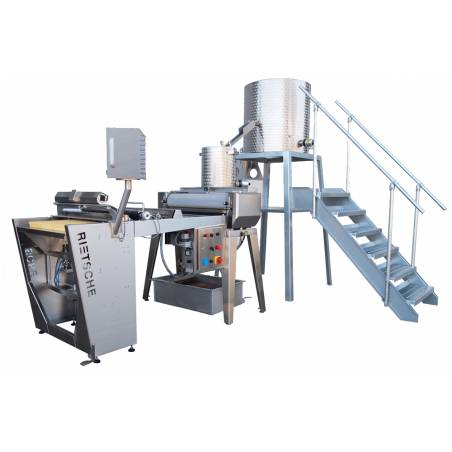
 Apipasta with vitamins 15kg
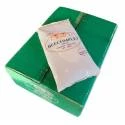 Beecomplet® Spring 14Kg
 Beekeeper suit with round veil
 Oxalic acid 1kg
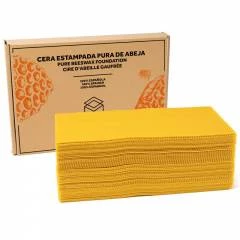
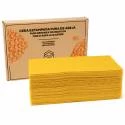 Beeswax Foundation 5kg
 Fresh royal jelly 20g
 Classic honey jar 1kg comb-lines TO77 - Pack of 16 units
 Promotor L Apis 1 litre

 Share in WhatsApp
9 V OUTPUT | 1-2 s WORKING PULSE |
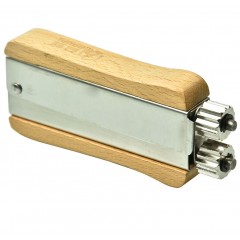
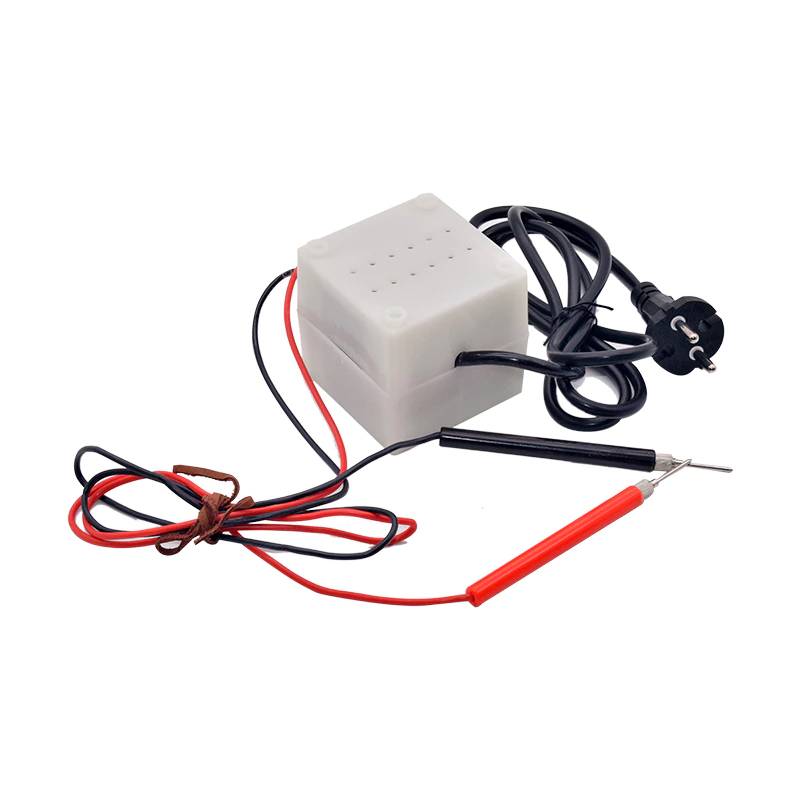
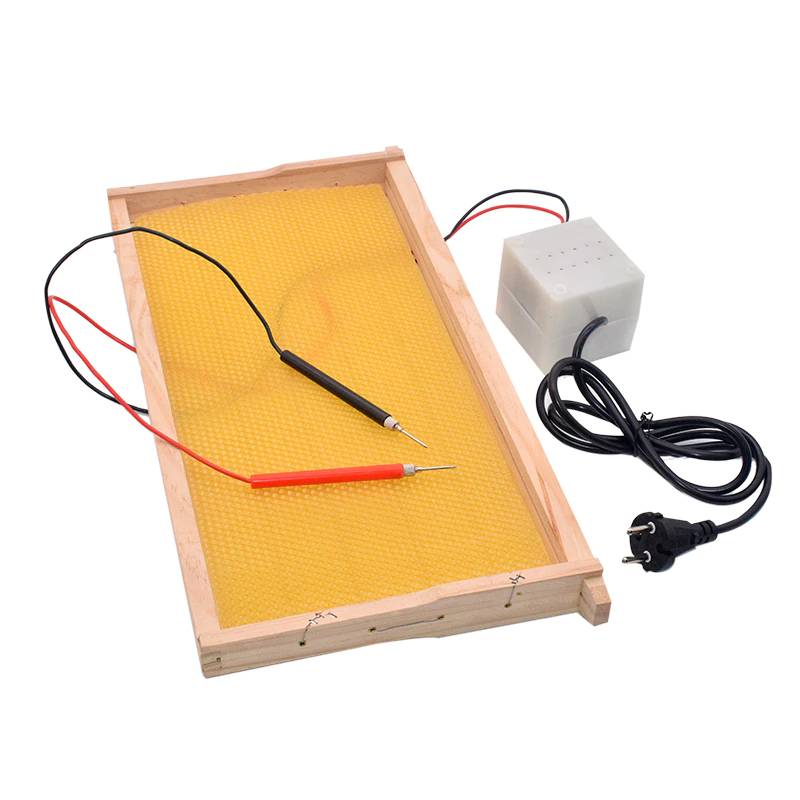
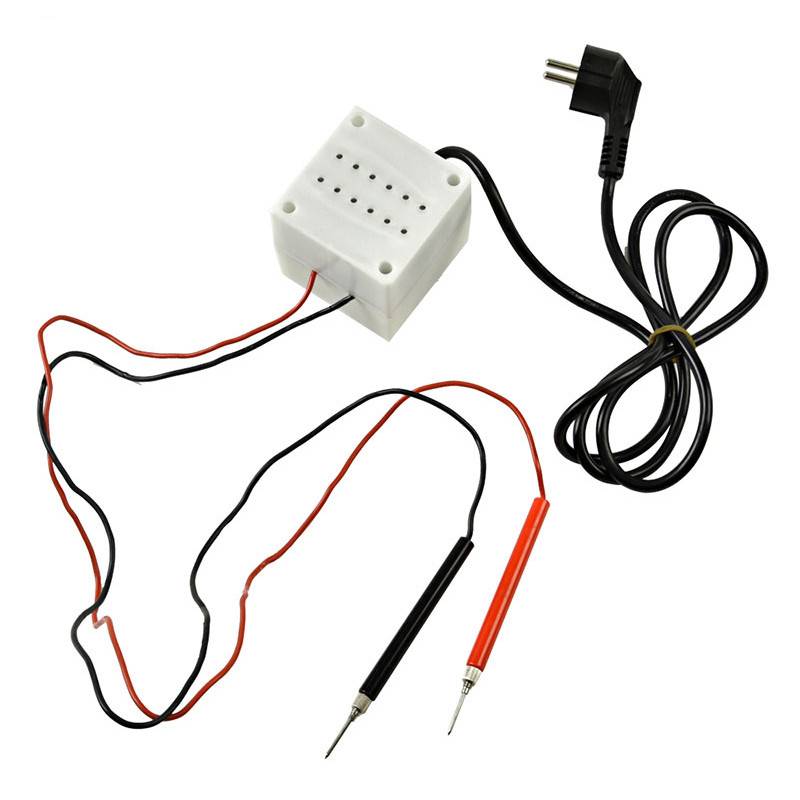
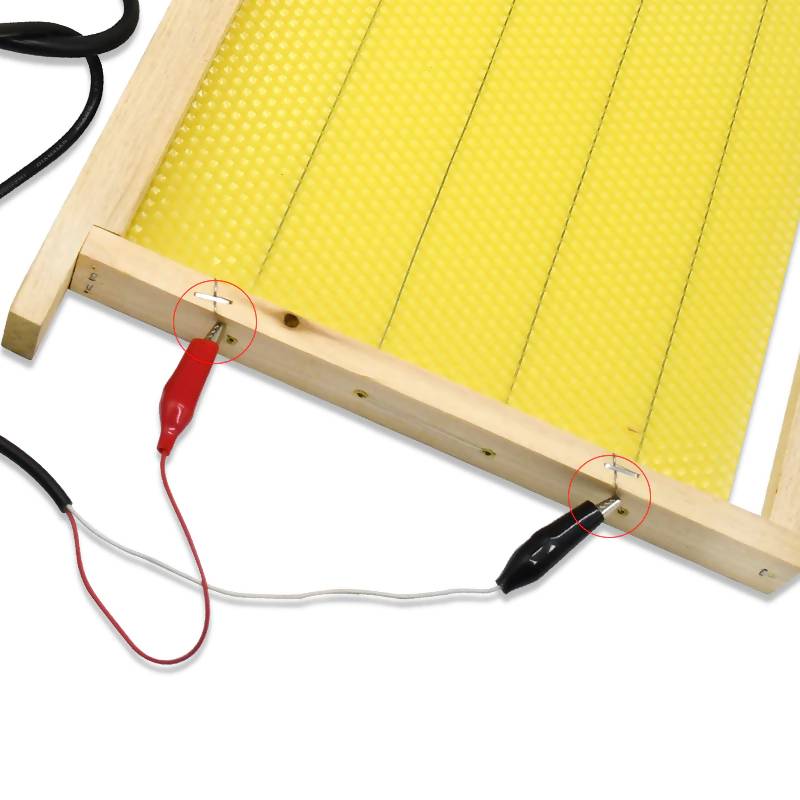
Transformer for embedding foundation into the frame wire. The entry model, meant for galvanised wire and for getting the knack without overdoing it.
It heats slowly, and that is not a shortcoming: it is the margin anyone assembling their first frames will be glad of.
01 · HOW IT IS USED
With the sheet laid and properly centred on the frame, touch the two probes to two different points on the same wire — usually the two ends — and apply current in pulses. The wire heats by resistance, melts just enough of the wax around it and settles into the sheet; the moment you see it, lift off and let it cool. Order matters: if the sheet is crooked, the transformer fixes it crooked. And tension the wire first: slack wire sinks unevenly, and then come the ripples and the cuts.
02 · 9 V OR 24 V
| Galvanised wire | Conducts well: this 9 V unit is ideal, and its relative slowness gives you room not to overshoot |
|---|---|
| Stainless steel wire | Higher electrical resistance: at 9 V the job becomes far too slow. That calls for the 24 V, 100 VA unit |
| Not sure which | A magnet tells you: galvanised is magnetic, good stainless barely is or is not at all |
If you are starting out and your frames are galvanised, this is the one you want: with the 24 V unit the wax settles so fast that it is easy at first to overshoot and cut the sheet instead of fixing it.
03 · MAKING IT LAST
Work in pulses of 1 to 2 seconds, and several short ones beat one long one: holding it too long overheats the wire and ends up cutting through the sheet instead of bedding into it. Two more things that head off almost every problem: never let the two probes touch each other, which is a short circuit, and make sure they contact the wire itself, not staples, nails or timber — poor contact is the usual cause of “it does not heat” and “it takes forever”. And like any small transformer, it is not built for continuous duty: on a long run of frames, give it a break every half hour rather than leaving it plugged in and hot all afternoon.
04 · BEFORE YOU BUY
It comes with the transformer, its cable and the two contact probes. Frames and foundation are not included. This is winter-workshop kit: frames get assembled before the season starts, not in the middle of the honey house.
| ✓ FITS | Frames with galvanised wire and winter batches of a domestic size. |
| ✕ IT IS NOT | The model for stainless wire: that is the 24 V, 100 VA one. |
| ⚠ DUTY CYCLE | Small transformer: short pulses and rests. It will not take hours on end. |
| LTA reference | WT01-9 |
|---|---|
| Output | 9 V |
| Working pulse | 1 to 2 seconds |
| Recommended wire | Galvanised |
| Stainless wire | Better served by the 24 V, 100 VA model |
| Includes | Transformer, cable and two contact probes |
| Weight | 100 g |
Data sheet
1 file available

check_circle
check_circle