

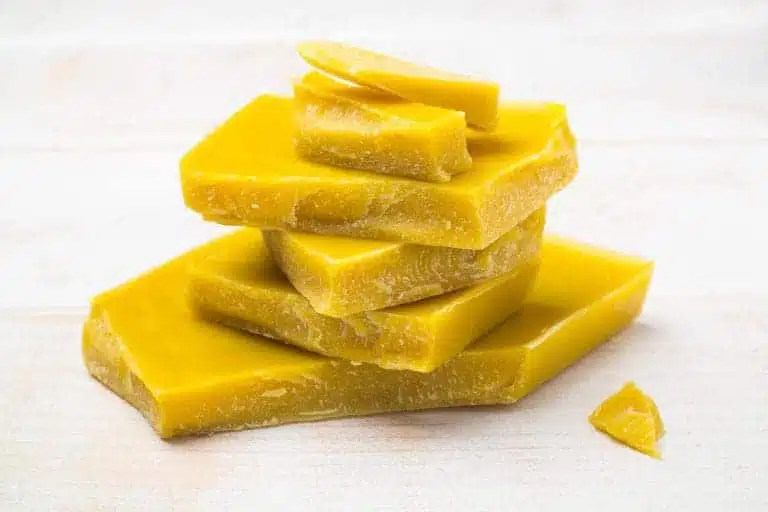
Replacing old foundation

Choose wax with a documented history and select a sheet that fits your actual frame. Foundation and professional wax-processing equipment serve different purposes.
Keep origin, process and intended use together
- Identify the wax lot before processing or sending it to a specialist.
- Keep source, handling records and any relevant analysis with the finished lot.
What does sterilising beeswax mean?
Sterilisation is a validated treatment designed to control a defined microbiological hazard. In wax processing it uses specialised equipment and a documented cycle. Simply melting the wax produces a very different result.
An ordinary steam or heated wax melter turns comb into liquid wax so debris can be strained out and solids allowed to settle. A clear-looking wax block does not establish that resistant disease agents have been inactivated. Where a bee-health treatment is required, use a process validated for that purpose and for the material in question.
Neither routine melting nor a microbiological heat treatment establishes that acaricide residues have been removed. The source and treatment history of the wax remain important.
Does all wax need a sterilisation treatment?
A beekeeper handling good-quality wax from an identified healthy source can decide the appropriate process according to intended use, local requirements and the processor’s specification.
Keep wax of uncertain origin, material heavily exposed to treatments and comb from clinically suspect colonies out of the general recycling stream. Obtain the bee inspector’s advice where a serious brood disease is suspected.

American foulbrood spores can remain viable for years. An ordinary melter cannot be relied on to make affected wax suitable for another colony. Keep the material separate and follow the competent authority’s instructions on handling and disposal.
Chalkbrood (Ascosphaera apis) spores have been reported to die at 70 °C after 120 minutes, but that study concerns honey, and we have found no equivalent data for wax. European foulbrood is caused by a non-spore-forming bacterium. Ask the processor what their procedure actually validates for beeswax.
Some processors apply a validated cycle to every accepted lot. Importing countries can also specify treatments for hive products. Check the current destination requirements and certification before dispatch.
The decision depends on the origin of the beeswax, its intended use and the applicable bee health requirements. Retain a batch record even when the wax has been professionally processed.


What equipment is used to sterilise beeswax?
Wax-rendering equipment separates wax from comb and produces blocks. A process that claims microbiological sterilisation needs equipment with the controls and validation appropriate to that separate operation.
Professional plants use a temperature-controlled vessel suitable for hot wax. The controller, probe location and measurement of the entire load matter as much as the nominal setting.
Equipment may use a jacketed tank or a purpose-designed pressure system. A trained operator follows the validated cycle for the particular plant and product, using calibrated instruments and documented safety controls.
Use materials approved for the process. Stainless steel is a common choice. Reactive or unsuitable metals can discolour the wax, and lead-containing vessels are unacceptable.

A conventional steam melter and a validated sterilising unit are different machines. A steam outlet or a temperature figure in a catalogue does not demonstrate the performance of a full loaded cycle.
How a professional wax-treatment line works
The processor first identifies the wax lot, checks whether the material can be accepted and selects the appropriate documented process. Keep suspect disease material out of routine production.
1. Melting and loading
Load only suitable, accepted wax. Melt it using the manufacturer’s procedure and remain within the working capacity of the vessel so the contents can expand and move safely.
Separate comb carrying fermented honey or excess moisture. It can foam, complicate processing and spoil the quality of a lot.
2. Completing the validated heat cycle
The cycle must be defined for the relevant hazard, the particular equipment and the full working load. The processor records that the required conditions have been reached throughout the batch. A thermostat reading alone is insufficient.
3. Controlled cooling
Allow the plant to cool as specified before transferring or separating phases. The cooling time depends on the batch size, insulation and equipment design.
4. Separation of water-soluble material
Some industrial systems have a controlled water-separation stage. Hot wax and water can spit violently. Use only equipment and procedures expressly designed for that operation and leave any change in process to the operator responsible.
This stage can remove some water-soluble material. It cannot establish microbiological or chemical purity.
5. Optional clarification
Clarifiers are used in some specialist plants to address minerals or colour. A product such as oxalic acid requires the correct grade, a process specification, appropriate controls and confirmation that its use is compatible with the intended wax product.
Use a commercial processor for chemical clarification if you do not have a validated process and suitable equipment. Improvised additions to hot wax can cause severe splashes and contamination.
The intended effect is to improve separation or appearance. The finished wax still needs checks appropriate to its intended use.
6. Settling
A quiet settling stage helps suspended debris collect beneath the cleaner wax. The processor controls time and temperature for the batch rather than relying simply on leaving a heater running overnight.
Steady conditions aid separation. Excess heating can darken the wax and reduce its aroma.
7. Drawing off the wax
Recover the clean wax from the appropriate outlet, then collect the remaining liquid and sediment separately. Keep the containers and batch identities clear.
Clean and inspect the equipment before changing lots.

Why wax is lightened
Raw wax ranges from pale yellow to dark brown depending on its pigments, age, brood history, debris and handling.
Settling and filtration remove physical debris. Some cosmetic or pharmaceutical applications also specify a particular colour or quality grade. Agree that specification before processing or ordering wax.
The following are approaches described in the technical literature. Industrial chemical bleaching requires dedicated equipment, trained operators and product-specific quality tests.
- Oxalic-acid clarification. A processor may use an appropriate controlled process to reduce mineral-related discolouration. Confirm suitability and residual specifications for the final use.
- Citric-acid clarification. This is another specialist option. Validate the complete process and finished-wax quality for the application.
- Strong-acid treatment. Corrosive industrial reagents require specialist handling and controls. For light wax in a small workshop, buy material supplied to the required grade.
- Oxidative bleaching. Industrial peroxide processes require control of heat, reaction and residues. Residual oxidants can make the wax unsuitable for later formulation.
- Light exposure. Sunlight can lighten wax over time. A solar melter may help separate wax from clean cappings. Protect the wax from dust and monitor it for overheating.
- Other oxidising treatments. Chemical oxidation can affect more than colour. A specialist processor should confirm the product’s suitability by testing the final wax.
Refining and solvents can also remove volatile components responsible for the characteristic scent. Colour, aroma and intended use should all form part of the buying specification.
Technical background: Stefan Bogdanov’s resources on beeswax.
Traceable material, clean equipment and controlled settling frequently improve wax quality before any bleaching is considered.
What about chemical contamination of beeswax?
Beeswax residues: assessment and commercial processing
Heat treatment for bee disease and chemical decontamination address different problems. Comb can collect residues from crop protection products and from some treatments used in the hive. The introduction of regular Varroa control added an important source of exposure for European wax-recycling streams.
Certain persistent fat-soluble residues remain in wax after ordinary melting or a microbiological heat process. Repeated recycling can carry them into new foundation. Only appropriate chemical analysis can establish what remains in a given lot.
Which contaminants are relevant?
Wax can accumulate organic substances that enter the hive from several sources.
- Older organophosphate acaricides, including coumaphos and chlorfenvinphos in residue studies.
- Compounds such as tau-fluvalinate and bromopropylate found in historical analyses.
- Agricultural pesticides associated with the surrounding crops.
- Legacy contaminants such as paradichlorobenzene from past wax-moth control practices.
Why contamination matters
Residues can affect bees and limit how wax can be used or sold. The risk depends on the substance, concentration, exposure and intended product.
Studies report effects on brood survival, adult performance or drone fertility under some exposures. Stored pollen can also come into contact with contaminated wax. Do not extrapolate one experimental result to every recycled lot.
Poor-quality wax can reduce colony performance, increase replacement costs or make batches unacceptable for some markets. Traceability is particularly important for comb sold as food and for cosmetic ingredients.
Commercial adsorption with a filter aid and activated carbon
A published industrial process combines controlled heating, adsorption and filtration. The source reports large reductions for certain tested residues under its own conditions. Results cannot be guaranteed for every chemical, batch or plant.
Stage 1. Controlled heating and moisture management
The industrial line melts and conditions the wax in an indirectly heated vessel with controlled agitation. Operators verify equipment compatibility and the condition of the lot.
A mixing tank keeps liquid wax moving under controlled heat. Ordinary honey-creaming equipment should not be assumed safe or suitable for hot wax; check its explicit temperature, material and load ratings.
Stage 2. Selecting the adsorption and filtration materials
The process uses two materials with different functions.
- A suitable grade of diatomaceous filter aid.
- Activated carbon selected for the contaminants and intended application.
Diatomaceous earth is a mineral material derived from microscopic diatoms. Grades differ substantially. Only a grade documented for the intended process should enter a food-contact or cosmetic supply chain.
Activated carbon has a porous structure that can adsorb some compounds. Its specification, suitability and eventual removal must be verified in the intended wax process.
Stage 3. Mixing and contact
The plant maintains controlled agitation and contact under its validated conditions. Compare a representative incoming sample with the final product when assessing removal.
Stage 4. Filtration
The wax is filtered while it remains fluid, with equipment designed for hot wax and the selected filter medium.
Plate filters hold and retain the solid filter material while wax passes through. A simple mesh or paper filter cannot be presumed to provide the same removal or quality verification as an industrial process.
Stage 5. Casting and batch release
Cast the wax into identified blocks. Manage spent adsorbent and residues through the appropriate waste route, and retain the incoming and final test records.
The original patent provides a reference for the industrial method.
Spanish patent ES2350216A1 (PDF, in Spanish).
Alternative commercial processes
Solvent-based processes
Some industrial processes use solvent extraction followed by controlled recovery. They require specialist fire, exposure and residue controls. Published removal rates for particular compounds do not establish the suitability of an untreated or home-processed batch.
Preventing contamination at source
Several management decisions can reduce avoidable contamination before wax reaches a processor.
- Use only authorised Varroa medicines suited to the colony, according to the label and veterinary programme.
- Renew old comb on a planned rotation appropriate to the apiary and the history of each frame.
- Ask foundation suppliers for batch traceability, quality specifications and relevant analytical evidence.
- Use approved methods for protecting stored comb. Keep unapproved chemicals and household moth repellents out of it.
- Keep treatment, comb-rotation and wax-purchase records together so any problem can be traced back to its source.


