

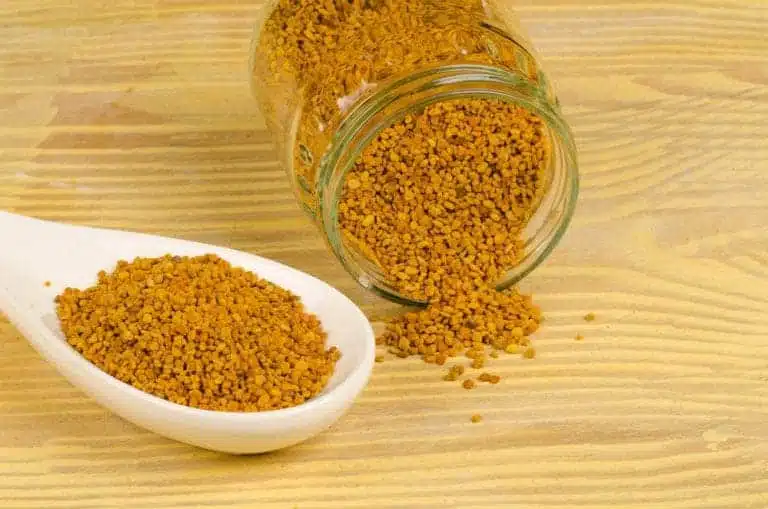
Equipment for handling and checking pollen


A shallow perforated food-contact box helps during collection and transport. A moisture meter supports process checks. Use an appropriate method and the instrument’s pollen setting.
Prepare the handling chain before harvesting
- Identify the lot and prepare clean, shallow food-contact containers.
- Check the planned cold or drying capacity before opening traps.
Producing bee pollen
Spain has long been an important European producer of bee pollen. The Spanish guide cites historical annual estimates of roughly 1,000–1,500 tonnes, with considerable variation between seasons and weather conditions.
The author wrote against a background of falling sales and prices. A producer can do little about the weather, but can control collection, traceability and storage, all of which affect the value of a lot.
Plants that provide a pollen crop
Much Spanish bee pollen comes from wild plants. Rockroses and sunroses are particularly important and can give the crop a sweet, fruity character. Other sources include the following.
| Borage family: bugloss and viper’s bugloss | Echium spp. | April–May |
| Rockrose family: rockroses and sunroses | Cistus spp. and Helianthemum spp. | May–June |
| Daisy family: thistles, carline thistles and sunflower | Carduus spp., Carlina spp. and Helianthus annuus | June–July; August–September; July, respectively |
| Grass family: maize | Zea mays | July |
| Cabbage family: oilseed rape, mustards, wall-rocket and turnips | Diplotaxis spp. and Raphanus spp., among others | |
| Heather family: heaths | Erica spp. | April for some white-flowering heaths; September–October for other species |
| Beech family: chestnut, holm oak and other oaks | Quercus spp. for the oaks | May |
| Meadow legumes: medicks and lucerne, trefoils, sweet clovers and clovers | Trifolium, Medicago and Lotus spp., among others | May |
| Olive family: olive | Olea europaea | April |
Some Spanish pollen crops include Echium. Its presence can be relevant to the food safety assessment for pyrrolizidine alkaloids. Some beekeepers hold a lot or pause collection when the pellet mix changes markedly. Colour is a screening observation, not a measure of chemical concentration.
Where Spanish bee pollen is produced
South-western Spain combines early colony build-up with substantial spring pollen flows within reach of the same apiary or a short move away. After the main flow the beekeeper can move strong colonies to later forage or let them rebuild reserves and use a subsequent nectar flow.

Weather can make the difference between a crop and a negligible harvest. Cold, wet springs limit flight, while very dry springs can restrict flowering and pollen production.
Pollen traps
The front-mounted pollen traps common in Spain reflect years of practical changes by commercial pollen producers. Many were designed around the local 10- or 12-frame Layens hive.
A wooden or plastic trap fits at the entrance, with the collection drawer clear of the ground. Some beekeepers use a separate higher entrance to reduce moisture and debris entering the drawer.

Keeping pollen clean from the start reduces later sorting and helps protect its quality.
The example trap has an entrance grid with openings of about 4.5 mm. As a returning worker passes through, the larger pollen pellets are brushed from her hind legs. They drop through a second perforated surface, with holes of around 3–3.5 mm, into a drawer the bees cannot enter.

The collection drawer slides out from the front. Perforated bases or sides allow air to circulate and make the drawer easier to wash and dry.
A sloping cover keeps rain and dew from dripping into the pollen drawer.
Drone exits behind the worker grid keep larger bees from being trapped inside. Inspect and clean this space regularly even when the trap has dedicated exits.
Managing colonies during pollen collection
Choose healthy, well-populated colonies with a laying queen, open brood and adequate pollen stores. Check regularly what the colony retains for itself. A trap may obstruct a young queen returning from mating flights, so take queen status into account before fitting it.
Do not apply varroa treatments inside the hive while you are collecting pollen: the active substance clings to the bees’ hairs and therefore to the pollen loads they carry. Follow the authorised medicine label and, before refitting the traps after a treatment with impregnated strips, remove from the floor and entrance the frayed, cotton-like material the bees tear from the strips, which can end up in the pollen drawer. The Teruel beekeeping health association’s good-practice guide describes fibres from certain strips appearing in collection drawers.
At first leave the grid open or partly open so the workers learn the entrance. The guide suggests one or two days before engaging it, with regular checks afterwards.

Collect at least daily under normal harvesting conditions. Warm, damp pollen deteriorates quickly. The source mentions occasional two-day intervals in dry conditions with a shaded, ventilated drawer. Check the actual product, weather and handling plan before relying on a longer interval.
Transfer the pollen in clean, food-contact containers. A useful transport box has the following features.
- Materials suitable for food contact.
- Surfaces that can be cleaned and disinfected effectively.
- A stackable shape for transport and storage.
- Shallow sides so fresh pellets are not compressed into clumps.
After collection, move the pollen promptly to the appropriate stage of the planned process.
- The freezer, for pollen marketed in a frozen chain.
- A suitable dryer, for dried pollen.
Leaving the crop warm and moist increases the risk of deterioration. Freezing and drying both require sound incoming material, hygienic handling, controlled storage and an identified lot.
If the pollen will be frozen
Start with pollen in good condition. Freeze promptly in shallow layers using equipment suitable for the load, then clean it with a process compatible with frozen pollen and the intended cold chain.
If the pollen will be dried
Spread the pellets in thin, even layers on perforated trays so air can circulate. The guide gives a maximum layer depth of about 2 cm as an example. Follow the dryer’s instructions and check the full load.

Pollen dryers use airflow to remove moisture. Bogdanov gives about 6% water as a practical drying reference. The 6–8% maximum proposed by Campos and colleagues (2008) was tentative, not a target of 8% or a shelf-life guarantee. Verify the endpoint with a method suitable for bee pollen.
The Spanish practical guide describes commercial dryers operating near 40 °C. Bogdanov’s The Bee Pollen Book recommends the lowest feasible temperature, with a maximum of 30 °C when preserving sensitive components is the priority. Airflow, loading and the measured final condition matter alongside the temperature setting.
| Method | Effect on sensitive constituents | Practical consideration |
|---|---|---|
| Direct freezing | Generally preserves the original composition well under suitable conditions. | Requires a reliable cold chain. |
| Drying at or below 30 °C | Lower vitamin losses in the cited comparison. | A useful approach when retention of heat-sensitive components is the priority. |
| Drying at 40 °C | Greater losses of vitamin C and provitamin A in the comparison. | Used by some commercial dryers; monitor the loading and endpoint. |
| Drying at 45 °C for six hours | Reported losses of about 15–25% of vitamin E and beta-carotene in the cited comparison. | Less favourable for retaining these constituents. |
| Freeze-drying | Some loss of vitamin C and provitamin A, less than with the 40 °C process in the cited data. | An option where the equipment and economics allow. |
The guide gives about 10–14 minutes of cool, dry airflow as an example of final cooling. Confirm that your load is cool, limit exposure to humid air and verify moisture before sealing. Dried pollen can reabsorb water.
Cleaning pollen
Remove dust, bee fragments and plant debris before packing. Machines designed for dry pollen, such as the LYSON Optima W3215 in its manual, require drying first. Other models, including the Thomas 4522 in the source, can handle fresh or dry pollen. For a frozen line, check compatibility and maintain the cold chain.
A sieve and careful hand sorting may suit a small lot. Use clean equipment suitable for contact with food.
Larger operations can inspect dried pollen on a moving belt and use controlled aspiration to remove lighter debris before the final check.

Foreign material can impair storage and cause buyers to reject the lot.

Storage and packaging
Store dried pollen in clean, dry, sealed food-contact containers protected from insects and rodents. A suitable sealed liner inside a drum can provide an additional barrier.
Small food-grade pails or sealed liners allow a producer to open only the quantity needed, reducing exposure of the rest of the lot.
Drying and sealing help preserve pollen, but the store still needs inspection and environmental control. Traditional additions such as bay leaves do not replace a pest-management programme.
Some processors use food-grade protective atmospheres in purpose-designed equipment. Where a pest treatment is necessary, use a qualified service and verify that the intended application is authorised.
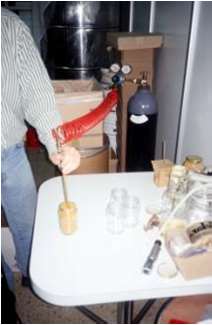
Bogdanov gives example periods of one year for dried or frozen pollen and up to two years for vacuum-packed dried pollen. These figures depend on the process, packaging and storage. The business must establish an appropriate shelf life for its own product.
Every item touching the crop in the apiary, vehicle, dryer, cleaning line and packing area should be suitable for food contact and easy to clean. Follow a documented cleaning plan.
Preventing storage pests
Start with sealed food-contact containers, clean premises, inspection and exclusion of insects and rodents. Do not improvise fumigation in pollen drums. Airing a container cannot establish that its contents are safe for food use.
If a professional treatment is required, the specialist must check the permitted product, exact use and required controls. Approval of a substance does not automatically permit application to pollen. In Spain, consult the Ministry of Health’s official biocides register.
| Product format | Indicative storage period reported by Bogdanov |
|---|---|
| Dried pollen at room temperature | 12 months |
| Vacuum-packed dried pollen | 24 months |
| Frozen fresh pollen | 12 months |
Selling bee pollen
Dried pollen is sold as food and is also used in certain animal feeds. Fresh or frozen pollen for commercial bumblebee rearing is a separate market, with different requirements.

Examples of wholesale packaging include 200-litre food-grade drums holding approximately 130–150 kg of pollen and cartons of 25 kg. A glass jar normally used for 500 g of honey may hold only about 200–250 g of pollen. Check the actual net weight.
The Spanish source describes a substantial export trade, including sales to Asian buyers. Destinations and specifications vary by season.
See our bee pollen range for the product available in the shop.
Assessing the quality of bee pollen
A food business needs appropriate microbiological, chemical and sensory checks. The following points help in preparing a product-specific plan with a competent laboratory.
Microbiological checks
Specify sampling, methods and acceptance criteria for the actual product. Regulation (EC) No 2073/2005 sets criteria for food categories. There is no single table that can be applied indiscriminately to all fresh, dried and frozen pollen.
Salmonella. Include it in the hazard assessment and sampling plan where appropriate. Specify the sample amount and acceptance criterion together.
Escherichia coli. It can be used as a hygiene indicator. Agree the method, units and interpretation with the laboratory in light of the product and process.
Listeria monocytogenes. The criterion of 100 CFU/g cannot be applied automatically to every pollen product. For ready-to-eat foods able to support growth, other than those for infants or special medical purposes, the operator must demonstrate that the limit will be met throughout shelf life. Where that cannot be demonstrated, the relevant criterion is absence in 25 g throughout shelf life under Regulation (EU) 2024/2895, applicable from 1 July 2026. Classify the product correctly and document the storage conditions.
Pyrrolizidine alkaloids
Annex I, point 2.4.11 of Regulation (EU) 2023/915 sets a maximum of 500 µg/kg for pollen-based food supplements, pollen and pollen products. Use an appropriate analysis of the sum defined in the regulation. Pellet colour and mechanical cleaning cannot demonstrate compliance.
Multi-residue analysis
Specify the substances covered, the reporting or quantification limits and the criteria relevant to the lot. A compliant result applies to the substances tested. Select the panel with the origin and production history in mind.
Aflatoxins and other mycotoxins
Consider fungal toxins in the hazard assessment in light of origin, moisture and storage. Campos and colleagues discuss this risk in the technical literature on pollen. A qualified laboratory can advise on a relevant panel and interpretation.
Sensory assessment
Buyers also assess taste, smell, colour and texture against the expected product. Sensory quality is a commercial consideration and can flag deterioration. It is separate from microbiological and chemical compliance.
Applying the quality-control plan
Keep origin, lot traceability, process and storage records and analytical results together. Drying, cleaning, testing and condition checks each control different parts of the process.
Would you like to learn more about bee pollen?
Our Spanish-language course covers pollen, honey, propolis and royal jelly. See the course information.
An extract from the class is shown below.

Sources
Pajuelo Consultores Apícolas, 2020.
S. Bogdanov (2017), Pollen: Production, Nutrition and Health. A Review. Bee Product Science.


