
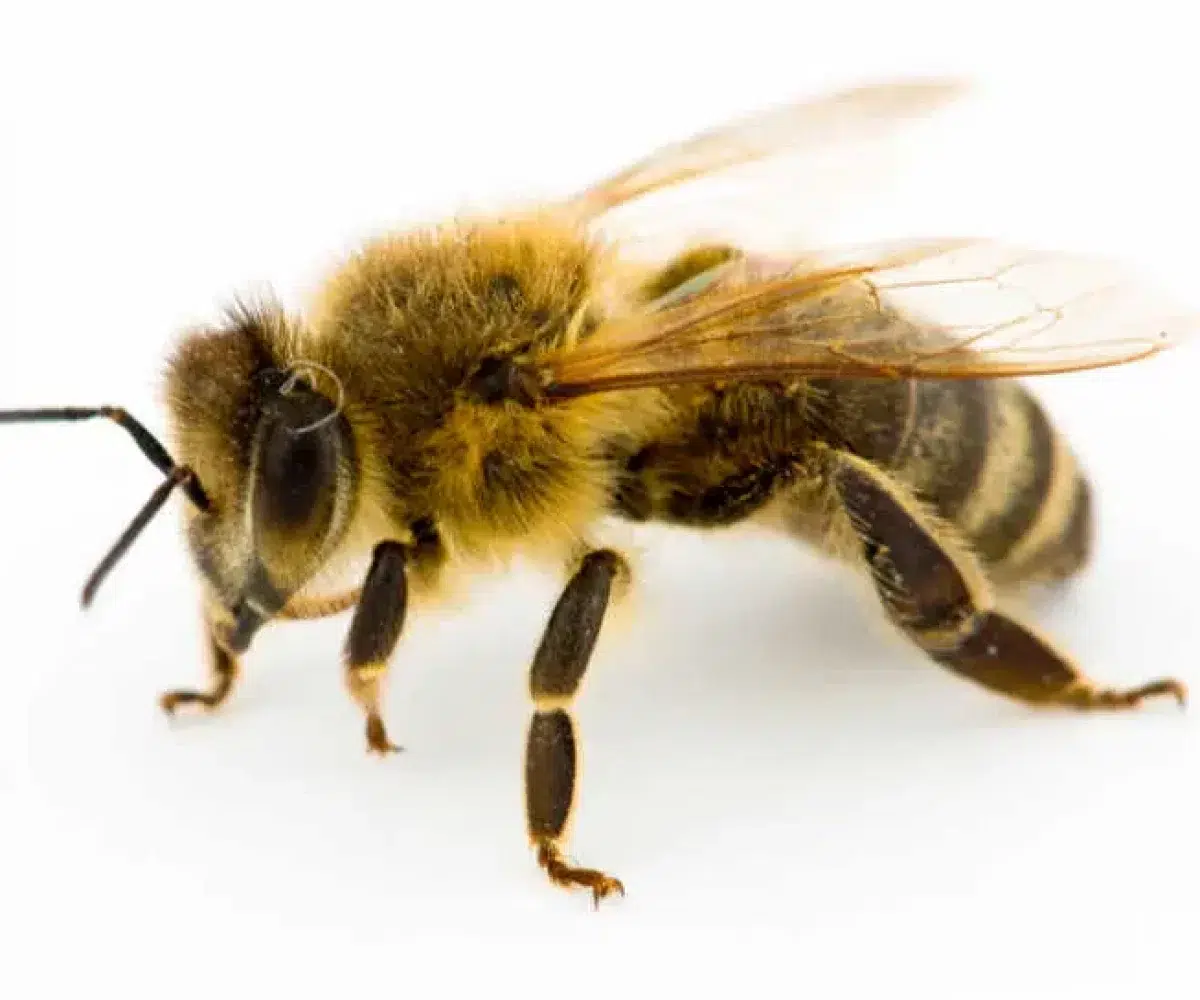
A honey bee’s antennae combine several kinds of sensory equipment. They detect odours, chemicals on contact, touch and tiny movements of the surrounding air, as well as temperature, humidity and carbon dioxide. Together with the bee’s other senses, they support foraging, flight and communication—including life inside a dark hive.
Antennae at a glance
| Sense or function | Where | What it contributes |
|---|---|---|
| Sound and air movement | Johnston’s organ in the pedicel | Senses movement of the flagellum, including near-field air vibrations associated with the waggle dance. |
| Touch | Mechanosensory structures on the antenna | Provides information about nearby bees, comb surfaces and objects during exploration and comb work. |
| Smell and contact taste | Chemosensory sensilla | Detects floral odours, pheromones and chemicals encountered on contact; other body parts also have taste receptors. |
| Brood assessment | Antennal chemosensory pathways | Helps workers detect cues associated with dead, diseased or mite-infested brood; sensory detection is one part of hygienic behaviour. |
| Nestmate recognition | Chemical cues sampled during antennal contact | Helps guard bees distinguish colony members from potential intruders; recognition depends on context, not a single infallible test. |
| Temperature and humidity | Specialised antennal sensilla | Supplies information about local conditions, contributing to the colony’s responses to its environment. |
| Carbon dioxide | CO₂-sensitive antennal sensilla | Detects changes in gas concentration. A specific role in predator detection should not be treated as established here. |
| Airflow and electric-field responses | Antennal mechanoreceptors, including Johnston’s organ | Airflow contributes to antennal positioning in flight. Experiments also show responses to electric fields; this is not proof of magnetic-field detection. |
In this guide
- the parts of the antenna;
- their functions, one by one;
- how they keep them clean.
Parts of the bee’s antennae
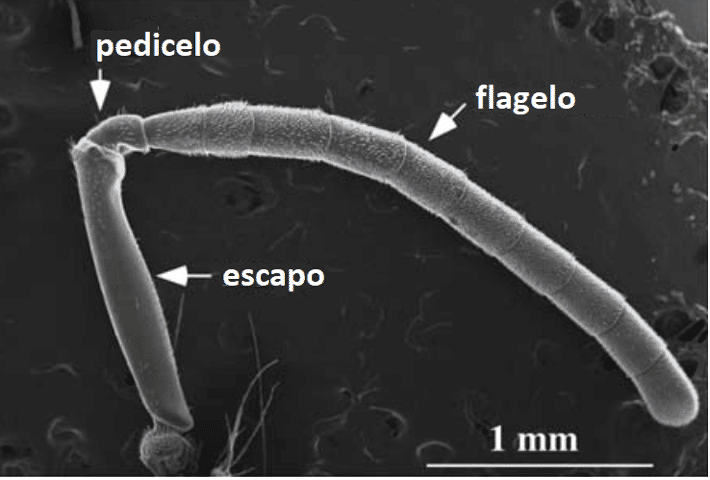
The antennae are divided into three main parts (Image 1). The scape articulates with the head. Next comes the pedicel, a small segment that, together with the scape, controls the movement of the antenna. The final part is the flagellum, which comprises ten flagellomeres in females and eleven in drones.
The antennae carry many tiny sensory structures called sensilla (singular: sensillum), of several types. Each contains sensory cells and supporting structures linked to the nervous system. It is more accurate to describe a range of specialised sensors than to say that a bee has just seven sensory organs in its antennae.
What functions do the antennae have?
Honey bees do not have ears like ours, but they can detect near-field sound through air-particle movement. When the flagellum moves relative to the pedicel, Johnston’s organ converts that mechanical movement into nerve signals. Tsujiuchi and colleagues’ 2007 experiments showed responses suited to the frequencies and timing of waggle-dance sounds. Antennal sensing helps followers receive signals; it is not the whole system by which they interpret a dance.
Antennae also provide touch information. By moving them over surfaces and contacting other bees, a worker samples its immediate surroundings. These tactile cues contribute to inspecting and working comb; the antennae are not the only structures involved in building cells.

Chemosensory sensilla detect odours and pheromones, while contact-sensitive receptors contribute to taste. Bees also taste with their mouthparts and feet. Floral odours help guide foraging, and queen pheromones influence colony behaviour and mating. Alarm signals can recruit defensive bees; they are not simply “repellent smells”. The sting-associated alarm system must be distinguished from the Nasonov gland, whose scent helps attract and orient bees (Image 2). A bee smoker can temporarily reduce odour responsiveness, rather than merely repel bees with its smell.
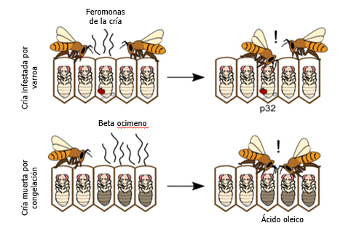
Chemical detection also contributes to removing dead adults and identifying abnormal brood. Varroa-sensitive hygiene (VSH) involves workers detecting and removing some mite-infested brood; it is a specialised aspect of colony hygiene, not a guarantee of freedom from Varroa. Mondet and colleagues (2015) found differences in antennal gene expression and viral abundance between workers observed performing VSH and those not doing so. Their suggestion that higher DWV infection might impair sensory function or VSH is a hypothesis, not proof that antennal infection alone causes the behaviour to fail. Shah and colleagues (2009) studied DWV in the brain; that work should not be presented as a direct test of antennal VSH.
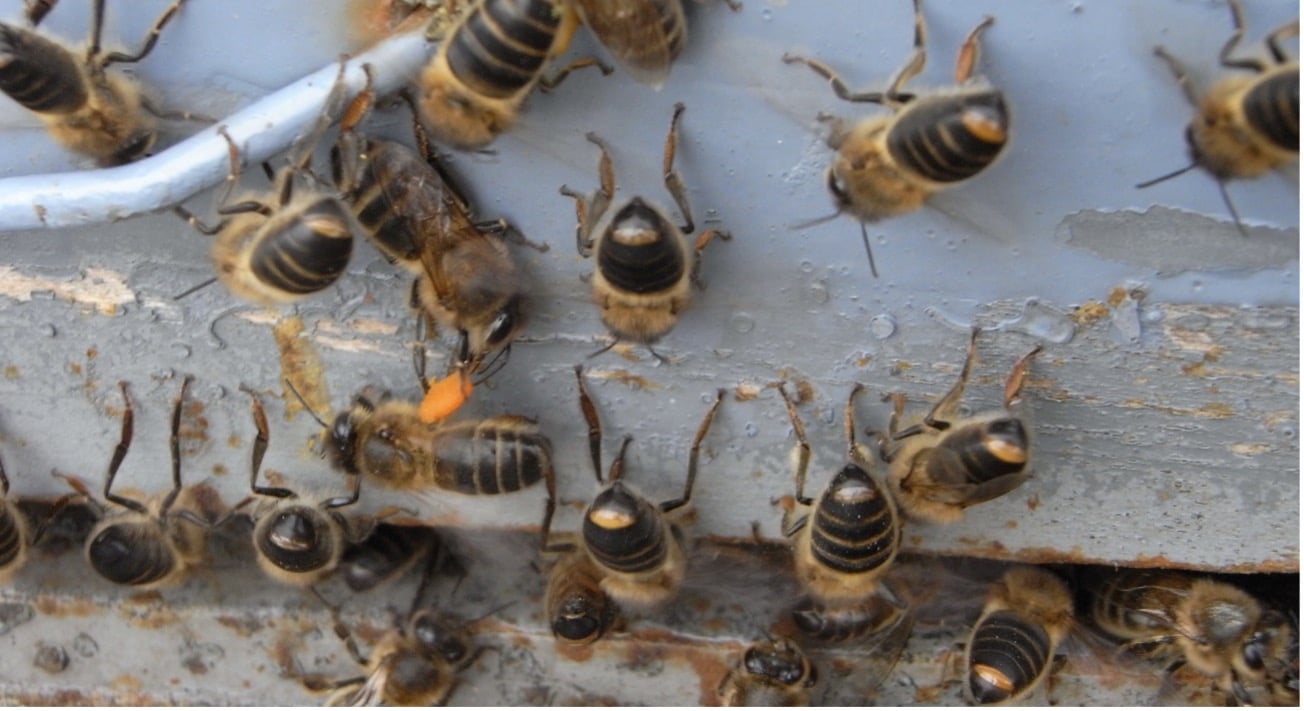
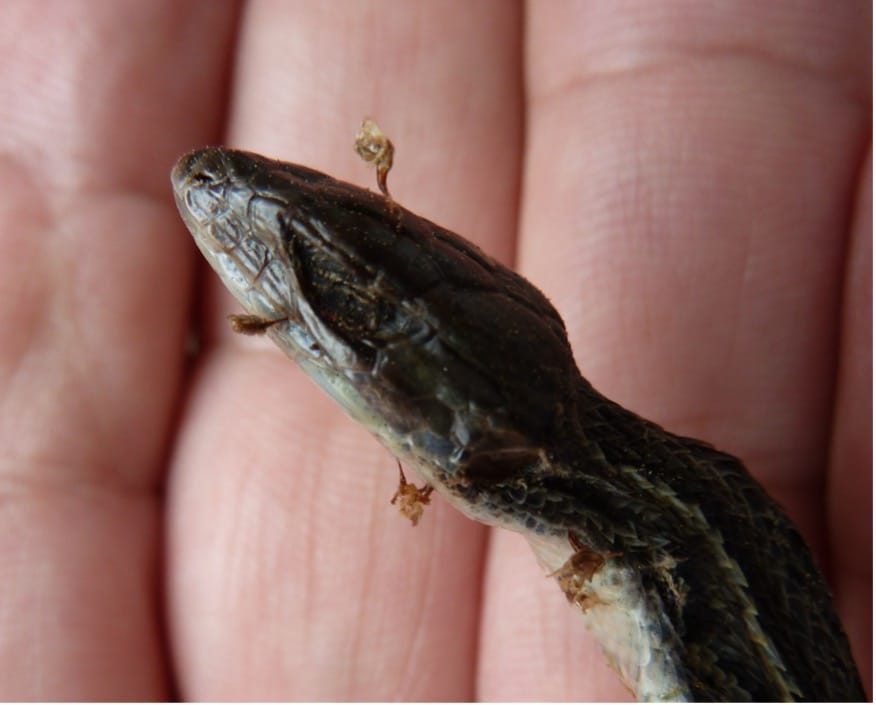
At the entrance, guards sample chemical cues when they contact arriving bees with their antennae. These cues help with nestmate recognition and defensive decisions. A deposited sting can release alarm compounds that draw further defensive attention to a target. The photograph in Image 4 illustrates bee stings on a lizard; a photograph alone cannot establish the full sequence of events.
Specialised antennal receptors respond to temperature, humidity and carbon dioxide. These responses have been studied directly, including humidity and temperature receptors and the sensory pathways of CO₂-sensitive sensilla. Detecting CO₂ does not, by itself, demonstrate that the antennae function as a dedicated predator detector.
As discussed in our article on how bees see, vision is important outside the hive. In darkness, chemical signals, antennal contact, air movements and comb vibrations provide other information. Bees combine these cues; communication is not carried out through the antennae alone, nor does every signal specify an exact location for food, brood or new comb.
Flight and electric fields: airflow and visual motion influence antennal positioning during flight. Separate experiments show that electric fields can move charged antennae and elicit mechanosensory responses. These findings should not be expanded into a claim that Johnston’s organ detects magnetic fields or supplies all of the bee’s orientation information.
How do they keep the antennae clean?

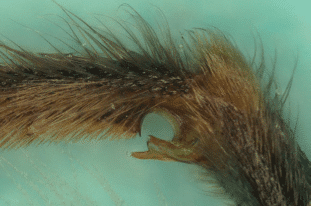
To keep their sensory surfaces clear, bees groom their antennae with an antenna cleaner, or strigilis, on each foreleg. A notch with fine comb-like hairs on the basitarsus works with a movable tibial spur. The bee draws the flagellum through this structure, normally using the foreleg on the same side (Image 5).
This is ordinary grooming, not a ritual gesture. It is also misleading to describe it as continuous: Schönitzer and Renner’s observations commonly found one cleaning stroke before the bee returned to other activity. The frequency varies with contamination and circumstances.
Bibliography
– Kane, T. R., Faux, C.M. (Eds.). 2021. Honey bee medicine for the veterinary practitioner. John Wiley & Sons, Inc.
– McAfee, A. 2017. Mechanisms of hygienic behavior: it’s all about necromones. American Bee Journal.
– Mondet, F., Alaux, C., Severac, D., Rohmer, M., Mercer, A.R., Le Conte, Y. 2015. Antennae hold a key to varroa-sensitive hygiene behaviour in honey bees. Sci. Rep. 5, 10454.
– Shah, K.S., Evans, E.C., Pizzorno, M.C., 2009. Localization of deformed wing virus (DWV) in the brains of the honeybee, Apis mellifera Linnaeus. Virol. J. 6, 182.
– Tsujiuchi, S., Sivan-Loukianova, E., Eberl, D.F., Kitagawa, Y., Kadowaki, T. 2007. Dynamic range compression in the honey bee auditory system toward waggle dance sounds. PLOS ONE. https://doi.org/10.1371/journal.pone.0000234
Frequently asked questions
What do honey bee antennae do?
They detect odours, contact chemicals, touch and small air movements, as well as temperature, humidity and carbon dioxide. They contribute to foraging, flight and colony communication alongside the bee’s other senses.
Can honey bees hear?
They can detect near-field sound as air-particle movements that move the antennal flagellum. Johnston’s organ in the pedicel responds to that movement. This differs from hearing through an ear like a human’s.
What are the parts of a honey bee antenna?
The three main parts are the scape, pedicel and flagellum. The flagellum has ten segments in females and eleven in drones; the scape and pedicel are separate from those counts.
How do bees clean their antennae?
They draw the flagellum through a specialised cleaner on the foreleg on the same side. A notched comb and a movable spur work together to remove material. Grooming occurs as needed, not continuously.
How are antennae involved in Varroa-sensitive hygiene?
Antennal chemical sensing helps workers detect cues from abnormal brood. VSH includes removing some mite-infested brood, but several sensory and behavioural processes are involved. Antennal differences and viral associations do not alone prove causation or eliminate the need to monitor mites.
How do bees communicate inside a dark hive?
They combine chemical signals, antennal contact, air movements and vibrations. Antennae are important receivers, but they are not the only sensory system involved.
Continue reading
- How bees see, the other major sense.
- Pheromones in the hive, which the antennae read.
- The queen bee, whose pheromones help regulate colony life.
- Why bees sting (in Spanish), and the role of alarm signals.
Editorial note: original image credits and source illustrations have been retained. Some diagram labels and linked related articles remain in Spanish. This English edition distinguishes established sensory functions from hypotheses and historical anecdotes.

ISNI 0000 0005 1801 1100 | Joshua Ivars is the manager of LA TIENDA DEL APICULTOR and the author of this blog, where he shares technical and practical guidance for beekeepers. Drawing on extensive experience in the beekeeping sector, he offers advice and solutions based on beekeepers’ real needs, sharing his knowledge of equipment and essential beekeeping practices.


