

Energy feed and further reading


Commercial fondant is one option when a colony is short of carbohydrate. The book is a Spanish-language reference on bee health and feeding. Check the feed label and how much food the colony already has.
Assess what the colony needs
- Check the quantity and position of the stores before supplying energy feed.
- Record the batch of commercial feed and keep it separate from the honey harvest.
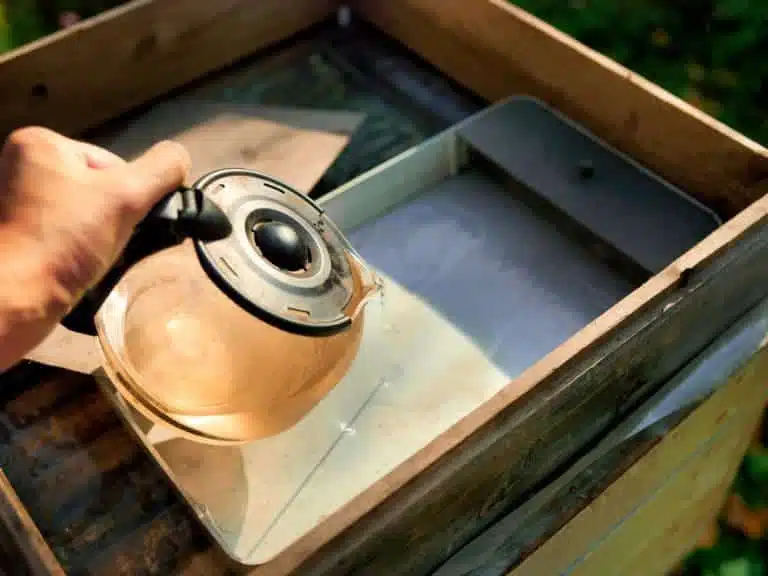
Beekeepers sometimes ask whether it is worth making invert syrup at home for their hives. Antonio Gómez Pajuelo addressed the question in our bee nutrition course. His practical concern is whether inverting the sugar brings a benefit and what happens if the syrup is overheated or stored in comb that is later harvested.
What is invert sugar?
Sucrose, the main sugar in ordinary white table sugar, is made up of glucose and fructose. Inversion splits sucrose into those two simpler sugars. Bakers use invert sugar partly for the texture it gives their products. Manufacturing methods vary, and syrup made for confectionery does not automatically meet the requirements of bee feed.

Honey bees already produce enzymes that break down sucrose. An enzyme can take part in more than one reaction. The fact that commercial syrup has already been inverted is therefore insufficient, on its own, to establish a nutritional advantage over an appropriate sucrose feed.
Why extra heating can be a problem
Heating a sugar syrup, particularly under acidic conditions, can increase its hydroxymethylfurfural (HMF) content. How much forms depends on the composition, heating history and storage conditions. Darkening or a caramel smell can indicate overheating, but appearance does not establish a numerical HMF value.
HMF can harm honey bees at sufficient exposure. Results from laboratory cage studies depend on the concentration and on how much syrup the bees consume and for how long. The figures often repeated in beekeeping discussions should not be treated as one universal safe or toxic threshold. The practical implication is straightforward: there is little reason to subject a homemade feed to prolonged heat simply to invert the sugar.
Keep feed separate from the honey crop
A colony may move surplus syrup into its combs. If those combs are harvested for sale, the extracted product can contain feed-derived sugars. This applies to ordinary sucrose feeds as well as invert syrups. Commercial honey must meet its composition and origin requirements.
Laboratories can use several analytical methods to investigate unusual findings. Some tests target indicators associated with particular industrial syrups, while others assess a wider compositional profile. An HMF result, for example, tells you about heating and storage and cannot establish the source of a sugar on its own. Gómez Pajuelo reported that honey lots had been returned after concerns about feed stored with the crop.

Base feeding on the colony’s actual shortage, keep a record of which colonies were fed and when, and keep surplus feed out of harvestable supers. Buying an appropriate manufactured bee feed and attempting to invert sugar in the kitchen are different decisions. A “pre-digested” claim alone is a poor reason to heat and acidify syrup at home.


