
Beekeepers often ask for “food for bees”. When comparing products, the formal term used on the label matters because it identifies what is being sold and how it is intended to be used.
Two feed labels to compare


Apifonda is an energy feed and Ultra Bee is a ready-to-use protein patty. Compare their stated uses, declarations, batch details and storage instructions with the gap you have identified in the hive.
Keep the label with the record
- Record the batch number and date of purchase.
- Ask the supplier to fill any gaps in the technical sheet before choosing.
Two products listed as bee feed can serve quite different purposes. A carbohydrate feed supplies energy. A pollen supplement is chosen for other nutrients. Start with what is missing in the hive.
In the EU, feeds may be marketed in several categories. The three terms most useful for understanding the label are as follows.
- Complete feed
- Complementary feed
- Feed material
The rules that apply depend on the type of product and how it is placed on the market.
What to look for on the feed label
Food and feed safety and traceability are governed by EU Regulation 178/2002. The marketing and labelling of feed are covered by Regulation 767/2009, as amended.
Responsibilities extend along the chain. Manufacturers and distributors have duties for products they supply, and the beekeeper is responsible for using and recording the feed appropriately.
Find out what product you are buying, what the label declares and what extra details you need to assess its suitability. Check how it should be used and stored before committing to a large purchase.
Three details are particularly useful when a delivery arrives.
- Identify the operator responsible for the label and check the relevant registration or approval details where applicable. Keep enough information to trace the supplier.
- Record the batch number. For complementary feed, check the indicated minimum storage life and the conditions under which the product retains its declared properties.
- Retain the product name, quantity, batch and supplier with the invoice or delivery record. If buying a feed material, verify that the material is intended for animal feeding.
Feed materials and complementary feeds
For bee feeding you will commonly encounter a single feed material or a complementary feed. Their labels answer different questions.
- Feed materials are ingredients intended for animal feeding. They can include products of plant or animal origin, including specified products of processing. Sucrose from sugar beet is one example.
- Complementary feed is compound feed that contains relatively high levels of certain substances and meets the animal’s daily needs only in combination with other feed. Check its intended purpose and directions.
The EU Catalogue of Feed Materials, established by Regulation 68/2013 and subsequently amended, gives names, descriptions and relevant declarations. Use of the catalogue is voluntary, but where a catalogue name is used, the material must meet its description and associated requirements.
For a complementary feed, read the composition, declared additives where applicable, analytical constituents and directions. Requirements vary with the feed type and category. The analytical section gives useful figures such as protein or oils and fats where declared. It will not necessarily tell you everything you need about the sugar or amino-acid profile.
Honey and nectar are principally energy sources for bees. Pollen provides much of the protein, lipids and other nutrients needed by nurse bees and developing brood.
How to interpret a bee feed technical sheet
A technical sheet can supply details that do not appear in the mandatory declarations. It is especially useful when two feeds have similar names but different proportions of digestible sugars or different intended uses.
Which sugars does it contain?
Ask for the sugar profile, not only a total carbohydrate figure. Glucose, fructose and sucrose are widely used energy sources for bees. Other sugars, including maltose and longer-chain carbohydrates, should be identified so that you can assess the formulation. The term “higher sugars” alone covers more than one substance.
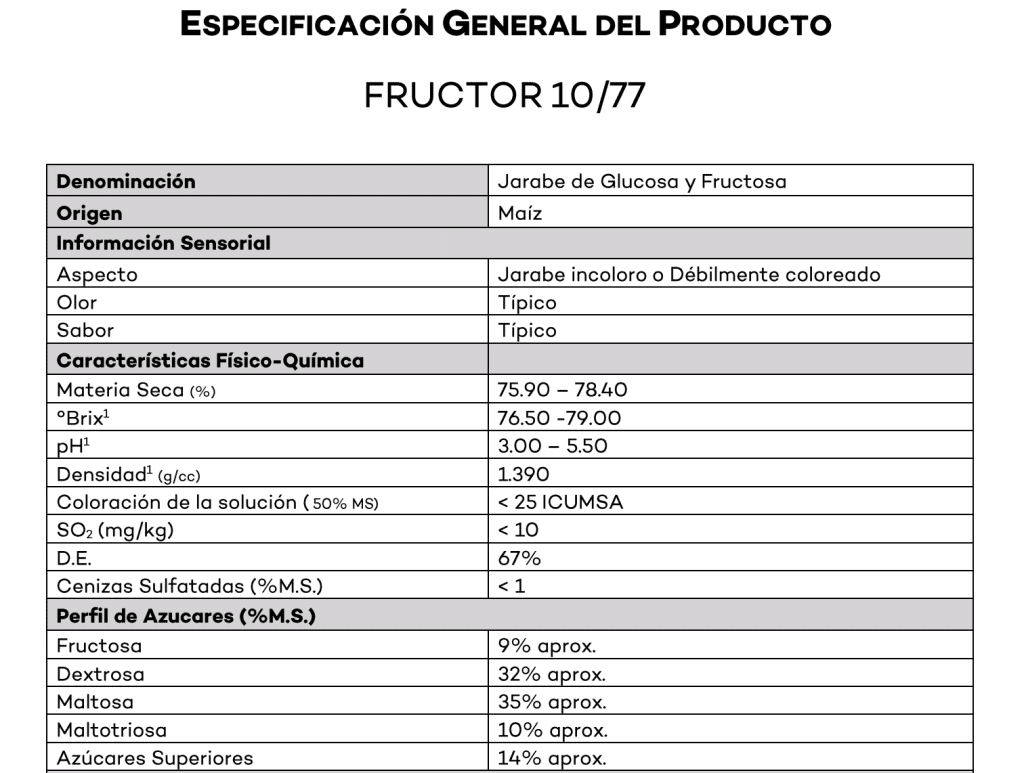
If the product will supplement honey stores, look for a high proportion of sugars the colony can use and check how the figure was calculated.
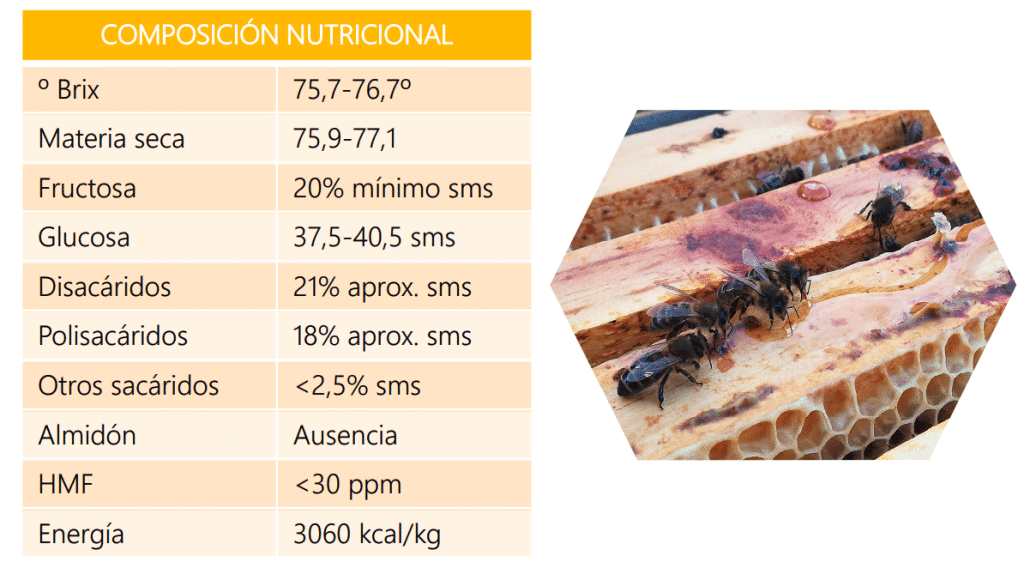
Check the basis for each percentage. It may refer to the whole product as supplied or to dry matter after excluding the water. A Spanish sheet may use “s.m.s.” for sobre materia seca.
For example, a syrup comprising equal masses of sucrose and water is 50% sucrose as supplied. If sucrose is its only solid ingredient, it is also 100% sucrose on a dry-matter basis. The descriptions refer to the same syrup.
Ask about the origin of the sugars (for example beet, cane or maize) and the manufacturing process where this information matters to your purchasing and traceability records.
Glucose is the same molecule regardless of its botanical origin. Feed ingredients and manufacturing histories can nevertheless differ in accompanying sugars and other constituents. Keep records so that a laboratory investigating a honey lot can interpret the evidence correctly. Keep feed-derived sugars out of the harvest.
HMF in bee feed
Hydroxymethylfurfural (HMF) can form when sugars are heated or stored, particularly in fructose-containing syrups. Chronic exposure can harm honey bees. Risk depends on concentration, consumption and duration of feeding.
The 2022 EFSA opinion assessed exposure per bee and derived reference points for different feeding periods. Its indicative feed concentrations included about 131 mg/kg for 50 days, 49 mg/kg for 90 days and 15 mg/kg for 180 days under the assumptions used. They are estimates for risk assessment. They do not establish a universal legally permitted concentration for all bee feeds.
A feed that bees consume over a short period and one that stays in the comb for months represent different exposures. For overwintering feed in particular, ask the manufacturer for an HMF specification or a recent batch result and follow the recommended storage conditions.
HMF also occurs in heated foods such as bread and coffee. Values from human foods are not a way to assess the suitability of a winter feed for bees.
Protein and amino acids
For a pollen substitute, check the protein percentage and, if available, the amino-acid profile and vitamin specification. The crude protein percentage alone cannot tell you whether essential amino acids are present in suitable proportions or how well the bees can use the ingredient.
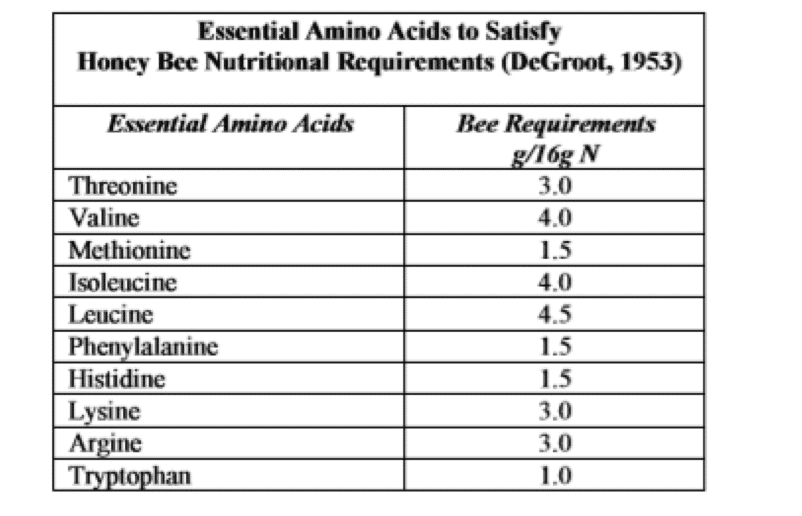
Proteins are made up of amino acids. Honey bees need to obtain ten essential amino acids from the diet. Pollen or the chosen supplement must therefore supply more than an undifferentiated quantity of “protein”.
De Groot’s work (1953) identified ten essential amino acids for honey bees and investigated their relative requirements under controlled conditions. The table summarises those laboratory reference values.
B-group vitamins and other micronutrients can also contribute to a balanced diet. Ask for the actual composition where a supplier makes a nutritional claim about its supplement.
Moisture content and intended use
Moisture affects texture, storage and how the colony takes the feed. A wetter syrup and a firm maintenance fondant are different products. Select a format appropriate to the season, the hive and the reason for feeding.
Some liquid feeds intended for build-up contain roughly 30–50% water. The choice depends on local weather, forage and brood conditions. A high moisture value alone is not a reason to stimulate a colony.
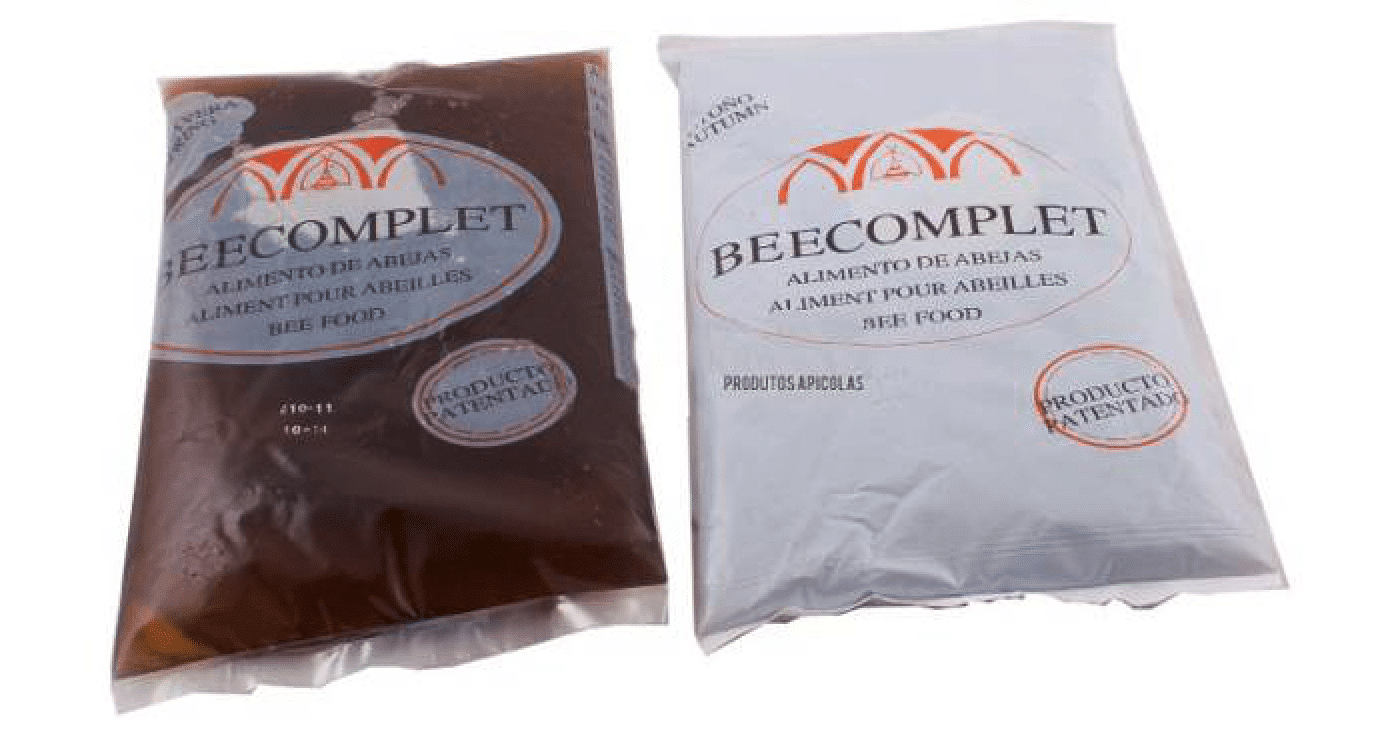
Feed also has a minimum storage life. Check the date before purchase and again before use, and follow the supplier’s directions after opening.
Choosing between two products
Read the label and technical sheet together. Compare figures on the same moisture basis, confirm the batch and intended use, and ask for any missing information. “The bees eat it readily” tells you about acceptance, but little about the nutrients they receive or whether the feed addresses the shortage.
Keep the sheet with your batch and feeding records so that the next purchase can be compared on the same basis.