

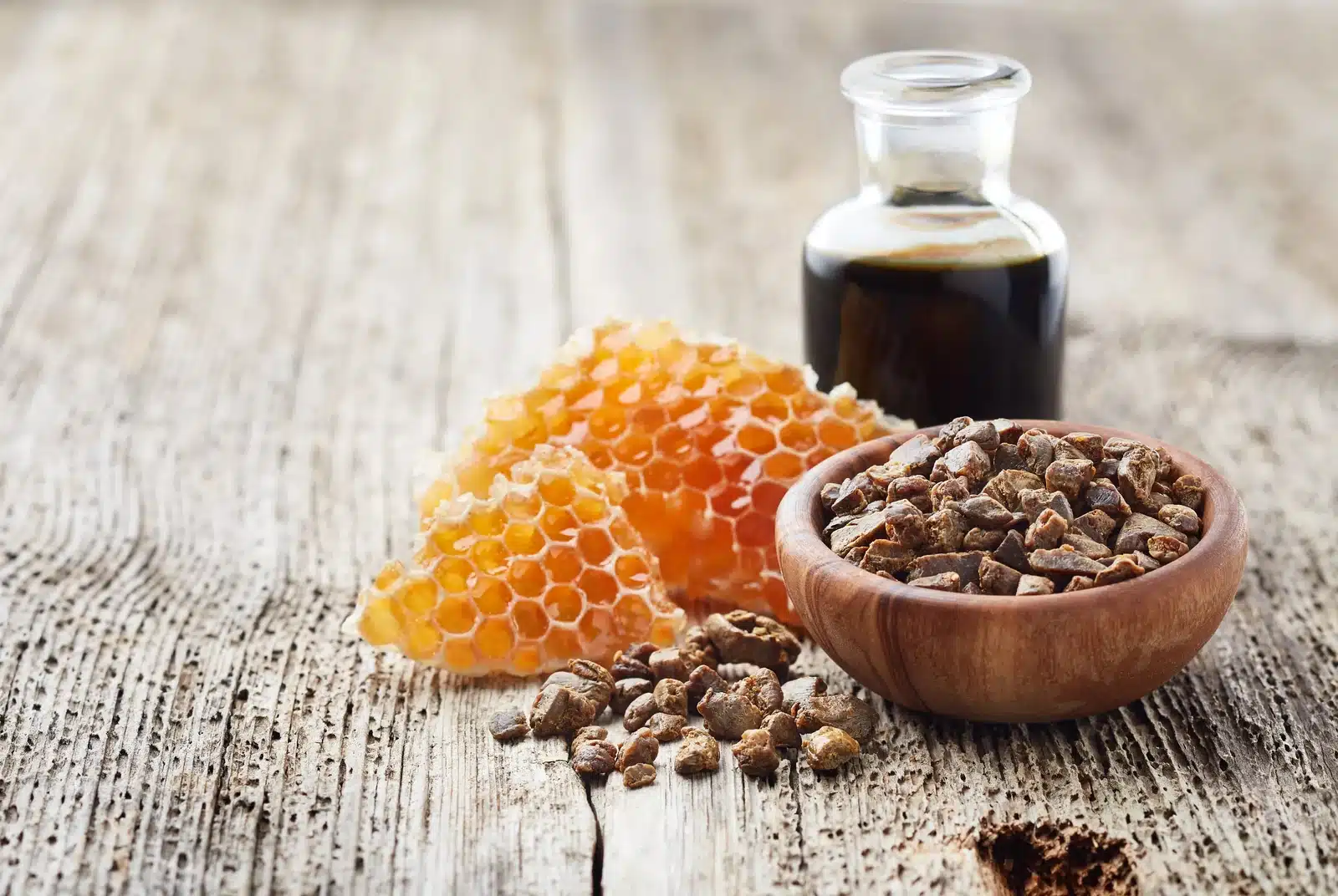
When formulating a cream with propolis or pollen, the ingredient you handle is usually an extract. It might be an alcohol tincture, an extract in glycerine or glycol, or a product designed for use in oils. Each behaves differently and brings its own preservation considerations.
Ready-made soaps with propolis or pollen


These finished soaps already contain propolis or pollen. Check the ingredient and fragrance lists, especially if you have a known sensitivity. Use cosmetic-grade extracts when developing your own formula.
Check the carrier before calculating the weight
- Keep the extract reference, ingredient list and supplier’s technical data sheet together.
- When comparing formulas, record the extract, its solvent and the total finished weight separately.
For propolis from your own hives, our guide to making a propolis tincture covers the initial preparation. Here we look at the next decision: which extract suits the cosmetic, how much to weigh and what to check when adding it.
Choosing an extract for the formula
FOUR TYPES OF EXTRACT
Start with the carrier
Hydroalcoholic
Alcohol and water
Check how the extract behaves when diluted and how much alcohol it contributes.
Glycol-based
A specific glycol, often with water
Identify the glycol and the preservation system.
Glycerine-based
Glycerine and water
Check how it is preserved, its recommended dose and its effect on texture.
For the oil phase
An oil-compatible carrier
Check the data sheet for composition, use level and compatibility.
The ingredient name alone is insufficient. The technical data for that extract tell you where it can be used and at what level.
| Extract type | Carrier | Possible uses | What to check |
|---|---|---|---|
| Hydroalcoholic tincture | Alcohol and water | Alcohol-based toners or small amounts in melt-and-pour soap | May turn cloudy in water. Include the alcohol in the formula and consider its drying effect. |
| Glycol extract | A specific glycol such as propylene glycol, butylene glycol or propanediol, often with water | Water phase of toners and creams | Identify the glycol and whether a preservative is present. |
| Glycerine extract | Glycerine and water | Water phase of toners and creams | Check how the extract is preserved. High concentrations can feel sticky. |
| Oil-compatible extract | Oil or another fat-compatible carrier | Balms, ointments or the oil phase of a cream | Verify the composition and extraction method. Infusing raw propolis in oil does not establish the extract’s composition. |
Match the extract to the phase it will enter. A water-and-alcohol tincture mixes poorly with a beeswax-and-oil balm, while an oil macerate will not dissolve in a water-based toner.
How the solvent and extraction method affect the result
Kubiliene and colleagues (2015) compared methods for extracting propolis. In three preparations, 10 g of propolis were made up to 100 ml with solvent and left for five hours at room temperature. The researchers measured total phenolic compounds in milligrams of gallic acid equivalents per millilitre (mg GAE/ml).
| Extraction at room temperature for five hours | Phenolic compounds |
|---|---|
| 70% alcohol | 12.7 mg GAE/ml |
| Water | 1.6 mg GAE/ml |
| Olive oil | 0.5 mg GAE/ml |
Under those conditions, alcohol extracted roughly eight times as much phenolic material as water and 25 times as much as olive oil. Neither the water extract nor the oil extract inhibited the microorganisms tested in the laboratory.
The team also examined alcohol-free preparations containing polyethylene glycol 400 and water, with or without olive oil. After 15 minutes at 70 °C, the two preparations yielded 10.7 and 9.5 mg GAE/ml respectively. Both showed activity in the laboratory tests.
Two details matter when comparing extracts.
- Identify the actual extract. Its solvent and processing method affect the result. The words “alcohol-free” or “tincture” alone tell you little about concentration.
- Colour cannot tell you the concentration. A very dark tincture may contain less of a measured compound than a paler one. Only analysis can settle the question.
These values describe the phenolic content of the extract. They do not measure the effect of a cosmetic on skin.
What to ask the supplier
The technical data for a well-documented cosmetic extract should identify the following.
- The INCI name of each component, including the solvent.
- What any percentage describes: the extraction ratio, dry extract or measured amount of a particular compound.
- The preservative, if present, and the recommended use level for the extract.
- The microbiological specifications and batch number.
For a homemade tincture, record at least the raw-material ratio, solvent, alcohol strength and date. Extracts sold under the same name may differ considerably. A comparison based on price per millilitre alone misses those differences.
How to calculate the amount
Weigh the whole extract, including its solvent, as part of the formula’s 100%.
For 50 g of cream containing 3% extract, weigh 1.5 g extract and 48.5 g of the other ingredients. Adding 1.5 g to 50 g of finished cream instead gives a 51.5 g batch with a different percentage.
The 3% refers to the entire supplied ingredient. Some of those 1.5 g may be water, glycerine or alcohol. A cream containing 3% extract does not therefore contain 3% pure pollen or propolis.
Avoid adding extract to a cream you have bought. This dilutes the preservative, can alter pH and may destabilise the emulsion. The manufacturer assessed the cream as supplied.
From percentage to weighing scales
This example uses a formula calling for 3% extract. The appropriate dose depends on the particular extract.
How much extract goes into 50 g of finished product?
1.5 g extract + 48.5 g other ingredients = 50 g
Weigh the extract with its solvent. That weight is different from 1.5 g of pure pollen or propolis.
What if I add 1.5 g to a jar that already contains 50 g?
The jar then holds 51.5 g. The extract makes up approximately 2.91% of the total, and the original formulation has changed. Use this calculation when designing a formula from scratch.
In a toner
A toner is mostly water. When propolis tincture is added, resins that had dissolved in alcohol may separate, producing a milky cloud or sediment. Shaking can redistribute the deposit, but application will be uneven if it settles again. For an even toner, choose an extract intended for the water phase and check its compatibility at the intended dose. Changing the amount of tincture or alcohol alters solubility and requires a fresh assessment of the formula.
Alcohol also affects preservation. ISO 29621 includes an alcohol content above 20% among the factors that may support a low-risk assessment, provided the packaging prevents evaporation (DGK, 2025). In a toner made up to 125 ml, 25 ml of 90% alcohol contributes 22.5 ml of pure alcohol, or 18% by volume. Include any alcohol in the tincture as well. This calculation alone does not establish microbiological safety.
High-alcohol toners can dry the skin. For people with acne, the American Academy of Dermatology recommends gentle, alcohol-free products and advises avoiding toners and astringents that may irritate the skin. Propolis toner is not an acne treatment.
A low-alcohol toner needs a preservation system shown to work in that formula. Start from a documented formula or choose a finished product.
In a cream or balm
In a cream, water-phase extracts are often added during cooling, at the temperature given by the supplier. Weigh the extract and deduct that amount from the water in the formula.
For a water-free beeswax ointment, choose an extract intended for the oil phase. A tincture is a poor match. An extract containing water also changes the preservation requirements of a balm that was previously water-free.
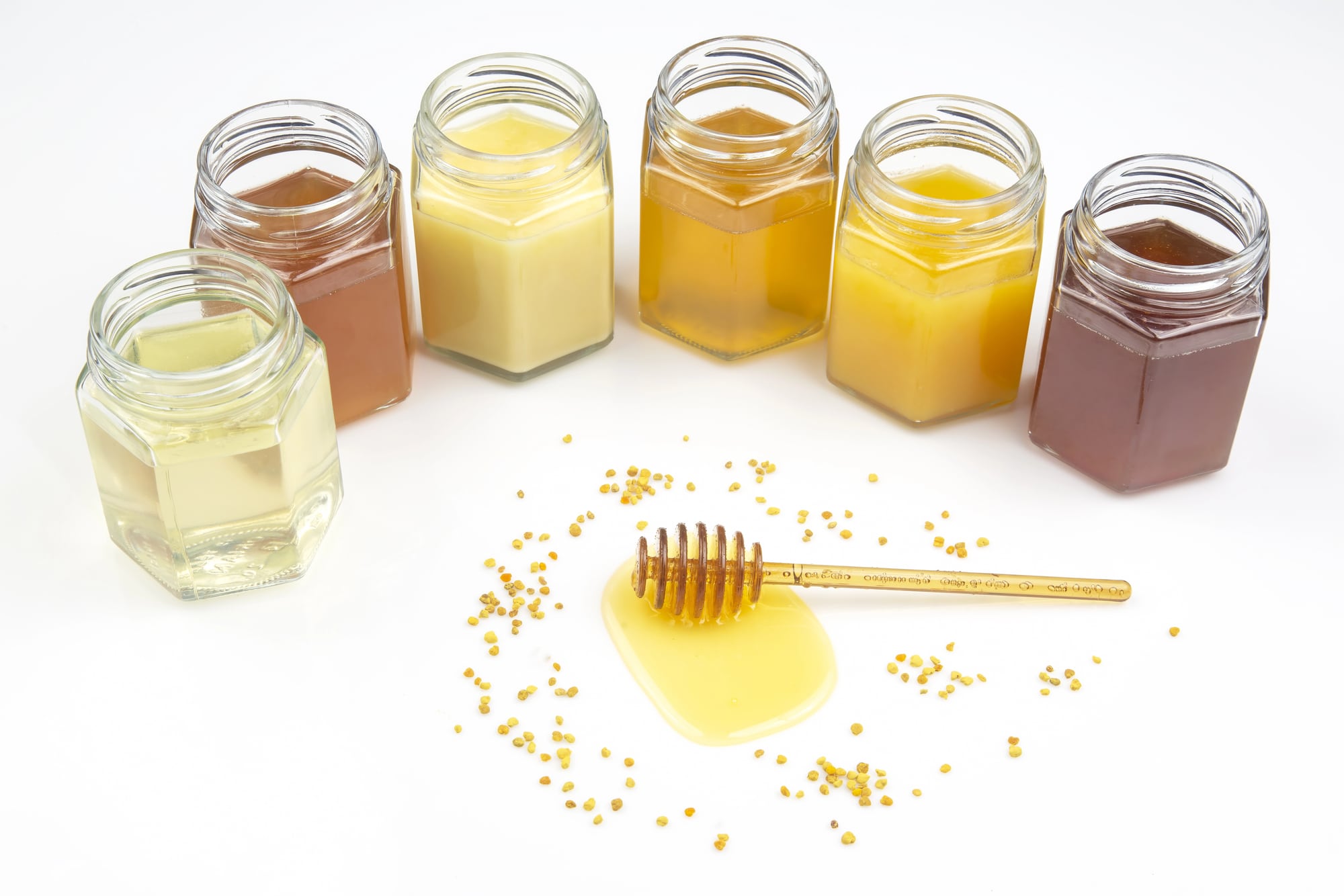
Pollen in glycerine: why a common recipe lacks a demonstrated shelf life
One widely circulated recipe uses 10 g of pollen in 50 ml of liquid containing one part glycerine and two parts water. Some versions suggest leaving it at room temperature for 24–48 hours, filtering it into an amber bottle and adding 0.5% of an unnamed preservative, then claim it will keep for more than three months. That shelf life has not been demonstrated.
Three points explain the uncertainty.
Water is still available. Water activity, measured from 0 to 1, describes how available water is to microorganisms. Nakagawa and Oyama (2019) measured about 0.89 in a water–glycerine mixture with roughly one-third glycerine. Most bacteria stop multiplying below about 0.91, but many yeasts and moulds tolerate much lower values. A reference for low-risk cosmetics is 0.75 (DGK, 2025). The measurements apply to the model mixture. The pollen extract also contains material released by the pollen and would need its own measurement.
Pollen is not sterile. Its microbial load varies in the field. De-Melo and colleagues (2015) reported aerobic bacterial counts from under 10 to 11,000 per gram and yeast and mould counts as high as 7,700 per gram in 45 samples of dried Brazilian bee pollen. These values illustrate the variation and cannot predict the count in your pollen.
Straining is not sterilisation. A household filter removes visible particles and amber glass helps protect against light. Neither proves that the extract is microbiologically safe. An unnamed preservative at 0.5% leaves its effective level, working pH and incompatibilities unknown.
To use homemade pollen extract in a cosmetic, you need to know the final composition, specify a preservation system and have its performance assessed in a laboratory. A cosmetic-grade extract with a technical data sheet is the simpler option.
What does “20% extract” mean?
The glycerine recipe is sometimes called a “20% pollen extract”. That description can refer to several different quantities.
- 20 g pollen per 100 ml of solvent. This is the starting material per volume of solvent, equivalent to 10 g per 50 ml.
- A ratio of 1 g to 5 ml. This is the same starting ratio with the units made explicit.
- 16.7% by weight of the initial mixture. This would apply to 10 g pollen plus 50 g solvent, or 10 g out of 60 g in total. It is a different calculation because 50 ml solvent does not necessarily weigh 50 g.
None of these numbers tells you how much pollen material has actually passed into the liquid. Some stays in the filter. The extract’s composition requires analysis.
Converting millilitres to grams requires the density of the mixture at the working temperature. If formulating by weight, weigh the solvent directly.
Propolis and contact allergy
DermNet reports positive propolis patch tests in 1.2–6.6% of patients in European patch-test series. These are patients referred for testing. Contact allergy can appear hours or days after exposure, so a brief test on the forearm cannot rule it out. Avoid propolis in any form if you have a known allergy to it.
Propolis can stain clothing, especially white fabrics. A homemade propolis preparation is unsuitable for treating wounds.
Our shop carries a ready-made honey and propolis soap and other products in the cosmetics section.
IN OUR SHOP
Ready-made soaps with pollen or propolis
The product pages give each soap’s ingredients and directions for use.


