If dark pellets appear in a harvest, keep the lot identifiable while you assess it. Some forage plants contribute pyrrolizidine alkaloids (PAs). Commission Regulation (EU) 2023/915 sets a maximum of 500 µg/kg for pollen-based food supplements, pollen and pollen products. Colour can help flag a lot. Laboratory analysis measures the concentration. Honey is a separate category.
Honey and bee pollen are assessed differently
| Honey | Bee pollen | |
|---|---|---|
| PA content | Spanish study of 103 honeys: 1–237 µg/kg in samples with detectable PAs, with a reported mean of 48 µg/kg | Concentrations vary. Pellet colour cannot quantify them. |
| Is there a specific EU maximum? | Regulation (EU) 2023/915 sets no specific PA maximum for honey. | 500 µg/kg for pollen-based food supplements, pollen and pollen products. |
| How is risk assessed? | EFSA assessed acute risk from honey as low. Chronic risk depends on dietary exposure. | Use the applicable maximum and the operator’s risk-based controls. |
| Practical action | Assess origin and supplier history as part of the food business’s controls. | Hold suspect lots separately and arrange representative testing where needed. |
A field reference for identifying forage plants

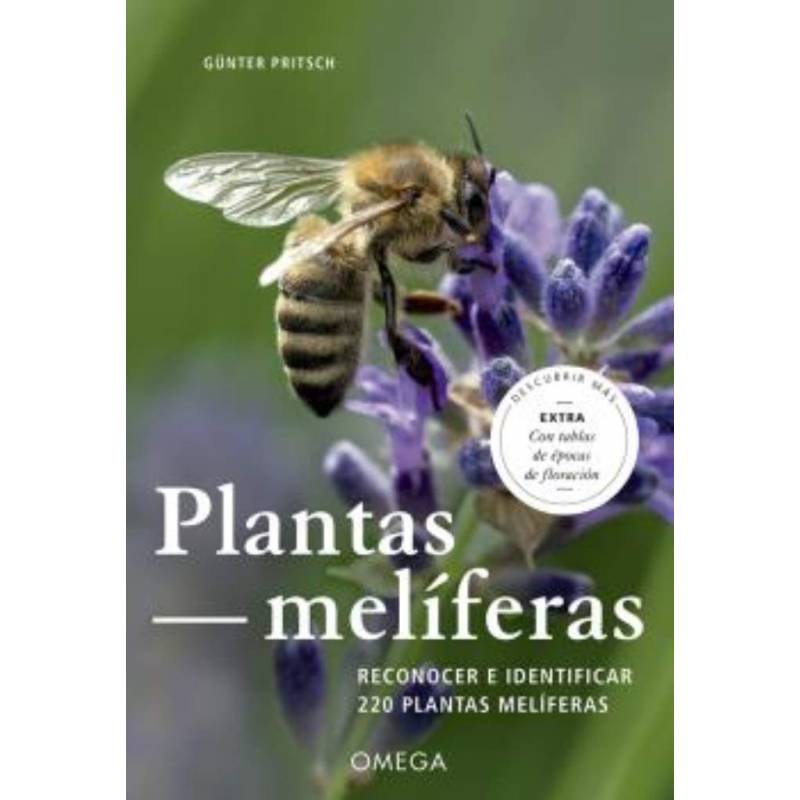
This Spanish-language botanical reference helps compare plant observations in the field. Use identifiers and harvest records to accompany laboratory checks of a pollen lot.
Keep the origin with the lot
- Record the apiary, harvest date, supplier and lot number.
- Keep any analytical result and decision to release or hold the lot with those records.
In this guide
- Why these compounds occur in bee products
- What honey analyses show
- Which limit applies to bee pollen
- Practical controls for a pollen harvest
Why can these compounds occur in bee products?
Plants have many defences against herbivores. Some produce compounds that can enter the food chain through nectar or pollen. Their significance depends on the substance and the exposure.
Pyrrolizidine alkaloids are one such group. Some are of concern because long-term dietary exposure can affect the liver and increase cancer risk. Food safety assessments therefore consider exposure over time as well as short-term exposure.
Several plant families relevant to European forage contain PA-producing species, including members of the borage and daisy families. In Spanish honey and bee pollen, Echium species are among the botanical sources considered in risk assessment.
EU food surveillance first drew considerable attention to certain herbal infusions. Honey and pollen also came under review as potential sources of dietary exposure.
In 2008 German honey laboratories raised the issue with major buyers, and some buyers began requesting PA analyses for particular lots. A customer specification and a statutory food-category maximum are different requirements.
What do the data show for honey?
At first the sector had little Spanish evidence on which to base an assessment.
The Spanish honey trade association ASEMIEL commissioned work on Spanish honeys involving APINEVADA and Pajuelo Consultores. The main findings concerned the range of concentrations and the limits of pollen-based predictions.
- <em>Echium</em> can contribute to honey crops in central and south-western Iberia. Some honey samples contain a high proportion of its pollen.
- Spanish flora includes numerous Echium species. Two relevant to the honey study were E. plantagineum and E. vulgare.
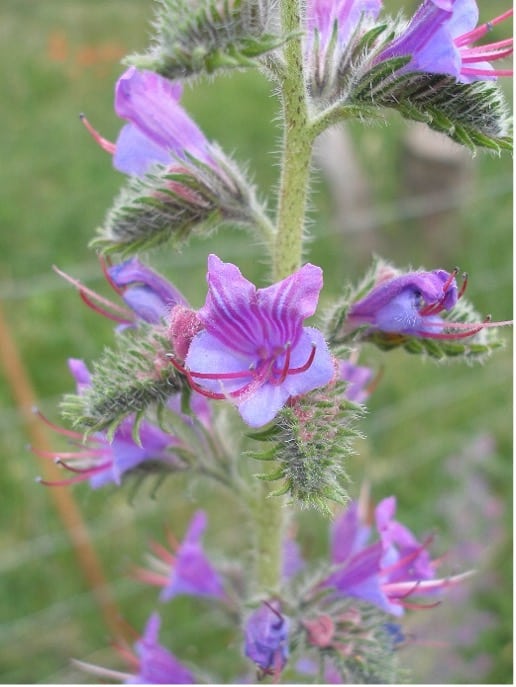
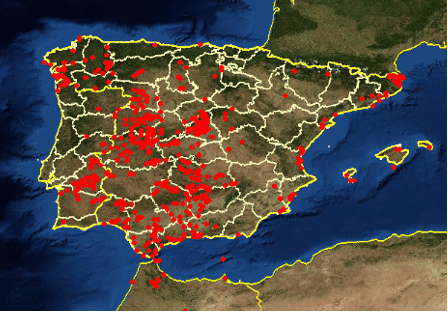
- In the study of 103 honeys, PAs were detected in 94.2% of samples. The reported range was 1–237 µg/kg and the mean was 48 µg/kg. There was no direct relationship between the proportion of Echium pollen and the measured PA concentration.
- EFSA’s 2017 assessment found a low acute risk from honey. Its chronic-exposure assessment used margins of exposure and identified possible concern in some scenarios, including younger high consumers. “Low acute risk” is not a blanket conclusion about long-term exposure.
Regulation (EU) 2023/915 has no PA maximum specific to honey. A food business still needs to assess relevant hazards and its own supply chain.
Some buyers continue to request analytical results for honey. Clarify the agreed specification, the identity of the sample and the laboratory method when supplying a result.
What about PAs in bee pollen?
Bee pollen needs its own assessment. Results for honey cannot simply be transferred to a pollen lot from the same place.
Commission Regulation (EU) 2023/915 lists maximum levels of contaminants for specified food categories, including pollen.
Annex I, point 2.4.11 sets 500 µg/kg for pollen-based food supplements, pollen and pollen products. The provision specifies the product category and, for supplements, applies to the product as placed on the market. Consult the current consolidated text.
The food business must be able to demonstrate compliance. The maximum itself does not set one universal testing frequency for all operators. Base the sampling plan on the supplier, botanical and geographical origin, season, previous results and variation within the lot. A visual check can flag material for investigation. A representative analysis provides the concentration.
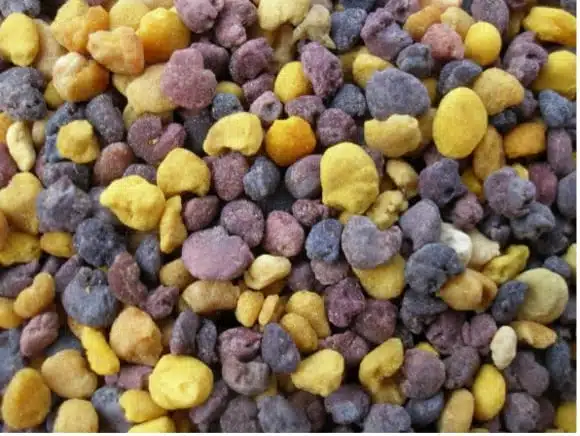
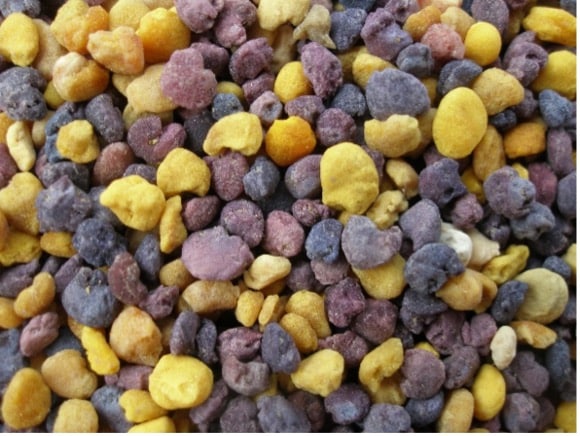
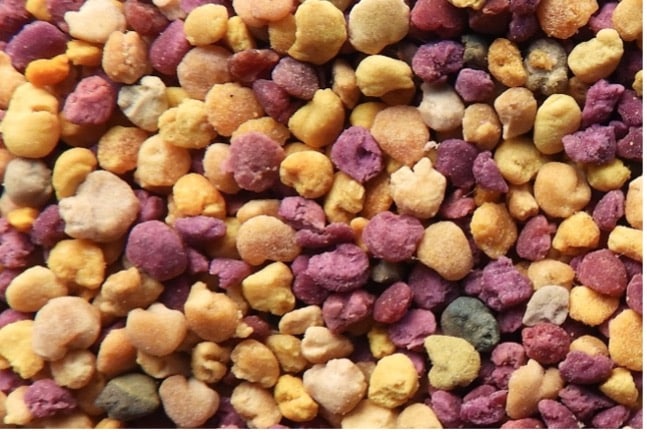
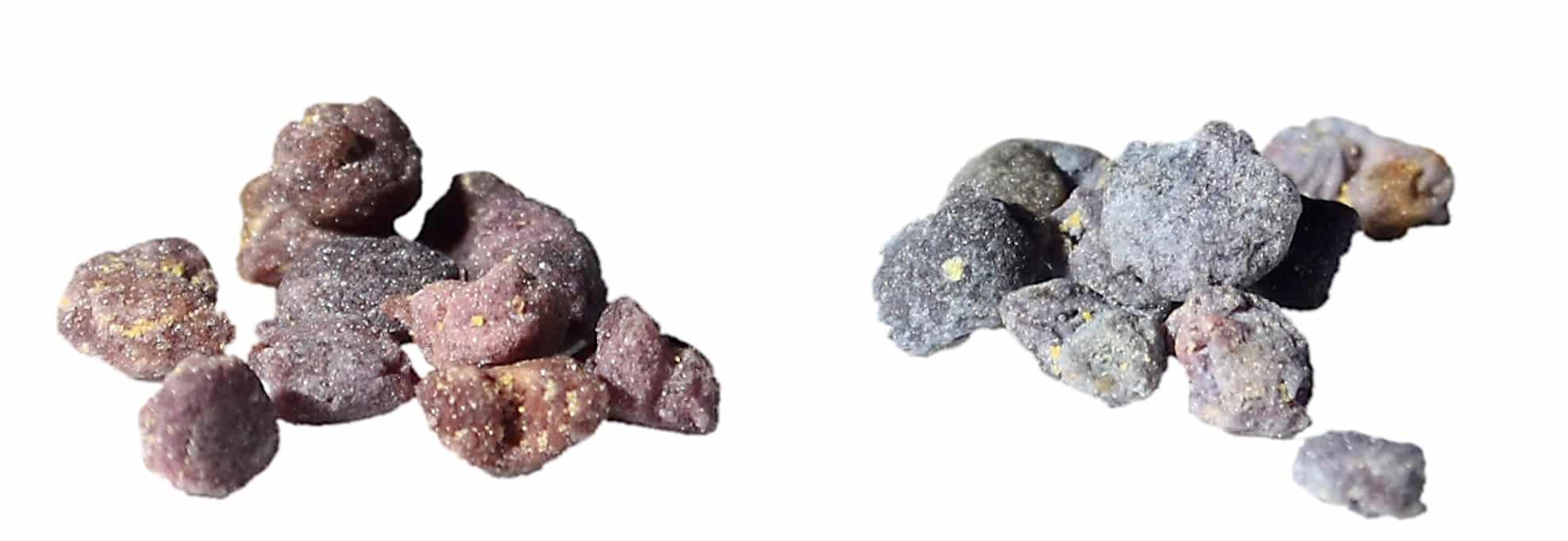
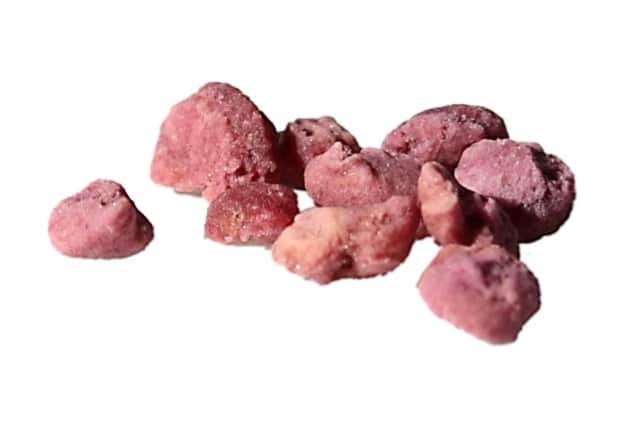
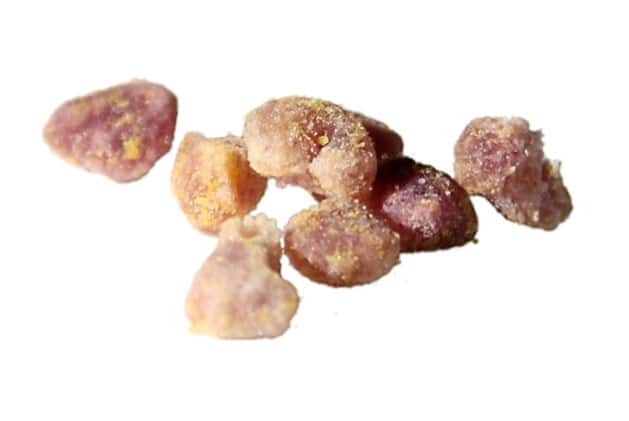
The dark blue-purple pellets shown in the photographs are one reason to examine a crop more closely. Other forage plants, including rampion and thistles, can produce similar colours. Sight alone cannot establish botanical origin or PA content.
Practical controls for beekeepers and packers
Local analytical data linked to the harvest date, site, weather and botanical origin can improve decisions about which batches to test. Keep those records with each lot.
Some packers include optical sorting in their cleaning process. Its role is visual quality screening. It neither measures PAs nor proves that the finished batch complies.
If a harvest raises a concern, identify and hold it separately pending assessment. A lot exceeding the legal maximum must not be blended with compliant food to reduce its measured concentration.
Frequently asked questions
What does a dark pollen pellet in the trap tell me?
It is a reason to look more closely at the harvest. Several plants can produce dark colours. Record the lot and assess its origin, history and need for representative analysis.
What is the EU maximum for PAs in bee pollen?
500 µg/kg for pollen-based food supplements, pollen and pollen products under Annex I, point 2.4.11 of Regulation (EU) 2023/915.
Is there an EU PA maximum specifically for honey?
The regulation does not set a specific PA maximum for honey. EFSA has assessed dietary risk separately, including long-term exposure.
Can I identify bugloss pollen by colour alone?
Dark blue-purple pellets can be consistent with bugloss, but rampion and thistles can give similar colours. Visual appearance cannot identify every botanical source or measure PA concentration.
Does more bugloss pollen mean a higher PA concentration?
The Spanish study of 103 honeys found no direct relationship between the proportion of Echium pollen and the chemical result. Analysis is needed to quantify PAs.
Does every pollen lot have to be tested?
The regulation sets a maximum. A food business must justify its controls and sampling in light of risk, source, history and variation in the product. A colour check on its own does not demonstrate compliance.
Further reading
- Bee bread and how pollen is stored in the colony.
- Honey pollen analysis and its use in identifying botanical origin.
- Feeding honey and pollen to bees and the risks of an unknown source.
- Bee forage plants (in Spanish) and their role in the apiary.
Before marketing a new harvest, check the current food-category maximum and the sampling and testing obligations applicable to your business.


