
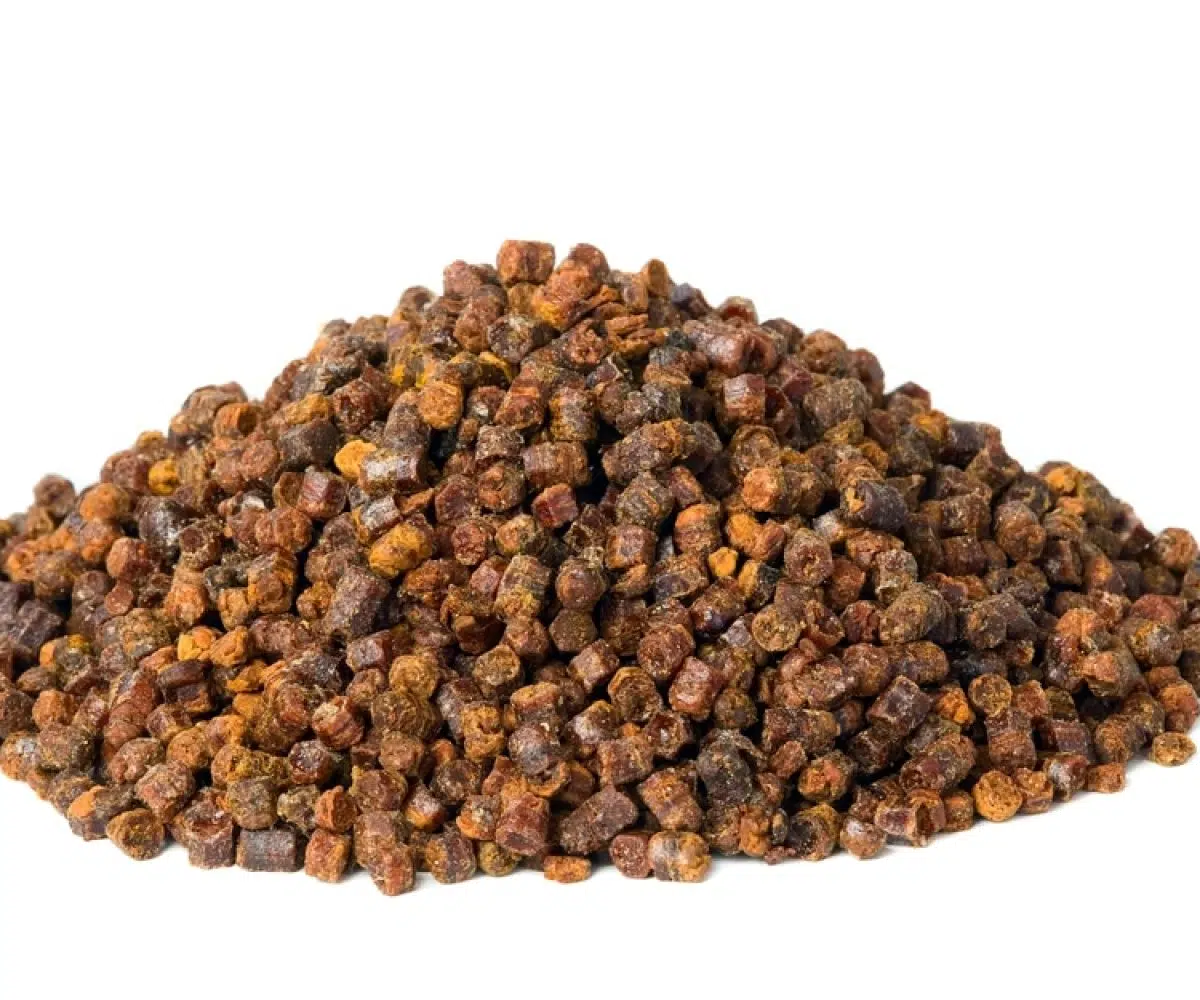
Bee bread is pollen that bees pack into comb cells, cover with honey and allow to ferment; lactic fermentation makes it more digestible and helps preserve it. It differs from the collected pollen pellets sold as a supplement. As the source puts it, bees eat pollen in the form of bee bread. For beekeepers, it can provide an additional harvest from combs that have already passed through the honey extractor.
Bee bread and collected pollen compared
| Collected pollen | Bee bread | |
|---|---|---|
| What it is | Pollen pellets removed at the hive entrance with a pollen trap | The same pollen, already compacted, mixed with honey and fermented |
| Processed by the bee | No | Yes, lactic fermentation in the cell |
| Where it is collected | At the hive entrance, using a pollen trap | From the comb, using a dedicated extractor |
| Digestibility | Lower: the pollen-grain wall is difficult to break down | Higher: fermentation partially degrades it |
| Storage | Requires drying and cool storage | Acidity protects it; nevertheless, it is dried |
In this guide
- exactly what it is and how bees make it;
- how it differs from pollen;
- how it is harvested, step by step;
- what can be said about its properties and what cannot;
- the market and the prices cited by the source.
Bees mainly collect two raw materials that are fundamental to their diet: nectar and pollen. They transform nectar into honey through a physicochemical process involving enzymes. They collect pollen to make the lactic-fermented food known as bee bread.
Honey provides most of the colony’s carbohydrate, while bee bread is its principal protein source. The source summarises this by saying that bees consume pollen as bee bread.
What is it?
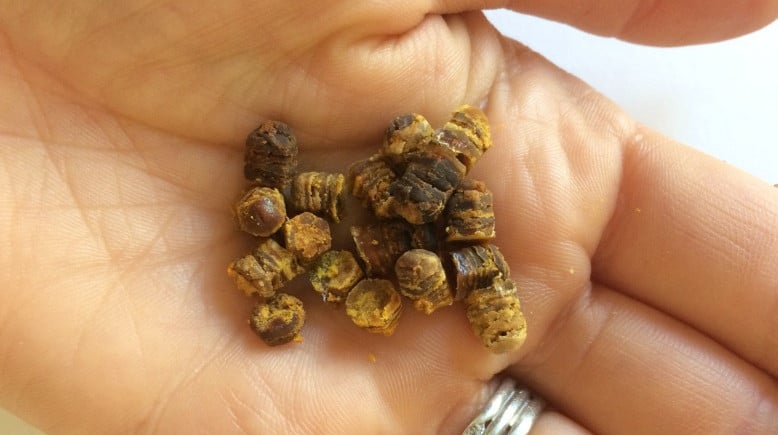
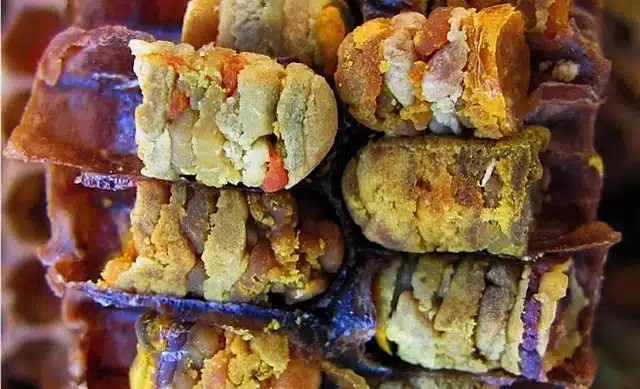
It is a mixture of pollen, honey and enzymes from bee saliva. Bees place it in cells near the brood and compact it with their heads to expel air, creating conditions for lactic fermentation.
Bees return carrying pollen, which they deposit and pack into cells. They add a thin layer of honey, then another layer of pollen, gradually filling the cells. Once a cell contains the layered pollen and honey, the mixture undergoes lactic fermentation over several days. This produces biochemical changes, including increased soluble proteins and free amino acids. Lactic-acid production lowers the pH and helps preserve the bee bread.
Within the colony, bee bread feeds young adult bees and brood and contributes to the production of royal jelly.
How does it differ from pollen?
The collected pollen sold as a dietary supplement is not the same as bee bread and does not have the same flavour. The term ‘bee pollen’ can be imprecise; ‘flower pollen’ describes its origin more directly because bees collect it and use it as the raw material for bee bread.
Pollen has considerable potential as a protein source, but its natural grain wall limits digestibility. Bees therefore transform it before using it as food.
Bee bread is not only food for bees; it is also eaten by people. The source describes bee bread as a more complete food because it is more digestible and combines honey and pollen. Any claimed benefits from the interaction between those ingredients still require appropriate evidence.

How is it harvested and processed?
Bee bread is stored in the comb and can be separated in several ways. Purpose-built machinery is available for this work.
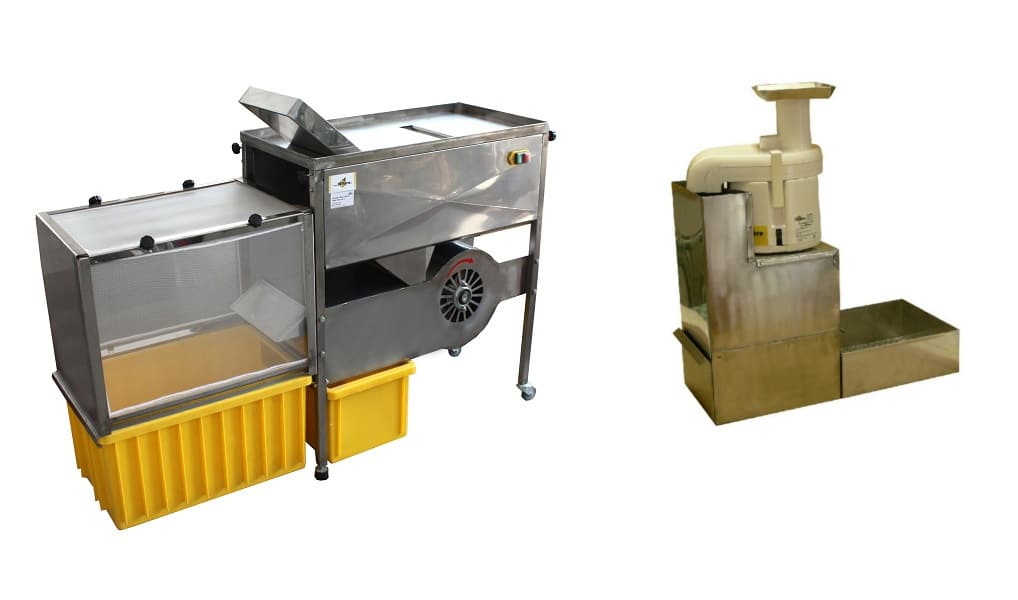
The process is straightforward and makes use of combs that still contain bee bread after honey extraction. Bee bread is therefore an additional harvest rather than a crop requiring dedicated production.
- Select frames containing bee bread but no honey. If honey is present, first pass the frame through the honey extractor.
- Cut the comb away from the wires in strips 85 mm wide.
- Place the strips in a freezer at −18 °C for 12 hours; putting them in during the afternoon should leave them ready the following morning.
- Once frozen, feed the strips into the bee bread separator. The source describes two machines: the professional PROFI and the small-scale MINI. The PROFI separates the material by sieving it in an airflow; the MINI crushes the wax, after which the material is sieved by hand. Wax and bee bread collect in separate compartments.
- After separation, dry the bee bread like pollen for 2–3 days below 42 °C, using a pollen dryer. The source cites entry-level dryers from €99; that price requires a live check.
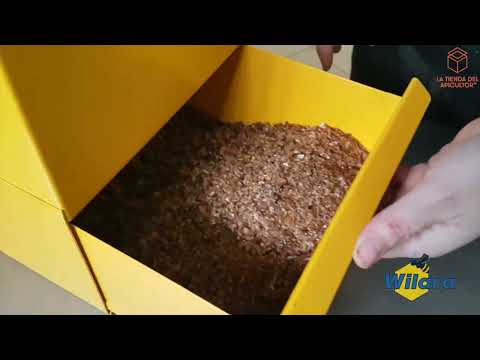
Properties and benefits for human consumption
Bee bread is primarily a more digestible protein source than raw pollen. Lactic fermentation partially breaks down the pollen-grain wall — a sporopollenin layer that the human digestive system barely penetrates — increases free amino acids and soluble proteins, and acidifies the product, which also helps preserve it.
Those compositional differences are supportable. Long lists of ailments that bee bread supposedly treats circulate online, but they should be treated with caution. Bee bread is a food, not a medicine. The source states that the European Union has authorised no health claim for pollen or bee bread, so therapeutic claims are not permitted in labelling or advertising.
This matters if you sell it. The Regulation (EC) 1924/2006 permits only nutrition and health claims authorised in the Union register. You may describe the product, its composition and how it is made, but must not claim that it prevents, treats or cures disease.
Nutritional information
| Component | Pollen (BP) | Bee bread (BB) |
|---|---|---|
| Carbohydrates % | 13–55 | 24–35 |
| Proteins % | 10–40 | 14–23 |
| Lipids % | 1–13 | 2–14 |
| Dietary fibre % | 14–31 | 3–20 |
| Vitamins % | 0.02–0.7 | 0.4–3 |
| Amino acids % | 3.2 | no data |
| Organic acids % | 1 | 0.4 |
| Flavonoids % | 0.2–3.2 | no data |
| Lactic acid % | 0.6 | 3 |
| Free acidity (mEq/kg) | 105–146 | 400 |
| pH | 4–6.3 | 3.8–4.2 |
Also contains:
Vitamins: A, B1, B2, B3, B6, B12, C, PP, E, D, K, H
Minerals: P, S, Cl, K, Ca, Na, Mg, Fe, Cu, Zn, Co, Mo, Se, Cr, Ni, Si
Amino acids: phenylalanine, leucine, valine, isoleucine, arginine, histidine, lysine, methionine, threonine and tryptophan
The market
The source describes supply of bee bread as limited but growing, with potential interest for organic producers. This is a time-sensitive market assessment and should be checked before publication.
The source identifies Germany and the United Kingdom as the most mature markets and cites retail prices of €80–€90/kg. It suggests that this may interest beekeepers because harvesting requires limited additional work, provided buyers are secured. Both the market comparison and the price range require a current check.
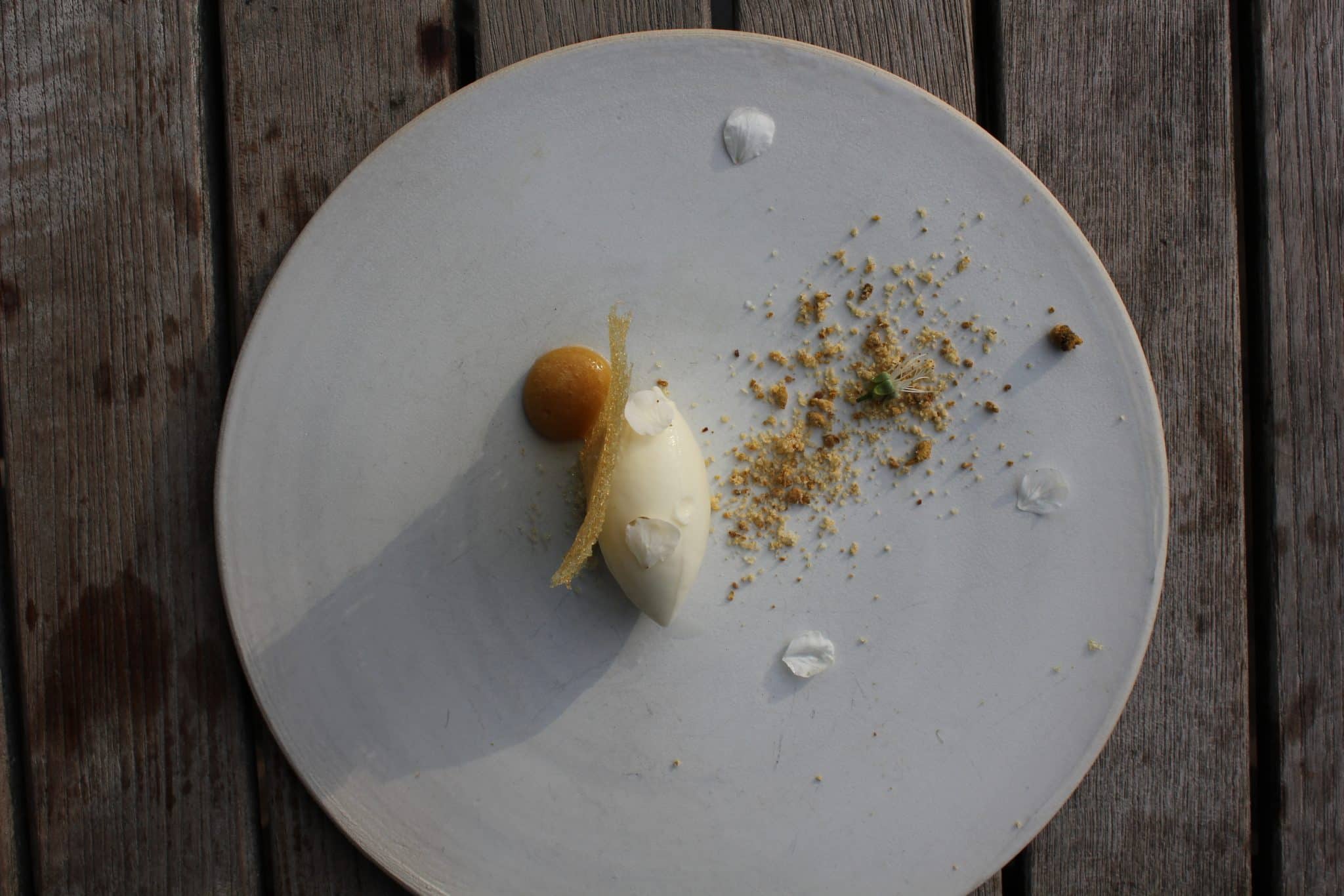
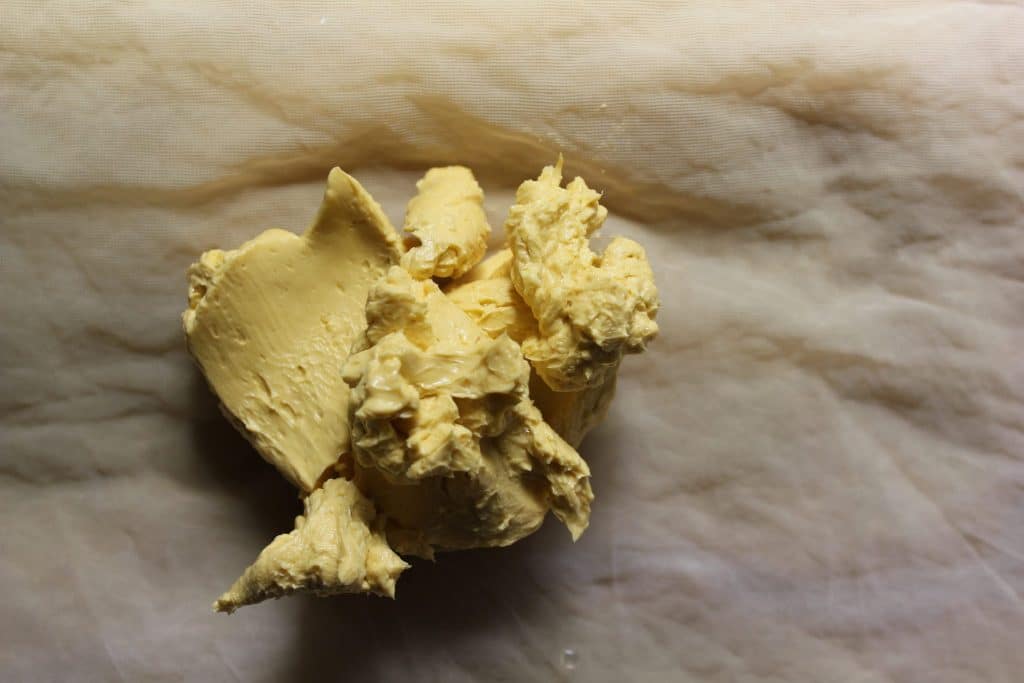
Finally, this dish shows how bee bread can be used in a composed dessert: ice cream made with beeswax, served with honey kombucha sauce and bee bread. The other image shows bee bread butter.
Frequently asked questions about bee bread
What is bee bread?
Bee bread is pollen that bees pack into comb cells, cover with a layer of honey and allow to ferment. Lactic fermentation changes its composition, increasing free amino acids and soluble proteins and acidifying the product, which helps preserve it.
Is bee bread the same as pollen?
No. Collected pollen pellets are removed at the hive entrance with a pollen trap. Bee bread is pollen that the bees have packed and fermented inside the comb. The flavour and composition differ.
How is bee bread harvested?
Select combs containing bee bread but no honey, cut them into strips about 85 mm wide, freeze them at −18 °C for about 12 hours, then pass them through a purpose-built separator that removes the wax. Dry the bee bread for 2–3 days at a temperature below 42 °C.
Why must the combs be frozen before extraction?
At low temperature, wax becomes brittle and separates cleanly from the compact bee bread. When warm, the two materials clump together and mechanical separation becomes impractical.
Does bee bread have medicinal properties?
No health claim is authorised in the European Union for pollen or bee bread. The source describes it as a protein-rich food that is more digestible than raw pollen, but it must not be presented as preventing or treating disease.
Is it worthwhile to produce bee bread?
It can make use of combs that have already been through the honey extractor, so it is an additional harvest rather than a dedicated crop. The main limitation is commercial: the source describes the market as small, so a buyer should be found before production begins.
Continue reading
- Why avoid dark pollen? (in Spanish) A guide to the quality of collected pollen.
- Protein feeding for bees, for periods when pollen is scarce.
- Melissopalynological analysis of honey (in Spanish), what pollen reveals about its origin.
Informational content. The cited market prices are indicative and vary by country, channel and season. Before selling bee bread, check the current labelling rules and the requirements governing nutrition and health claims.

ISNI 0000 0005 1801 1100 | Joshua Ivars is the manager of LA TIENDA DEL APICULTOR and the author of this blog, where he shares technical and practical guidance for beekeepers. Drawing on extensive experience in the beekeeping sector, he offers advice and solutions based on beekeepers’ real needs, sharing his knowledge of equipment and essential beekeeping practices.


