
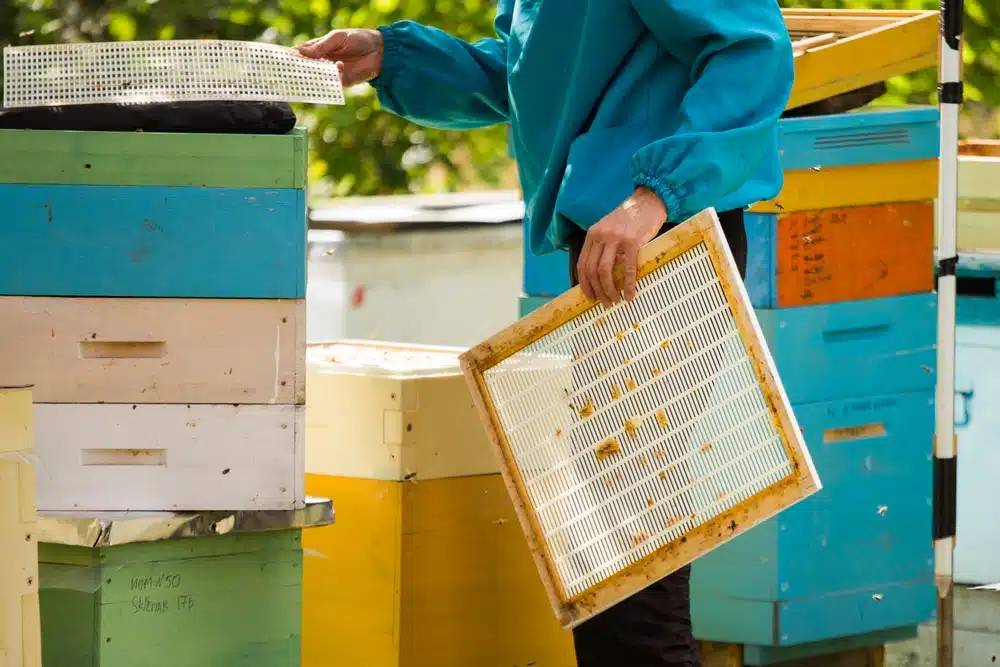
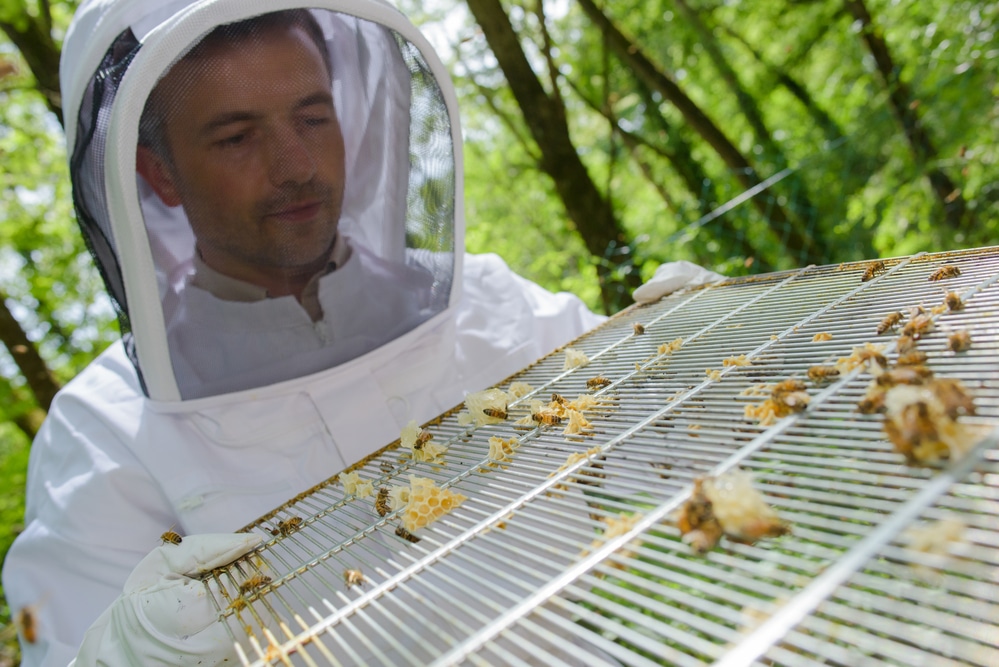
Queen excluders are specialised beekeeping equipment, made from metal or plastic, with openings designed to let worker bees pass while excluding the larger queen and drones. The separation depends on body width, particularly the thorax—not simply the queen’s longer abdomen. Correct dimensions, condition and placement matter; a damaged excluder may not do its job.
Usually placed between the brood boxes and honey supers, an excluder keeps the queen below so that she does not lay in the supers. Keeping honey combs free of brood simplifies harvesting and comb management; it is not, by itself, a guarantee against honey contamination or residues. Whether to use one depends on the beekeeper’s aims, equipment and management system.
Queen excluders also have specialised uses, including:
- Some methods of making nucleus colonies or splits without first locating the queen.
- Queen-rearing systems, including queenright cell finishers used with grafting methods such as Doolittle’s.
- Managing queen access in certain royal-jelly production systems.
The original article expresses a preference for managing honey-producing colonies without an excluder, while recognising its value in some production systems. The discussion below adapts professional beekeeper Hugo Negrioli’s viewpoint for an English-speaking audience, distinguishing management preferences from general biological claims. An excluder can be a useful tool in both small and commercial apiaries; it is not inherently necessary or unsuitable at either scale.
The aim is to weigh the benefits and limitations fairly. Compare colony development, brood space, swarm pressure and the practicalities of harvesting under your own conditions. A method that works well with drawn comb, one hive format and a particular nectar flow may need adjustment elsewhere. Workers can be reluctant to enter a super of foundation above an excluder; available drawn comb can help them occupy it.
To use one or not? A perspective from Hugo Negrioli
A queen excluder limits where the queen can lay, but it does not automatically reduce egg laying or colony population. The important question is whether the space available below it meets the colony’s needs. Confining a vigorous colony to too little brood space can restrict development; placing an excluder above two brood boxes is also an option in suitable hive systems.
Incoming nectar and pollen can occupy cells that would otherwise be available for laying, especially during rapid spring development. If the brood nest is already congested, restricting it further may make matters worse. Assess usable comb and the actual brood pattern, not just the number of boxes on the hive.
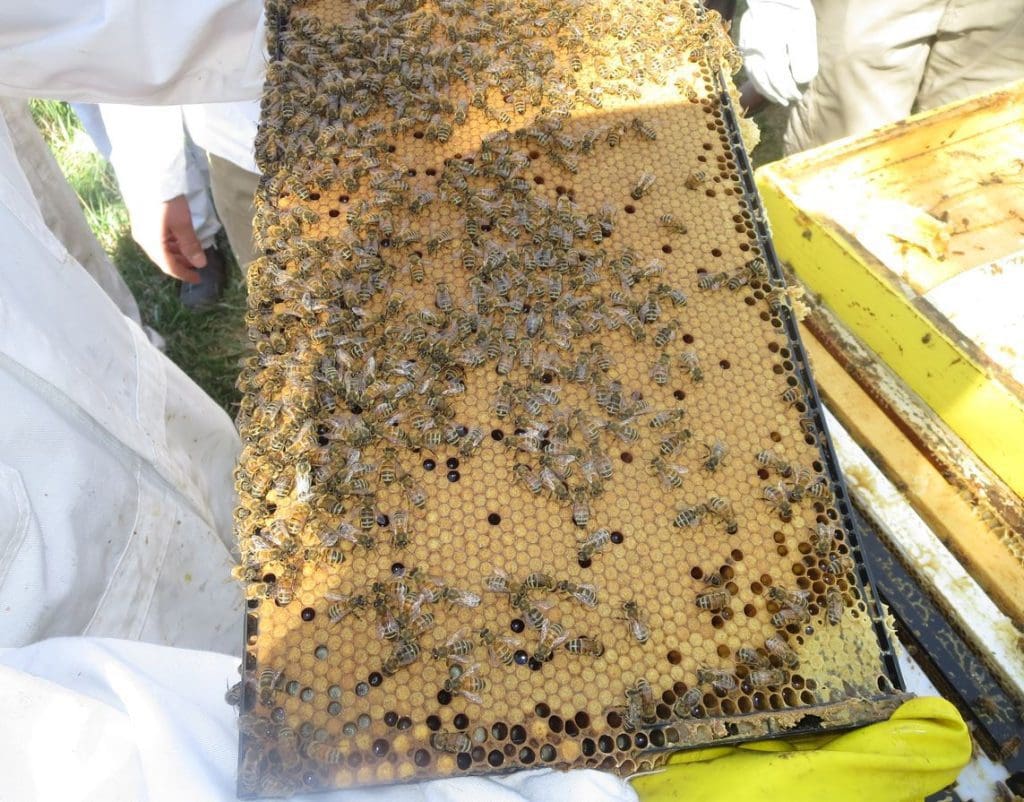
A frame covered with a compact brood pattern from edge to edge can represent several thousand developing bees. There is no universal total for a ‘full frame’: frame dimensions, cell size, the area actually occupied and brood survival all affect the number of adults that eventually emerge. Not every frame in a brood box will be filled to the same extent.
Good brood-nest management can accommodate an excluder successfully. However, insufficient space and congestion can contribute to swarm preparation, with a subsequent loss of bees and potential honey production if a swarm leaves. This is a management risk, not proof that an excluder inevitably causes early swarming. Colony inspections and timely provision of suitable space remain essential whichever system is used.
Negrioli’s central concern is that beekeepers should allow queens enough suitable comb for the colony to develop, rather than restrict brood space by habit. The aim is a healthy colony whose population is well timed for the available forage—not maximum brood rearing regardless of conditions. An excluder and adequate brood space are compatible when the hive is managed accordingly.
A healthy colony with a strong foraging workforce can make good use of a nectar flow, provided forage and weather allow it. That is a sound reason to question an automatic one-brood-box limit. It is not a reason to assume that every colony needs two boxes, or that a larger population always produces a larger surplus.
The idea behind Farrar’s rule is a useful reminder of the productive potential of strong colonies, not a universal formula for predicting a harvest. The practical priority is to maintain well-populated, healthy colonies, rather than simply place more boxes in the countryside.
Apiary stocking and competition for forage also deserve attention. A high concentration of colonies can put pressure on a limited local resource, but national hive totals alone cannot tell us whether a particular site is overstocked. Match colony numbers and production methods to the forage actually available throughout the season, including periods of scarcity.
Returning to the excluder debate: brood in a second brood box does not automatically prevent a honey crop. The brood develops into adult workers, some of which later become foragers; it does not ‘turn into nectar’. As brood emerges and the nest changes through the season, bees may use vacated cells for stores. Manage the distinction between brood boxes and harvest supers carefully, and do not extract frames containing brood.
In stacked-box hives, the brood nest may extend upwards as the colony develops. Providing suitable space and arranging it appropriately are management decisions. We supply the hive, so understanding the colony’s needs is more useful than insisting that the bees conform to a fixed box arrangement throughout the year.
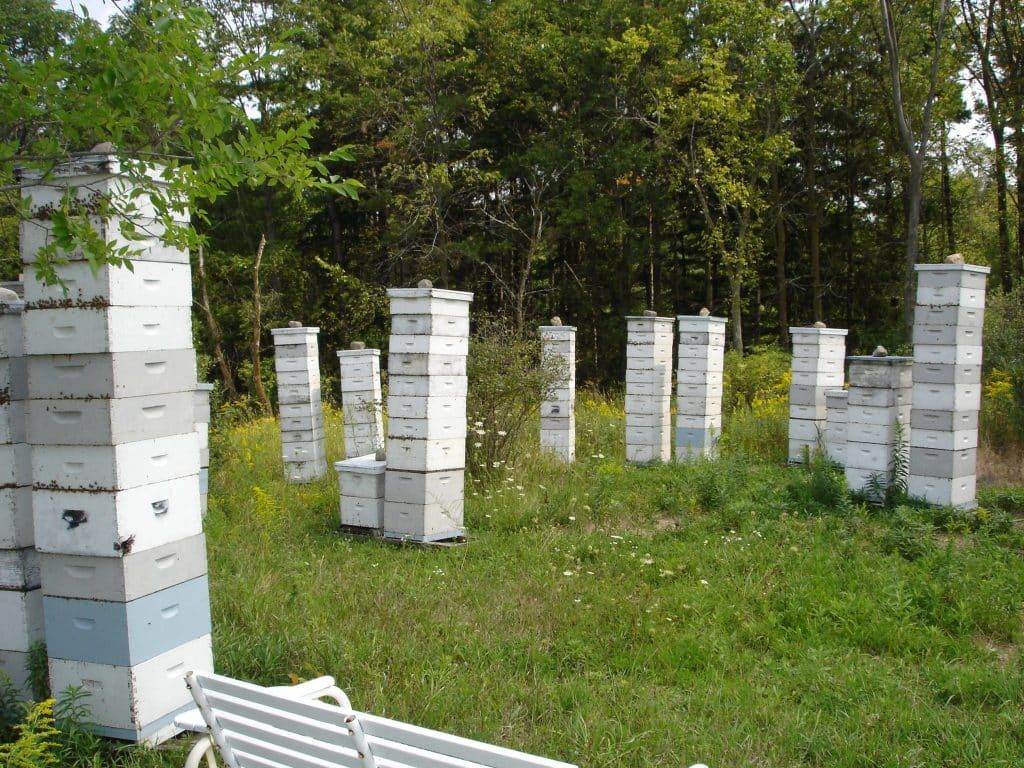
For beekeepers using vertical, stacked-box hives, understanding how the colony occupies those boxes is central to good management. An excluder should support that system, not replace observation and judgement.
We may disagree about the best arrangement, but a useful debate should distinguish experience, preference and evidence. Compare the results, explain the conditions under which a method works, and remain willing to adapt: that is how professional beekeeping improves.
For further practical context, see MAAREC’s guidance on hive equipment and queen excluders and the National Bee Unit’s spring-check guidance on brood space and congestion.

Técnico apícola argentino. Perito apicultor. Su trabajo y pasión es la cria y selección de Abejas Reinas en Argentina -España
Más en información en: http://www.asesoriaapicola.com