

Monitoring and further reading


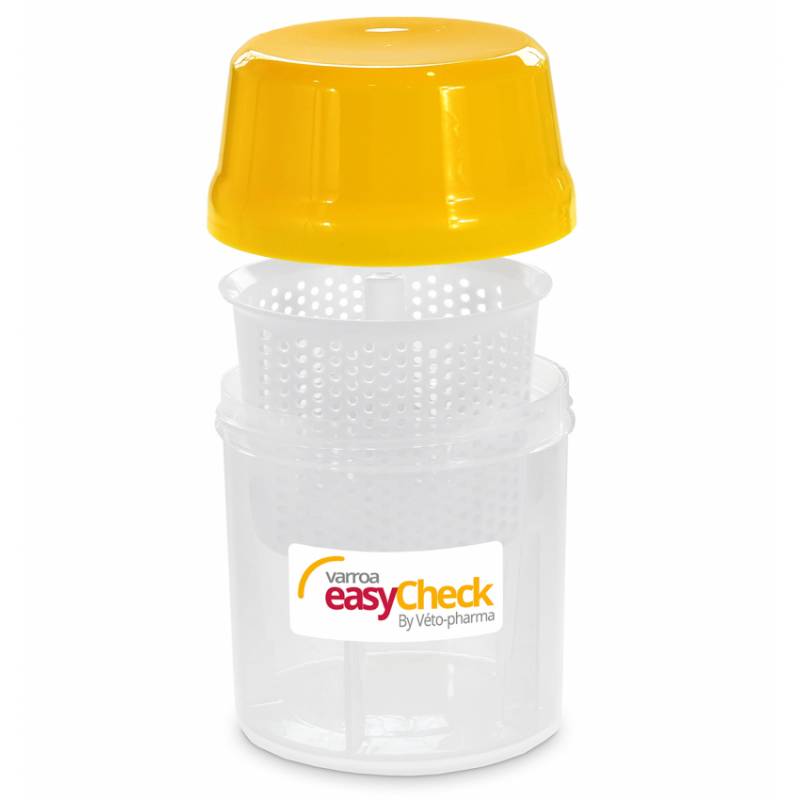
Mite monitoring and records of brood, stores and colony losses can help investigate a difficult season. The health and feeding reference is printed in Spanish.
Keep a record for each season
- Record colony numbers, new splits and losses separately.
- Keep mite counts, flowering dates, treatment records and colony inspections together.
What do we mean by “disappearing”?
Earth’s history includes mass extinctions, such as those in the late Devonian and at the end of the Cretaceous. Today’s question about bees needs more precise measures. The loss of wild species, winter deaths in an apiary and the national number of managed hives describe different things.
Beekeepers were writing about winter losses long before the term “colony collapse disorder” appeared. In 1807 J. Rivas discussed pollen shortage in <em>Antorcha de colmeneros</em>. Australian losses in the 1970s were linked to an inadequate diet dominated by particular eucalyptus pollens. Sanford later studied losses in California and Florida.
From the mid-1990s French beekeepers raised concerns about neonicotinoid seed treatments. France restricted the Gaucho sunflower seed treatment in 1999. Several other countries introduced restrictions, and the EU adopted restrictions on three neonicotinoids in 2013. These dates describe the historical response.
Spanish beekeepers reported serious episodes in the early 2000s, particularly during the winters of 2004 and 2005. Official hive numbers fell from 2,464,600 in 2003 to 2,146,000 in 2007, then recovered to 2,868,337 by 2018. Over an earlier 25-year interval the managed population grew from about 1.5 million towards three million hives.
The recent trend has reversed. Spain’s official livestock register recorded 2,741,400 hives in March 2026, about 42,000 fewer than the previous year. Numbers remain well above the levels of several decades ago, but they have fallen from their recent peak.
Honey yield per hive has also concerned Spanish professionals. The historical figures discussed in this article were around 10 kg per hive annually, compared with higher averages reported in some neighbouring countries. Census methods, seasons and the cost of replacing colonies matter when comparing yields.
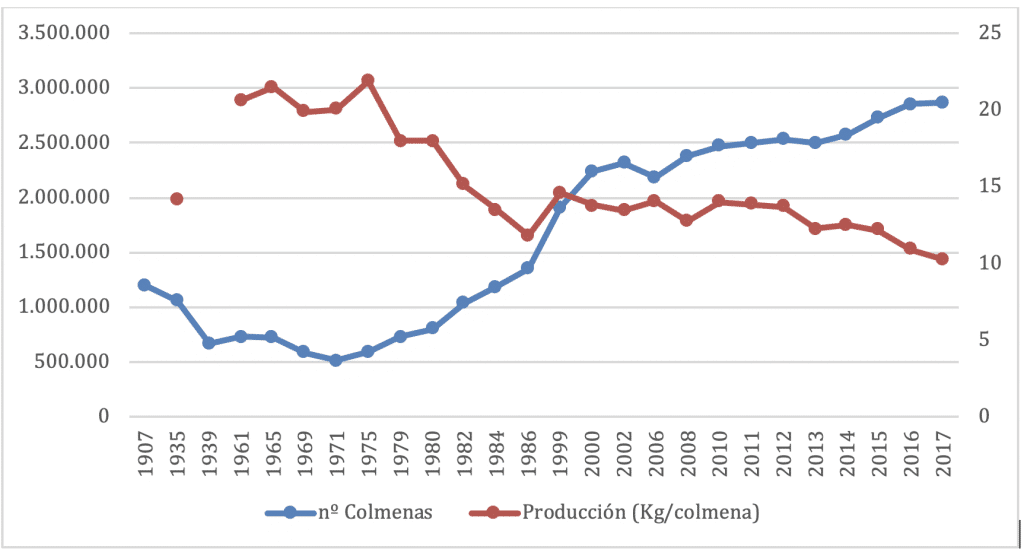
Rebuilding the stock of hives uses bees, time and resources that could otherwise produce a honey crop. National numbers can recover while replacements reduce the profitability of individual businesses. Honey prices and production costs also affect that balance.
Beekeepers and researchers in countries including Canada, Croatia, Denmark, Slovenia, the United States, France, the Netherlands and the United Kingdom have followed losses under different local conditions.
The COLOSS comparison cited in 2018 reported winter losses of 27.6% for Spain, 19.5% for France, 19.2% for Italy and 32.2% for Germany. These were survey results for a specific period, not long-term national mortality rates.
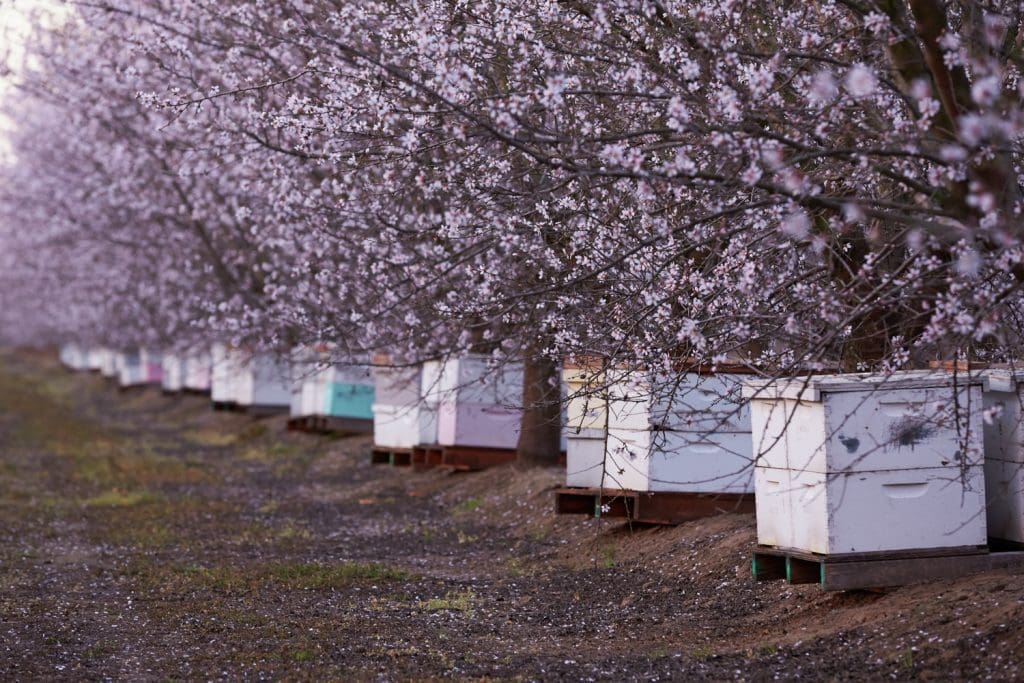
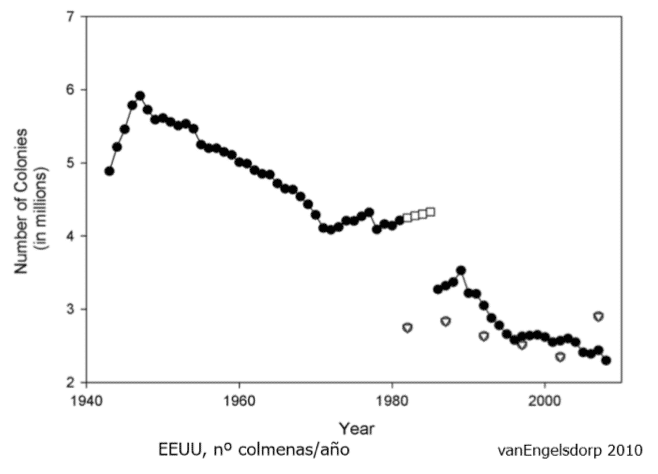
The US almond crop brought public attention to colony availability. Almond production depends heavily on insect pollination. A historical review put the US managed population near six million in 1945, while the figure cited for 2018 was about 2.68 million. Pollination demand is concentrated into a short period and a particular region.
Growers’ demand for strong colonies during almond bloom also affects hive-hire prices. A 2020 pollination fee report cited about US$195 per colony. Colony-loss surveys in the United States and the European COLOSS network provide a different measure: the proportion of colonies lost in a particular period.
The author’s historical example describes roughly 1.5 million colonies hired for almond pollination in a season. The Almond Board publishes pollination and bee-health resources for growers, reflecting the importance of protecting the colonies on site.
Which factors contribute to colony losses?
Some Spanish commercial beekeepers reported losses as high as 80% during severe episodes in 2004 and 2005. They had put populations and food stores into winter, then returned to find only a handful of bees or an empty hive. The appearance resembles what English-language researchers call colony collapse disorder (CCD), but an empty hive alone does not establish a diagnosis.
From 2004 our team followed commercial apiaries in several affected areas, particularly Salamanca. Migratory management is common there. The 2019 figures cited in the study counted 438,820 hives in Castilla y León. Colonies often made two to five moves a year, sometimes over distances of up to 600 km.
A survey during the winter of 2004 covered 34 beekeepers managing about 100,000 hives. Losses were more common among those using the drier southern route to Andalusian sunflower crops than among those moving north to natural scrub in the wetter Burgos area. Route and outcome were associated; other factors also differed between sites.
From 2006 the team followed colonies through autumn and winter to examine weather, nutrition and exposure to pesticides. It looked at water and vegetation around the apiaries, residues in wax and pollen, and the health and nutritional condition of the colonies.
Three pressures stood out in the field observations.
- Poor autumn nutrition when weather disrupts forage.
- Exposure to pesticide residues.
- Infestation by the Varroa mite (in Spanish).
Poor nutrition before winter
Workers live for a matter of weeks during an active flow, while autumn-reared winter bees can live for several months. The condition in which that generation is reared matters to the whole colony.
In the areas studied, rain from mid-August onwards can support a useful autumn bloom. Pollen and nectar then allow colonies to rear well-nourished young workers and replenish the stores they need until spring.
If rain fails or arrives mainly in short downpours, there may be little usable autumn forage. Colonies can enter winter with older workers or a poorly nourished new generation. Inadequate pollen affects the resources needed for immune function, while nosemosis, viral disease and mite pressure may compound the loss.
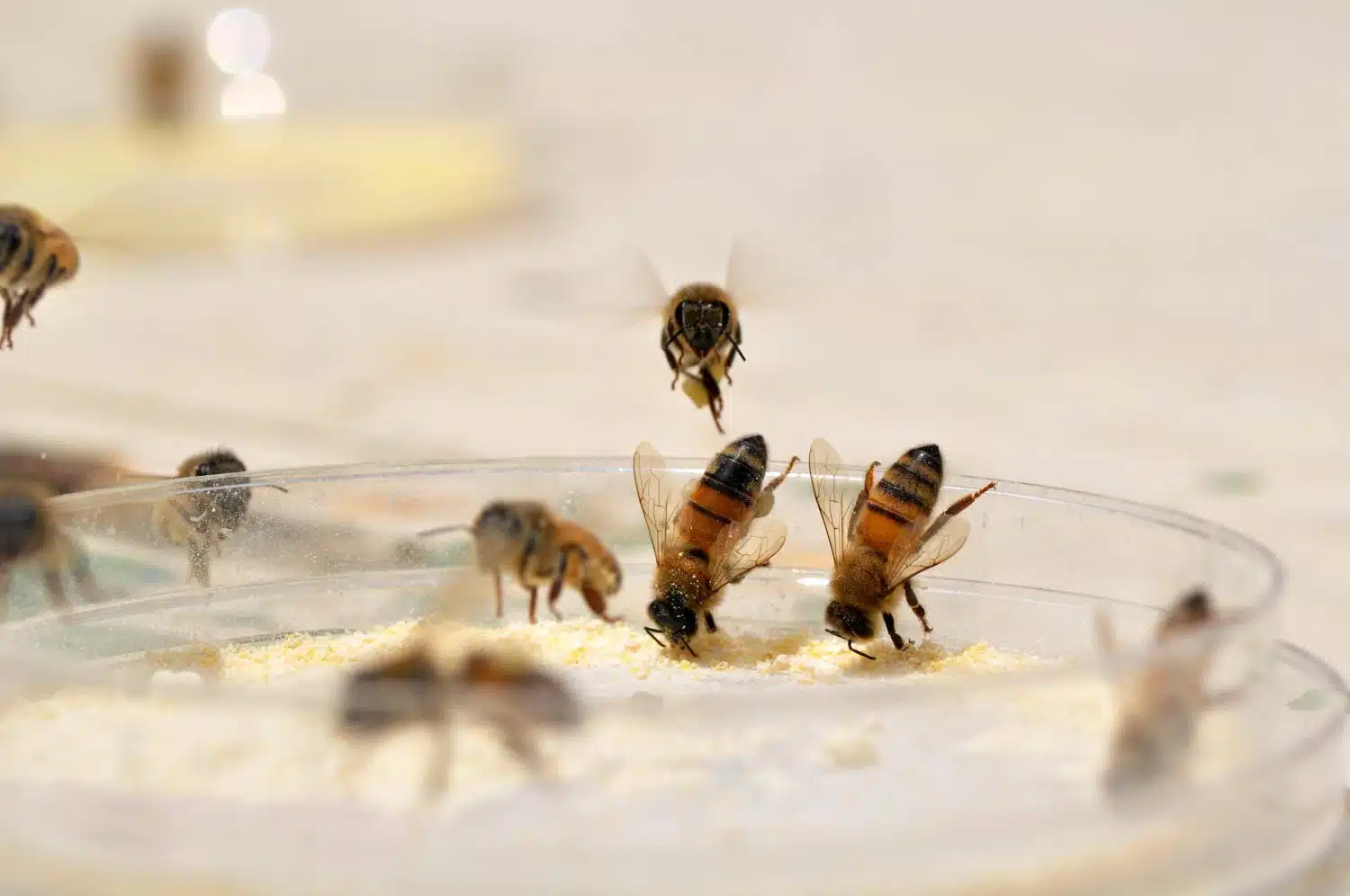
Climate change affects flowering calendars, heat exposure and water availability. The practical effect on forage varies by region, plant and season.
Wild bees also face pressures from changes in habitat and flowering. A census of managed honey bee colonies says little about how a particular wild bee population is faring.
Pesticide residues
Studies in Spain and other beekeeping countries have found pesticide residues in beeswax. Residues from some substances can also enter food stored in the comb. Results from a particular exposure or apiary need to be read in context, but they support recording treatments and managing the history of brood comb.
Two sources featured in the cases discussed: substances used within the hive against Varroa and agricultural products encountered outside it. Their relative importance depends on the material sampled, the crop and local management.
The work that followed concerns about French sunflower crops contributed to European assessments of risks to bees. In 2013 the EU restricted certain uses of three neonicotinoids. For a decision about a product today, consult the current authorisation and label in the country of use.
Pesticide exposure and landscapes dominated by a single crop can also affect wild pollinators, which have different nesting and foraging patterns from managed honey bees.
The Varroa mite
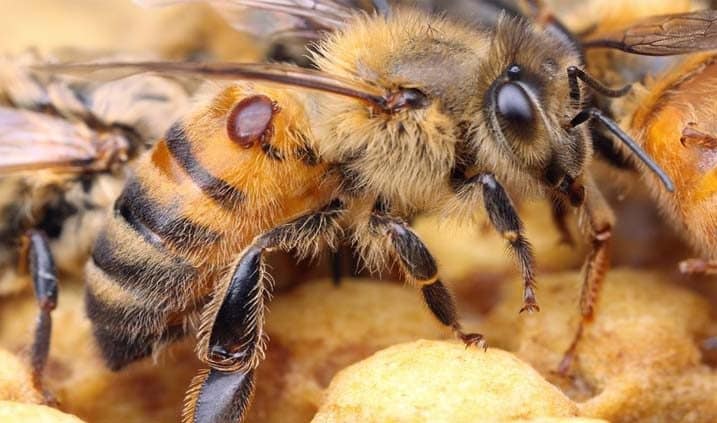
Varroa destructor became a parasite of the western honey bee and spread across much of the world during the twentieth century. The article records its arrival in Spain in the mid-1980s. Australia detected it in New South Wales in 2022 and moved from eradication to management in 2023. Mite monitoring and the authorised local control programme are central to protecting winter bees.
Varroa harms both developing and adult bees, damages their tissues and is associated with serious viral disease. A colony that looks strong during a flow can deteriorate later if the winter generation develops under heavy mite pressure.
Researchers generally regard large-scale colony loss as multifactorial. In the Spanish work described here, nutrition, pesticide exposure and Varroa were the main pressures. One may dominate at a site, or several may act together.
The balance changes with local forage, weather, disease pressure and the decisions of beekeepers and growers. Finding a pressure in one sample rarely explains an entire region’s losses.
Effective action takes coordination between beekeepers, growers, bee health advisers and those managing the landscape. Keeping reliable records makes the local causes easier to investigate.
Article by Pajuelo Consultores Apícolas for La Tienda del Apicultor.
Would you like to learn more about beekeeping?
Explore our online introductory beekeeping course, taught in Spanish.
The course covers the foundations of apiary work and includes contributions from practising specialists.
References
- COLOSS (2018). International colony-loss survey.
- K. S. Delaplane and D. F. Mayer (2000). Crop Pollination by Bees. CABI, 344 pp.
- Official Journal of the European Union, 24 May 2013, pp. 12–26. Implementing Regulation (EU) No 485/2013.
- Spanish Ministry of Agriculture (2019), Economic indicators for the honey sector. Updated editions are available from the ministry’s beekeeping sector portal.
- Orantes Bermejo, F. J., Gómez Pajuelo, A., Mejías, M. and Torres, C. (2010). Study of pesticide residues in beeswax and pollen from Spanish honey bee colonies. Journal of Apicultural Research.
- Statista (2018). US honey bee colony figures.
- Thompson, H. (2012). <em>Interaction between pesticides and other factors in effects on bees</em>. EFSA supporting publication, 204 pp. The source notes that this document was withdrawn from the EFSA portal.
- vanEngelsdorp, D. and Meixner, M. D. (2010). <em>A historical review of managed honey bee populations in Europe and the United States and the factors that may affect them</em>. <em>Journal of Invertebrate Pathology</em> 103, S80–S95.


