
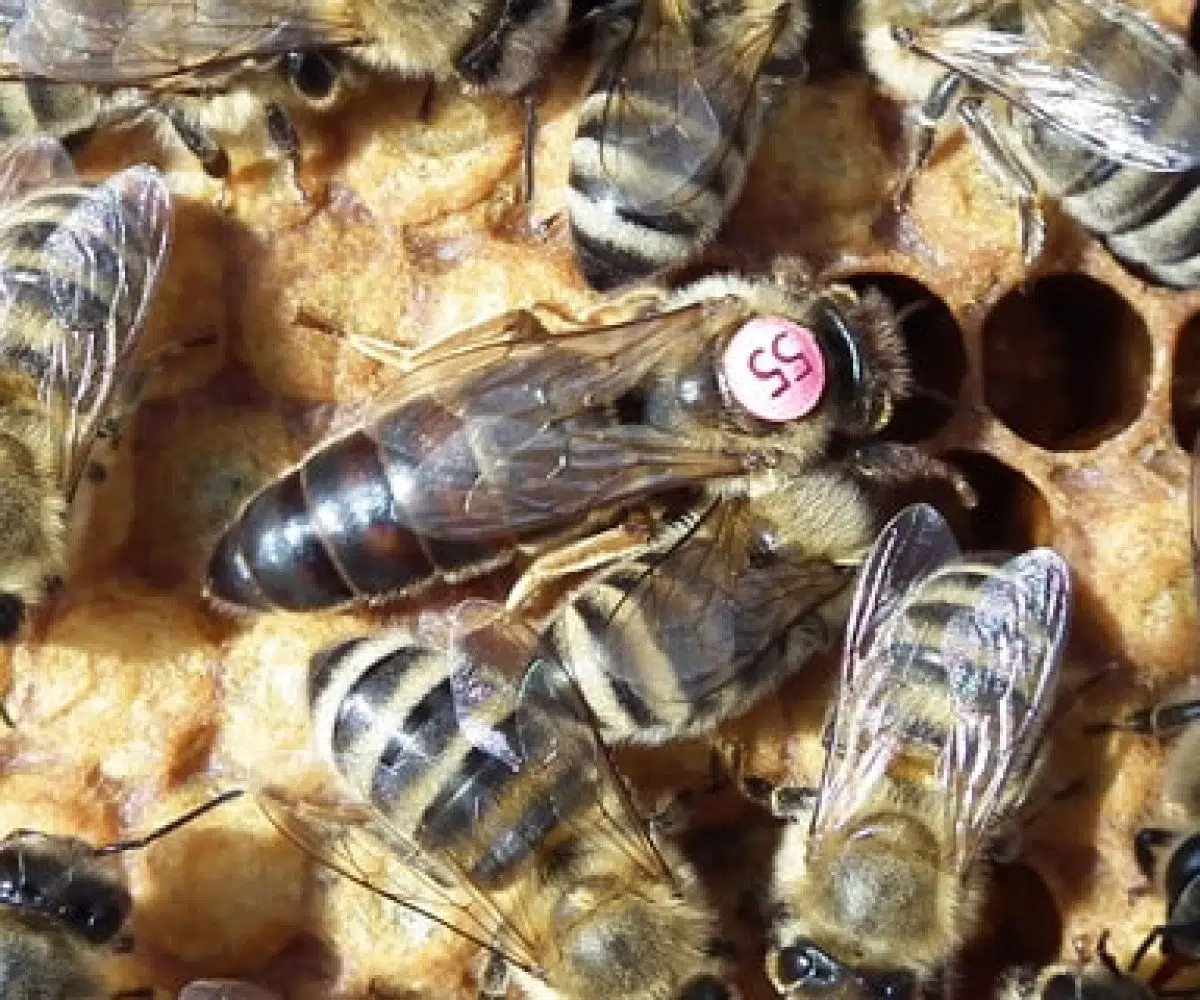
Apis mellifera, the western honey bee, is the species most widely kept in modern beekeeping. Other honey bee species include Apis cerana, Apis dorsata and Apis florea. Italian, Carniolan and Iberian honey bees are not separate species of Apis mellifera: they are subspecies. Buckfast bees, by contrast, are selectively bred stocks developed through crossing within this species.
Managed Apis mellifera was introduced to the Americas and Australia; this does not mean those regions lacked native bees. Indigenous communities in Mesoamerica have long kept native stingless bees, including Melipona. Their honeys and husbandry form a distinct beekeeping tradition, not simply a lower-yield version of western honey bee management.
Queen breeders work both with local populations and with introduced or crossbred stocks. Selection can improve useful traits, but the breeder’s records and the colony’s performance in your own conditions matter more than the stock name alone.
This guide compares the main subspecies and breeding stocks, their commonly reported characteristics and the management points worth checking. An evolutionary lineage is a broader genetic grouping; an ecotype describes a population adapted to particular conditions. Neither term is interchangeable with a commercial queen line.
🐝 Honey bee stocks at a glance
| Stock | Temperament | Foraging and morphology | Swarming | Production | Practical consideration |
|---|---|---|---|---|---|
| European dark honey bee A. m. mellifera | Variable; assess the line | Relatively short proboscis | Line-dependent | Assess locally, not by colour | Regional adaptation and wintering |
| Caucasian honey bee A. m. caucasia | Often gentle | Relatively long proboscis | Often selected for lower tendency | Early flow may precede full strength | Heavy propolis; check spring build-up |
| Iberian honey bee A. m. iberiensis | Some colonies defensive | Substantial regional variation | Requires active management | Match local forage and objectives | Conserve useful local ecotypes |
| Carniolan honey bee A. m. carnica | Often gentle in selected lines | Dark, grey-haired workers | Watch rapid spring expansion | Can build strongly for spring flows | Give space as the colony develops |
| Italian honey bee A. m. ligustica | Often manageable | Frequently yellow-banded | Line- and management-dependent | Strong colonies can exploit heavy flows | Watch food demand during dearths |
| Buckfast Selected breeding stock | A selection objective | Varies with ancestry | Low tendency is a breeding goal | Depends on line and season | Pedigree and mating records matter |
Use this table as an orientation, not a performance guarantee. Traits vary within every stock and depend on season, management and mating history. NC State Extension’s stock comparison also stresses this variation. Select a name to jump to the full profile; no stock label proves disease resistance or makes protective equipment unnecessary.
European and Caucasian honey bee subspecies
Apis mellifera mellifera: the European dark honey bee
The European dark honey bee includes distinct regional populations. Locally adapted lines can be valuable for overwintering and matching the local season. Introgression—gene flow from other populations—can alter their genetic identity, but colour alone cannot establish ancestry. Conservation breeding needs reliable records and appropriate genetic or morphometric assessment, not a judgement based only on how dark the bees look.
Potential strengths and selection points
✅ Often valued for winter hardiness where the local population is suited to the climate.
✅ Low swarming tendency can be selected for; confirm it in the actual line.
✅ Regional ecotypes offer a starting point for breeding bees suited to local conditions.
✅ Winter survival and worker longevity are useful selection criteria, assessed through records.
✅ A restrained early build-up may suit a later local nectar flow.
Limitations and management checks
⚠️ Some colonies are defensive. Assess temperament under comparable inspection conditions.
⚠️ The relatively short proboscis can limit access to some deep corollas; it does not exclude every deep-flowered plant.
⚠️ Steadiness on the comb varies: record how readily the bees run across the frame.
⚠️ Do not assume an inherently low honey yield; compare colonies in the same apiary and season.
⚠️ Queen-rearing and royal-jelly performance need separate assessment, not a blanket racial ranking.
⚠️ Worker drift also depends on hive layout, entrance orientation and apiary conditions.
⚠️ Winter hardiness is not immunity to brood disease or other health problems.
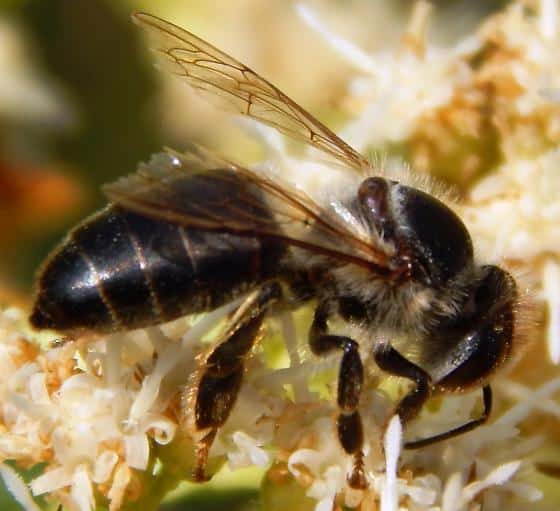
Apis mellifera caucasia: the Caucasian honey bee
The Caucasian or grey mountain honey bee, Apis mellifera caucasia—also commonly written A. m. caucasica—is generally dark, with grey body hair. Appearance overlaps with other populations, so it is not enough for a confident subspecies identification.
Native range
Its native range is associated with the Caucasus, between the Black and Caspian seas. Avoid inferring a simple migration route or lineage from appearance: nuclear and mitochondrial analyses can describe different aspects of ancestry. It can look similar to the Carniolan bee without being the same subspecies.
Potential strengths and selection points
✅ Gentle handling behaviour is a frequently reported characteristic of selected lines.
✅ Its relatively long proboscis can help it reach nectar in deeper flowers; lengths vary among samples.
✅ Winter performance can be useful in suitable conditions; ask for evidence from a climate like yours.
✅ Lower swarming tendency is a common selection objective, not a reason to stop inspections.
✅ Calmness on the comb can make queen finding and brood inspection easier.
✅ Selected lines may contribute useful traits to a controlled breeding programme.
✅ Assess honey production against the timing and duration of your own nectar flows.
Limitations and management checks
⚠️ Heavy propolis use can make frames and hive parts harder to separate.
⚠️ Do not assume protection from Nosema or other infections on the basis of ancestry.
⚠️ Slow spring build-up may be a disadvantage where the main crop comes early.
⚠️ Watch for robbing and drift, particularly during dearths and in crowded apiaries.
⚠️ Plan nucleus production around actual brood, bees and stores; a slowly building colony may not support repeated early splits.
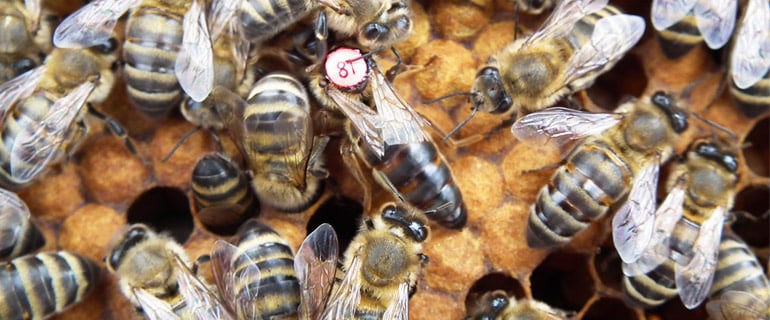
Apis mellifera iberiensis: the Iberian honey bee
The Iberian honey bee, Apis mellifera iberiensis, is native to the Iberian Peninsula and is often very dark. It includes substantial regional variation across Spain and Portugal; “Iberian” is not a promise that every colony will behave alike.
Its genetic history is more complex than a straightforward modern cross between European dark bees and African bees. A study of Iberian population structure found a northeast–southwest pattern in nuclear and maternal markers, consistent with contact between populations previously isolated in glacial refugia.
Maternal DNA traces one part of ancestry, not the whole genome. These patterns help explain the diversity within the Iberian subspecies, but cannot be used to assign a fixed temperament, productivity or “African percentage” to an individual colony simply from its location or colour.
Potential strengths and selection points
✅ Local ecotypes provide a useful basis for selection within the varied climates of the peninsula.
✅ Colonies already matched to local forage can make good use of its seasonal sequence.
✅ For pollen production, select on measured collection and colony performance in the intended area.
✅ Specialised products, including bee venom, require their own assessment; ancestry alone does not establish suitability.
✅ Brood rearing may contract during unfavourable periods, helping align demand with available forage.
✅ With sufficient resources, selected colonies can draw comb and expand strongly.
Limitations and management checks
⚠️ Some colonies are notably defensive; select for manageable temperament rather than accepting it as unavoidable.
⚠️ Swarming tendency needs regular assessment and timely management.
⚠️ Heavy propolis use may increase the work involved in inspections.
⚠️ In built-up areas, assess the actual colony, flight paths and neighbours’ exposure; a stock name does not establish a safe site.
⚠️ Check brood health routinely; fungal disease susceptibility cannot be predicted from the subspecies label alone.
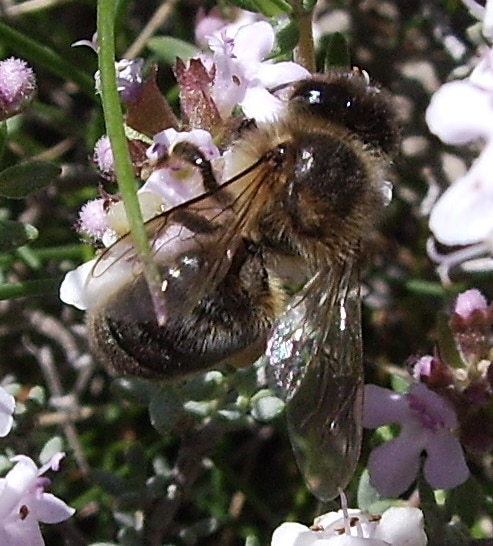
Apis mellifera carnica: the Carniolan honey bee
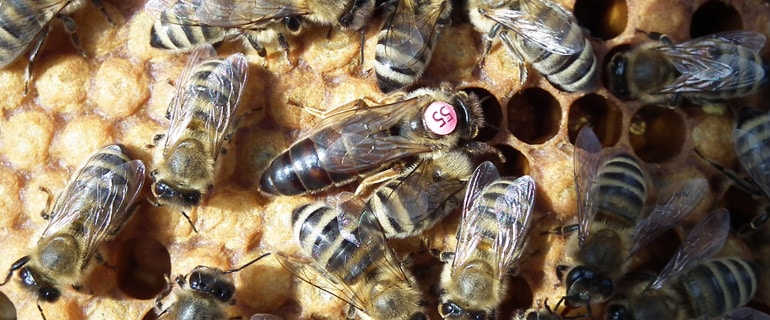
The Carniolan honey bee, Apis mellifera carnica, is typically dark with conspicuous grey hair. It has a long history in European queen breeding, including breeding programmes in Germany. It is related to Italian bees and can resemble Caucasian bees, but these names describe different subspecies.
Native range
Its native range centres on the south-eastern Alpine and Balkan region, including Slovenia and neighbouring areas. Modern commercial distribution extends well beyond that range; country borders and a queen’s place of sale do not by themselves establish her ancestry.
Potential strengths and selection points
✅ Selected lines are widely appreciated for gentle temperament.
✅ Can exploit nectar and honeydew flows where forage and colony strength are suitable; tongue length is not a yield guarantee.
✅ Rapid spring build-up can help colonies reach strength for early flows.
✅ A relatively small winter population can conserve stores, but food checks remain essential.
✅ Good steadiness on the comb is a useful trait to confirm in the breeder’s records.
✅ Well-selected local lines may perform strongly; no bee is adapted to every climate.
✅ Good orientation is valuable, but hive layout still matters for limiting drift.
✅ Relatively light propolis use is often reported.
✅ Select for measured health and hygienic traits rather than assuming general brood-disease resistance.
Limitations and management checks
⚠️ Fast spring expansion can increase swarming pressure if space and management lag behind.
⚠️ Continue health surveillance, including assessment for Nosema where indicated.
⚠️ Comb drawing depends on resources and colony condition; a universal “worst comb builder” ranking is not reliable.
⚠️ Pollen collection varies with brood demand and forage; compare like-for-like colonies.
⚠️ Weather, queen age and drone availability affect mating; do not rely on a fixed race-specific delay.
⚠️ Crossbred offspring need assessment: parental subspecies names do not reliably predict swarming or defensiveness.
The practical attraction of selected Carniolan stock is often the combination of manageable temperament and a strong response to spring forage. That same rapid expansion calls for close attention to space and swarm control.
Apis mellifera ligustica: the Italian honey bee
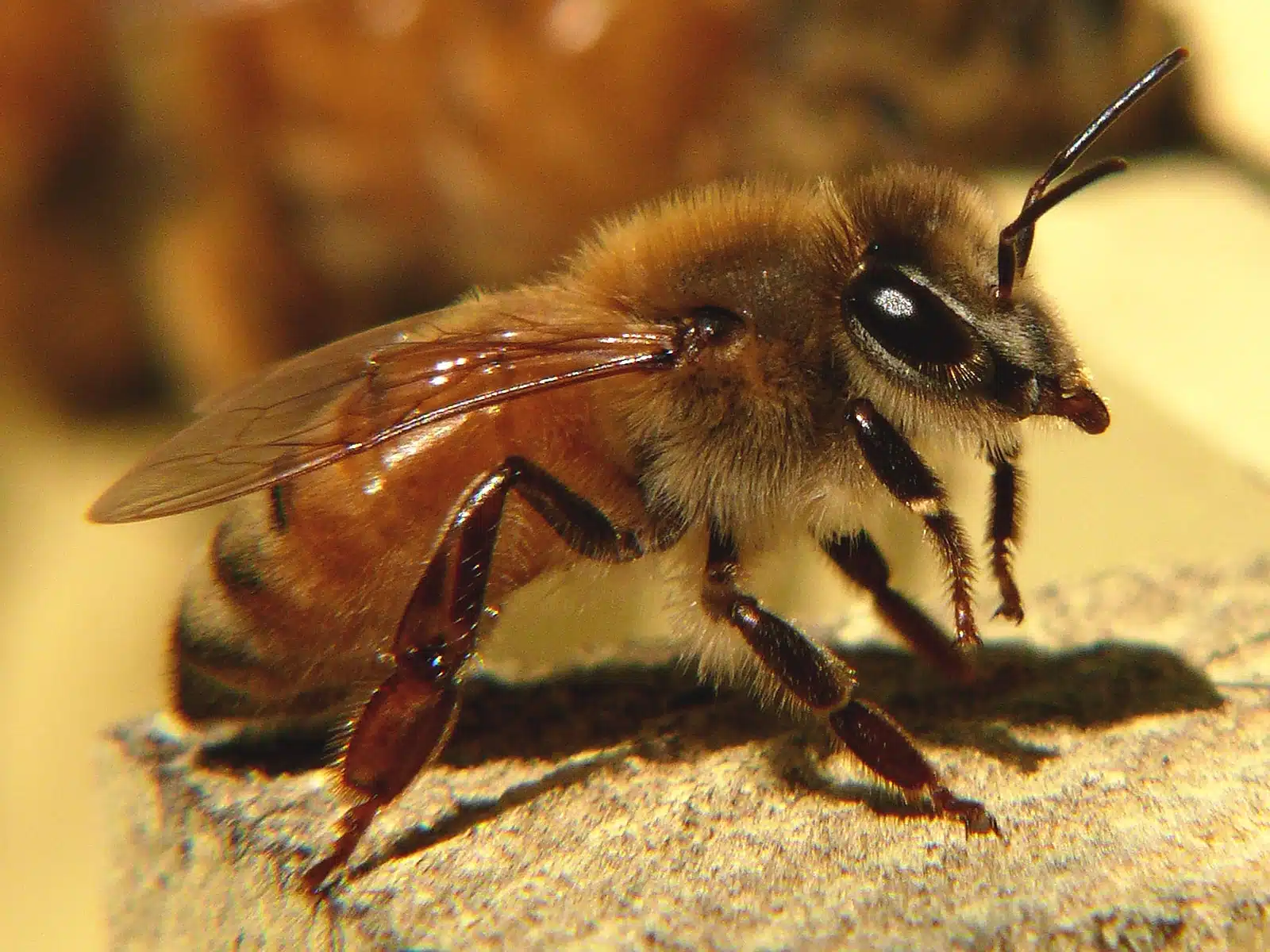
The Italian honey bee, Apis mellifera ligustica, commonly has yellowish or copper-coloured abdominal bands, although colour varies by line. Wing measurements such as the cubital index can contribute to morphometric identification, but no single visible feature proves ancestry.
Native range
Native to the Italian peninsula, it has been exported extensively, including to the Americas and Australia. Commercial “Italian” queens may represent selected or admixed populations rather than an unchanged sample of the native subspecies.
Potential strengths and selection points
✅ Selected Italian lines are commonly manageable and gentle.
✅ Can forage across a broad range of plants; fixed proboscis measurements are not a dependable buying criterion.
✅ Suitable lines can overwinter successfully with appropriate stores and management.
✅ Lower swarming tendency can be a useful selected trait, but queen-cell checks remain necessary.
✅ Strong, sustained brood rearing can build a substantial workforce.
✅ Calmness on the comb helps make inspections easier.
✅ Italian ancestry has contributed to many breeding and crossing programmes.
✅ A colony already at strength can use a short, heavy nectar flow effectively.
Limitations and management checks
⚠️ Robbing can be a concern during a nectar dearth; avoid exposing honey or feed.
⚠️ A large population and continued brood rearing can mean high food consumption.
⚠️ Assess daughter colonies individually after crossing; do not assume a particular mating always produces aggressive bees.
⚠️ Foulbrood and other diseases still require proper surveillance and control.
⚠️ During summer forage gaps, food demand can outstrip incoming nectar even in a populous colony.
Italian bees have often been praised for comb building and attractive cappings. For comb-honey production, compare actual capping colour, completeness and presentation in your own colonies rather than treating one subspecies as invariably the best.
The Italian bee’s Mediterranean origins help explain the interest in its brood-rearing pattern, but do not make it incapable of living in colder regions. The important question is whether the particular line, colony size and management fit the length of your winter, the start of spring and the availability of forage. A long brood-rearing season can be an asset or a feeding liability.
Other honey bee subspecies
Western Asian and Middle Eastern populations
Western Asia and the Middle East contain several distinct honey bee populations across very different landscapes. Some are adapted to hot summers, but elevation, winter conditions and local forage also matter. Their history should not be reduced to a single, certain route from an assumed centre of origin.
Examples include Apis mellifera syriaca, A. m. anatoliaca and A. m. meda, alongside populations described from Armenia and the Caucasus. Classification and boundaries require care. Recent genomic research in the region also documents gene flow involving imported commercial stock and neighbouring native populations.
African honey bee subspecies
African honey bees occupy environments ranging from arid areas to tropical and highland habitats. Their morphology, seasonal biology and behaviour vary substantially. It is misleading to describe all African populations as having one temperament or to present a single ancient migration route as settled fact.
Examples include Apis mellifera sahariensis, A. m. scutellata, A. m. capensis, A. m. adansonii and A. m. lamarckii. This is an illustrative list, not an exhaustive catalogue. Native African subspecies should also be distinguished from the admixed populations commonly called Africanised honey bees in the Americas.
Crossbreeding and selective breeding
Why cross honey bee stocks?
There is genetic variation among Apis mellifera subspecies, among lines within them and within a colony’s worker population. The crosses discussed here are within one species, not crosses between A. mellifera and other Apis species. Breeders aim to combine useful traits such as temperament, productivity and suitability for local conditions.
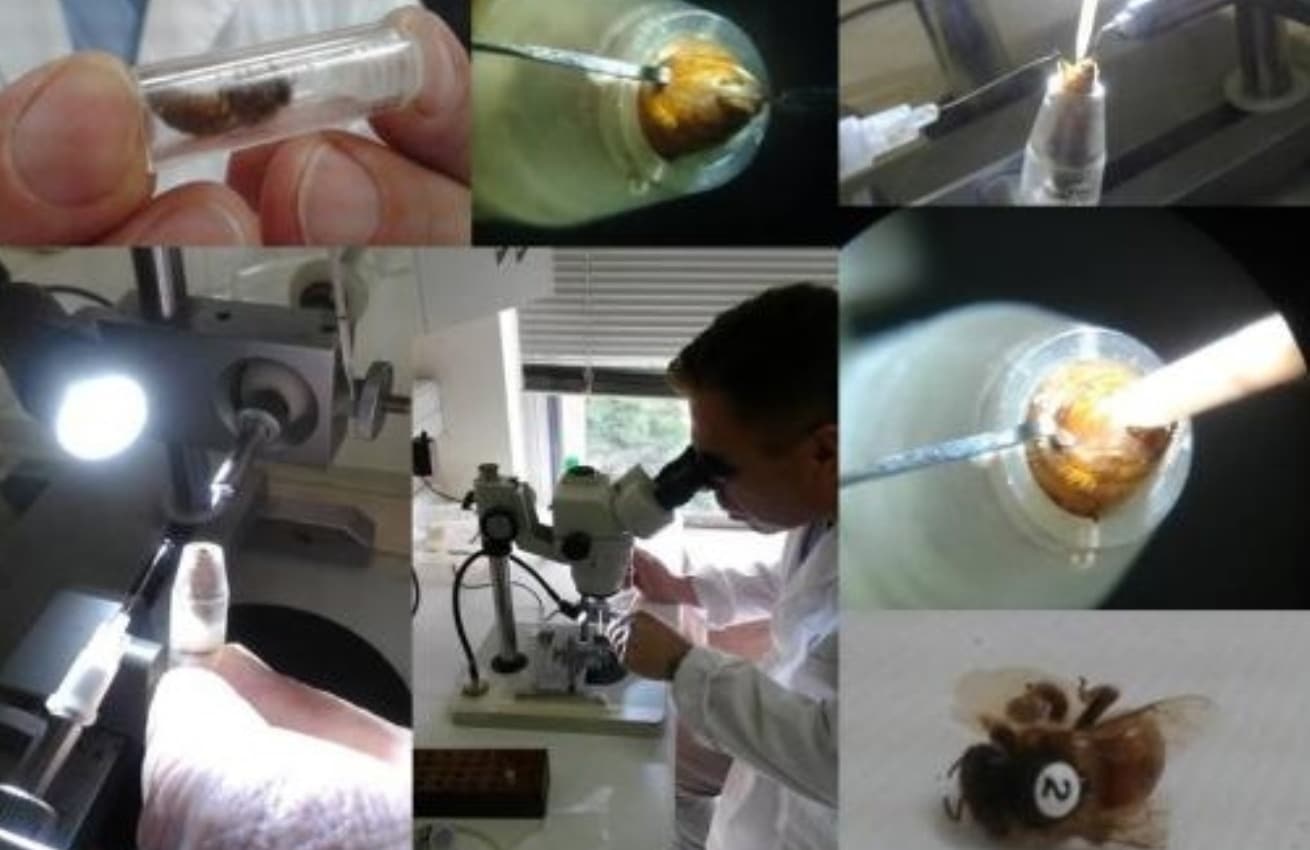
Some combinations show hybrid vigour, or heterosis, but improvement is not automatic. Honey yield, swarming and defensiveness must be measured in the resulting colonies. Queen rearing, selected drone populations, suitable mating arrangements and records are central to a repeatable breeding programme.
Risks and limitations of selection
Crossing without an objective or mating plan makes results hard to predict. A queen normally mates with multiple drones, so raising a daughter from a desirable colony does not by itself reproduce the mother’s mating combination. Test the offspring before multiplying a line widely.
Selecting too narrowly can overlook other important traits, while uncontrolled movement of queens and colonies can introduce pests or pathogens as well as new genetics. The history of Africanised populations illustrates that introductions can have lasting consequences, not that every cross is harmful. Breeding decisions need health safeguards, local knowledge and more than a single production score.
Extensive introductions can alter local gene pools and complicate conservation. Conversely, using too few breeders can reduce diversity and increase inbreeding. Neither selection nor crossbreeding inevitably has one outcome: maintain an adequate breeding population, document matings and coordinate with nearby conservation or breeding programmes.
Buckfast bees
Buckfast is a well-known breeding tradition, not a separate honey bee species or naturally occurring subspecies. The name covers selected stocks whose ancestry and performance depend on the breeder and mating programme; it is not a universal guarantee of the best bee.
Brother Adam developed the Buckfast bee at Buckfast Abbey in Devon, England, through a long programme of selection and crossing using stock from different regions. The University of Guelph’s account of his breeding work describes controlled matings, pedigree records and colony testing, with emphasis on manageable temperament, comb steadiness, low swarming and honey production. It was not a single fixed recipe of subspecies.
Potential strengths and selection points
✅ Low swarming tendency is a major breeding objective.
✅ Selected lines can produce good honey crops when their build-up matches the forage season.
✅ Gentle temperament is a key selection criterion, checked in actual colonies.
✅ Winter performance should be supported by records from comparable conditions.
✅ Hygienic behaviour can be selected and tested; the Buckfast name alone does not certify it.
✅ Foraging under cool conditions is worth observing locally, not assuming from the label.
Limitations and management checks
⚠️ Nutritional shortages can weaken any stock; lack of pollen does not by itself establish a diagnosis of foulbrood.
⚠️ Spring development varies among lines and may not match an early local flow.
⚠️ Maintaining a defined breeding line requires skill, records and control of mating.
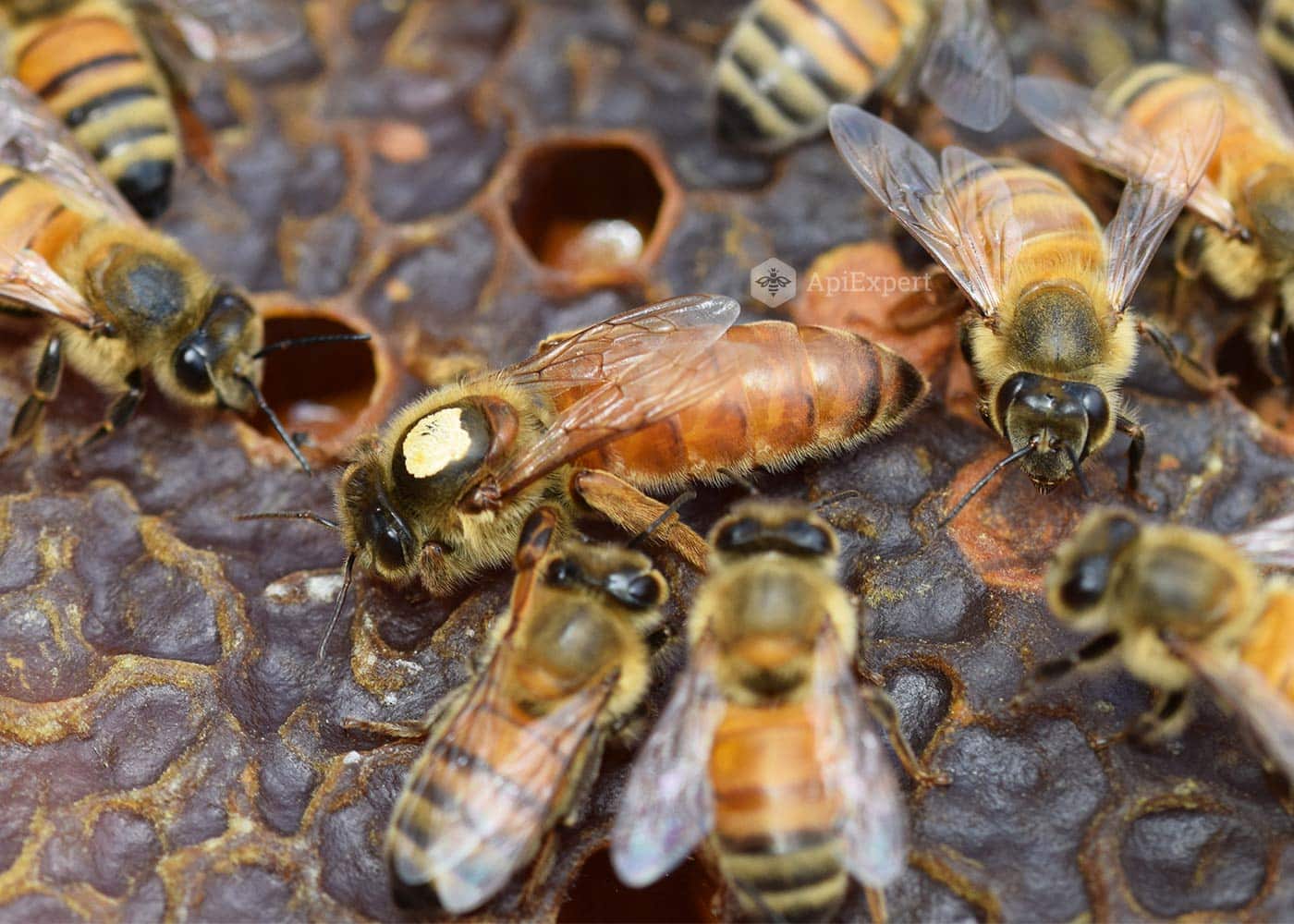
⚠️ An open-mated daughter may not retain the same combination of traits. Splitting a colony is possible; maintaining pedigree is a separate issue. There is no universal requirement to replace every queen annually solely because she is Buckfast.
Choosing bees for your own conditions
Subspecies, ecotypes and breeding lines help explain why different trials and apiaries can obtain different results. They are useful starting information, not substitutes for comparing colonies under similar conditions.
Before changing stock across an apiary, test a small group locally. Record winter survival, brood development, temperament, swarming, health and harvest alongside the weather, forage and management. One exceptionally productive hive is not enough to establish the best breeding strategy.
Introduced stock has brought both successes and disappointments. Match the queen line to your needs and obtain reliable information about its origin, mating and health rather than buying on reputation alone.
Selecting within local populations can combine practical improvement with conserving regional diversity. Keep several sound breeding families and consider the effect of your drone population on neighbouring apiaries.
Controlled crossing is another breeding tool, but should answer a clear objective and be evaluated over successive generations. The most useful bee is a healthy, manageable colony that performs consistently in your conditions—not a name at the top of a universal league table.
Would you like to learn more about beekeeping?
Explore our online introduction to beekeeping. The course is taught in Spanish, even when you view its product page in English.
Designed for beginners, it covers bee biology, colony management, health, nutrition and hive products. Check the current course page for the syllabus and access details. The introductory video below is also the original Spanish-language presentation.
![Introducción al Curso de Apicultura [SÚPER COMPLETO]](https://www.latiendadelapicultor.com/blog/wp-content/plugins/wp-youtube-lyte/lyteCache.php?origThumbUrl=https%3A%2F%2Fi.ytimg.com%2Fvi%2FuJomNRA0UP8%2F0.jpg)

ISNI 0000 0005 1801 1100 | Joshua Ivars is the manager of LA TIENDA DEL APICULTOR and the author of this blog, where he shares technical and practical guidance for beekeepers. Drawing on extensive experience in the beekeeping sector, he offers advice and solutions based on beekeepers’ real needs, sharing his knowledge of equipment and essential beekeeping practices.


