
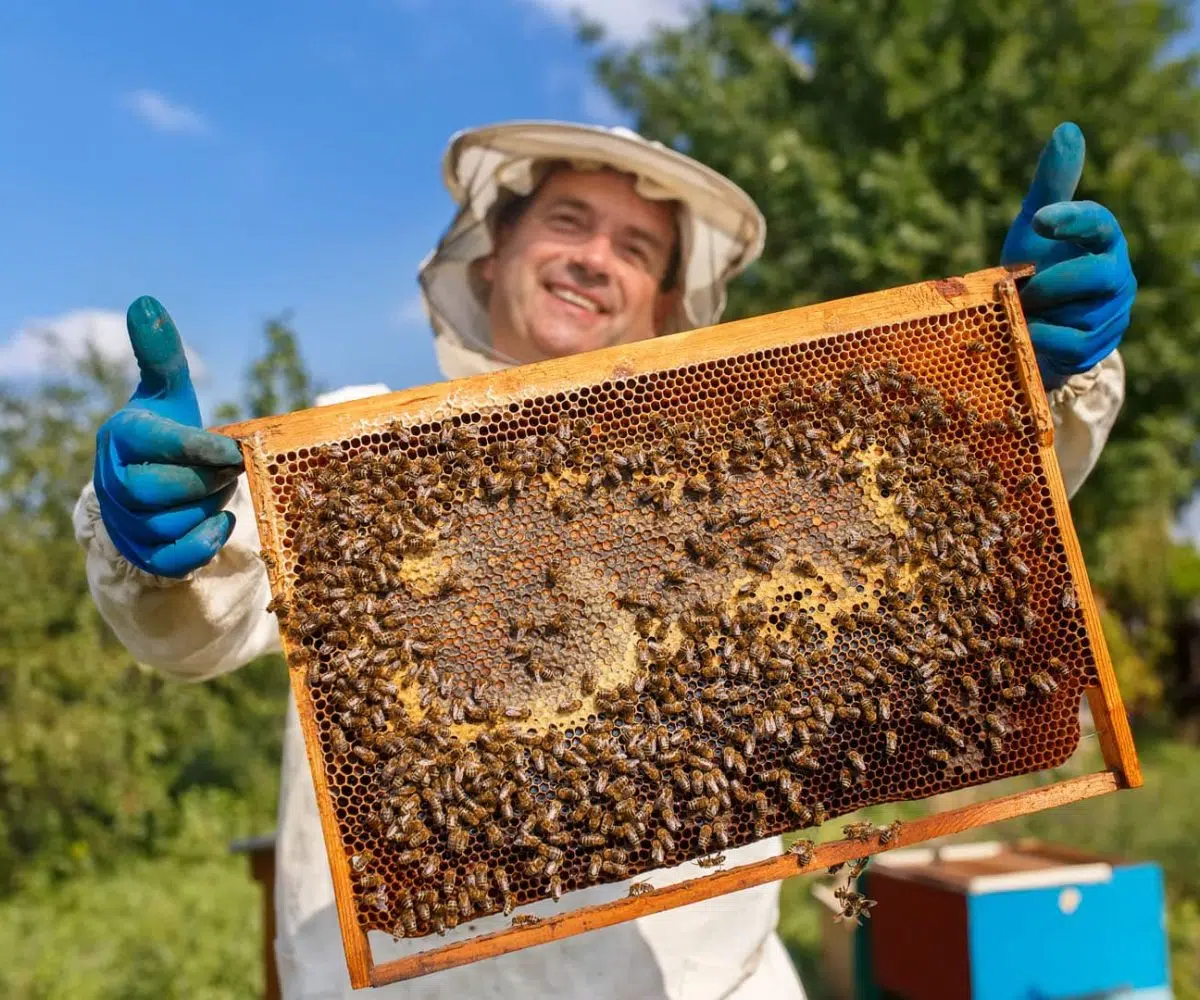
Is beekeeping profitable? It can be, but there is no magic number of hives that guarantees a living from them. Profitability depends on how many colonies reach productivity during each flowering period, what yield you achieve, at what price you sell, how much labour the system demands, and what actual costs—including your own time—your operation bears.
Is beekeeping profitable? The short answer
Yes, a beekeeping operation can be profitable when the margin from its productive hives covers fixed costs, depreciation and a reasonable return on labour. It can also generate high turnover and still lose money if it relies on optimistic harvests, underestimates time, confuses a loan with an expense, or requires too many kilometres to produce each kilo.
The useful question is not ‘how many hives do I need?’, but this: what annual margin does each truly productive hive leave, and how many can I manage effectively within my available hours, resources and routes?
In this guide you will learn to calculate
- income without inflating production or prices;
- fixed, variable and hidden costs;
- investment, depreciation and cash flow without mixing them;
- the break-even point and the number of hives required under different scenarios;
- a ten-step beekeeping business plan that you can update each season.
Being a beekeeper can be profitable, but 150 hives are not a guarantee
In Spain, regulations classify an operation with 150 hives or more as a professional beekeeping operation. This is an administrative definition, not proof of viability: 150 strong, well-sited colonies with direct sales may perform very differently from 500 colonies with low productivity, long travel distances and sales entirely in bulk.
36,833
operations in April 2025
2.78 M
number of hives in March 2025
≈17 %
of professional operations
≈80 %
of migratory hives
Sectoral context from MAPA. These data describe the sector, but not the profit of a specific operation.

In 2024, 33,181 tonnes of honey were produced in Spain, a 21 % increase from 2023. The rebound does not erase the fluctuation of previous years: precisely for this reason, it is advisable to budget using multiple scenarios and maintain liquidity.
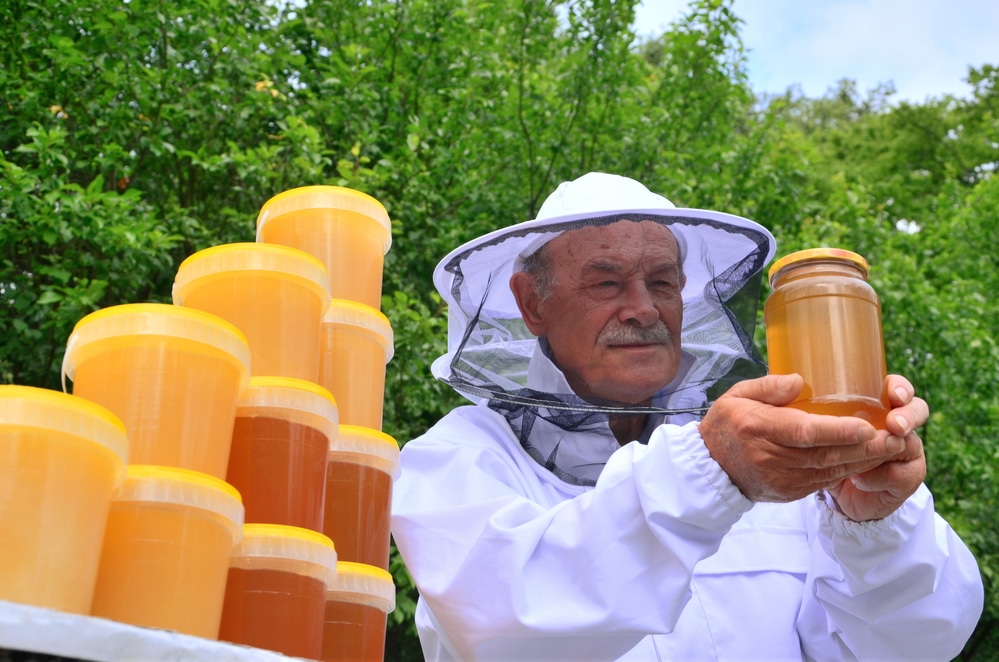
The unit that matters is the productive hive
An operation may census 500 hives but enter the flowering period with fewer productive units due to losses, weakness, swarming, queen replacement or reserve nucleus colonies. If you divide costs between the census and not the hives that actually produce, the unit cost appears artificially low.
Productivity rate = hives entering production ÷ registered hives × 100
Record this rate per site and flowering period. It will help you distinguish management or health issues from pricing problems.
Your own labour also costs
If the operator works without assigning a cost, profit appears higher than it is. Record hours spent in the field, travel, extraction, packaging, sales and administration. For comparing operations, the UTA (annual work unit) may be used, equivalent to one person’s full-time work for a year.
Work capacity limits size as much as capital. Before adding hives, check whether you can manage the spring peak, move hives, harvest on time and maintain health. Adding a person increases fixed or semi-fixed costs, but may prevent production losses by removing a bottleneck.
Income: calculate what is actually sellable, not a dreamed harvest
Income is not ‘hives × average yield from the internet’. It must be built per product, channel and scenario. For each line, record sellable units, actual net price received, losses, self-consumption, unpaid invoices and time spent on sales.
Honey: price depends on the sales channel
The MAPA distinguishes between honey sold in bulk —sold to industry or wholesale— and honey packaged —sold by producer to retailer. It is not correct to compare either directly with the final price seen by the consumer.
| National reference | April 2024 | March 2025 |
|---|---|---|
| Multifloral, sold in bulk | €3.42/kg | €3.14/kg |
| Honeydew honey, sold in bulk | €3.99/kg | €3.99/kg |
| Multifloral, packaged for retail | €6.98/kg | €6.33/kg |
| Honeydew honey, packaged for retail | €7.51/kg | €7.66/kg |
Direct sales may increase income per kilo, but also add jars, lids, labels, boxes, batches, transport, commissions, customer service, promotion and sales hours. Before choosing a channel, calculate the net margin per kilo and per hour. If packaging, also review the honey labelling regulations.
Pollen: diversification does not mean adding income without adding work
The price of 2019 previously listed in this article’s earlier version is no longer valid for decision-making. For pollen, budget for traps, collection visits, cleaning, drying or freezing, storage, analysis, losses and marketing. There is also a biological cost: demanding multiple products from the same colony may reduce output from others.
If you are considering this product line, begin with the management and requirements described in our guide to pollen production and marketing (in Spanish), then calculate your cost per accepted kilogram, not per harvested kilogram.
Other possible income sources
| Line | What it can provide | What you must not forget |
|---|---|---|
| Swarms and nucleus colonies | Early income and supply to selected hives | Queens, equipment, health, loss of strength and after-sales support |
| Pollination | Service payment and possible access to bloom periods | Contract, transport, phytosanitary risk, surveillance and calendar |
| Propolis and wax | Utilisation of complementary products | Harvesting, cleaning, processing and marketing work |
| Royal jelly | High-value product | High labour intensity, technical requirements, cold chain and stable demand |
| Direct sales | Greater control over price and customer relationship | Packaging, compliance, stock, marketing and trading hours |
Diversification works when it shares routes, customers or facilities and when there is market demand. It is not profitable by definition. You may explore multiplication of the apiary, propolis collection and royal jelly production in detail before incorporating them into your plan.
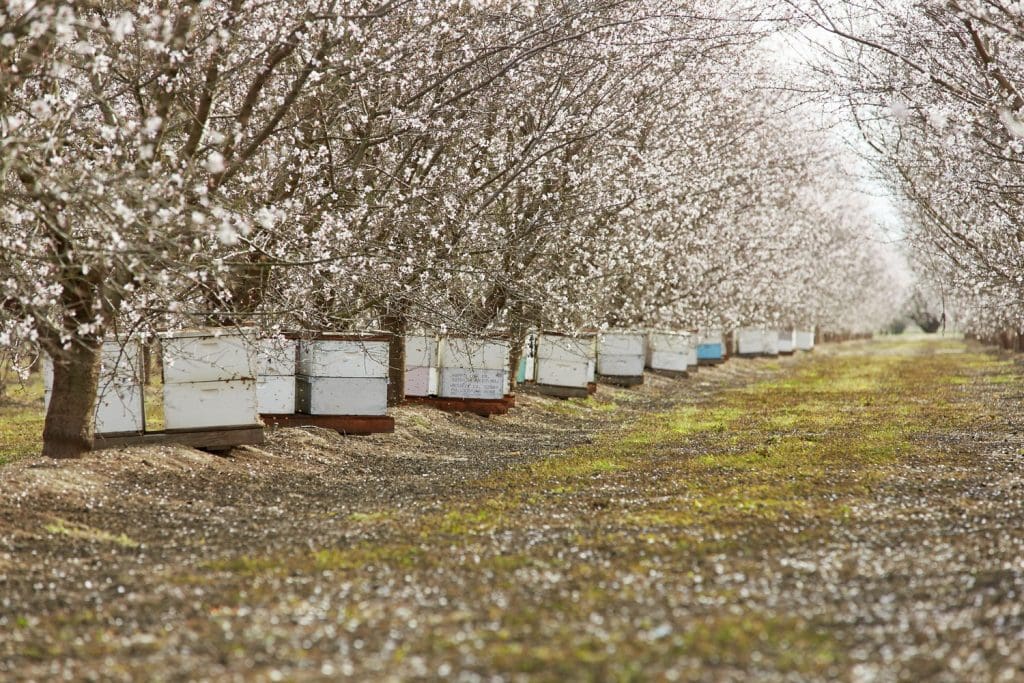
Subsidies: use them as support, not as the foundation of profit
Sectoral apicultural interventions for the period 2023–2027 are implemented through calls for proposals and regional management. Eligibility, eligible items, percentages and deadlines change. In a prudent scenario, do not account for a subsidy until it is approved and separate the subsidy intended for investment from the ordinary income of the activity.
Template for estimating income
| Line | Annual calculation |
|---|---|
| Honey | Productive hives × marketable kg per hive × net price per kg |
| Pollen or other products | Accepted units × net price − specific losses |
| Nuclei or queens | Units sold × net price − replacement cost |
| Pollination | Hives contracted × rate − full service cost |
| Subsidies | Only approved and allocable amounts for that campaign |
Costs: the visible ones and those often overlooked
The cost of an operation varies with geography, access conditions, distances, migratory beekeeping, scale, sales system and labour needs. Therefore, the useful data is not ‘what another beekeeper spends’, but the traceable cost per site, journey, productive hive and sellable kilo.
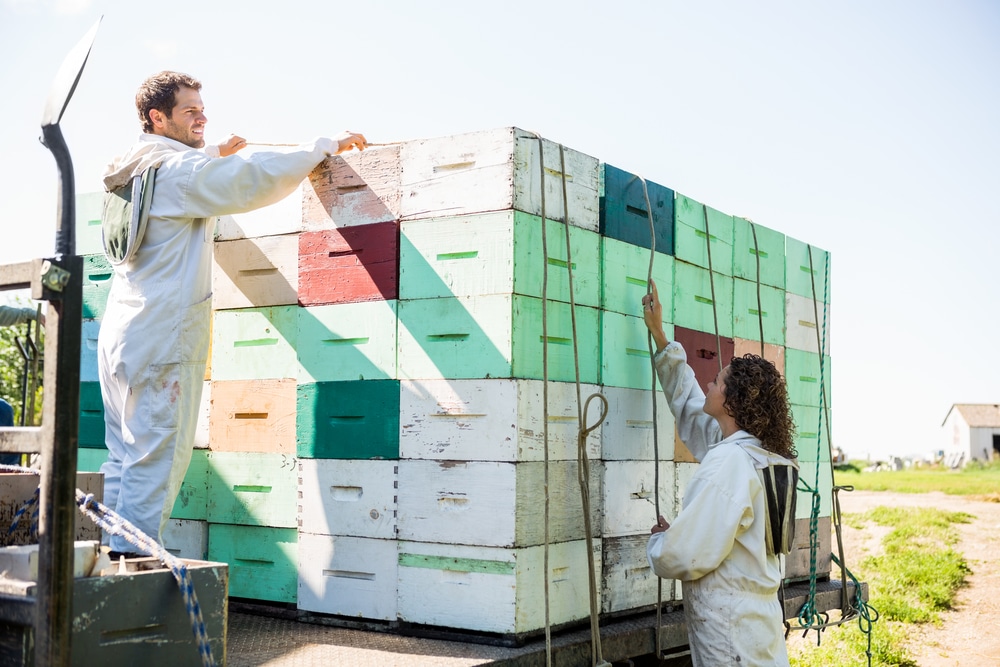
Fixed, variable and semi-fixed costs
| Type | How it behaves | Common examples |
|---|---|---|
| Fixed | Exists even if you produce less that year | Insurance, fixed rental, management services, licences, connectivity, part of the labour force |
| Variable | Increases with hives, production or sales | Feeding, treatments, wax, packaging, labels, commissions, certain transport costs |
| Semi-fixed or tiered | Remains stable until a threshold is exceeded | Another vehicle, an additional person, greater extraction capacity or a new storage facility |
Some costs change category depending on the contract. An annual rental is usually fixed; transport billed per movement is variable. The important thing is to classify them consistently in order to know what changes when adding one hundred hives.
- Health: treatments, diagnosis, losses and replacement. An economic plan without control of Varroa is not a plan.
- Feeding: product, distribution and time. It must respond to a goal; consult the criteria for bee feeding.
- Logistics: fuel, tolls, maintenance, time and payload. Plan every hive relocation.
- Marketing: packaging, wrapping, commissions, samples, trade fairs, advertising, delivery and bad debts.
- Labour: hired staff and owner’s hours, including administration and sales.
Depreciation and amortisation: equipment wears down even if no cash is spent today
An extractor, vehicle, trailer or facility provides service over several years. Amortisation spreads its cost —deducting, where applicable, the residual value— over its useful life. It is an annual cost without a simultaneous cash outflow, but ignoring it leaves the operation unable to replace equipment.
Estimated annual amortisation = (purchase price − residual value) ÷ years of useful life
Educational example: an item of equipment costing €12,000, with a residual value of €2,000 and a ten-year useful life, contributes €1,000 in annual cost. The applicable tax depreciation period should be checked with a professional adviser.
Investment, financing and cash flow: three distinct elements
Starting or expanding requires hives, live stock, extraction equipment, vehicles, facilities and working capital. It is advisable to distinguish:
- Investment: money allocated to equipment that will serve multiple seasons.
- Financing: where that money comes from. Interest is a financial cost; repaying the principal reduces cash flow, but is not an operational expense.
- Cash flow: when you receive payments and when you make payments. An operation with positive accounting profit may still run out of liquidity before selling the harvest.
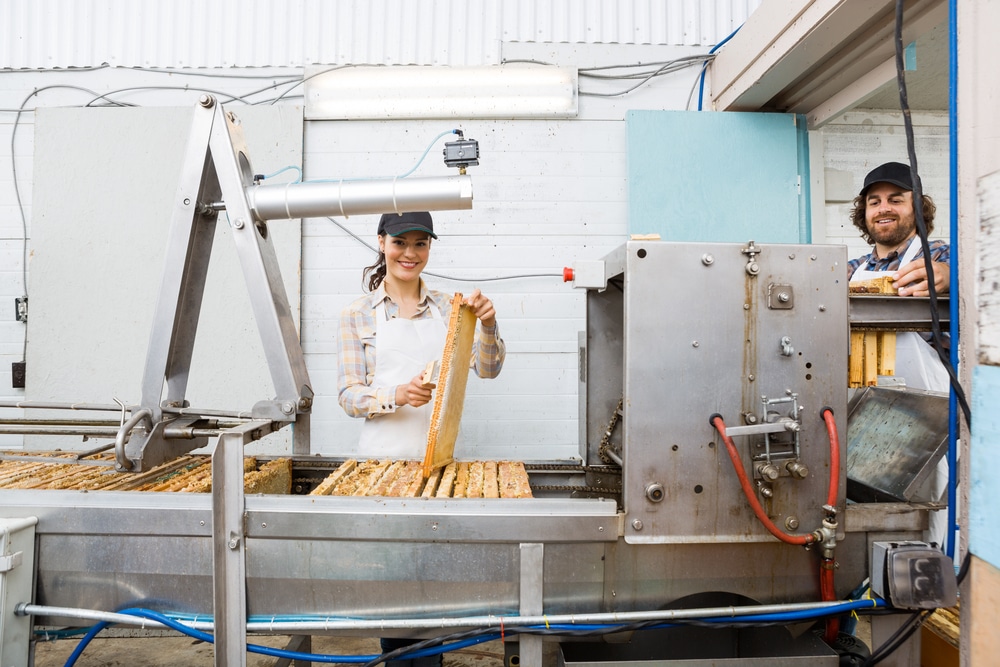
The old example of 500 hives, in context
The National Beekeeping Plan 2020–2022 published two models of 500 hives with wholesale sales. They are useful for learning the structure of an account, but not for copying their figures into a plan for 2026: they use prices, costs, subsidies and reference income from that period.
| Historical model | Honey | Honey and pollen |
|---|---|---|
| Investment | €175,019.75 | €187,819.75 |
| Annual fixed costs | €33,075.94 | €34,357.61 |
| Annual variable costs | €11,775.00 | €11,775.00 |
| Income | €58,070.00 | €65,895.00 |
| Net result | €13,219.06 | ≈€19,582 |
| Indicated production cost | Honey: €2.92/kg | Honey: €2.73/kg · Pollen: €6.68/kg |
The lesson remains valid: diversification improved the model’s outcome, but required additional investment and a different process. Moreover, the honey-only operation’s result at that time was less than half the reference income of 2019. The administrative size of ‘professional’ did not guarantee remuneration for a full working day.
Profitability and performance: calculate three results
| Result | What it answers | Simplified calculation |
|---|---|---|
| Cash flow | Can I pay on time? | Receipts − payments, including investments and principal repayments |
| Accounting result | Does the activity generate profit? | Income − expenses − amortisations − interest |
| Economic result | Is it worthwhile compared to using labour and capital elsewhere? | Accounting result − owner’s labour − opportunity cost |
Taxes are calculated afterwards according to the applicable legal and tax regime; they are not a universal figure that can be subtracted equally from all operations. To properly frame the activity, consult our guide on taxation for beekeepers in Spain.
How many hives are needed to live from beekeeping?
First calculate the contribution margin per productive hive: net income attributable minus attributable variable costs. Then:
Required productive hives = (fixed costs + amortisations + target remuneration) ÷ contribution margin per productive hive
Required registered hives = productive hives ÷ productivity rate
Purely illustrative example: a remuneration target of €35,924.10—the official reference income for 2026—plus €15,000 in fixed costs and depreciation, with a productive-hive rate of 85%. The reference income is the only official figure in this example; replace all the others with your own.
| Contribution margin per productive hive | Required productive hives | Required registered hives at 85 % |
|---|---|---|
| €60 | 849 | 999 |
| €120 | 425 | 500 |
| €180 | 283 | 333 |
Are 100 hives profitable? An example you can recalculate
Colony count alone does not provide the answer. In the calculator’s base scenario, 100 registered hives become 85 productive hives. With 20 kg of saleable honey per productive hive and a net price of €6.33/kg, honey revenue is €10,761. After €3,500 in variable costs, €2,500 in fixed costs and €2,000 in depreciation, the accounting result is €2,761. If 350 hours of the beekeeper’s own labour are also valued at €12/hour, the economic result becomes −€1,439.
| Scenario with 100 registered | Productive · kg · net price | Accounting result | Economic result |
|---|---|---|---|
| Adverse | 70 · 840 kg · €4/kg | −€6,640 | −€11,440 |
| Base | 85 · 1,700 kg · €6.33/kg | €2,761 | −€1,439 |
| Favourable | 90 · 2,700 kg · €8/kg | €14,100 | €10,140 |
The lesson is not that 100 hives lose or gain a specific amount, but that the same census can yield a positive accounting result yet fail to remunerate labour. Replace each assumption with your own data and always compare the three results.
Calculate your own operation using your own data
The spreadsheet includes editable assumptions, accounting profit, economic result, cash flow, required number of hives, three scenarios, sources and automatic controls.
File .xlsx without macros. Edit the yellow cells with blue text and keep the formulas intact.
Do not use a forecast: use three scenarios
| Scenario | Useful assumption | Question to be answered |
|---|---|---|
| Adverse | Lower productivity rate or harvest, conservative price and higher logistical costs | Can I maintain cash flow and health management without urgent debt? |
| Base | Average of several personal seasons, not the best year | Does it remunerate labour and replace equipment? |
| Favourable | Good harvest or better mix of sales channels, with their additional costs | What extraction, packaging and sales capacity do I need? |
Add a combined stress test: lower production, delayed payment, a fuel-price increase and an unexpected replacement cost. If the business works only when the best yield, the best price and no incidents occur all at once, the plan is still not robust.
Beekeeping business plan: ten steps before expanding
- Define the objective: self-consumption, supplementary income, or remuneration for a UTA.
- Measure your actual base: registered hive count, productive hives, losses, reserve nuclei and yield per apiary site.
- Choose flowering periods and routes: plan during the preceding season and avoid unproductive moves.
- Budget for health: monitoring, treatments, efficacy, replacement and time.
- Select the production target: honey, pollen, swarms or services; do not expect all from every colony.
- Validate the market: customers, net price, quantities, calendar, payment terms, and requirements before production.
- Record hours and kilometres: including those of the holder, sales and administration.
- Size the equipment correctly: standardise your equipment and buy enough capacity for the actual bottleneck.
- Separate profit and cash flow: include depreciation, investments, financing and working capital.
- Decide on scenarios: calculate break-even point, worst-case scenario and specific conditions for growth or restraint.
If you are starting out, complete this economic analysis with the administrative procedures for becoming a beekeeper and the mistakes to avoid when starting out in beekeeping.
A talk to think like a beekeeper and like a business owner
The following presentation by the Montañesa Beekeepers’ Association examines an operation with 500 hives. Its main value is not in copying the figures, but in the method: fitting the apiary to the working time available, working with productive units, preparing for nectar flows, controlling bee health, calculating logistics and not overstating income.

An operation is not sized solely by what you can buy, but by what you can manage effectively on critical days.
Conclusion: profitability is designed before the harvest
Beekeeping can be a profitable business, a valuable supplementary activity or a loss-making operation with high turnover. The difference becomes clear when five things are measured rigorously: productive colonies, margin by product and sales channel, actual working hours, logistics and the capacity to withstand a bad year.
Growth does not always improve the result. Sometimes the best decision is to increase the productivity rate, reduce kilometres travelled, sell a portion of the harvest more effectively, standardise equipment or abandon a line that consumes too many hours. Update the account at the end of each season and use it to decide before expanding.
Do you want to build a technical foundation before doing the numbers?
Our online beginner course brings together handling, health management, equipment and planning to understand what a colony needs and what work lies behind every decision.
Frequently asked questions about beekeeping profitability
Is beekeeping profitable in Spain?
Yes, it can be profitable, but it depends on the margin from productive hives, the sales channel, productivity, logistics, health management and labour costs. The census alone does not determine this.
How many hives are needed to live from beekeeping?
There is no universal figure. Divide your fixed costs and depreciation plus the annual remuneration you seek by the margin per productive hive, and adjust the result by your actual rate of productive hives.
How much does a beekeeper earn in Spain?
There is no single salary: a beekeeper may be an employee, self-employed, or the owner of a hive operation, and results vary significantly between bulk sales, direct sales and services. To compare fairly, subtract costs, depreciation and your own labour.
Are 100 hives profitable?
They may generate supplementary income, or, in a high-margin model, a significant return; they may also incur losses. The answer depends on how many are productive, what they sell, at what price, and how many hours and kilometres they require.
Is selling honey a good business?
It can be, if the net margin covers production, packaging, compliance, marketing, distribution, losses and labour. Direct sales often increase income per kilo, but also add costs and hours.
Sources and methodology
- MAPA: Economic indicators of the beekeeping sector 2024
- MAPA: Honey prices, season 2024/2025.
- MAPA: Sectoral Intervention in Beekeeping 2023–2027.
- MAPA: National Beekeeping Plan 2020–2022, used only to contextualise the historical example of 500 hives.
- Royal Decree 209/2002, regulation of beekeeping holdings.
- Order APA/1523/2025, reference income for 2026.
- Eurostat: definition of an annual work unit (AWU).
- Montañesa Beekeepers’ Association: economic study of a beekeeping operation.
Educational content. Prices and subsidies change by season, territory, quality and sales channel. Replace the examples with your own data and verify the tax and accounting implications with your adviser.

ISNI 0000 0005 1801 1100 | Joshua Ivars is the manager of LA TIENDA DEL APICULTOR and the author of this blog, where he shares technical and practical guidance for beekeepers. Drawing on extensive experience in the beekeeping sector, he offers advice and solutions based on beekeepers’ real needs, sharing his knowledge of equipment and essential beekeeping practices.


