 Apipasta with vitamins 15kg
 Beecomplet® Spring 14Kg
 Beekeeper suit with round veil
 Oxalic acid 99% 1kg
 Beeswax Foundation 5kg
 Fresh royal jelly 20g
 Classic honey jar 1kg comb-lines TO77 - Pack of 16 units
 Promotor L Apis 1 litre


 Share in WhatsApp
Véto-pharma diagnostic jar for estimating phoretic varroa on a sample of around 300 bees, with three methods in one tool: alcohol, icing sugar and CO₂.
It measures the varroa riding on the bees, not the varroa inside the capped brood: that is why the figure is read as a series through the year, not as a single snapshot.
01 · THE SAMPLE
The white basket carries two marks: the upper one is about 300 bees and is the one to use; the lower one, about 200, is only for nucs and weak colonies, because with fewer bees you miss just the low infestations you want to catch in time. Take the bees from a frame in the brood nest, always the same kind of frame so the readings compare, and never from the entrance or the super. The trick that saves grief: shake the frame into a wide tub, wait half a minute for the older bees to fly off and check the queen hasn't dropped in; then fill the basket to the mark with the young bees, no drones.
02 · THE THREE METHODS
For the alcohol wash, half-fill the jar, drop in the basket and swirl it round for a full minute without tipping it over: this is the reference method, and if you rush it or the alcohol is watered down the count comes out low. The sample is lost, under 1% of the colony. For the sugar roll, two heaped tablespoons of icing sugar, one minute rolling, three minutes resting in the shade, then shake it out over the lid; most of the bees go back alive, but the count runs low, more so in damp weather or during a flow. With CO₂, five seconds of gas through the holes, ten seconds' wait and fifteen of gentle shaking: the quickest, and the sample goes back alive; count the mites on the lid and in the basket as well, and take it as read that it runs low. For the figure that decides a treatment, alcohol.
03 · THE SUM
In good light, count the mites in the base (brown, oval and all alike) and divide by 3 if you took 300 bees: 6 mites is 2%, or 2 mites per 100 bees; 15 is 5%. It's an estimate for comparing hives and dates, not for arguing over decimals, and a zero isn't a clean hive: it's under 1%. As a guide, the one we publish in our varroa diagnosis post: around 1%, measure again within two months; 3%, treat within the month; over 5%, don't wait. And don't count the apiary as checked on the strength of one hive: wash around ten per site; there is always one well above the rest.
04 · WHEN TO MEASURE
Early spring, to know where you are starting from; with the hive full of brood most of the varroa is under the cappings, and a single mite in the base is already a warning. Between flows, so it does not run away from you while you cannot treat; in the middle of a flow the sugar cakes up. Late summer, the reading that decides the treatment before overwintering. And one or two weeks after taking the product out, same hives and same sample size: measuring afterwards is what separates treating from assuming, because every treatment leaves some behind.
05 · BEFORE YOU BUY
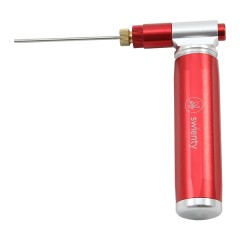
CO₂ needs the Véto-pharma injector and 16 g cartridges, sold separately: one cartridge does three to five hives, and check on its page whether it takes threaded or unthreaded cartridges. For the alcohol wash, methylated spirits or 96% alcohol will do, and so will winter windscreen washer fluid; not soap, the foam hides the base. Filtered, the liquid lasts around ten washes.
| ✓ FITS | Any hive and any format: the work is done on the sample of bees. |
| ✕ DOESN'T FIT | As a measure of the varroa inside the capped brood. |
| ⚠ NOT INCLUDED | CO₂ injector and its cartridges, alcohol or icing sugar. |
| Manufacturer | Véto-pharma |
|---|---|
| Measures | Phoretic varroa on adult bees |
| Sample | Around 300 bees (upper mark); 200 (lower mark) only for nucs or weak colonies |
| Methods | Alcohol, icing sugar and CO₂ |
| Calculation | Mites ÷ 3 (300 bees) or ÷ 2 (200 bees) |
| Material | Clear jar with basket and lid, reusable |
| Consumables | Alcohol or icing sugar; for CO₂, injector and 16 g cartridges (sold separately) |
| Reference | VARR091 |
Specific References
1 file available

Write your question
check_circle
check_circle