 Apipasta with vitamins 15kg
 Beecomplet® Spring 14Kg
 Beekeeper suit with round veil
 Oxalic acid 1kg
 Beeswax Foundation 5kg
 Fresh royal jelly 20g
 Classic honey jar 1kg comb-lines TO77 - Pack of 16 units
 Promotor L Apis 1 litre

 Share in WhatsApp
The mite you can see on a bee's back is the one that worries least. The one that decides the winter is inside the brood, under the cappings.
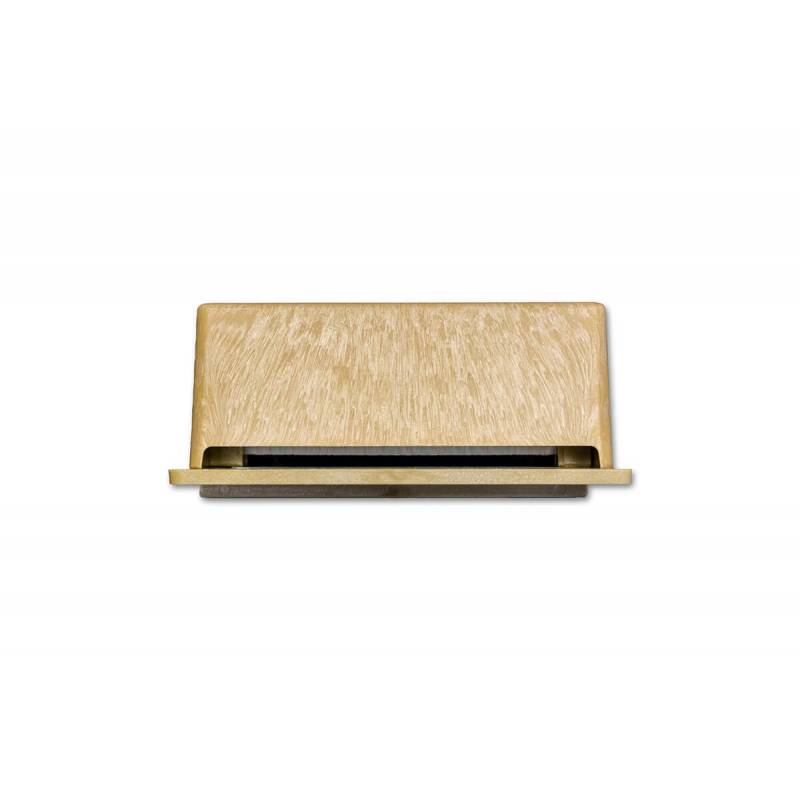
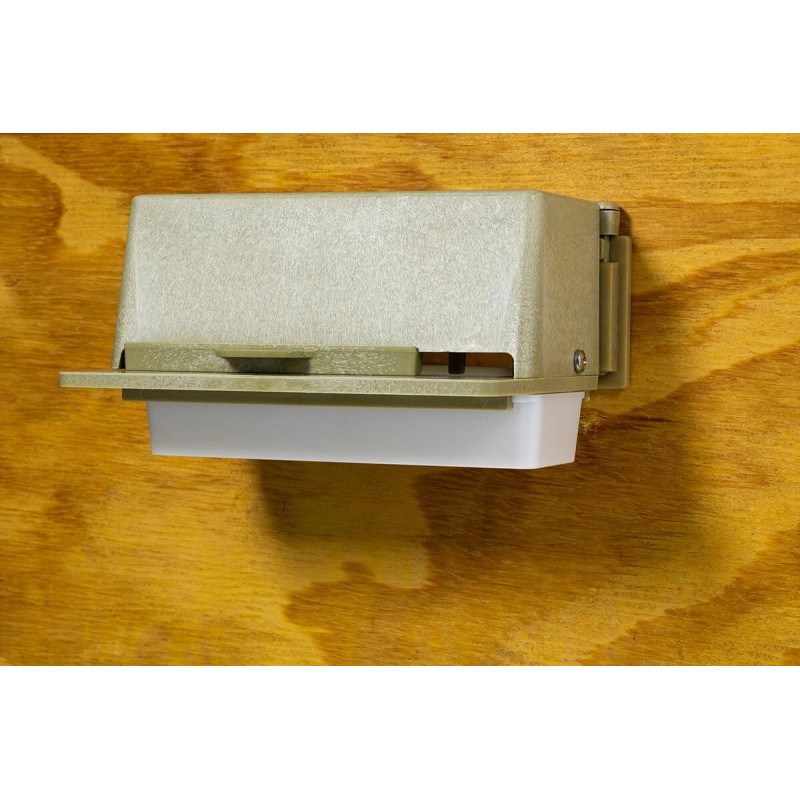
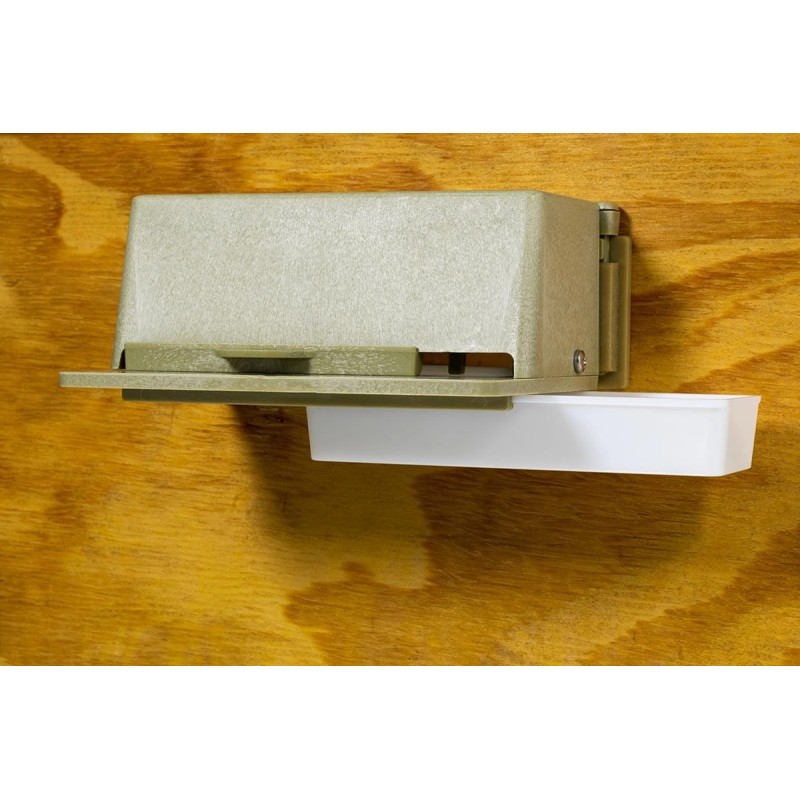
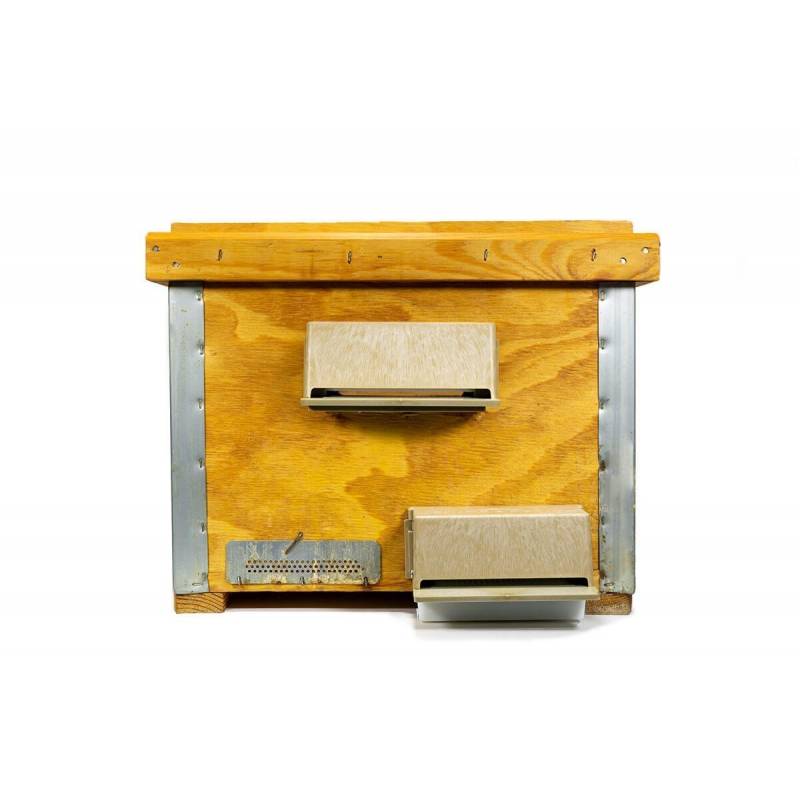
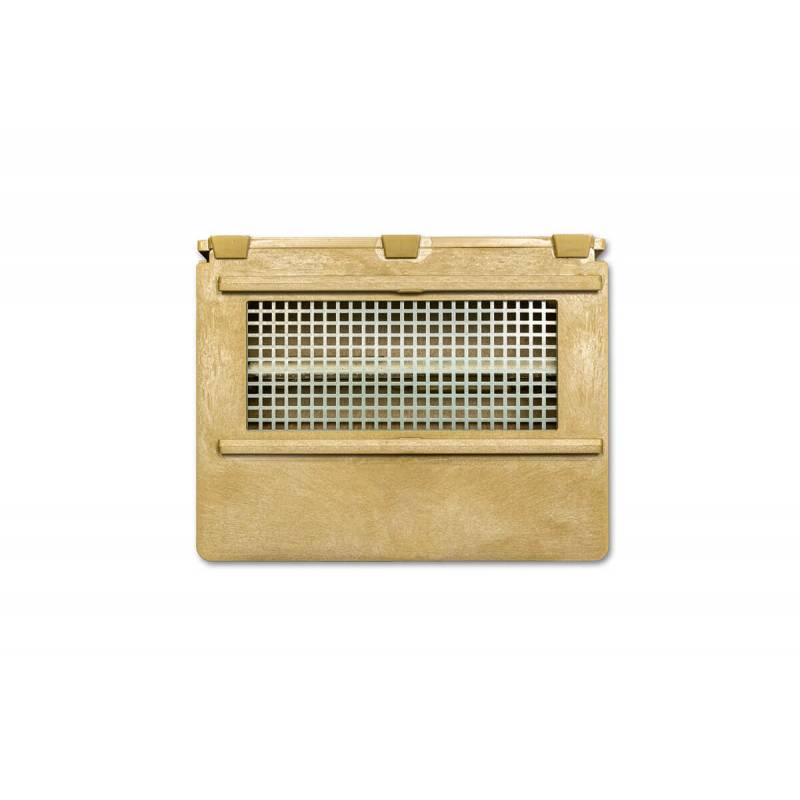
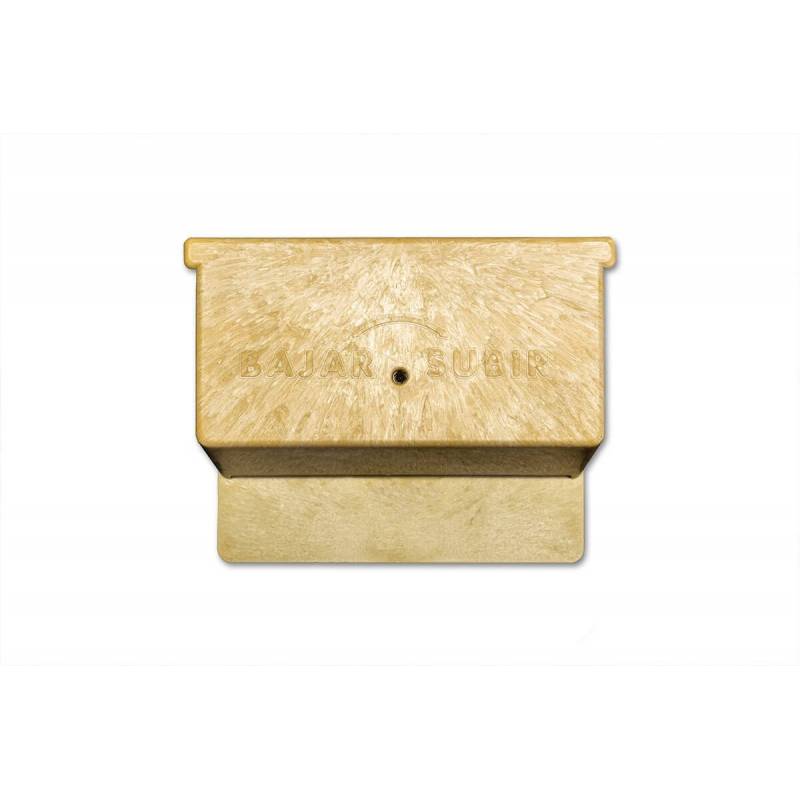
Entrance tunnel with an internal brush, for Layens and migratory hives. Bees pass under the brush on their way in and the bristles sweep off the mites riding on their backs. It is a mechanical add-on, and it pays to know exactly what it reaches.
01 · WHAT IT REACHES AND WHAT IT DOES NOT
The brush sits on top and can only touch the bee's back. It does not act on mites underneath, and that is deliberate: a brush below would also sweep off the pollen loads. So of the phoretic mites — those riding on adult bees — it reaches some, not all.
And the rest it does not reach at all, because the rest is out of sight: in full season most of the mites are inside the capped brood, breeding where no brush goes. Which is why this device belongs to complementary control and not to treatments.
Plainly: it does not replace any treatment. Varroa control is done with authorised veterinary medicines and by monitoring mite fall; this adds to that, it does not stand in for it.
02 · WHERE THE MITE ENDS UP
The device has no collection tray: the mite the brush knocks off falls inside the tunnel itself. And a fallen mite is still alive — left there, it can climb onto the next bee through.
So the routine matters as much as the fitting: open and clean the box regularly through the season, the same way you clean the drawer of a screened floor. A dirty tunnel stops working for you.
03 · FITTING AND ADJUSTMENT
It fits onto the entrance and the brush is raised or lowered with a 5 mm Allen key. It arrives set at a standard gap that suits both small and large bees, and carries a safety stop so the entrance can never be closed off by accident, however far it is tightened.
The lid has two small side doors. They do two jobs: letting out drones or dead bees that would otherwise block the brush, and opening a little on each side in hot weather so some air moves through the tunnel.
The body is high-impact food-grade polystyrene with UV protection, which is what lets it stand sun and cold for a whole season without going brittle.
04 · BEFORE YOU BUY
The fit is narrow and worth checking:
| ✓ FITS | Layens hives and migratory hives. |
| ✕ DOES NOT FIT | Fixed hives and vertical Langstroth or Dadant types, whatever the floor. |
| ⚠ NOT INCLUDED | No entrance closure for transport, no reducer and no collection tray. |
| Type | Entrance tunnel with brush, complementary control |
|---|---|
| Action | On mites riding the back of the adult bee |
| Material | High-impact food-grade polystyrene with UV protection |
| Adjustment | Brush height with a 5 mm Allen key, with safety stop |
| Ventilation | Two small side doors in the lid |
| Compatibility | Layens and migratory hives |
| Reference | PRM001 |

check_circle
check_circle