 Apipasta with vitamins 15kg
 Beecomplet® Spring 14Kg
 Beekeeper suit with round veil
 Oxalic acid 1kg
 Beeswax Foundation 5kg
 Fresh royal jelly 20g
 Classic honey jar 1kg comb-lines TO77 - Pack of 16 units
 Promotor L Apis 1 litre

 Share in WhatsApp
20 × 15 CM, ABOUT 3 THICK: IT FITS INTO THE COMB | PP POLYPROPYLENE; IT STAYS IN THE HIVE ALL YEAR |
4 SEASONS OF USE: SPRING, SUMMER, AUTUMN AND WINTER | 1 HINGED LID: THE QUEEN IS RELEASED WITHOUT OPENING THE NEST |
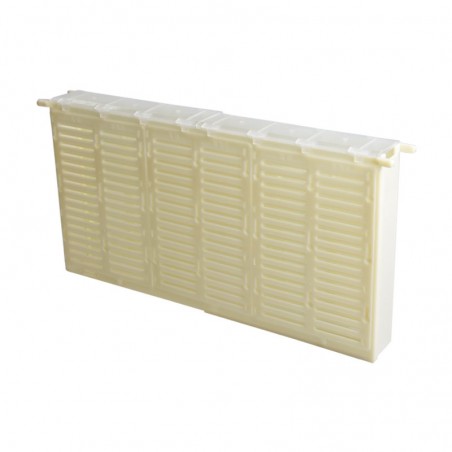
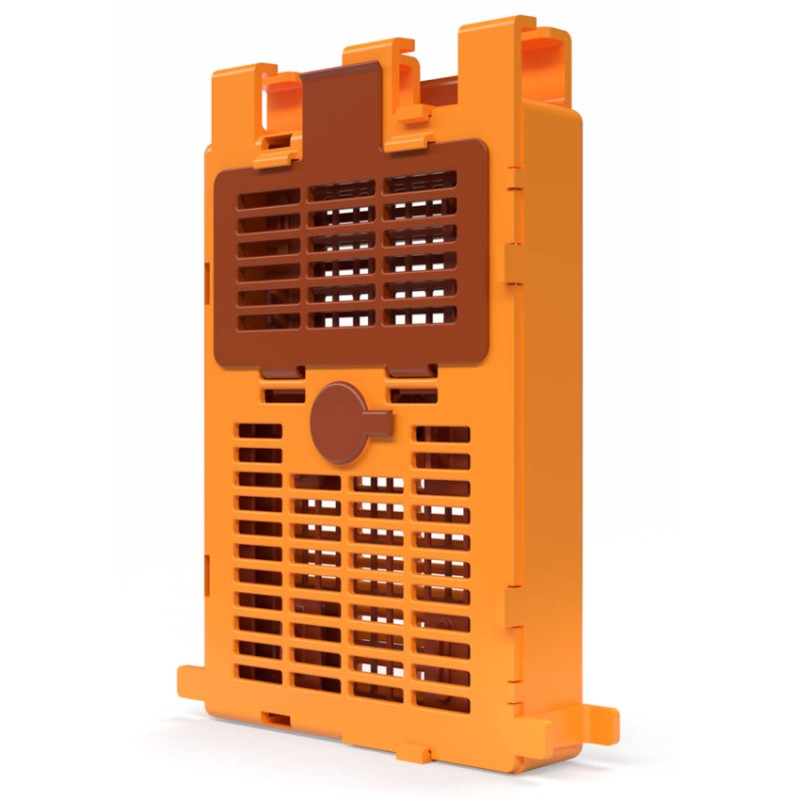
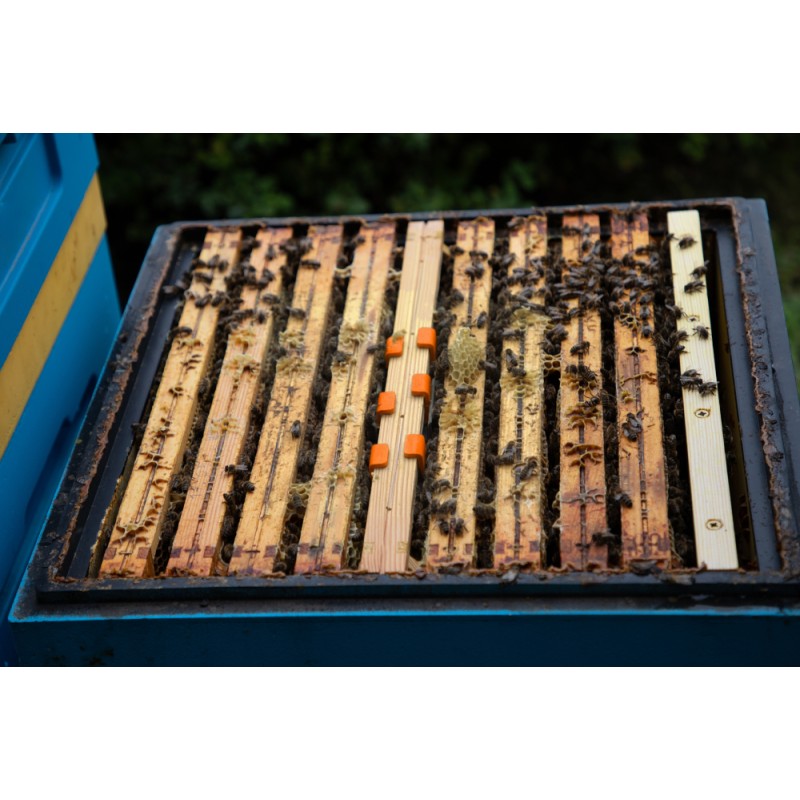
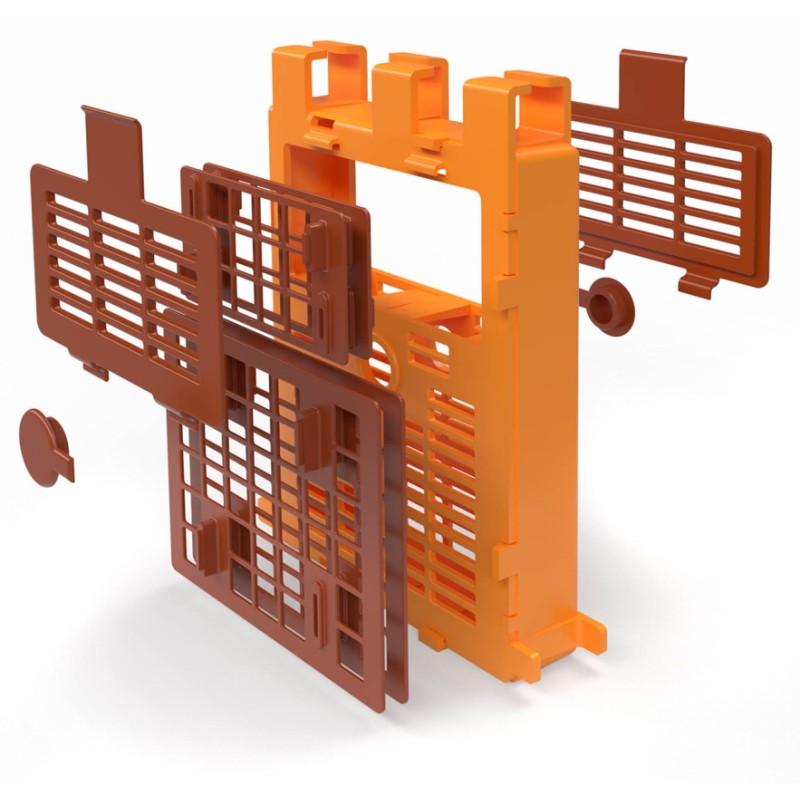
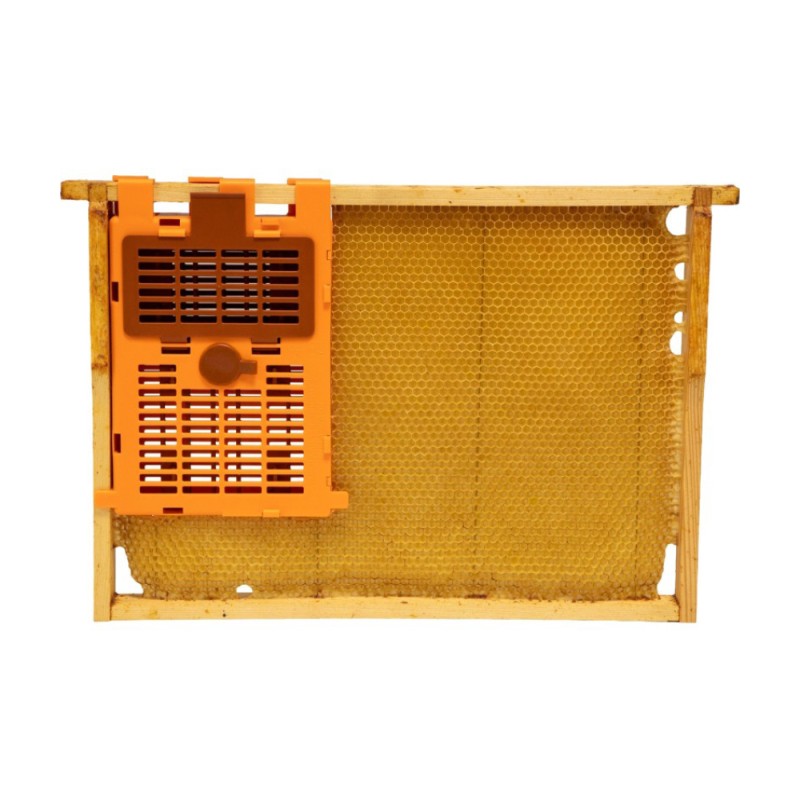
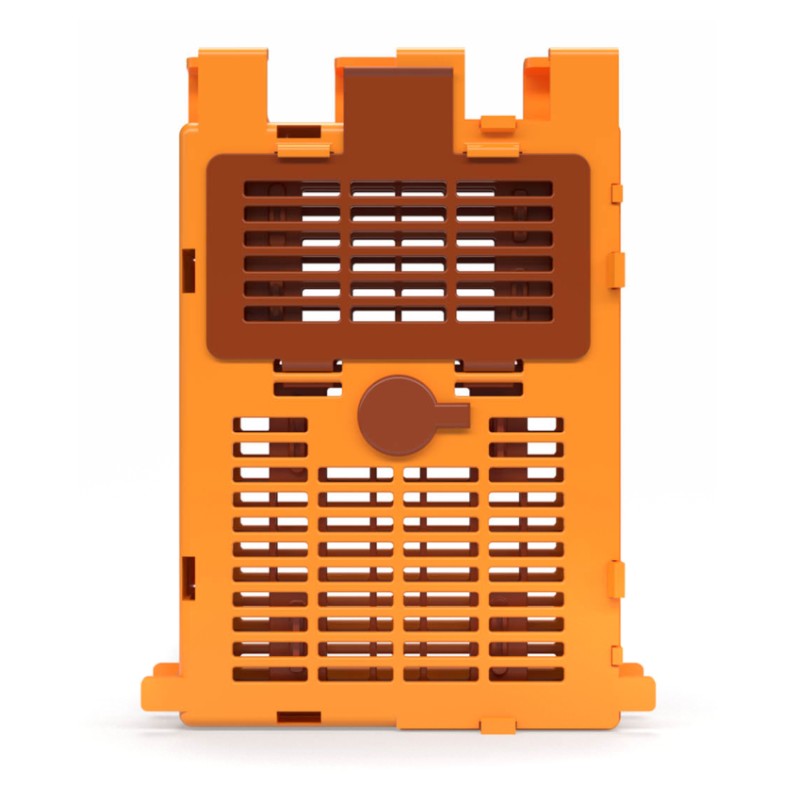
IzoVar queen isolator by LYSON for a controlled brood break against varroa: a polypropylene box of about 20 × 15 × 3 cm that fits into a hole cut in the comb, with a grid that lets workers through and keeps the queen in, a removable insert so they do not build inside and a hinged top lid to release her without opening the nest. It can stay in the colony all year.
Varroa only breeds inside capped brood: with no laying for about 24 days the colony runs out of capped brood and the mite is left on the bees, which is where an authorised treatment reaches it.
01 · THE BROODLESS WINDOW
With the queen confined, laying stops, the capped brood emerges and after about 24 days no capped cell is left for the mite to breed in: all the varroa is phoretic, on adult bees, and there an authorised varroa medicine, applied as its label says, reaches it far better than over capped brood. The isolator creates that window; it is not a treatment on its own and does not replace one. It requires finding the queen, a marked one saves a lot of time, keeping to a calendar and measuring infestation before and after.
02 · HOW IT SITS IN THE COMB
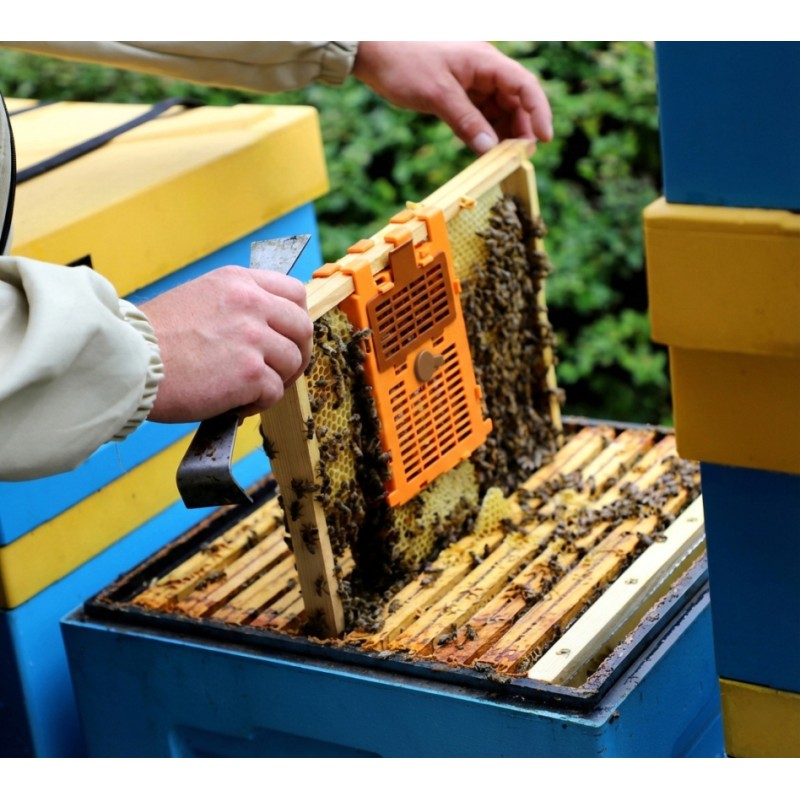
Cut a hole in a drawn comb and fit the isolator in the centre or at one side of the frame, depending on whether the nest runs cold or warm way; it can be done on foundation too, with more work. Both faces are grid: workers go in and out, feed the queen and spread her pheromone, so the colony does not behave as queenless. The removable insert stops them building comb inside and the chamber is roomy so the queen can move. When that comb fills with brood, the isolator moves to another frame.
03 · THE HINGED LID
To release her you open the top lid and that is it: no frame out, no nest dismantled, which in the busy season is time and a calm colony. Through the same opening you introduce a caged queen or a queen cell, so the brood break and the queen change happen in one operation. Fitted in the comb, the IzoVar can stay all year and be used each season without refitting.
04 · WHEN
LYSON proposes four moments: in spring, to curb the swarming urge; in summer, after the main harvest, as part of varroa control; in autumn, to cut late brood and go into winter broodless; and in some systems as a long winter isolation, where its size lets the queen move with the cluster. Brood-break methods fit best when the colony still has time to recover before wintering; the date is set by your area, infestation level and calendar, not by a fixed schedule.
05 · BEFORE YOU BUY
The isolator is supplied on its own; the authorised varroa medicine and the introduction cage come separately.
| ✓ FITS | Anyone running integrated management with monitoring who wants a broodless window so the authorised treatment reaches the mite on the bees. |
| ✕ DOESN’T FIT | Anyone after a stand-alone treatment or who cannot find queens: it requires finding her, keeping a calendar and measuring before and after. |
| ⚠ NOT INCLUDED | Medicine or introduction cage. |
| Reference | 30081 |
|---|---|
| Brand | LYSON |
| Product | IzoVar queen isolator for brood interruption |
| Material | Polypropylene |
| Dimensions | About 20 × 15 × 3 cm |
| Fitting | In a hole cut in the comb, centre or side; movable to another frame |
| Grid | Workers pass through both faces; the queen stays inside |
| Insert | Removable, stops comb building inside |
| Lid | Hinged top to release the queen or introduce a queen or cell |
| Seasons | Spring, summer, autumn and winter |
| Weight | 250 g |
check_circle
check_circle