 Apipasta with vitamins 15kg
 Beecomplet® Spring 14Kg
 Beekeeper suit with round veil
 Oxalic acid 1kg
 Beeswax Foundation 5kg
 Fresh royal jelly 20g
 Classic honey jar 1kg comb-lines TO77 - Pack of 16 units
 Promotor L Apis 1 litre

 Share in WhatsApp
55 × 30 mm CAGE SIZE | 21-30 DAYS OF CONFINEMENT |
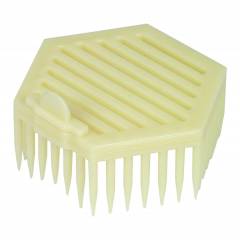
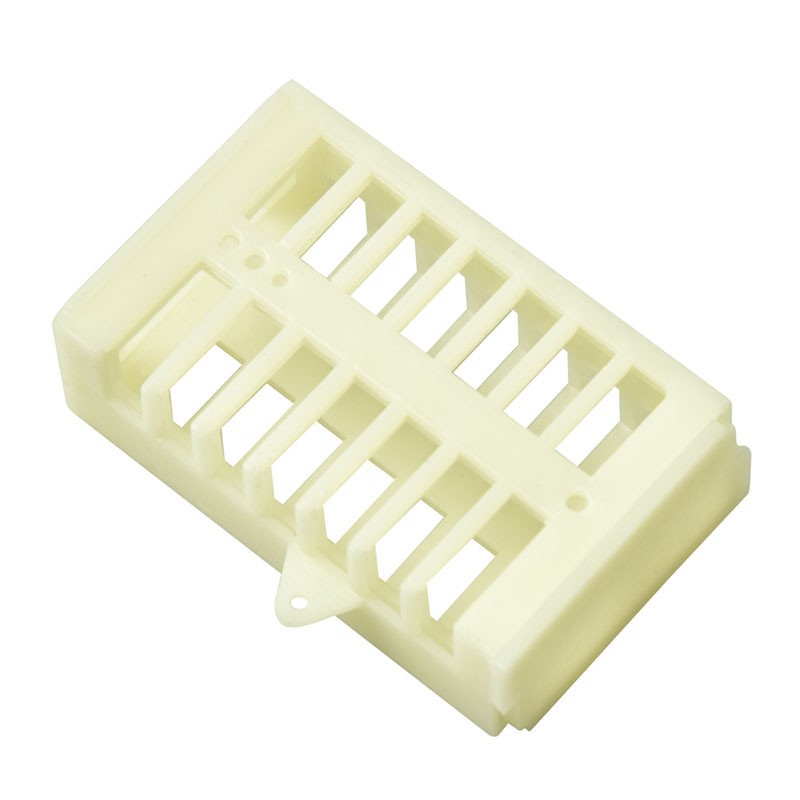
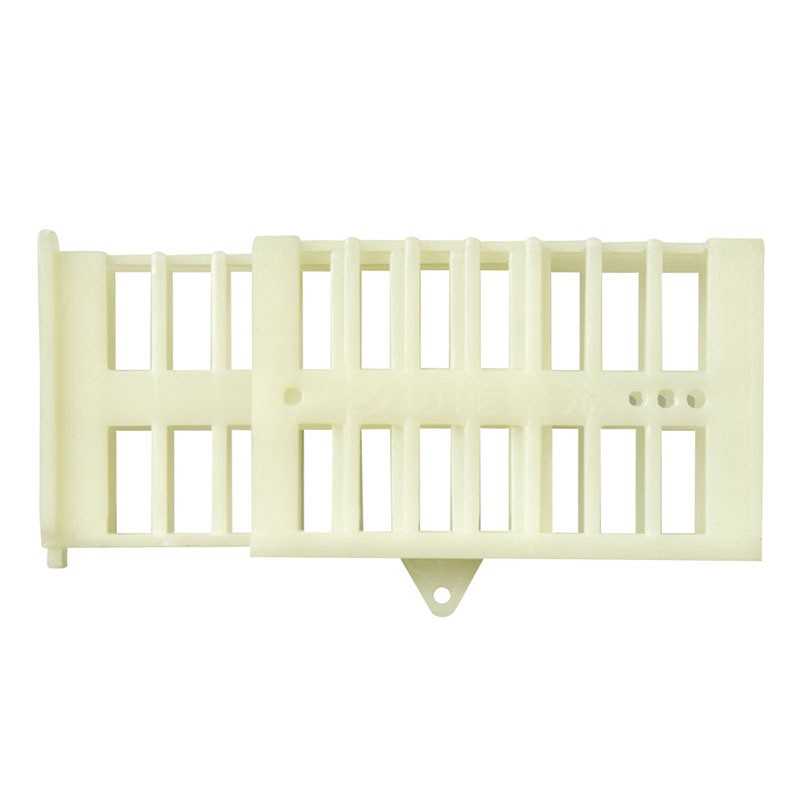
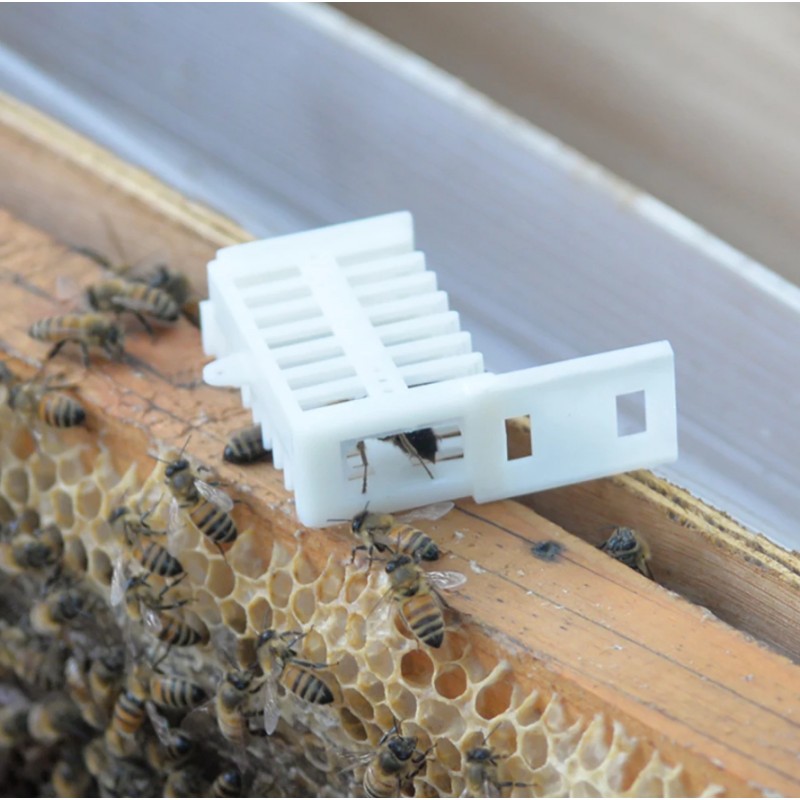
Plastic cage with a sliding lid that rests on the comb and shuts the queen in to stop her laying, with no need to handle her.
Forty cents of plastic that open the one window in which the mite has nowhere to hide.
01 · WHY A BROOD-FREE WINDOW
The mite multiplies inside sealed brood, and for as long as there are capped cells a share of the population is beyond the reach of any application. Stop the laying and the brood already sealed finishes emerging; once none is left, every mite is out on the adult bees, in the phoretic phase. That is the window: at that point you apply whichever authorised treatment applies, within a controlled protocol. The cage treats nothing — what it does is create the moment when treating makes sense.
02 · WORKERS PASS, THE QUEEN DOES NOT
The gap is sized so that workers can come and go and keep tending the queen: that contact is what keeps pheromone distribution and colony cohesion going through the confinement. And there is an important difference from ordinary queen shipping cages, which are not meant to sit inside a hive for a month: there the bees end up propolising the openings and the passage closes. This one's mesh is designed to prevent that. To fit it, rest it on the comb where the queen is and slide the lid across: no picking her up, no handling.
03 · THE CALENDAR RULES
First you have to find her, and that is where the time goes: with a marked queen caging stops being an afternoon of searching and becomes a minute per hive. The usual reference is 21 to 30 days of confinement, but the number is not what decides it: what decides it is that no sealed brood is left, and you check that by looking at the comb, not the calendar. Note the caging date hive by hive — and note the release date too, because a queen left in too long is a colony left with no new bees coming through.
MANAGEMENT KIT, NOT A TREATMENT
This cage is not a medicine and does not replace varroa treatment: it only sets up the situation so that the appropriate one can be applied, authorised and according to its data sheet. Nor is it an automatic practice: it calls for finding the queen, keeping the calendar and releasing her on time, and not every colony or season lends itself equally. If you are unsure when and how it fits your apiary, take it up with your vet or your animal health association.
04 · BEFORE YOU BUY
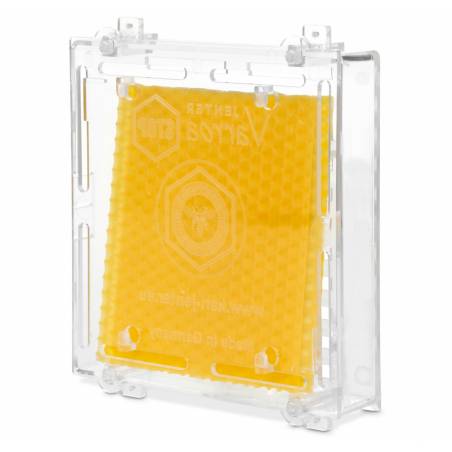
It is sold by the unit, and at this price the sensible count is one per hive you plan to block, plus a few spares. If you want the same thing with more room for the queen, there is the IzoVar isolator: a roomy polypropylene chamber fitted by cutting an opening in the comb, with a hinged lid to release her without taking the nest apart, built to last season after season. One is the quick, cheap option when there are many hives to block; the other gives the queen space and gets reused. Both open the same window.
| LTA reference | QC02 |
|---|---|
| Purpose | Blocking laying — brood interruption |
| Dimensions | 55 × 30 mm · 17 mm wide |
| Material | Plastic |
| Closure | Sliding lid |
| Worker access | Yes — keeps contact with the queen |
| Reference confinement | 21-30 days (absence of sealed brood rules) |
| What it is NOT | A medicine or a varroa treatment |
Data sheet

check_circle
check_circle