

Shortage usually leaves clues well before a colony dies. The entrance, the brood nest and the position of the stores tell different parts of the story. This guide follows the order in which to look for them during an inspection.
Five warning signs to take seriously
- Pale wax crumbs at the entrance, often a sign that the colony is being robbed.
- Drones and pupae being evicted outside the usual seasonal period.
- Dead bees with abdomens conspicuously shorter than their wings. Consider poor body condition alongside other causes.
- Young larvae lying almost dry, with little brood food around them.
- Patchy brood. Hungry bees may remove brood, but Varroa, foulbrood, sacbrood or chalkbrood can also cause gaps. Check colony health before moving comb or assuming that feed will solve the problem.
By the time several signs occur together, the colony may already have been struggling for some time. A severely weakened colony is difficult to recover.
Feed to match the shortage


Apifonda is a carbohydrate fondant. Ultra Bee is a ready-to-use protein patty. Check the brood, stores and incoming pollen before choosing.
Check the stores before choosing a feed
- Record what the bees can reach and what is coming into the hive.
- Return to check colony condition as well as feed consumption.
Why colony nutrition deserves closer attention
More colonies can be competing for limited forage at a site, while drought, heat and irregular weather can interrupt flowering. An autumn failure matters particularly in Mediterranean regions: the colony needs to rear a population able to survive winter and support the first spring brood.
Two foods underpin the natural diet, honey and pollen. They make different contributions.
Honey
Honey begins as nectar, which the bees concentrate and modify with enzymes. A nectar containing around 60% water may finish as honey at about 18% moisture.
The guide gives roughly 50–120 kg as an illustrative range for annual honey consumption per colony.
Honey supplies sugars, water and small amounts of minerals. It contributes very little fat or protein, although ling heather (Calluna vulgaris) honey can contain some protein. Bees use the sugars in several ways.
- They provide building blocks for chitin, the structural material in the exoskeleton.
- Circulating sugars supply energy for flight, walking, respiration and the muscle activity that generates heat.
Glucose and fructose make up most of the sugars. Water, smaller quantities of other carbohydrates, minerals and other constituents make up the rest. The exact proportions depend on the honey.
Avoid feeding old, overheated or unknown-origin honey. Honey can carry American foulbrood spores, and heat or long storage increases hydroxymethylfurfural (HMF), which can harm bees. For a shortage of carbohydrate, use suitable bee syrup or fondant.
Pollen
Workers pack pollen into cells and add nectar or honey and glandular secretions. The resulting stored pollen, or bee bread, supplies nutrients to the nurse bees.
The guide gives about 12–40 kg of pollen as an illustrative annual intake per colony.
Pollen provides sugars, water and minerals, and is the main dietary source of protein, lipids and many vitamins. Bees use these nutrients for several purposes.
- Building muscle and other tissues.
- Producing antimicrobial peptides involved in the immune response.
- Making enzymes, hormones and other molecules needed for normal function.
- Supplying the materials needed to make nucleic acids, including DNA.
- In severe shortage, using some body reserves for energy.
| Constituent | Illustrative pollen composition |
|---|---|
| Sugars | 25–40% |
| Protein | 18–32% |
| Water | 20–25% |
| Fat | 2–6% |
| Minerals | 2–4% |
| Vitamins | Particularly B-group vitamins |
A varied supply reduces the risk of a nutritional gap. The Spanish guide uses four different pollen sources as a practical reference in poor periods. Frost and drought can also affect the quality of pollen, so seeing pollen loads at the entrance does not tell you everything about the diet.
The source describes changes in stored pollen over roughly 10–20 days and some nutrient losses after prolonged storage. Conditions in the hive and the age and origin of the pollen influence its quality.
The whole diet
The balance between honey and pollen changes with brood area, population, temperature and activity. There is no fixed ratio for every colony.

A shortage in quantity or quality affects successive generations. As Brodschneider and Crailsheim set out in 2010, the colony’s diet affects adult workers, nurse bees feed the larvae, and those larvae become the next generation. The consequences of poor nutrition can persist after the first day of renewed forage.
What happens when reserves run down?
A colony relies on two kinds of reserve.
- In the hive, honey and stored pollen in the comb.
- In the bees themselves, nutrient reserves in the fat body of the abdomen.
These reserves help the colony maintain itself and rear brood through poor weather or a gap in flowering. As reserves fall, several changes can follow.
- Brood rearing declines, followed later by adult population.
- Immune function can be compromised, and problems such as foulbrood, nosemosis, chalkbrood and viral disease may become more evident.
Nutritional stress can make a colony less resilient. It does not identify the cause of diseased-looking brood. Examine abnormal brood and obtain bee health advice where appropriate.
What to look for at the entrance
Before opening hives, inspect all the entrances. Mark any with unusual activity or dead bees. Use separate equipment where a disease is suspected and seek advice before working other colonies.
Robbing
During a dearth, strong colonies may rob weaker ones. Look for robbers searching around the entrance and pale crumbs from torn honey cappings. Our guide to hive robbing describes the other signs.
Drones being expelled out of season

As well as adult drones, you may find drone pupae and occasionally underdeveloped worker pupae with short abdomens. The colony may be reducing the brood it can support.

Dead bees with short abdomens

After a cold spell, a pile of dead bees with noticeably short abdomens may point to poor body condition and depleted reserves.
Nosemosis and Varroa infestation (in Spanish) can also affect body condition. Check disease pressure, stores and the brood pattern before concluding that a food shortage was the primary cause.
What to look for on the comb
Too little stored food

Look first for honey and pollen within reach of the bees. A prolonged shortage can leave gaps in the brood as larvae die or are removed and their nutrients reused. Disease may cause a similar pattern.
Too little brood food

Young larvae should be lying in visible brood food. Almost dry cells are an early prompt to check pollen availability, nurse-bee numbers and the condition of the brood.
Brood cannibalism
A colony struggling to feed all its brood may remove larvae or pupae. The resulting pattern depends on the age of the brood removed.
| Brood removed | Appearance on the comb |
|---|---|
| Young larvae under three days old | Gaps among the open brood |
| Poorly developed pupae | Gaps among areas of capped brood |


It is easy to blame the queen for irregular brood. Check accessible stores, nurse bees, mites and signs of brood disease before requeening.
Examining a colony after it has died

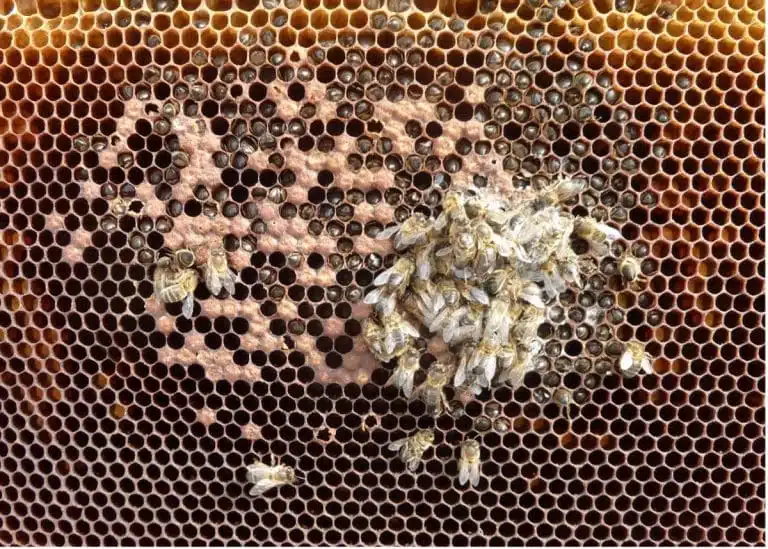
At the end of a starvation event, a small cluster can die tightly packed on a comb, often with bees head-first in the cells. Once the bees can no longer sustain sufficient warmth, the last workers and sometimes the queen die together.
Honey can remain on outer frames. A small cluster pinned down by cold may be unable to reach stores only a few centimetres away. Finding honey in a dead-out does not exclude starvation.
How to respond to a food shortage
Act while there are enough bees to use the feed. Identify what is lacking, make it accessible and check the colony again.
| Decision | Practical point |
|---|---|
| Feed format for the season | Liquid feed is generally easier to use during active weather. Fondant can suit colder periods. |
| Placing the feed | Place it within reach of the occupied, warm part of the hive without splitting the brood nest. |
| Short of honey, with pollen available | Choose a suitable carbohydrate feed. |
| Short of pollen | Assess the need for a suitable protein feed supplying the missing nutrients, alongside carbohydrate if stores are also low. |
Our bee feed range includes different formats. See the guides to honey bee nutrition and when and what to feed for their uses.
Water matters too. In a dry Mediterranean summer, provide a reliable clean source where the site lacks one. Our guide to water for bees explains how to make it safe and accessible.
How can I tell whether a colony is short of food?
Look for robbing, drones or pupae expelled at unusual times, bees in poor body condition, nearly dry young larvae and gaps in the brood. Read these signs alongside accessible honey, pollen, colony strength and disease checks.
How much honey and pollen does a colony consume each year?
The reference ranges used here are roughly 50–120 kg of honey and 12–40 kg of pollen, depending on the colony and season.
Why is there still honey in a colony that starved?
A cold, dwindling cluster may have been unable to move from its central combs to stores farther out. Check where the cluster died in relation to the honey.
Does patchy brood mean the queen is failing?
A food shortage can cause workers to remove young larvae or poorly developed pupae. Varroa and brood disease can also leave gaps. Check stores and colony health before replacing the queen.
Can I feed old stored honey back to the bees?
Avoid doing so. There can be a disease risk even if the source colony looked healthy, and old or overheated honey may contain elevated HMF. Suitable bee syrup or fondant is a better choice for a carbohydrate shortage.


