


Field test and further reading


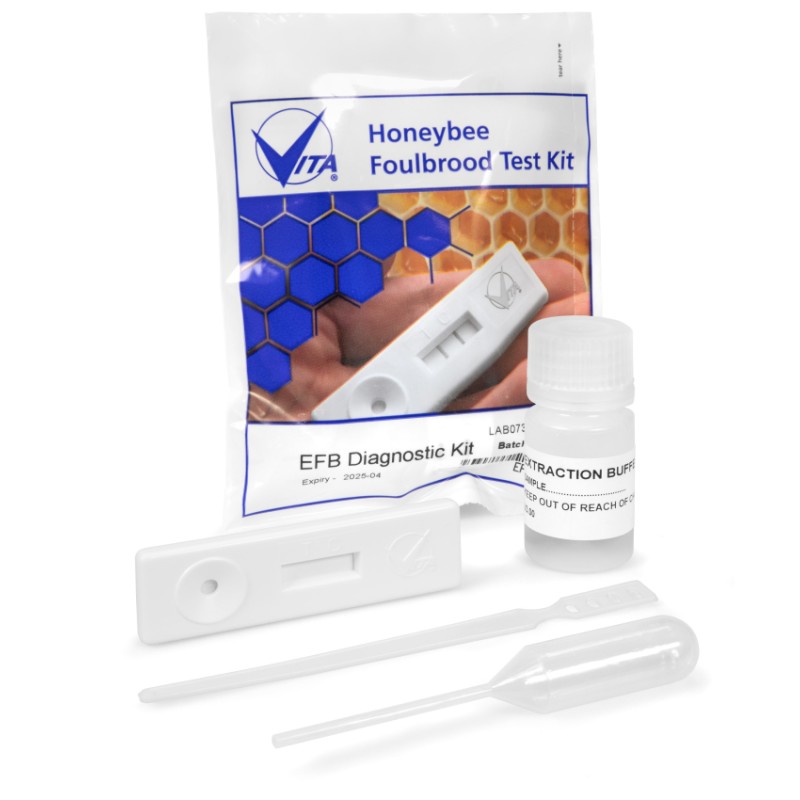
The Vita kit is a rapid field test for European foulbrood. Follow its directions and ask your bee inspector about confirmation and any movement restrictions.
Record what you find
- Note the hive, date and signs observed.
- Keep the test lot and result for your inspector or veterinarian.
What is European foulbrood?
European foulbrood (EFB) is a disease of honey bee brood caused by the bacterium Melissococcus plutonius. Affected worker larvae often die shortly before their cells would normally be capped.
A colony can have very few visibly affected larvae. Signs may become harder to see during a strong nectar and pollen flow.
Signs can recur when the colony comes under stress. An apparently healthy brood frame on the next visit cannot establish that the problem has cleared.
European foulbrood occurs in many countries. Work in Switzerland by Luc Belloy and colleagues is one example. Local disease pressure, nutrition and other stresses can all affect the picture in an apiary.
Laboratory testing has improved surveillance. PCR can detect small amounts of bacterial material in colonies with no visible signs. An inspector or laboratory can help interpret a result alongside the brood examination.
When is it most likely to appear?
Beekeepers often first notice signs during rapid colony growth, when a large area of brood needs feeding.
A shortage of suitable food can add to the pressure. Marta Guarna and colleagues studied nutrition in Canadian colonies providing blueberry pollination.
Protecting the rest of the apiary
A colony that appears healthy can still carry the bacterium. Avoid sharing equipment or moving combs once a case is suspected.
Nutrition and colony condition influence how much disease is visible. Workers sometimes remove affected larvae before the beekeeper sees them.
Adult bees and ordinary hive materials can carry contamination. Keep the suspect hive’s tools, food and combs separate and seek advice from the bee health authority.
Capped cells can also be involved. Follow the inspector’s instructions for the whole colony, including comb that appears clear.
What does affected brood look like?
Healthy larvae are pearly white. Affected larvae can turn dull ivory or beige and may lie twisted, stretched or slumped against a cell wall. Older remains may darken. Some larvae still show segmentation.
Workers remove many dead larvae. Others dry into a scale against the lower wall of the cell.


On the comb, look for the following signs.
- A patchy brood pattern with gaps where developing bees have died.
- Larvae lying in unusual positions in their cells.
- Loss of the healthy pearly sheen. Larvae can become ivory, beige or light brown.
- A sour or fermented smell is possible, but there may be no unusual smell at all.
- Dry scales in cells where dead larvae have remained.
These signs justify a call to your bee inspector or veterinarian. A European foulbrood field test can support an assessment. Follow the authority’s instructions on confirmation and sample submission.
What should you do if you suspect EFB?
Mark the hive, stop exchanging bees, food, tools or combs, prevent robbing and contact the local bee health authority. Leave colonies and equipment at the site while you wait for instructions. In England and Wales suspected cases must be reported to the National Bee Unit immediately.
When few larvae appear affected
The inspector will assess the colony and advise whether supervised management is appropriate. Nutrition, the space the bees can cover, comb condition and queen performance may all need attention.
Keep the colony’s equipment separate
- Keep all material from the suspect colony on site and away from other hives.
- Ask which equipment can be disinfected and which must be disposed of. Follow the approved process for the material and the directions on any authorised disinfectant. Keep removed comb out of use.
Practical decisions for the beekeeper
- Separate the suspect hive in your records. Obtain the inspector’s clearance before moving it anywhere.
- Keep a record of repeated outbreaks before choosing breeding stock. Record recent introductions of bees or comb as well as changes in stores.
- Keep affected and healthy colonies separate. Ask the inspector how to support a weak colony and whether its occupied space needs adjusting.
- Set surplus frames aside for disposal or treatment as directed. Keep them out of other colonies.
- Review the colony’s access to forage and its nutritional condition.
A varied pollen supply supports brood rearing and normal colony activity. Supplements, oils and tinctures are not established treatments for EFB.
- A nectar flow can improve the colony’s appearance while contaminated material remains. Consult your inspector or veterinarian before considering any move.
When a colony is severely affected
- In a severe or recurrent case, the competent authority may direct destruction of the colony. Follow its instructions.
- Ask the authority how to clean and disinfect the equipment.
- Keep brood and pollen frames out of circulation. Follow the veterinarian’s or inspector’s directions on their disposal.
- Keep honey from an affected colony out of bee feed. Ask the competent authority about its permitted use or disposal.

Inspect brood regularly. A patch of discoloured or twisted larvae is reason to call for advice, even in a well-fed, strong colony.


