

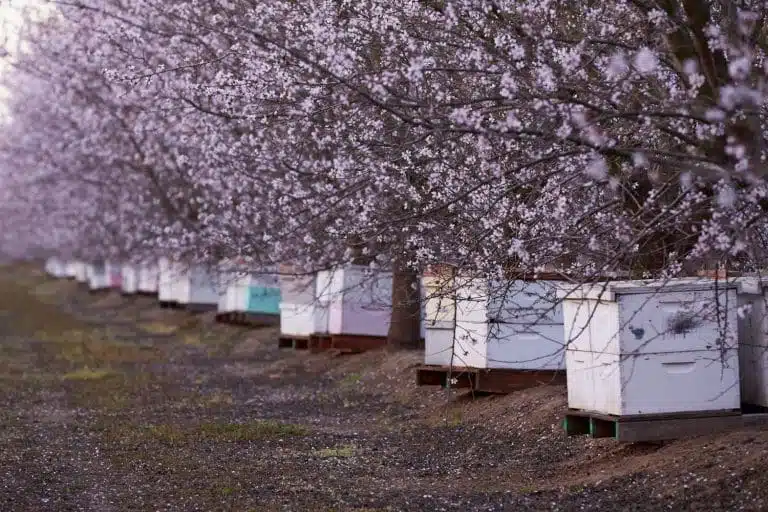
In a pollination contract both parties take on measurable responsibilities. The beekeeper supplies healthy, strong colonies at the right stage of bloom. The grower provides clean water and agrees a spray plan that protects the bees. Here are the figures to discuss and ways to check what happened in the field.
Pollination services at a glance
| Contract item | Starting point for discussion |
|---|---|
| Colony strength | Specify the crop, hive and frame size. A common example is eight frames covered with bees and three frames of brood, including one with open brood. |
| Stocking density | Agree this for the crop, cultivar, strength of the colonies and layout of the field. Four to ten colonies per hectare is an example range. |
| Placement | On crops that are difficult to cover, groups about 300 m apart are one option. Vary entrance orientation and keep clear of vehicle routes and workers. |
| Arrival | Agree the stage for each cultivar. A starting point for discussion is 10–20% of flowers open. |
| Removal | Promptly when the agreed service ends. |
| Water | The grower supplies clean, accessible water. |
| Crop treatments | Agree a spray-free service period and sufficient notice to remove the hives if a treatment becomes unavoidable. |
Water for a pollination site

The ANEL drinker needs a continuous water supply from a suitable tank or pipe. Check the fittings, pressure and water source before installation.
Agree the water supply before moving the hives
- Record the location, access and who will maintain the water point.
- Check that the drinker works and stays clean throughout the service.
Why growers hire pollination services

Flowering plants need pollination to produce seed. Fossils show that insects and flowering plants have interacted for over 100 million years. Nectar and pollen supply energy and protein to visiting insects. As bees move between flowers, they carry pollen to receptive stigmas, allowing cross-pollination in crops that need it. Our introduction explains how pollination works.
The farm landscape has changed. Large single-crop fields, regional specialisation and the removal of vegetation between rows and around field margins leave fewer nesting and foraging opportunities for wild pollinators.
Growers therefore hire honey bee or bumblebee colonies to improve fruit set, seed set and quality. Delivering a commercial service means agreeing a price, a specification and a way to check performance.
An example at scale: California almonds

California’s almond orchards illustrate the scale of the operation. In the period discussed here, the state produced roughly four-fifths of the world’s commercially traded almonds. In very large plantings, wild pollinators from field edges may not reach the interior in sufficient numbers. Beekeepers bring in colonies from across the United States for almond bloom.
Figures from the reference season
- Estimated demand was about 2.5 million colonies.
- The US colony total used for comparison was about 2.6 million.
- Approximately 1.85 million colonies were reported as supplied in the reference season.
- The reported average hire fee was US$194 per colony, about €172 at the exchange rate used at the time.
These figures describe the 2020 reference period. Use current local contract figures when pricing a service.
Those figures put the estimated demand for one crop close to the entire national colony count. Availability depends on colony strength, health, transport and timing as well as on the total number of hives.
Which crops use the service in Spain?

Spanish growers hire colonies for almonds, apples and other tree fruit, melons, blueberries, watermelons, greenhouse crops and seed production. The variety of crops and sites makes a written specification valuable to both parties.
What sort of colony should the beekeeper supply?
A pollination colony must be healthy and well populated. Agree a minimum for the crop and the hive format, and specify the frame size. One commonly used specification calls for the following.
- Eight frames covered with adult bees.
- At least three frames of brood, including one with open brood.
Open brood matters because larvae need feeding and stimulate pollen collection. A hive may look busy at the entrance yet make a poor pollen-foraging unit if there are few larvae to feed.
A thorough check before loading the colonies helps prevent disputes once they are on site.
Where to put the hives, how many to use and when to move them
Where to put them
Bees often work within about 1–1.5 km, although they can fly farther. For a difficult crop, consider groups spaced roughly 300 m apart to cover the field more evenly. Vary the entrance directions and provide landmarks to reduce drifting. Keep hives clear of workers and traffic, with clean water nearby. Read more about water for honey bees.
How many hives per hectare?
Crop, cultivar, colony strength and planting layout all matter. Four to ten colonies per hectare is a possible starting range. If the units contain fewer foragers or little brood, the same number of hives may deliver fewer flower visits. Agree minimum colony strength as well as a stocking rate.
When to bring the hives in
Aim for the start of bloom. Agree a threshold for each crop and cultivar, with 10–20% open flowers as one starting point. If colonies arrive too early, their foragers can become faithful to neighbouring flowers. Some growers prefer to have hives ready as the first blossoms open.
When to take them out
Remove colonies promptly once the service ends. A grower may need to resume crop protection immediately after flowering. A late pickup leaves the bees exposed.
What the grower should provide
In addition to paying the agreed fee, the grower takes responsibility for two practical matters. Put both in writing.
- Provide clean water at points the bees can safely reach.
- Agree to suspend applications of insecticides, fungicides and herbicides that could expose the colonies. If an application becomes essential, give the beekeeper sufficient warning to remove the hives safely.
An unexpected spray during bloom can cost the beekeeper an entire load of colonies. Put the emergency contact, required notice and removal arrangements in the contract before the hives arrive.

How to check pollination in the field
Count bees on the trees
Divide the tree visually into six sections and count bees visiting flowers for 10–15 seconds. Repeat at comparable times and in comparable weather, using the same method on each visit. The crop adviser should set a suitable target and check it against fruit or seed set.
How many visits does a flower need?
A review by Lucas Garibaldi and colleagues gives indicative figures for several crops. The number of visits matters because each flower remains receptive for a limited time.
| Crop | Approximate visits needed per flower | Days the flower is receptive |
|---|---|---|
| Apple | About 10 | 3 |
| Watermelon | 8–12 | 2 |
| Blueberry | More than 10 | 2 |
A crop that needs about ten visits in two or three days gives little room for late delivery or uneven coverage. Check when flowers are receptive and whether bees are reaching them throughout the planting.
Count bees at the hive
Count the bees leaving a hive over a fixed interval. Keep time of day, weather and method consistent. Flight at the entrance shows colony activity. Flower observations and fruit or seed set tell you more about the service delivered to the particular crop.
Check the harvest
Compare fruit quantity and quality at different distances from the hives. A gradient can suggest uneven pollination, although variety, weather and field conditions can also affect the result.
What belongs in the contract?
Grower and beekeeper can use a short written agreement to make the following points clear.
- When the colonies arrive and leave.
- The number of hives and their exact locations.
- Colony quality, including the frame format and the required frames of bees and brood.
- The price and payment terms.
- Field management and crop-protection practices while the bees are present.
- Emergency contacts, the method of notification and the time allowed for hive removal.
- The location of water points and who will maintain them.
A clear agreement lets both parties judge the season on its results and gives them a basis for working together again.
What colony strength should a pollination contract specify?
Specify the hive and frame size and agree a minimum for the particular crop. One example is eight frames covered with bees and three frames of brood, including one frame of open brood. Larvae encourage pollen foraging.
How many hives per hectare are needed for pollination?
The figure depends on the crop, cultivar, colony strength and planting layout. Four to ten is an example starting range. A unit with fewer bees and less brood contributes fewer foragers.
When should the hives arrive?
Bring them in at the start of the agreed bloom stage. Ten to twenty per cent of flowers open is one possible reference. Colonies arriving earlier may concentrate on other plants that are already flowering.
How can the grower tell whether the bees are pollinating the crop?
Count flower visitors and entrance activity with a consistent method in comparable weather and at the same time of day. Agree crop-specific targets and check fruit or seed set afterwards.
Can the grower spray while the colonies are present?
The contract should set out the agreed spray-free period for insecticides, fungicides and herbicides. If a treatment is unavoidable, notify the beekeeper early enough to move the hives and follow the label and local rules.
Further reading: the pollination guide from Pajuelo Consultores Apícolas and Garibaldi and colleagues’ paper on monitoring pollination services.


