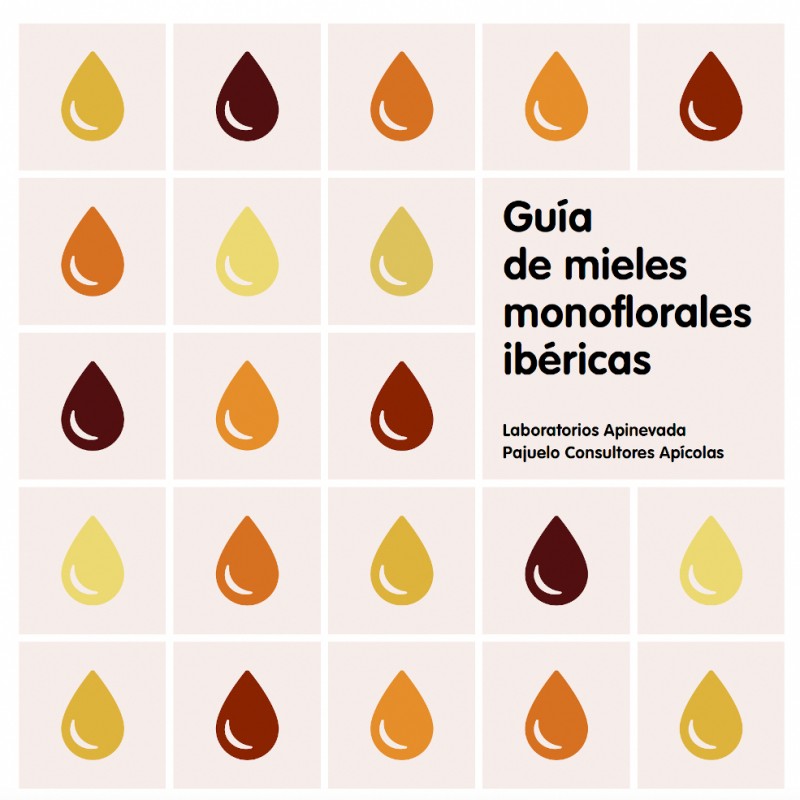


Rosemary honey and a tasting reference


Compare a labelled Spanish rosemary honey with the floral and sensory profile in the printed guide. Read the jar’s origin and lot details alongside your tasting notes.
Compare the description with the harvest record
- Read the origin and lot number on the label.
- Compare aroma, colour, crystallisation and any analysis supplied.
At a glance
Rosemary honey
Salvia rosmarinus (formerly Rosmarinus officinalis)
Colour
Very paleup to 35 mm Pfund
Aroma
Gentle floral scenthints of camphor and fresh beeswax
Taste
Clean sweetnesssometimes slightly acidic
Crystallisation
Fine or coarsedepending on the accompanying flowers
Season
Early springJanuary to May, depending on site
Region
Central and south-eastern Spainoften on limestone
Pollen reference
12%of Rosmarinus officinalis
Conductivity
up to 0.30 mS/cmamong the lowest in the guide
A Mediterranean classic and one of the few honeys that can look almost like water. Its pollen, flavour and harvest season tell different parts of the story.
Rosemary is among Spain’s best-known monofloral honeys. It is pale, lightly scented and cleanly sweet, with a gentler character than chestnut or thyme. Spanish rosemary honeys have won prizes at home and elsewhere in Europe. Securing a recognisable crop year after year is harder: it depends on the weather over two growing seasons.
This profile covers the features you can check in the jar, on the beekeeper’s harvest record and in the laboratory. It also explains which observations can support a claim about floral origin.
Why rosemary honey can look almost transparent
Honey colour is measured in millimetres Pfund on a scale running from water-white to dark amber. The Iberian guide gives rosemary a maximum of 35 mm Pfund, near the pale end. In a good flow, with combs from other flowering periods kept separate, a sample can look almost like water.
Pfund scale · where rosemary honey falls
Rosemary falls towards the pale end of the scale. A medium or dark amber sample falls outside the guide’s typical range. Other flowers or honeydew may have contributed. The screen colours are approximate. An instrument gives the actual reading.
Aroma, taste and texture
Technical tasting separates the smell at the nose, the aroma that reaches the nose from the mouth, the basic tastes and the texture. Rosemary honey usually smells faint, becomes a little more expressive on the palate and leaves a clean sweetness.
Sensory profile
Our interpretation of the descriptions in the Guía de mieles monoflorales ibéricas. The dots represent our comparison of the guide’s written descriptions and are not laboratory scores.
Aroma
The aroma is floral, low in intensity and of medium persistence, with hints of camphor and fresh beeswax. As it warms in the mouth, accompanying flowers become easier to pick out. Almond can add a fruity note and legumes can bring a faint smell of raw flour.
Taste
Chiefly sweet, sometimes with a slight acidity familiar in mint-family honeys. A substantial contribution from viper’s bugloss (Echium) can give it an unusual, slightly oily mouthfeel.
Crystallisation
Other flowers influence the texture. Almond often gives a fine, almost creamy set, while white wall-rocket (Diplotaxis erucoides) can produce coarser crystals. Crystallisation is a normal change in honey. Our guide explains why honey crystallises.
Interpreting the laboratory profile
The table combines the guide’s floral profile with general honey composition limits. The reference column gives the figure and the last column explains its practical significance. Floral origin is assessed using several lines of evidence together.
| Parameter | Reference limit | How to interpret it |
|---|---|---|
| Colour | up to 35 mm Pfund | Very pale. A darker reading suggests a contribution from other flowers or honeydew. |
| Moisture | up to 18% | Higher moisture increases the risk of fermentation in storage. |
| Fructose and glucose combined | at least 60% | This sugar measurement helps characterise blossom honey. It cannot rule out adulteration on its own. |
| Sucrose | up to 5% | Sucrose falls as nectar ripens. The source reports initial readings up to 13% during exceptionally rapid flows; those are not a marketing limit. |
| Electrical conductivity | up to 0.30 mS/cm | Conductivity reflects mineral content. Rosemary’s is low. Honeydew or heather can raise the reading. |
| Free acidity | up to 50 meq/kg | Free acidity may rise during fermentation or extended storage. |
| HMF | up to 40 mg/kg | HMF generally starts low in fresh honey and rises with heating and age. |
| Diastase activity | at least 8 Schade units | An enzyme contributed by the bee, sensitive to heat. EU rules provide a minimum of 3 for honeys with naturally low enzyme content when HMF is no more than 15 mg/kg. |
| Rosemary pollen | at least 12% | The guide’s pollen reference for this botanical origin. It does not measure nectar purity. |
The figures are drawn from the Guía de mieles monoflorales ibéricas, fourth edition (2023), and the composition standards in EU Directive 2001/110/EC and Spain’s Royal Decree 1049/2003.
Why 12% rosemary pollen does not mean 12% rosemary nectar
The 12% reference is a share of the pollen counted, not a measure of nectar purity. Rosemary contributes plentiful nectar relative to the amount of its pollen that reaches the honey. It can therefore dominate a harvest while accounting for a comparatively small share of the grains.
Reference percentages differ between plants because their pollen and nectar contributions differ. Here are several examples.
| Honey | Minimum pollen | Reason |
|---|---|---|
| Ling heather and strawberry tree | 8% | Very little pollen reaches the honey relative to the floral contribution. |
| Rosemary, thyme, savory and French lavender | 12% | Mint-family plants often provide abundant nectar but comparatively little pollen. |
| Citrus blossom and lemon blossom | 15% | Citrus pollen is often under-represented. |
| Acacia, almond and apple | 20% | Intermediate pollen representation in these profiles. |
| Heather, carob and loquat | 30% | A substantial pollen contribution in the guide’s classification. |
| Albaida, sunflower, oilseed rape and sainfoin | 45% | Higher reference percentages reflect the abundance of pollen. See the individual profiles for exact cut-offs. |
| Eucalyptus | 70% | A large pollen contribution relative to nectar. |
| Chestnut | 75% | A little nectar can introduce a great deal of pollen. |
Reference figures from the Guía de mieles monoflorales ibéricas, fourth edition. For an explanation of the count, read our guide to honey pollen analysis.
What else turns up in rosemary honey? Evidence from 255 samples
The pollen spectrum of Iberian rosemary honeys often includes the following.
- Legumes
- White wall-rocket
- Almond
- Rockroses (Cistaceae)
- Late-season carry-over, including heathers and brambles.
These other flowers help explain why two rosemary honeys rarely taste exactly alike. Almond can add fruitiness and finer crystals, wall-rocket can give a coarser set, legumes a flour-like note and viper’s bugloss a slightly oily mouthfeel.
From 2020 to 2023 the Pajuelo laboratory examined 255 honeys submitted by beekeepers and packers as possible rosemary crops. In its March 2024 report it identified 74 plant taxa, from citrus and eucalyptus near the coast to chestnut and strawberry tree in mountain areas. The researchers describe differences with surrounding land use and the dry conditions of these seasons.
Almond is becoming more prominent
Almond flowers at much the same time as rosemary. The study cites Spanish agriculture ministry figures showing an increase of about 36% in the area under almonds between 2015 and 2021. Mixed almond and rosemary honeys have long been known. Some 2023 samples contained up to 57% almond pollen and showed both flowers equally clearly in tasting. The laboratory classified them as rosemary-and-almond honey.
Almond’s own pollen reference is only 20%, so a count of 57% easily exceeds it. Yet a sample that expresses both floral sources equally on the palate is not necessarily monofloral almond honey. Fruity notes and a fine crystal are two clues to an almond contribution.
Fifteen of the 74 plant taxa identified were reported as non-nectar sources, including rockroses, olive and pine. Bees gather their pollen for food, and some enters the honey. This is another reason a pollen percentage cannot be read as a nectar percentage.
The laboratory reduced the centrifugation speed to 2,500 rpm in its own protocol to protect fragile rosemary pollen. It also avoided acidifying the samples so that honeydew elements would remain visible.
Growing areas and harvest season
Rosemary is characteristic of Mediterranean climates. In Iberia it grows on the coast and in drier inland areas, often on limestone, from sea level up to about 1,600 m. Stands are common in Catalonia, eastern Spain, Andalusia, Aragón and the central plateau. The coolest, wettest areas are less favourable.

Rosemary flowering calendar
Main flowering period Flowering and harvest Autumn flowering, rarely harvested separately
The guide places the main harvest in early spring. Along the Mediterranean it can begin in January, while in Guadalajara the main bloom may wait until March. Some beekeepers move hives from earlier to later areas to follow it.
Why the harvest varies from year to year
Rosemary flowers on shoots produced the previous season, while their bark is still thin. As those stems become woody, they stop producing flowers at the same points. One year’s weather determines shoot growth, and the next year’s conditions determine how well the plants flower and yield nectar.
In a typical year rosemary can also flower in autumn. Beekeepers often leave that flow in the hive, together with heather and other forage, to build winter stores. Cooling weather first reduces nectar flow and then brings flowering to a halt until conditions favour the main bloom.
A harvest is never guaranteed at a given site. The range of climates across Spain means one region can still produce a crop when another does poorly.

How to recognise rosemary honey
Five observations are worth making before drawing a conclusion about a jar. Colour, aroma and crystal size can guide you towards a possible origin. The harvest records and analysis complete the picture.
- 1Check the colour. The guide gives a maximum of 35 mm Pfund. Examine it in daylight against a white background. A darker amber calls for an explanation.
- 2Smell the open jar. The scent is usually mild. A strong, persistent aroma is more typical of thyme, heather or chestnut.
- 3Taste for clean sweetness. There may be slight acidity. Marked bitterness or astringency suggests a different profile or a mixed harvest.
- 4Examine the crystals. Rosemary honey commonly sets. Storage and processing affect its texture, so appearance alone cannot confirm its history.
- 5Ask for the batch analysis. Pollen, physicochemical results and harvest records together provide stronger evidence of origin.
Read our guides to assessing honey quality and the information required on a honey label for more detail.
Composition and health claims
Rosemary honey is a food. In the EU, commercial health claims have to meet Regulation (EC) No 1924/2006 and its applicable authorisations. A rosemary floral origin does not support claims that the honey treats disease.
Its composition and sensory properties do tell us a great deal.
- Honey is an energy-rich food, typically around 80% sugars, principally fructose and glucose, and about 17–18% water.
- Hydroxymethylfurfural (HMF) builds up over time and with heat. A low value is consistent with freshness when read alongside the history of the batch.
- Diastase is an enzyme supplied by the bees. Its activity can fall during heating and storage. Natural activity also varies, so interpret the result together with HMF and other measurements.
- Rosemary honey suits foods whose flavours can be overwhelmed by stronger honeys, including fresh cheese, yoghurt, herbal tea, cakes and vinaigrettes.
Who should take particular care?
Children under 12 months. Do not give honey to infants under one year. It can contain spores of Clostridium botulinum. These can cause infant botulism. This precaution applies to all honey, including raw and pasteurised honey.
Diabetes. honey is a source of sugars. This also applies to natural and monofloral honeys when planning a diet.
Known allergy. Anyone with a diagnosed allergy to honey or bee products should consult their clinician if unsure what is safe for them.
How to store it
Keep the jar tightly closed, away from light and at a stable room temperature. Refrigeration is unnecessary and can make the honey hard to spoon. Crystals often form readily at 10–18 °C, especially at about 14 °C. If you prefer it liquid, warm it gently in a water bath below 40 °C and allow time. Repeated or prolonged heating affects its aroma and enzymes. Our guide discusses how temperature affects honey.
Frequently asked questions
What is rosemary honey used for?
It is a mild food honey. Its pale colour and gentle aroma make it useful in dishes where stronger honey would mask other flavours. Its floral origin does not make it a medicine.
Who should take particular care?
Do not give honey to babies under 12 months. People managing diabetes should count its sugars in their diet. Anyone with a diagnosed allergy to honey or its components should follow their clinician’s advice.
Why has my rosemary honey become white and hard?
It has crystallised. As glucose forms crystals the honey becomes opaque and firmer. Almond can contribute a finer set and white wall-rocket a coarser one. Crystallisation is a normal physical change.
How do rosemary and thyme honey differ?
Rosemary honey is very pale (up to 35 mm Pfund in the guide), mild in aroma and cleanly sweet. Thyme honey is darker, up to about 84 mm Pfund, with a stronger, persistent phenolic note and more noticeable acidity. Its crystallisation is often slower.
Are Rosmarinus officinalis and Salvia rosmarinus the same plant?
Yes. Rosemary was reassigned to the genus Salvia. The accepted name is Salvia rosmarinus. The earlier name Rosmarinus officinalis still appears on labels, analytical reports and pollen records.
What is rosemary-and-almond honey?
It is a mixed harvest in which the two flowers contribute comparably to the sensory profile. Some 2023 samples contained up to 57% almond pollen but tasted equally of rosemary and almond. Almond can add fruitiness and a finer crystal.
Why can a good rosemary crop be followed by a poor one?
Rosemary flowers on the previous season’s shoots. Weather has to favour both shoot formation and flowering, followed by a usable nectar flow. The source contrasts the good 2018 harvest with much poorer crops in 2016 and 2017.
Where to buy rosemary honey
A local beekeeper can tell you about the harvest and the surrounding forage. Our shop also stocks raw rosemary honey harvested in Spain.


Sources
The reference ranges come from the fourth edition (June 2023) of the Guía de mieles monoflorales ibéricas by J. Orantes, F. Gonell, C. Torres and A. Gómez-Pajuelo, published by Laboratorios Apinevada and Pajuelo Consultores Apícolas. Their work draws on a series reaching back to 1980 and more than 3,600 analyses a year across the two laboratories. The printed guide in Spanish is available in our shop.
Pajuelo Consultores Apícolas summarises the study in Plants identified in rosemary honeys (in Spanish, March 2024), with the complete list of 74 taxa.
This is part of our series on Iberian honeys. Compare rosemary with almond honey, its frequent flowering partner, albaida honey (in Spanish), which often follows it, thyme honey, an aromatic relative, or heather honey at the darker end of the colour scale.