
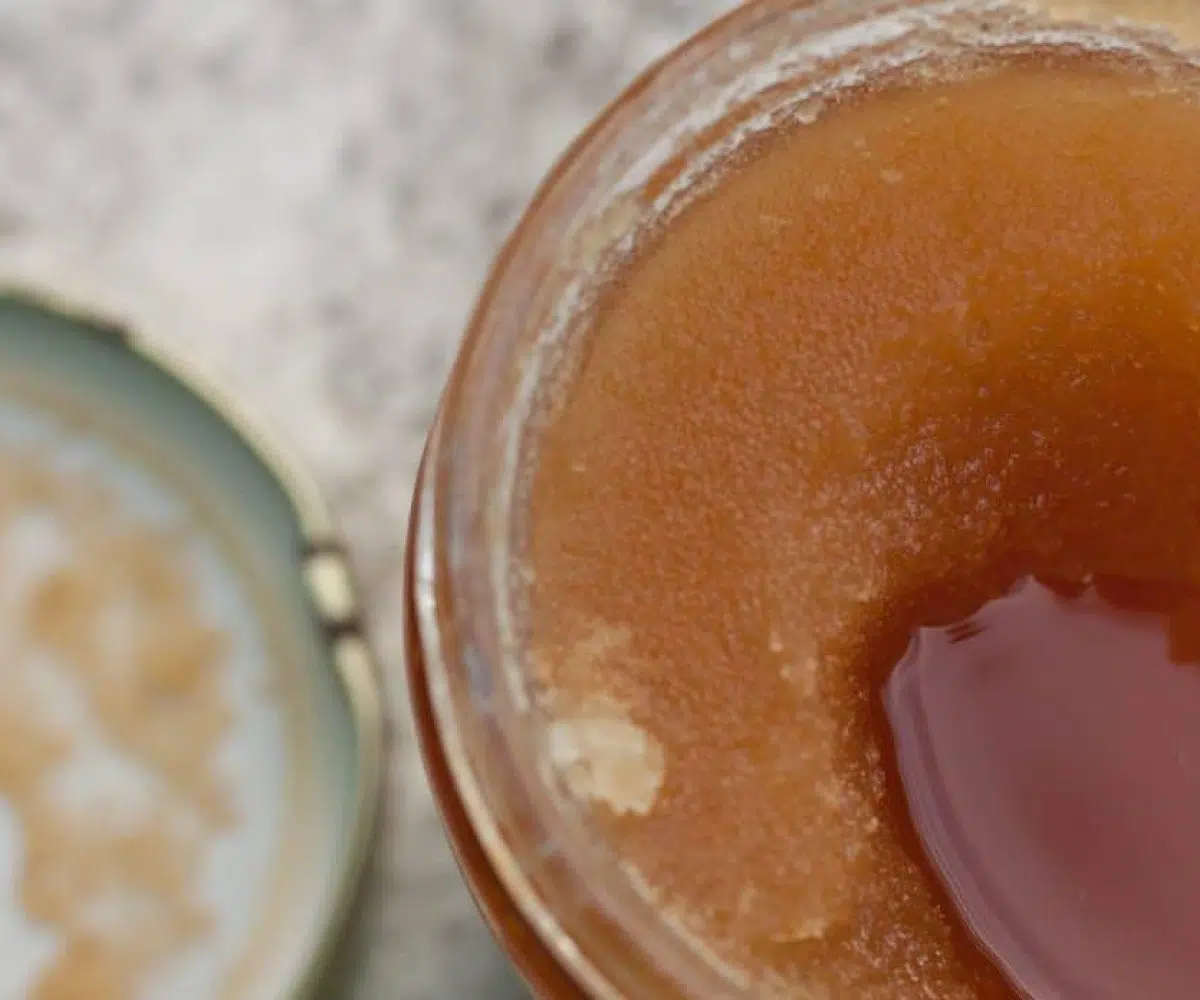
No kitchen test can establish that honey is pure. A glass of water, a drop on your thumb, absorbent paper, a flame or crystallisation cannot reliably reveal added syrups on their own. These tests confuse normal physical behaviour—affected by moisture, temperature, floral source and crystal size—with authenticity.
What you can do is make a much better-informed purchase: understand what honey is, read the origin and traceability information, recognise possible storage problems and know when laboratory analysis is needed. This guide separates what you can observe from what can actually be demonstrated.
How to tell if honey is pure: the short answer
At home, you can spot incomplete information, damaged packaging or possible deterioration, but you cannot certify purity. Before buying, check the product name, declared origin, responsible business and batch identification. Investigating adulteration or verifying an origin claim requires reliable records, appropriate sampling and specialist analysis.
Runny honey can be genuine, and so can set honey. Pale honey is not inherently worse than dark honey, while a thick texture does not mean that a product is purer.
The three-level approach
1 · OBSERVE
Appearance, aroma, packaging and storage condition provide clues—not proof of purity.
2 · READ
The product name, origin declaration, blend details, batch and responsible business support traceability.
3 · VERIFY
Authenticity assessment combines documentary evidence with suitable, complementary laboratory methods.
Pure, authentic and high-quality honey: three different questions
Under Spain’s honey quality standard, honey is made by Apis mellifera from nectar or honeydew sources. Bees collect and transform these materials, reduce their water content and leave them to mature in the comb. This guide uses Spanish and EU legal examples; sellers elsewhere must check their own market’s requirements.
A product sold simply as honey must not have syrups, flavourings or other non-honey ingredients added. “Pure” is not an independent certificate: compliance is already required of a product bearing the name honey.
| Concept | The question it answers | How it is assessed |
|---|---|---|
| Purity | Is it only honey, without added syrups or other ingredients? | Documentary controls and suitable authenticity tests. |
| Authenticity | Do composition and claimed floral or geographical origin match the product? | Traceability and complementary physicochemical, pollen and specialist methods. |
| Quality | Does it meet applicable standards and retain suitable freshness, stability and sensory characteristics? | Relevant measurements, storage assessment and sensory evaluation. |
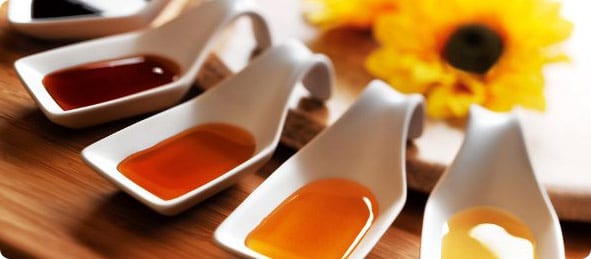
There is no single colour, aroma or texture that defines good honey. Botanical origin naturally changes both its appearance and sensory character.
What you can observe at home—and what it really means
Looking at and tasting honey helps describe it and may reveal obvious defects. It does not reconstruct its chemical composition. Both the Spanish standard and Codex’s honey standard recognise a wide range of colours and fluid, viscous or partly to fully crystallised consistencies.
| What you observe | Possible explanations | What it does not prove |
|---|---|---|
| Pale or dark colour | Botanical source, composition, age and processing. | Purity or overall superiority. |
| Very runny or very thick | Temperature, water content, sugar composition and crystallisation. | Dilution or authenticity on its own. |
| Fine or coarse crystals | Glucose, water, crystal nuclei, time and temperature. | Absence of added syrups or artisanal production. |
| Mild or strong aroma | Plant source, freshness and storage. | An exact origin without appropriate expert assessment. |
| Gas, pressure, persistent foam and sour or alcoholic odour | Possible fermentation or unsuitable storage. | Adulteration with sugar. |
Four honeys with contrasting behaviour
Appearance makes more sense alongside botanical origin. The Iberian monofloral honey guide describes contrasting profiles that show why colour and setting behaviour cannot provide a universal home purity test.
Two very pale honeys
Acacia (black locust)
Robinia pseudoacacia honey is very pale. The guide describes generally slow crystallisation with fine crystals.
Oilseed rape
Very pale honey that can set rapidly and firmly. The guide describes coarse crystals in its profile; actual texture also depends on processing and crystallisation conditions.
Two darker honeys
Ling heather (Calluna)
Amber to dark, with a thick, jelly-like consistency; crystals may develop within the gelatinous mass.
Holm oak or oak honeydew
Very dark. The guide describes a non-crystallising profile; do not turn that characterisation into a lifetime guarantee for every batch or blend.
The takeaway: remaining liquid, setting quickly or displaying mixed textures can be compatible with genuine honey. None of those observations proves purity, and a possible storage defect still needs separate assessment.
Profiles adapted from the Guide to Iberian Monofloral Honeys, fourth edition (2023), by Laboratorios Apinevada and Pajuelo Consultores Apícolas. The book is in Spanish. These are characterisation examples, not kitchen tests.
Crystallisation is normal, but it is not a certificate
Many honeys tend to crystallise as glucose forms crystals in the concentrated sugar solution. Some set quickly; others remain liquid for a long time. An adulterated mixture may crystallise too. Crystallisation is consistent with genuine honey, but it does not establish purity. See our Spanish-language guide to why honey crystallises.
Deterioration is not proof of fraud either
A poor seal, wet utensils or excessive moisture can contribute to fermentation. If a jar builds pressure, overflows, produces gas or develops a distinctly sour or alcoholic smell, treat it as a possible quality or storage problem—not a purity test. Avoid tasting visibly suspect honey simply to diagnose it; retain the batch details and contact the supplier. Read more about honey moisture and fermentation.
Seven honey purity tests that do not prove anything
Viral tricks are appealing because they produce an immediate result. The difficulty is that the result depends on ordinary physical variables and does not specifically identify syrup addition.
| Viral test | Why it cannot establish purity |
|---|---|
| A glass of water | Honey’s sugars dissolve in water. The rate changes with temperature, stirring, moisture and crystallisation; insoluble particles may remain. |
| A drop on your thumb | Spreading reflects viscosity under those conditions, not a specific chemical composition. |
| Absorbent paper | Paper type, contact time and moisture affect the mark. It does not identify the sugars present. |
| A match or flame | Unsafe and unsuitable. Results depend on the materials and their moisture; do not use fire to test honey. |
| Bread becoming firm | Moisture exchange between two foods is not an authenticity assay. |
| Whether ants approach | Insect behaviour depends on the environment, not a laboratory analysis of the sample. |
| Hexagonal patterns, alcohol or refrigeration | Patterns, precipitates and crystals are physical outcomes, not validated ways to separate genuine honey from adulterated mixtures. |
A useful rule: a demonstration without a defined measurement, representative sampling and validated interpretation cannot certify that a honey is pure. Even laboratory results need to be understood within the method’s scope and limitations.
What to check when buying good honey
A sensible choice combines clear information, traceability and your own preferences. A local beekeeper may make it easier to ask about the harvest and apiary; an established brand may have documented quality controls. Neither local origin nor brand recognition alone guarantees superior quality.
Traceability and responsibility: more useful than appearances
- Identify the responsible business. Look for clear contact and address details on the packaging.
- Look for batch identification. It connects the jar with production, packing and quality-control records.
- Read the origin declaration, not just the scenery. A flag, a hive illustration or a local-sounding brand does not replace the required country-of-harvest information.
- Understand what each mark certifies. PDO and PGI schemes link a product to an origin and specification; organic certification concerns the production system. Honey without these marks is not automatically inferior.
- Question unsupported promises. “Premium”, “natural” and “traditional” are not analytical results.
Reading a honey label in Spain in 2026
Since 14 June 2026, Spain’s rules require blended honey to show each country of harvest and its percentage, in descending weight order, in the principal field of vision. Spain’s implementation does not use the EU option to list percentages only for the four largest origins. These are Spanish requirements, not a worldwide labelling template.
Under the Spanish transition, qualifying honey marketed or labelled before that date under the old rules may continue while stocks last, but only within the specified 18-month period. An older label therefore does not automatically demonstrate fraud. See our 2026 honey labelling guide.
Illustrative information to look for—not a print-ready compliant label
HONEY
Origin: Spain 70% · Portugal 30%
Batch: [identifiable code]
Best before: [date]
Net weight: 500 g
Responsible business: [name and address]
- Honey identifies the food, subject to the appropriate legal designation for its presentation and use.
- Countries and percentages describe the blend in this Spanish example.
- Batch identification and the business make follow-up and traceability possible.
- Best before concerns quality rather than an automatic safety cut-off.
- A food consisting solely of honey may legitimately have no ingredients list where the applicable single-ingredient exemption is met.
A quick label checklist
1. Is the food named honey?
It must be the product described by the applicable honey rules. A food with added syrup, flavourings or other ingredients cannot simply be sold as honey.
2. Are countries of harvest and blend percentages shown?
For new blend labels in Spain, this is the format applying since 14 June 2026. Check the transition for qualifying older stock before concluding that an older format is non-compliant.
3. Can you identify the business and batch?
These details help identify the responsible business and connect the product with its supply-chain records. Keep the label and purchase details if you need to raise a concern.
4. Is a specific floral or geographical origin claimed?
A floral claim such as rosemary or orange blossom must be supported by the honey’s relevant sensory, physicochemical and microscopic characteristics. A named geographical origin also needs to match where the honey was produced; an attractive landscape on the label is not evidence.
5. Is there no ingredients list?
That can be normal. Article 19 of Regulation (EU) 1169/2011 allows omission for a single-ingredient food when its name clearly identifies the ingredient. The absence of a list neither certifies authenticity nor demonstrates fraud.
Can a consumer identify adulterated honey?
Not reliably from the jar alone. Specialist methods are needed because added syrups may mimic parts of honey’s normal composition. Some tests detect particular adulterants but miss others. A practical assessment combines suitable analysis with provenance and production records.
320
samples from imported consignments analysed in the EU’s 2021–2022 action
147
samples flagged as suspicious after at least one marker of extraneous sugars was detected
That is approximately 46%, but context matters. The “From the Hives” action examined selected imports during a particular period; the findings do not describe the whole honey market or the contents of any randomly chosen jar. A suspicious result is a flag for investigation, not automatically a final finding of fraud. A 2025 UK expert review also stresses the importance of honey type, method performance and the weight of all available evidence.
Why laboratories combine methods
| Method or evidence | What it contributes | Important limitation |
|---|---|---|
| Traceability | Links the batch, harvest, supplier, blending and packing. | Only useful when records and controls are reliable. |
| Physicochemical profile | Checks composition, freshness and basic consistency. | Meeting routine limits does not exclude every sophisticated adulteration. |
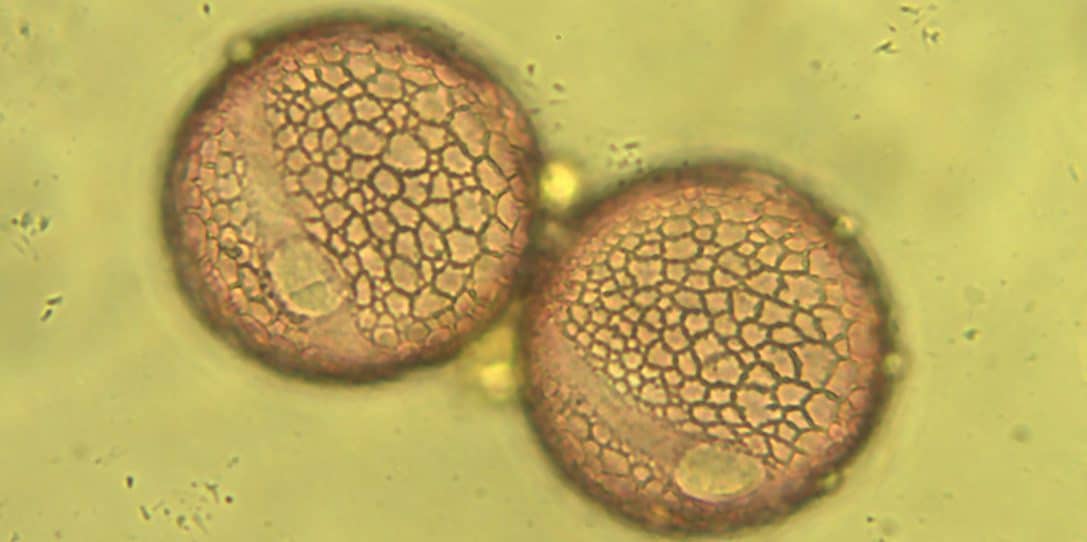
| Pollen and sensory analysis | Helps assess botanical and geographical claims. | Requires experienced interpretation alongside other evidence. |
| Isotope ratio mass spectrometry (IRMS) | Certain methods identify added sugars with a different isotope profile; bulk tests are particularly useful for C4 sources. | Coverage depends on the method. LC-IRMS can broaden testing, but not every C3 syrup or matching blend is detectable. |
| LC-HRMS and NMR | Measure selected markers or compare analytical fingerprints. | Method performance, natural variation and representative reference data determine interpretation. |
| Genetic methods | Biological signatures can support origin or authenticity assessment. | Adequate validation and representative reference samples are essential; do not treat an unvalidated standalone result as a verdict. |
How to read a basic honey analysis report
Different measurements answer different questions. The table below summarises general Spanish composition limits. It is not a complete specification: botanical and use-related exceptions matter, particularly for industrial-use honey. A competent laboratory should interpret the results for the actual product and its declared origin.
| Parameter | What it helps assess | General Spanish reference—not a complete specification |
|---|---|---|
| Water | Stability and fermentation risk. | Usually ≤20%; Calluna and industrial-use honey have specific exceptions. |
| Fructose + glucose | Consistency of sugar composition. | ≥60 g/100 g for blossom honey; ≥45 g/100 g for honeydew honey and its blends with blossom honey. |
| Sucrose | Consistency with botanical origin and maturation. | Usually ≤5 g/100 g; higher limits apply to specified floral sources. |
| HMF | Cumulative effects of ageing and heat. | Usually ≤40 mg/kg, excluding industrial-use honey; ≤80 mg/kg for declared tropical origins and their blends. Also check the low-enzyme exception below. |
| Diastase activity | Enzyme activity, influenced by origin, age and heat. | Usually ≥8 Schade units, excluding industrial-use honey; naturally low-enzyme honey may be ≥3 only where HMF is ≤15 mg/kg. |
| Electrical conductivity | Supports classification of blossom and honeydew types. | Usually ≤0.8 mS/cm for blossom types and ≥0.8 mS/cm for honeydew or chestnut honey, with specific botanical and blend exceptions. |
| Free acidity | Condition and possible deterioration. | Usually ≤50 milliequivalents/kg; industrial-use honey has a separate limit. |
HMF is not a universal syrup detector. A high result can indicate ageing or heat exposure, while a low result does not rule out adulteration. Diastase activity and moisture likewise answer only part of the question. A compliant individual value is not a certificate of authenticity.
So, which honey should you buy?
- Choose a clearly named product: honey, comb honey or the appropriate description for its presentation.
- Check declared origin and blend information, allowing for applicable transitions for older labels.
- Look for the responsible business and batch. When buying directly, ask about the harvest, locality and handling.
- Choose a profile you enjoy: delicate floral, strongly aromatic, bitter, honeydew, runny or set. Varieties do not form a universal quality ranking.
- Value certification for its actual scope when you want a specified origin or independently controlled production system.
- Do not treat price as a test. An unusually low price may justify questions; a high price does not prove authenticity.
- If you need to substantiate quality for sale, commission a sampling and testing plan suited to the batch and risk, rather than relying on one isolated value.
How to preserve quality after buying
- Keep the jar tightly closed in a dry place, protected from direct light and marked temperature fluctuations.
- Use clean, dry utensils to avoid introducing moisture or contamination.
- Avoid repeatedly heating the whole jar. If you want to soften it, warm only the amount needed and read how time and temperature affect honey.
- A best-before date concerns retained quality. Follow storage instructions and check the packaging and product condition; it is not a guarantee that damaged or badly stored honey is acceptable.
Conclusion: choose traceability over tricks
The useful question is not whether honey dissolves, burns or sets. Ask what the product is, where it was harvested, who is responsible for the batch and what evidence supports the claim you care about.
Appearance helps you describe and enjoy honey; the label helps you choose; traceability and suitable analysis help verify claims. Keeping those three levels separate avoids many common myths about pure honey.
Do you produce or pack honey?
First decide what you need to assess—moisture, freshness, origin or authenticity—then choose suitable sampling and methods. A refractometer can help measure moisture, but buying one does not turn it into an adulteration detector.
Frequently asked questions about honey purity and quality
Can I tell whether honey is pure at home?
No kitchen test provides a reliable verdict. Water, paper, a drop on your thumb, a flame or crystallisation do not establish whether syrup has been added. Check the label and traceability; investigation requires appropriate sampling and specialist methods.
Does pure honey crystallise?
Many genuine honeys crystallise, while others remain liquid for a long time. Botanical source, sugar composition, water content, temperature and crystal nuclei affect the process. Crystallisation is normal, but it does not certify purity.
Does pure honey dissolve in water?
Honey’s sugars dissolve in water, although insoluble particles may remain. Dissolving speed changes with temperature, stirring and the honey’s physical state. A glass-of-water test therefore cannot distinguish genuine honey from every adulterated mixture.
Does a flame test prove that honey is pure?
No. It is unsafe and does not identify the honey’s composition. The result depends on the materials used and their moisture. Do not use a match or flame as a honey authenticity test.
Why might a jar of honey have no ingredients list?
EU rules allow omission for a single-ingredient food when the name identifies that ingredient without confusion. Correctly named honey may therefore have no list. Its absence alone neither establishes authenticity nor demonstrates fraud.
What origin information is required on honey blends in Spain in 2026?
From 14 June 2026, Spain requires countries of harvest and their percentages in descending weight order in the principal field of vision. Qualifying older stock has a transitional period. Other destination markets may have different requirements.
Which test detects added syrup in honey?
There is no universal test for every adulterant. Laboratories select complementary methods, such as sugar profiling, suitable IRMS methods, LC-HRMS, NMR or other validated approaches, alongside reliable traceability. Coverage and interpretation depend on the honey and suspected adulterant.
Is dark honey better than pale honey?
Not necessarily. Botanical source and composition strongly affect colour. Both pale and dark honey can be excellent; colour does not certify purity or overall quality.
Sources and regulatory references
- Spain: Royal Decree 1049/2003, consolidated honey quality standard.
- Spain: Royal Decree 68/2025, origin percentages and transitional labelling provisions, applying from 14 June 2026.
- Laboratorios Apinevada and Pajuelo Consultores Apícolas: Guide to Iberian Monofloral Honeys, fourth edition, 2023 (Spanish).
- European Commission: “From the Hives” coordinated action, 2021–2022.
- JRC Knowledge4Policy: methods for verifying honey authenticity, updated 14 April 2026.
- Codex Alimentarius CXS 12-1981: Standard for Honey, including the 2022 amendment. International reference, not a replacement for current destination-market law.
- Regulation (EU) 1169/2011, Article 19: when an ingredients list may be omitted (official Spanish publication).
- AESAN: the difference between best-before and use-by dates (Spanish).
- International Honey Commission: honey science and harmonised methods.
English editorial review: 9 September 2026. Legal figures are general summaries with exceptions for origin and use. Before labelling, selling or deciding a dispute about a batch, consult current requirements for the destination market and a competent laboratory.

Con más de 50 años dedicados exclusivamente a la apicultura, Antonio Gómez Pajuelo ha trabajado en colaboración con agrupaciones de apicultores, administraciones y empresas en América, Europa y Oceanía. Desde 1992, ofrece desde Castellón servicios de asistencia técnica en manejo de colmenas, calidad de la miel, formación y estudios para productores y empresas apícolas. Licenciado en Ciencias Biológicas por la Universidad Complutense de Madrid, ha trabajado en diversas instituciones, incluyendo la Universidad Autónoma de Barcelona y la Facultad de Veterinaria de Córdoba.
Su trayectoria incluye más de 160 publicaciones en congresos y revistas técnicas, la autoría del libro “Cata de Mieles de España y Portugal” y la participaciónen múltiples publicaciones científicas y monografías sobre sanidad apícola, polinización y calidad de la miel.


