
A reference for albaida honey

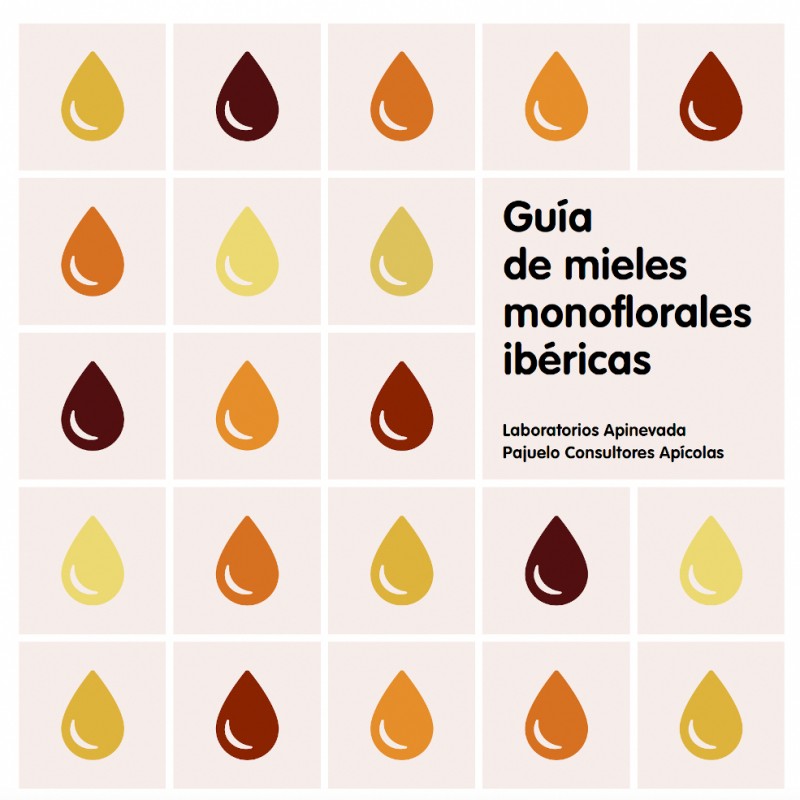
The printed Spanish-language guide compares albaida with other Iberian honeys. Use the botanical profile alongside the harvest record and any batch analysis.
Place the sample in its harvest
- Check the harvest area and lot documentation.
- Read the complete profile alongside any laboratory results.
At a glance
Albaida honey
Anthyllis cytisoides
Colour
Very pale amberup to 40 mm Pfund
Aroma
Very fainta slight flour-like note
Taste
Clean sweetnesswithout other marked tastes
Crystallisation
Fast and very fineuseful as seed honey
Season
Late springjust after rosemary
Region
South-east Spain, particularly Almeríathe plant itself is much more widespread
Pollen reference
45%pollen is over-represented
Conductivity
up to 0.30 mS/cmamong the lowest in the guide
This honey from the scrublands of Almería is almost white and remarkably mild. Its fine crystals give it an unexpected role in the honey room.
Albaida is one of the mildest Iberian honeys: very pale, faintly scented and simply sweet. Beekeepers value it for a quality you can feel as soon as you spread a spoonful of the set honey.
Its name tells us something about the plant.
Albaida, “the white one”
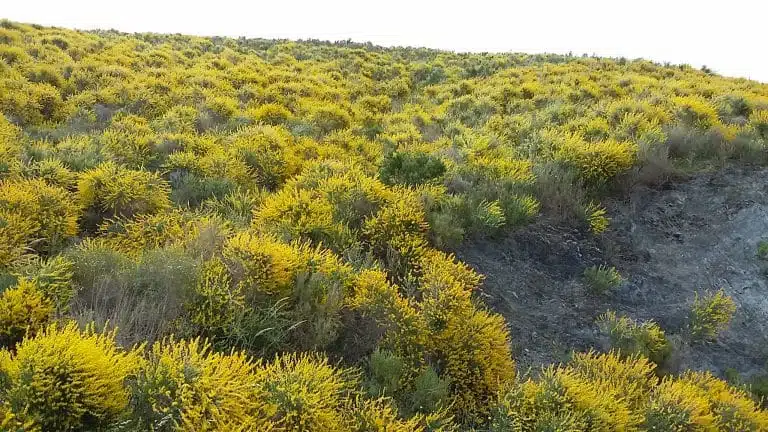
The name comes from the Andalusi Arabic albáyḍa, “the white one”. It refers to the silvery appearance of the shrub. The stems of Anthyllis cytisoides are covered in fine grey-white hairs. Its flowers, by contrast, are a strong yellow and can colour whole hillsides in a good spring.
The plant grows widely across the Iberian Peninsula, on banks, in open pine woodland, in Mediterranean scrub and on abandoned farmland. It favours limestone. The area that regularly yields a monofloral crop is much smaller: the guide places it in the south-east of Spain, especially Almería.

Why honey packers use albaida to make creamed honey
The guide describes rapid, fine crystallisation. In the honey room that means very small crystals which feel smooth and creamy on the tongue.
Two practical uses follow from that.
- 1Seed for creamed honey. Finely set albaida honey provides seed crystals. Mixing it into a liquid batch encourages small crystals to grow throughout the honey. This is a traditional way of producing creamed honey.
- 2Blending pale lots. Its pale colour and mild taste make it suitable for blends of light-coloured honeys . Keep the contributing lots traceable and describe the finished blend accurately.
Much of the albaida harvest goes into blends instead of being sold under the plant’s name. That, along with its limited production area, helps explain why a labelled jar is hard to find and why availability varies from year to year.
Two legume honeys with very different crystals
Albaida and acacia are pale legume honeys with little aroma. The guide gives both an upper conductivity of 0.30 mS/cm. Acacia can remain liquid for a very long time, while albaida is among the quickest honeys to set.
Colour
The profile gives a maximum of 40 mm Pfund. Samples range from water-white to extra light amber and often look almost white in the jar.
Pfund scale · where albaida honey falls
In the four lighter bands. Albaida spans several of the palest colour classes. Screen colours are illustrative. A laboratory reading gives the actual Pfund value.
Aroma, taste and texture
Sensory profile
Our interpretation of the descriptions in the Guía de mieles monoflorales ibéricas. Alongside acacia it has one of the faintest aromas in the series, but it sets much more quickly.
Aroma
The floral aroma is faint and short-lived, with a slight note of fresh flour. This note also occurs in acacia honey and sometimes in rosemary honey when legumes contribute to the harvest.
Taste
The guide describes the taste as simply sweet, with little discernible acidity, bitterness or saltiness. It sweetens delicate foods without leaving a strong flavour of its own.
Crystallisation
It sets quickly, forming fine crystals. Even a fully set sample can feel smooth and spread easily. Our guide to honey crystallisation explains how crystal size develops.
Interpreting the laboratory profile
| Parameter | Reference limit | How to interpret it |
|---|---|---|
| Colour | up to 40 mm Pfund | Very pale amber. A distinctly amber sample falls outside the profile. |
| Moisture | up to 18% | Higher moisture increases the risk of fermentation during storage. |
| Fructose and glucose combined | at least 60% | A sugar measurement helps characterise a sample. It cannot rule out added syrup on its own. |
| Sucrose | up to 5% | One of the sugars reported in the analysis. |
| Electrical conductivity | up to 0.30 mS/cm | One of the lowest values in the guide, alongside rosemary and acacia, reflecting the low mineral content. |
| Free acidity | up to 50 meq/kg | Can rise with fermentation or extended storage. |
| HMF | up to 40 mg/kg | Tends to rise with heat and time. Levels are usually low in freshly harvested honey. |
| Diastase activity | at least 8 Schade units | Indicator of enzyme activity, which can decline with heat. |
| Anthyllis pollen | at least 45% | The 45% reference reflects the plant’s abundant pollen. It is not the percentage of nectar from albaida. |
The values are drawn from the Guía de mieles monoflorales ibéricas, fourth edition (2023), and the honey composition standards in EU Directive 2001/110/EC and Spain’s Royal Decree 1049/2003.
A pollen found well beyond the main honey-producing area
Albaida pollen occurs in many eastern Spanish honeys even where a monofloral crop is rare. Legumes regularly appear in the pollen spectra of rosemary (in Spanish) and thyme honeys from Mediterranean scrub.
Which other pollen types can occur in albaida honey?
- Other legumes
- Viper’s bugloss
- Some mint-family plants
- Rockroses (Cistaceae)
Growing areas and harvest season
In south-eastern Spain, particularly Almería, albaida is a late-spring crop that often follows rosemary. The shrubs can supply nectar as surrounding vegetation begins to dry. That makes the flow valuable to the beekeeper even if the honey is later blended.
Albaida flowering calendar
Flowering Flowering and harvest Earlier flowering
The traditional flowering period was April to June , according to site. In recent seasons beekeepers have seen plants in flower as early as February in parts of south-eastern Spain.
How to recognise albaida honey
- 1Look for a very pale colour. Up to 40 mm Pfund, often nearly white. A medium-amber sample falls outside the guide’s albaida profile.
- 2Expect a mild aroma. Expect a faint, short-lived floral aroma with a slight flour-like note. Strong perfume points towards a different profile.
- 3Taste for clean sweetness. Little marked acidity, bitterness or saltiness.
- 4It sets quickly and finely. Check a sample that has remained clear and liquid for months against its traceability and storage history.
- 5Check the pollen report. The guide gives 45% Anthyllis pollen as its reference. Interpret the pollen spectrum alongside the harvest record and the sensory findings.
For a broader view, see how to assess honey quality and our guide to Spanish honey labelling requirements.
Composition and health claims
As with the other honeys in this series, flavour, composition and texture can be described without attributing a health benefit to this floral origin.
Here is what tasting and analysis can tell us.
- It forms some of the finest crystals in the guide, making set albaida honey easy to spread.
- Its low conductivity, up to 0.30 mS/cm in the guide, reflects its low mineral content. Dark oak honeydew honeys typically give much higher readings.
- The mild flavour suits delicate baking, dairy foods and herbal teas.
- A finely crystallised batch can provide seed for creamed honey.
Who should take particular care?
Children under 12 months. Do not give honey to infants under one year. It can contain spores of Clostridium botulinum that may cause infant botulism. This applies to all types of honey.
Diabetes. honey is a source of sugars. This also applies to natural and monofloral honeys when planning a diet.
Known allergy. Anyone with a diagnosed allergy to honey or bee products should consult their clinician if unsure what is safe for them.
Frequently asked questions
What is albaida and where does its name come from?
Albaida is Anthyllis cytisoides, a leguminous shrub of Mediterranean scrubland. Its name comes from the Andalusi Arabic for “the white one”, a reference to the grey-white hairs that give the stems a silvery appearance. Its flowers are bright yellow.
Why is albaida honey hard to find?
The guide places most monofloral production in south-eastern Spain, particularly Almería. Much of the crop is blended into other pale honeys, leaving relatively few jars sold under its own name.
How is albaida honey used to make creamed honey?
It sets quickly into very small crystals. Finely set albaida can be used as seed honey in a liquid batch to encourage a smooth, spreadable texture.
What does albaida honey taste like?
It tastes mainly sweet. The floral aroma is faint and brief, sometimes with a slight note of fresh flour. Along with acacia, it is among the mildest honeys in the guide.
When does albaida flower?
Flowering traditionally runs from April to June, depending on the site. The main honey harvest is usually in late spring, often after rosemary. Beekeepers have reported flowering from February at some south-eastern Spanish sites.
Who should take particular care?
Never give honey to a baby under 12 months because of the risk of infant botulism. People with diabetes should count its sugars in their diet. Anyone with a diagnosed allergy to hive products should seek individual medical advice.
Where to find albaida honey
Our range does not currently include monofloral albaida honey. A good place to look is a beekeeper in south-eastern Spain, particularly in Almería, who can identify the lot and the harvest area.
If you are looking for a mild, pale Spanish honey, compare it with our raw rosemary honey. You can also browse our raw honeys harvested in Spain.
Sources
The figures come from the fourth edition of Guía de mieles monoflorales ibéricas (June 2023), by J. Orantes, F. Gonell, C. Torres and A. Gómez-Pajuelo, published by Laboratorios Apinevada and Pajuelo Consultores Apícolas. The map is from Anthos. The printed Spanish-language guide is available in our shop.
This profile belongs to our series on Iberian honeys. Compare it with acacia honey for a very different crystallisation pattern, or with rosemary honey (in Spanish), which generally comes earlier in the local season.