

Hive formats to compare


Compare the brood box, super and frame dimensions before ordering. Nominally similar hive designs can use different rebates, top-bar lengths and depths.
Measure before introducing a new format
- Record box dimensions, frame dimensions and the spacing you actually use.
- Check compatibility with your extractor and existing stock of supers and frames.
The main types of beehive
Ancient Egyptian temple and tomb reliefs are among the earliest surviving images of beekeepers at work, dating back roughly 5,000 years. Their clay hives were laid horizontally, side by side.

Coastal trade helped spread beekeeping techniques around both shores of the Mediterranean. Horizontal hives became established as far west as the area of modern Aragón. In Greece, upright hives developed and the vertical arrangement spread along the northern Mediterranean.
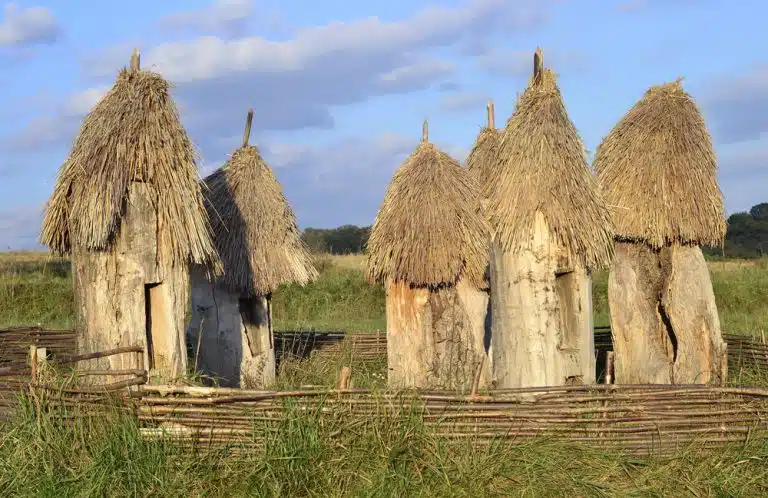
Many traditional hives were simple tubes made from local materials: pottery, hollow logs, wooden boards, or wicker and reeds sealed with a protective coating.

Bees attached their combs to the roof and walls. To harvest, the beekeeper cut out the honeycomb and pressed it to separate the honey from the wax. The bees then had to rebuild the removed combs. The author gives an illustrative yield of about 8 kg a year and an estimated 8 kg of honey consumed per kilogram of wax produced. Actual yields and costs vary with the colony and the season.

The beginnings of modern movable-frame beekeeping, 1851–1900
In 1851 Lorenzo Langstroth incorporated bee space into a practical movable-frame hive. Bees generally keep a gap of about 6–9 mm open for passage. They tend to seal very narrow gaps, below roughly 4.5 mm, with propolis and build comb in wider ones. The vertical boxes held ten removable frames, with clearance around them. The Spanish frame format described here has a working area of about 42 × 20 cm. A frame could be lifted without breaking the comb, and compatible equipment could be used throughout a healthy apiary.
Two further inventions completed the change: Johannes Mehring’s wax foundation in 1857 and Franz von Hruschka’s centrifugal honey extractor in 1865. Beekeepers could fit a sheet of foundation, extract ripe honey and return the intact comb for another flow.
Dadant’s larger brood chamber
Charles Dadant, keeping bees from 1863, studied the depth of natural brood nests. A brood patch often extends beyond the roughly 20 cm depth of the Langstroth frame used in this comparison, so brood can extend into boxes intended for honey.
The Dadant arrangement described here uses brood frames about 27 cm deep and shallower honey-super frames of about 13 cm. The larger brood area and smaller supers make it easier to manage the brood nest and harvest separately. Langstroth, Dadant, Blatt and Root equipment comes in several national variants. Some beekeepers mix compatible box formats, but the name alone does not establish that the parts fit.
In Spain, Perfección remains a trade name associated with a local Langstroth variation. Perfección Industrial has also been used for Dadant. Measure the actual equipment before buying frames or foundation.
Other regional hive designs
Regional designs remain in use alongside the internationally familiar Langstroth and Dadant families.
- Portugal: the Lusitana takes foundation of about 33 × 26 cm in this comparison, and the Reversível about 33 × 20 cm.
- France: the Voirnot uses a square format of about 33 × 33 cm.
- Africa: Kenyan and Tanzanian top-bar hives are examples of designs developed for local working conditions.
The Layens hive and migratory beekeeping in Spain
In the late nineteenth century Georges de Layens developed a horizontal, single-body hive. An early model held 30 frames of about 35 × 30 cm. Layens was among the first movable-frame designs to become widely established in Spain. A lower initial investment helped its adoption, although some operations take more labour.
Spanish migratory beekeepers adapted it into the familiar 12-frame version. Upper vents help during transport, an internal bar secures the frames against road movement, and a band around the box gives a firm grip. Close-fitting top bars reduce heat loss above the brood.
Which hive suits the way you work?
The differences become clearer when you compare a full season’s work: buying and storing equipment, inspecting colonies and harvesting short or long flows.
Advantages and limitations of the main designs
| Table 1. How the three hive designs compare in practice. | |||
| Feature | Langstroth | Dadant | Layens |
| Initial cost | Higher initial investment. The author allows an average of 2–2.5 standard supers per brood chamber. | A reserve of spare hives, around 15–20% in the example, generally meets the additional equipment need. | |
| Labour | Inspections and harvest can take less labour. Add supers to hold a continuing flow and organise extraction in batches. | More labour at harvest. A full horizontal hive needs attention promptly so that bees have room for the remainder of the flow. | |
| Storage space | Allow space for supers when they are off the hives. | Usually needs less storage space because there are no separate supers. | |
| Protecting stored comb | Provide suitable pest-proof or temperature-controlled storage for drawn super comb. | Generally fewer drawn frames to store off the hives. | |
| Routine inspection | Bees visible in the spaces between the top bars give a quick indication of occupied frames. | Lift several frames at least part-way to estimate occupancy. | |
| Specialised management | Stacked boxes allow more ways to organise queen rearing and colony splits. | Queen rearing and splitting are possible, but some techniques are harder to organise in one fixed box. | |
| Feeding | Feed can usually be placed where the bees can reach it readily. | Access to feed above close-fitting top bars can be difficult, especially in cold weather. | |
| Varroa treatment | Access to brood frames can make it easier to position authorised products according to their labels. | Some products require more frame handling in this format. | |
| Treatment residues | Separating brood and super comb helps keep track of wax exposure. | Frames may change position within the same box, which makes their treatment history harder to trace. | |
| Harvest capacity* | Full-depth boxes suit prolonged or strong flows. A full-size super may be too large for a short flow.* | Add shallow supers as needed. Their size can suit both shorter and longer flows.* | Good capacity on a sustained flow if frames are removed in time. A short flow may leave the available space only partly filled.* |
| Overwintering | Depending on climate and stores, one brood box may be tight while two give more space than needed. | A colony can often overwinter in one deep brood chamber. | The large horizontal brood area can provide ample space for winter stores. |
| Table 2. Dimensions of the hive formats in this comparison, in centimetres. | |||||
| Hive type | Brood body | Honey super | Brood frame | Super frame | Capacity, litres |
| Langstroth | 51 × 42.5 × 24 | 51 × 42.5 × 24 | 42 × 20 | 42 × 20 | 42.4 |
| Dadant | 51 × 42.5 × 31 | 51 × 42.5 × 17 | 42 × 27 | 42 × 13 | 54 |
| 12-frame Layens | 49 × 34.5 × 41 | — | 35 × 30 | 68.1 | |
- Initial investment.
A supered apiary needs more equipment at the outset. The working allowance in this example is 2–2.5 supers per colony for the flow. Layens hives have no separate supers, although many operators keep extra drawn comb for a quick exchange at harvest.
- Labour.
Adding supers when the bees need room makes it easier to schedule extraction and reduce the number of urgent trips. In a Layens hive the usable volume is fixed. Once the available frames are full, the beekeeper has to remove ripe honey or risk losing part of the flow. Timely visits can make a substantial difference to yield. A supered operation may also invest more in lifting and extraction equipment.
- Storage space.
Allow space for empty supers and extraction equipment whenever these are off the hives.
- Protecting drawn comb.
Stored brood comb and comb containing pollen are especially vulnerable to wax moth. Keep spare comb dry and protected, and use a suitable cold-storage or approved pest-management system. Layens operators who carry spare drawn frames for a one-visit harvest face the same storage problem as operators with stacks of supers.
- Routine inspection.
In a supered hive, a glance between the top bars shows how many spaces the bees occupy. A proper brood and stores check still requires lifting frames. In a typical Spanish Layens hive the close-fitting top bars mean lifting frames even for a rough population assessment.
- Queen rearing and splits.
Stacked bodies and partitions give more options for isolating a queen or arranging stages of a queen-rearing or splitting operation.
- Feeding.
Bees need access to feed close to the occupied, warm part of the hive. This is particularly important when cold weather restricts movement. In a supered hive, the gaps between top bars provide access above several combs. In a Layens hive with closed top bars the top space can be cool and poorly connected to the cluster, so feeder placement matters.
- Varroa treatment.
Brood access can be straightforward in a single brood box, but honey supers may change which authorised treatments can be used. Follow the product label, including any harvest or super restrictions.
- Treatment residues.
Some contact treatments can leave residues in wax. In a horizontal hive, frames that were near a treatment may later be moved elsewhere. Separating brood and honey frames in a supered hive makes it easier to track their history. Residues can still reach other combs, and results vary with the product and management.
- Capacity during a flow.
A full-depth Langstroth super uses the same frame size as the brood box and may hold around 20 kg of honey. The shallow Dadant super in this example holds roughly 15 kg. A strong flow can fill several supers. Shallower supers can be easier to finish in a brief flow or when separating floral harvests. The Layens harvest depends on how many frames are available for honey, often equivalent to about 12–20 kg in the example.
- Overwintering.
A Dadant brood chamber or a 12-frame Layens hive can hold a substantial population and stores in one box. A single Langstroth body can be tight in some regions. Two bodies or an appropriately arranged winter nest may work better there.
Choosing a hive for your apiary
A Layens apiary can suit a beekeeper who wants a lower initial investment, less storage and one large box for winter. Division boards can reduce the occupied space to suit the colony. Allow for the extra labour in inspections and harvest.
With stacked hives, box depth and frame compatibility affect the decision.
A full-depth Langstroth setup lets the same frame format serve the brood chamber and supers. A shallower compatible super may be better for small flows or separate floral crops. Check the footprint and frame rests before combining equipment.
Dadant’s larger brood chamber can provide useful winter storage in a cold climate. Langstroth colonies can also winter well in two bodies where appropriate, with the space and stores arranged to suit the cluster.
Choose a system against four features of your own operation.
- Your climate
- The duration and strength of your nectar flows
- How you inspect, move and harvest colonies
- The labour available
All three systems can perform well. Choosing compatible dimensions at the start saves duplicate equipment, extra journeys and handling time.
If you have decided which format suits your operation, our hive range includes Dadant, Layens and Langstroth models.


