


In a Mediterranean summer, forage can dry up as heat intensifies and the amount of brood declines. Mite pressure can rise just as colonies have fewer young bees coming through. This guide follows the decisions to make between the end of the spring crop and the start of autumn.
Five decisions for the summer apiary
- Assess each colony on its own. Separate those ready to produce from those needing attention and those unlikely to recover.
- Provide a dependable water source in shade, with safe places to land. Strong colonies can collect around 0.6 litres a day in summer and exceed a litre on hot days. In the study cited, collection rose sharply above a daily maximum of about 31.5 °C.
- Protect new comb from heat. Wax softens at around 40 °C, and new comb heavy with honey is especially vulnerable to sagging.
- Check Varroa at the start of summer. Consider both the amount of capped brood and an appropriate monitoring method under your local bee health programme.
- Decide which colonies can use a new flow before moving them. The population, the forage at the destination and the cost of the journey all matter.
Water supplies for summer inspections


A waterer that depends on a supply pipe and a portable waterer meet different needs. Plan how the bees will land and how often water must be replenished.
Check water at every summer visit
- Record how much water was used between visits.
- Check shade, secure landing places and that the inlet and float work freely.
Other seasonal guides: spring beekeeping (in Spanish), autumn beekeeping and winter beekeeping.
Assess each colony individually
Two hives side by side can come out of spring in very different condition. One may be ready to collect a crop while another is running short of bees and food. Check each before planning moves or feeding.
At the first summer inspection, look at the following.
- Adult population and area of brood.
- The condition of adult bees and signs that the colony has been short of food.
- Eggs, the queen’s laying pattern and the continuity of the brood.
- Survival of capped brood, including unexplained holes or scattered cells.
- The amount of brood food around young larvae.
- Queen age and whether replacement is warranted.
- The current Varroa infestation level.
Deciding what each colony needs
| Assessment | What you see | What to do in summer |
|---|---|---|
| Strong | A large population, compact brood, adequate stores and a good queen | Prepare it for the current or next flow and intervene only where needed. |
| Borderline | A modest population, uneven brood or limited stores | Identify the cause. Feeding or requeening may help. Consider uniting colonies only after health problems have been ruled out. |
| Unlikely to recover independently | Very few bees or a failing or drone-laying queen | Check for disease before deciding the future of the colony or reusing equipment. Avoid unnecessary expenditure on a unit that cannot use the flow. |
Giving every hive the same feed or taking all of them on the same move can make the season unnecessarily expensive. Spend time and supplies where they address an identifiable need.
Moving to summer forage
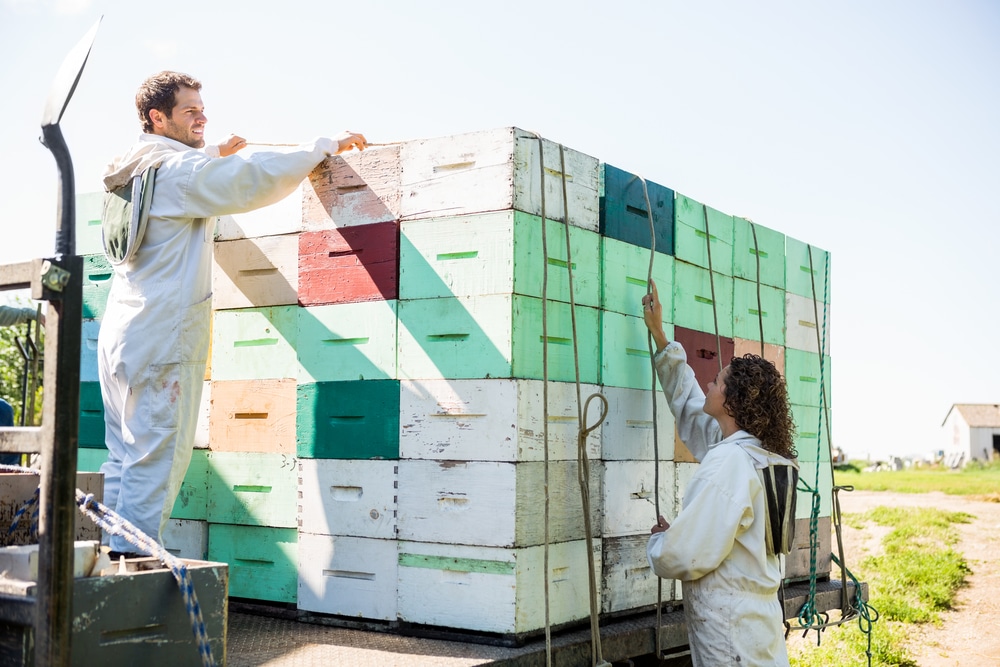
Around four-fifths of Spanish hives are classed as migratory. Moving costs time and money, so assess the destination before loading.
Useful evidence for a move includes the following.
- The site’s previous crops, from your records or those of a beekeeper you trust.
- Recent rain and a local forecast, such as AEMET’s in Spain. Flowers can open without producing much nectar.
- A local contact and, where possible, a visit to see what is genuinely in flower.
- A prepared working area. Manage excess vegetation and access with local fire restrictions in mind.
How many colonies can a summer site support?
Reduce the number if the flow is patchy. Consider its area and duration, neighbouring apiaries and access to water. Check incoming food, weight and stores after arrival.
Choose strong production colonies, healthy growing nucleus colonies that can benefit from the site, or colonies with a clearly identified nutritional need. Leave suspect colonies in place pending advice. See how to transport honey bee colonies for the practical arrangements.
Water for the summer apiary
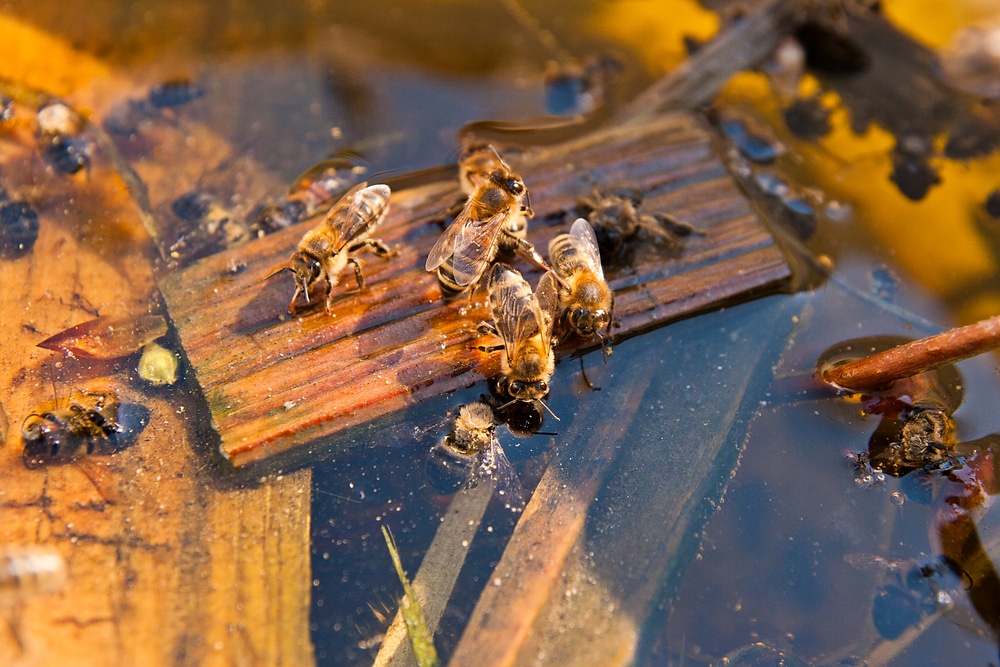
Water supports cooling, brood-nest humidity and production of brood food. In hot weather a colony diverts more of its water to cooling. The study cited by the Spanish author found a substantial shift above 37 °C. Brood can suffer when the nearest reliable source is too far away.
Setting up a water point
| Feature | Practical reference |
|---|---|
| Consumption | About 0.6 litres a day per strong colony on average in the cited conditions, and over a litre on hot days. The observed peak was 1.39 litres. Ten such colonies could need around 6–14 litres daily. |
| When to check more often | Demand rose sharply above about 31.5 °C in the study. Refill often enough that the waterer stays available between visits. |
| Distance | A source near the apiary reduces the distance water collectors must fly. |
| Position | Choose shade to limit heating and evaporation. |
| Salt | Do not add it routinely. |
| Safe access | Use stable landing places such as cork, floating stones or a suitable float. |
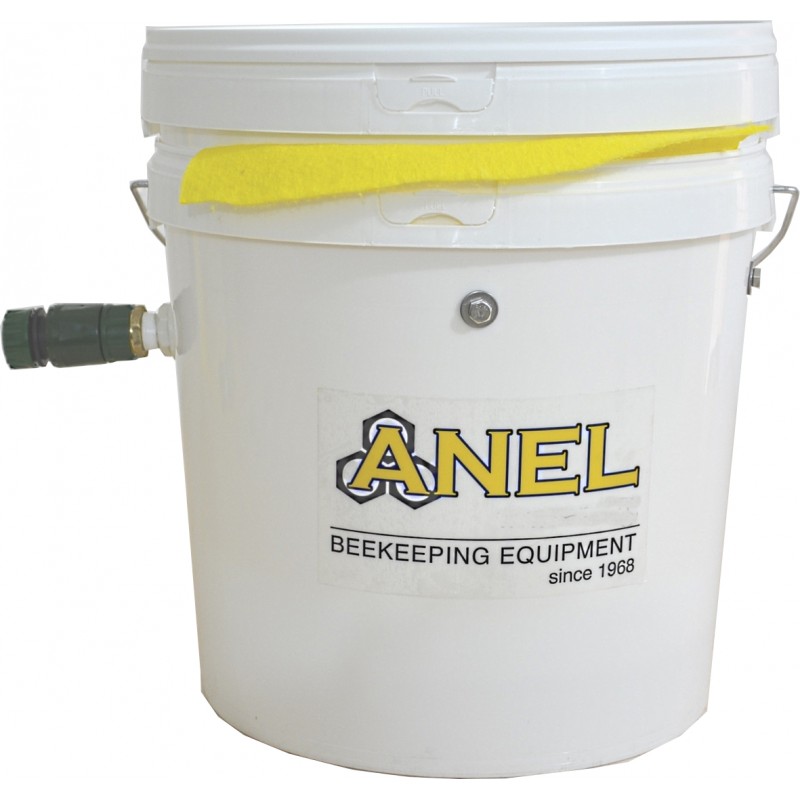
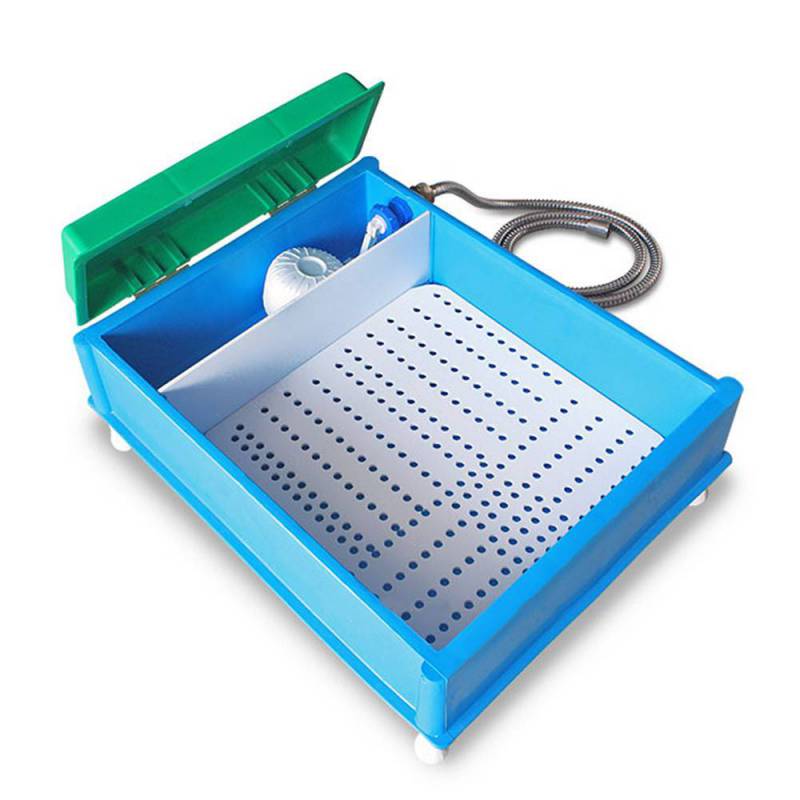
A tank with a float valve and floating landing material can maintain supply if it is checked regularly. Our guide explains how bees use water.
Protecting comb before it sags
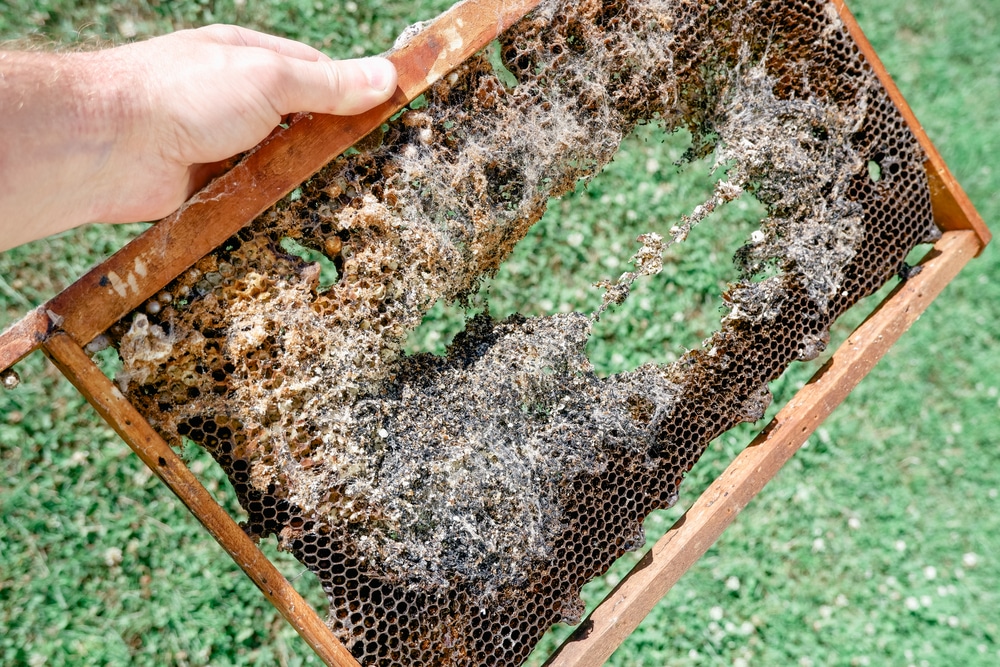
Wax becomes pliable around 40 °C (Hepburn, 1983), well below its melting point. Newly drawn comb that has never held brood is particularly vulnerable when heavy with honey. It can detach, spill honey or obstruct the entrance. Older brood comb is mechanically stronger, although it has its own hygiene and replacement considerations.
| Measure | Purpose | When to act |
|---|---|---|
| Partial shade or relief from direct afternoon sun | Reduces excessive heat load. | When choosing the apiary site. |
| Light-coloured boxes | Reflect more incoming solar radiation. | When painting hive equipment out of season. |
| A light, reflective roof finish | Reduces heating of the surface receiving most direct sun. | Before the hottest weather. |
| A clear entrance and appropriate ventilation | Helps the colony regulate its temperature. | Throughout summer. |
These measures deserve particular attention in southern Spain and in sites exposed to hot winds. See our guide to insulation, condensation and ventilation in hives.
Heat can also interrupt the nectar flow
Extreme heat affects plants as well as bees. A flower can remain open after nectar secretion has stopped. In a 2026 talk on beekeeping and climate change, Manuel Barquín described repeated heat events in Cantabria that affected heather flows and brought early yellowing in Pyrenean oak (Quercus pyrenaica).
After a heatwave, inspect or weigh the hive before adding supers or organising a move. A large population can consume its reserves quickly once a flow stops, as our article on the limits of the Farrar principle explains.
Freeing laying space in a honey-bound nest
After a spring flow the brood area can be crowded with stored honey and pollen. The queen has few empty cells and the colony rears fewer replacement workers just when the existing population is working hard.
Inspect a healthy brood nest and, where needed, replace surplus full frames with suitable empty drawn comb from the same healthy stock. Keep the brood nest continuous. Record whether the removed frames go into reserve or harvest.
When is supplementary feeding useful?
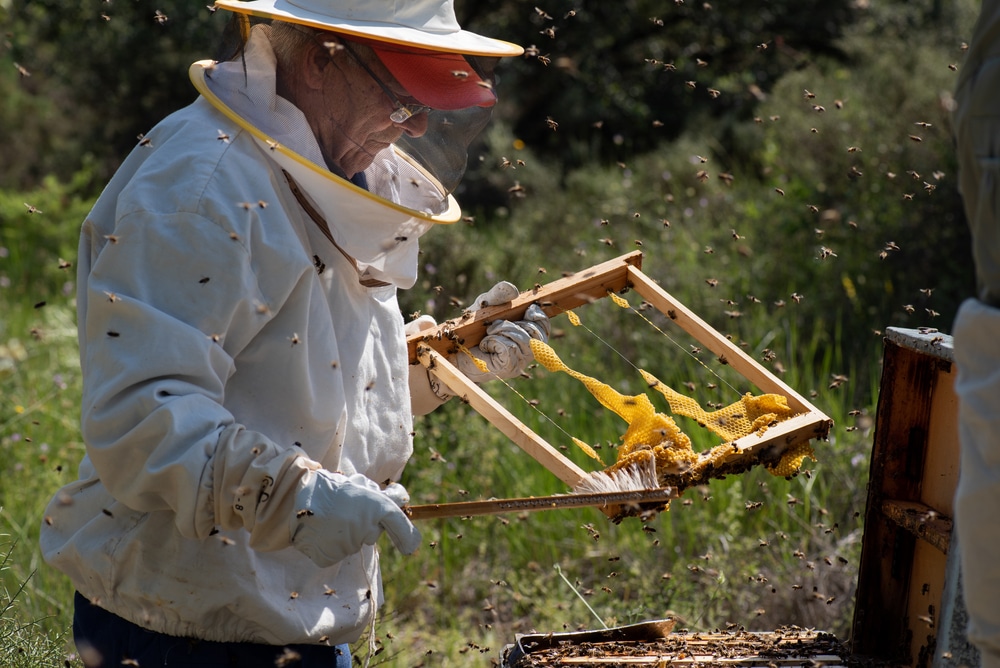
A sunflower or lavender crop can offer limited dietary variety, especially when dry field margins have stopped flowering. Look for stored pollen and incoming pollen before deciding whether the colony needs a protein supplement.
Why pollen diversity matters in summer
The source reports that colonies in parts of Huesca and Teruel collected only three or four main pollen types during certain dry summer periods. Counts rose to thirteen or fourteen in spring and after September rains (Pajuelo, 2018). Quantity is only part of the nutritional change.
A varied, adequate protein supply supports bee health. If carbohydrate stores also fall and the hives will stay on site, consider a suitable fondant or paste. Liquid feed can increase robbing pressure in a dearth. See when and what to feed and how to recognise nutritional shortage.
Wax moth and storing drawn comb
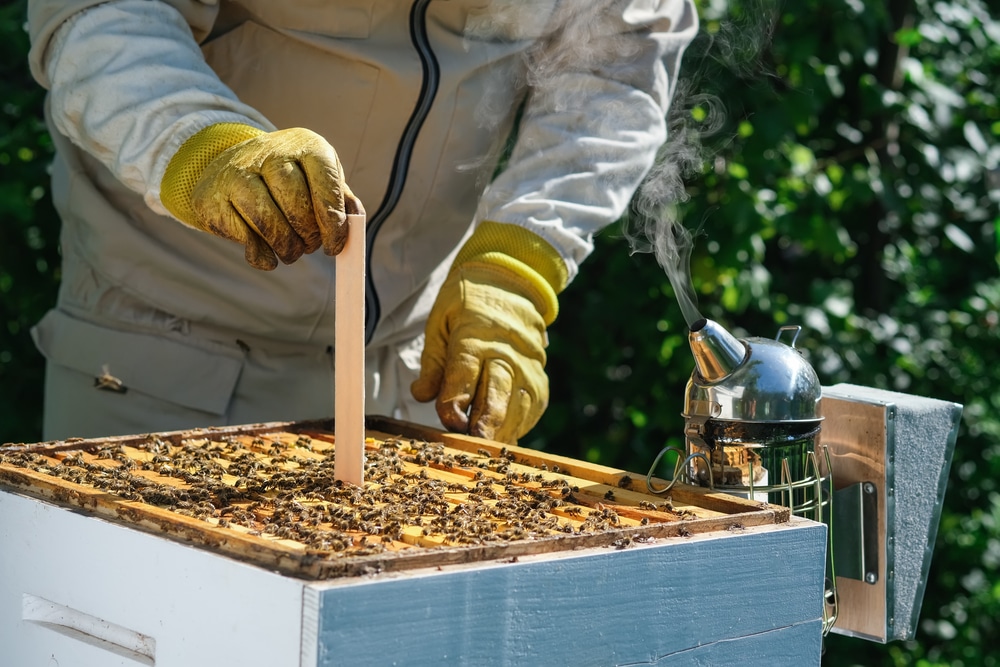
Drawn comb represents many hours of bee work. Warm storage can favour wax moth, particularly in comb containing pollen or old brood cocoons. Unused white comb is generally less attractive.
- Leave only as much comb in the hive as the bees can occupy and defend.
- Store surplus comb dry and protected from rodents. Appropriate cold storage or a controlled freezing step can help prevent wax moth damage.
- Use only a product specifically authorised for the intended storage treatment and suitable for comb destined to hold honey. Follow its label.
Our guide to working with beeswax and comb covers subsequent handling.
Varroa pressure as brood declines
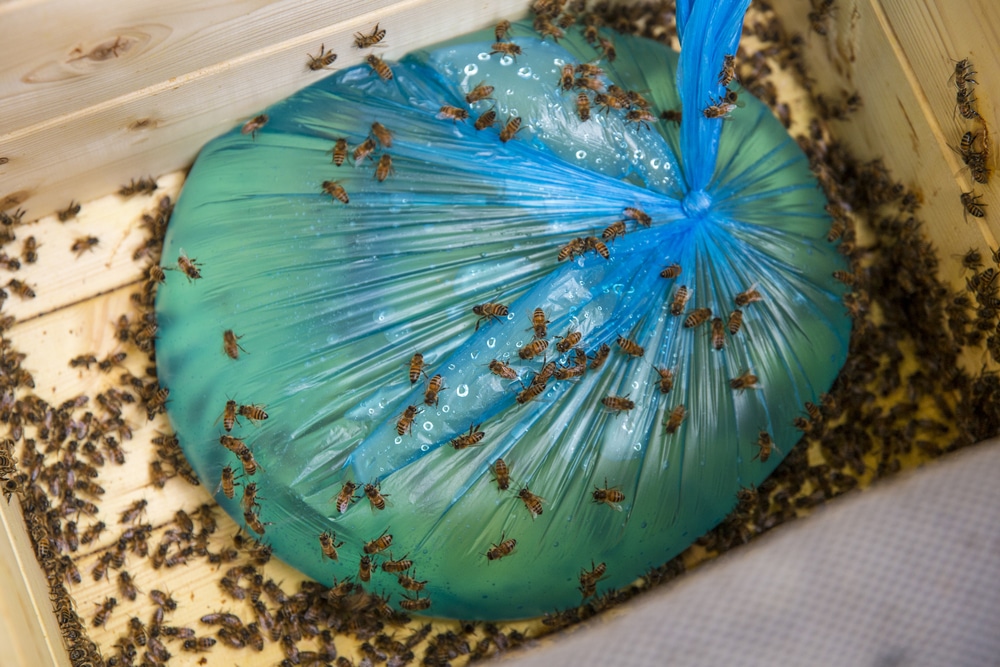
The Varroa (in Spanish) population may have risen since spring while the area of brood is now shrinking. A smaller amount of brood can therefore face a higher infestation pressure.
Less brood can mean greater pressure per cell
Mite levels can change rapidly as brood and adult populations change. A weakened colony can also show viral disease, nutritional problems or nosemosis. Mite monitoring helps determine what needs attention.
- Measure around the end of the spring crop and use the method recommended by your local bee health programme.
- An adult-bee count and an inspection of capped brood measure different things. Interpret the result with the amount of brood present and the thresholds appropriate to the method.
- Where action is needed, choose an authorised medicine compatible with the temperature, brood situation, harvest and known local resistance. In Spain, consult your veterinarian or competent regional authority about the national programme and notification before treatment outside its prescribed period.
- Check the product information for temperature limits, super restrictions and any withdrawal period.
- Keep medicines within their labelled storage conditions. A parked van or an unventilated shed can become dangerously hot in summer.
Busy migratory sites can bring further mite pressure. Keep checking colonies after a move. Our integrated Varroa management guide places those checks in the annual programme.
Summer work calendar
| When | Priority | What to decide |
|---|---|---|
| End of the spring harvest | Assess individual colonies and monitor Varroa. | Classify the colonies and act on the results and applicable programme. |
| Before a heatwave | Water, shade and a reflective roof. | Protect new comb from heat stress. |
| When planning the next summer flow | Destination and stocking density. | Which hives to move and how many the site can support. |
| During flowering | Laying space and accessible stores. | Free brood space or supplement an identified shortage. |
| When supers come off | Protect the drawn comb. | Arrange suitable cold storage or other authorised protection. |
| End of summer | Review stores and check Varroa again. | Plan autumn feeding and winter preparation. |
How much water do hives need in summer?
The cited study found an average near 0.6 litres per strong colony per day and over a litre in hot weather. Ten colonies could collect roughly 6–14 litres a day under those conditions. Provide shaded, dependable water with safe landing places and check it often.
At what temperature can honeycomb sag?
Beeswax softens at around 40 °C, before it actually melts. New comb holding a heavy honey load is particularly at risk of collapsing or blocking the entrance.
Should I treat Varroa in summer?
Monitor early, interpret the result with your bee health adviser or programme and follow the label of any authorised treatment. The timing matters because brood may contract while mite pressure rises. Check regional requirements before treating outside the prescribed period in Spain.
How many colonies can I place at a summer apiary?
Base the number on forage density and duration, neighbouring apiaries and water. Start conservatively on a poor flow and adjust using weight, incoming food and stores.
Is syrup or fondant better in a summer dearth?
Where a carbohydrate shortage is confirmed, fondant can reduce the robbing pressure associated with exposed liquid feed. Choose a form the bees can reach and keep feeding separate from honey intended for harvest.
Sources discussed: Hepburn (1983) on the thermal behaviour of beeswax, Pajuelo (2018) on seasonal pollen diversity and Barascou (2021) on nutrition and tolerance of toxic exposure.


