

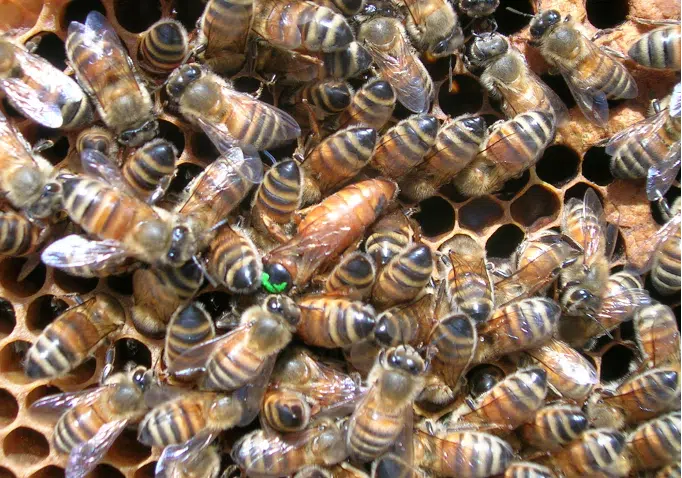
A queen can lay up to 2,000 eggs a day. She also produces pheromones that help hold the colony together, and she passes on genes to all her offspring. The workers make an important decision of their own: when to rear a new queen and replace her.
The queen bee’s three roles
- Laying eggs. The queen measures the cell with her forelegs. She usually lays a fertilised egg in a worker cell and an unfertilised egg in a drone cell.
- Holding the colony together. The queen releases pheromones, particularly from her mandibular glands. Workers pick up these signals and can detect the loss of the queen within hours.
- Passing on her genes. Her daughters inherit genes from her and from one of the drones she mated with, often 15 to 20 in our area. Her sons inherit genes from her alone. Requeening can therefore influence a colony’s temperament, productivity and health.
What about running the colony? Decisions are distributed among the bees. The workers rear a replacement when conditions call for one.
Equipment for marking a queen


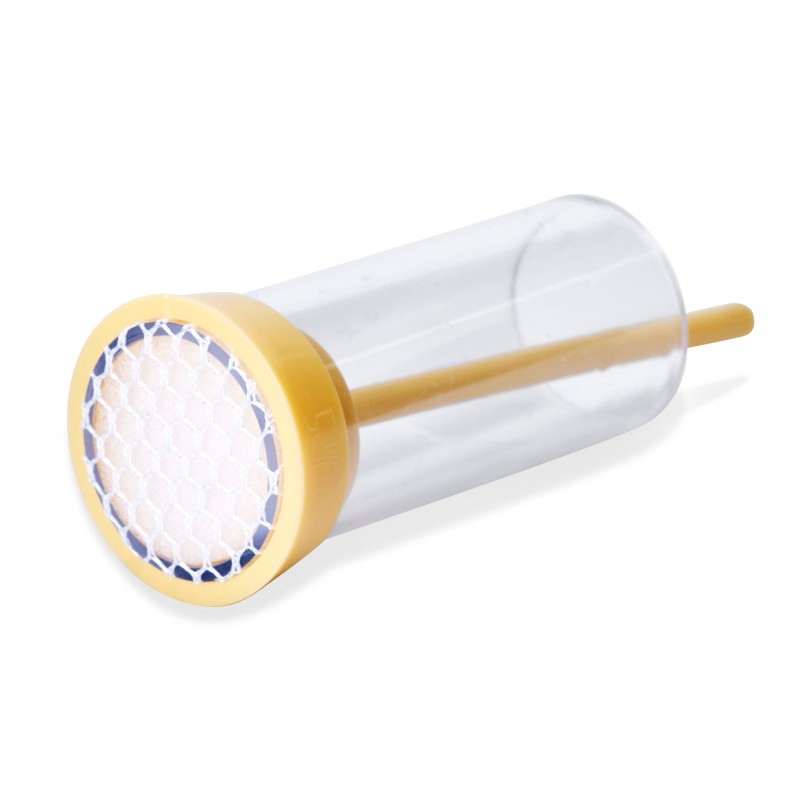
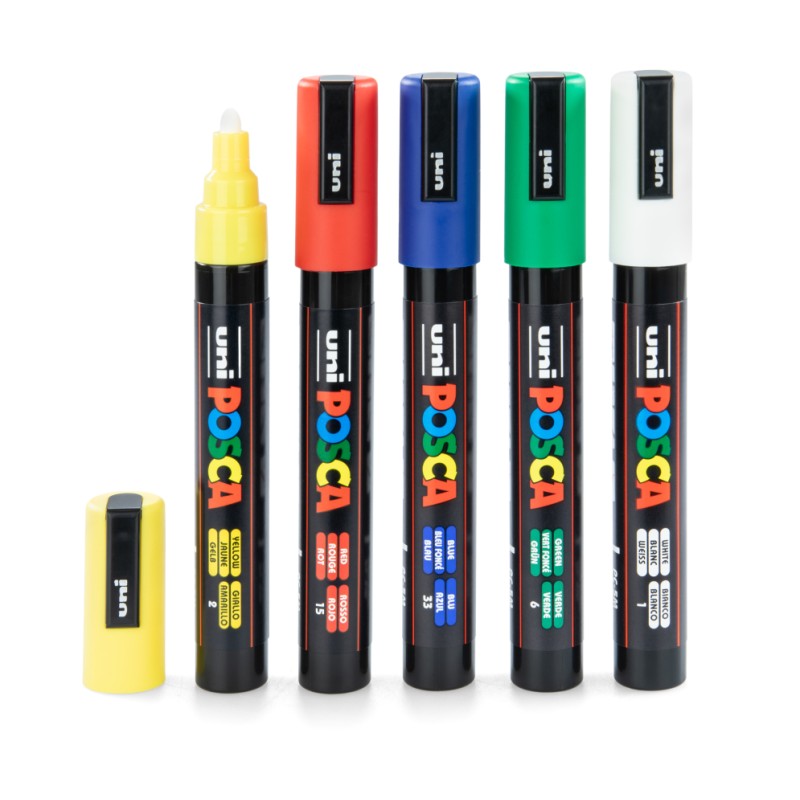
The mesh plunger holds a queen briefly for marking. The POSCA pen is sold separately. Choose the colour that matches your queen records and release her promptly.
Keep the mark with the colony record
- Write down the hive ID, the date and the queen’s origin.
- Check your records before drawing a conclusion from the mark.
In this guide
- What the queen does in the hive and who decides when to replace her
- How to find her among thousands of bees
- Her life cycle, from emergence to mating
- How long she lives and when to requeen
- Marking a queen and reading the international colour code
- Selecting breeding lines for hygienic behaviour
What does a queen bee do in the hive?
In a queenright colony, the queen normally lays the eggs. Despite her title, many decisions rest with the workers. They can rear a new queen and replace the old one.
At the peak of the season she can lay up to 2,000 eggs in a day. She also releases pheromones, produced principally by her mandibular glands, that help the colony function as a unit.
A colony that loses its queen or prepares to swarm may have to rear new queens. It needs very young female brood. Queens and workers both develop from fertilised eggs. A female larva less than three days old can still develop into a queen.
The difference lies in how the nurse bees feed her. A queen larva receives a generous supply of royal jelly throughout larval development. As an adult, the queen continues to receive glandular food from her attendants.
How to recognise a queen bee
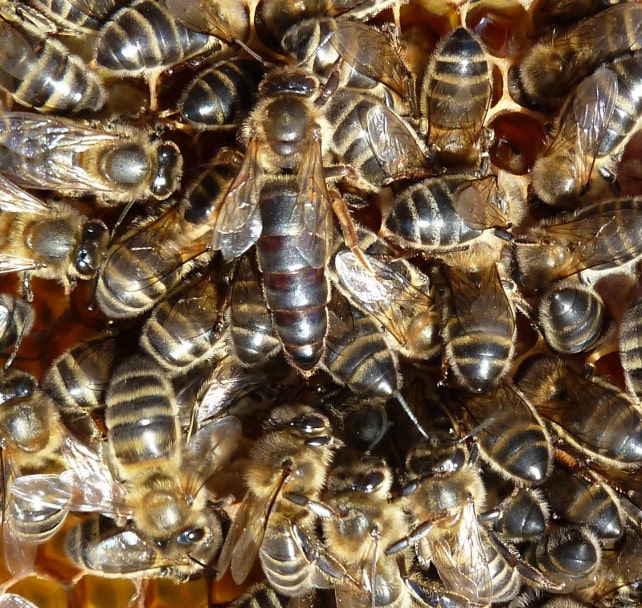
A young virgin queen can be surprisingly hard to distinguish from a worker. Once she starts laying, her abdomen enlarges and she usually walks more deliberately across the comb. Look for several features together.
| Feature | Queen | Worker | Drone |
|---|---|---|---|
| Abdomen | Long and tapered, extending beyond the wings | Short | Broad and blunt |
| Thorax | Larger than a worker’s | Smaller | Large and hairy |
| Movement | Usually deliberate, often with a retinue | Quick | Can appear clumsy on the comb |
| Pollen basket | Absent | Present on the hind legs | Absent |
| Tongue | Short | Long | Short |
| Sting | Can generally withdraw her sting | Barbed; often remains in mammalian skin | Absent |
| Eyes | Separate on top of the head | Separate on top of the head | Very large, meeting at the top of the head |
The queen has well-developed mandibles and a sting at the end of her abdomen. She mainly uses it against rival queens and can usually withdraw it.
An older queen may have lost some of the hair on her thorax, and the tips of her wings may look worn.
The queen has large ovaries and a spermatheca, an organ in which she stores sperm. In our area queens commonly mate with 15 to 20 drones. Their daughters consequently belong to several paternal lines, increasing the genetic diversity of the colony.
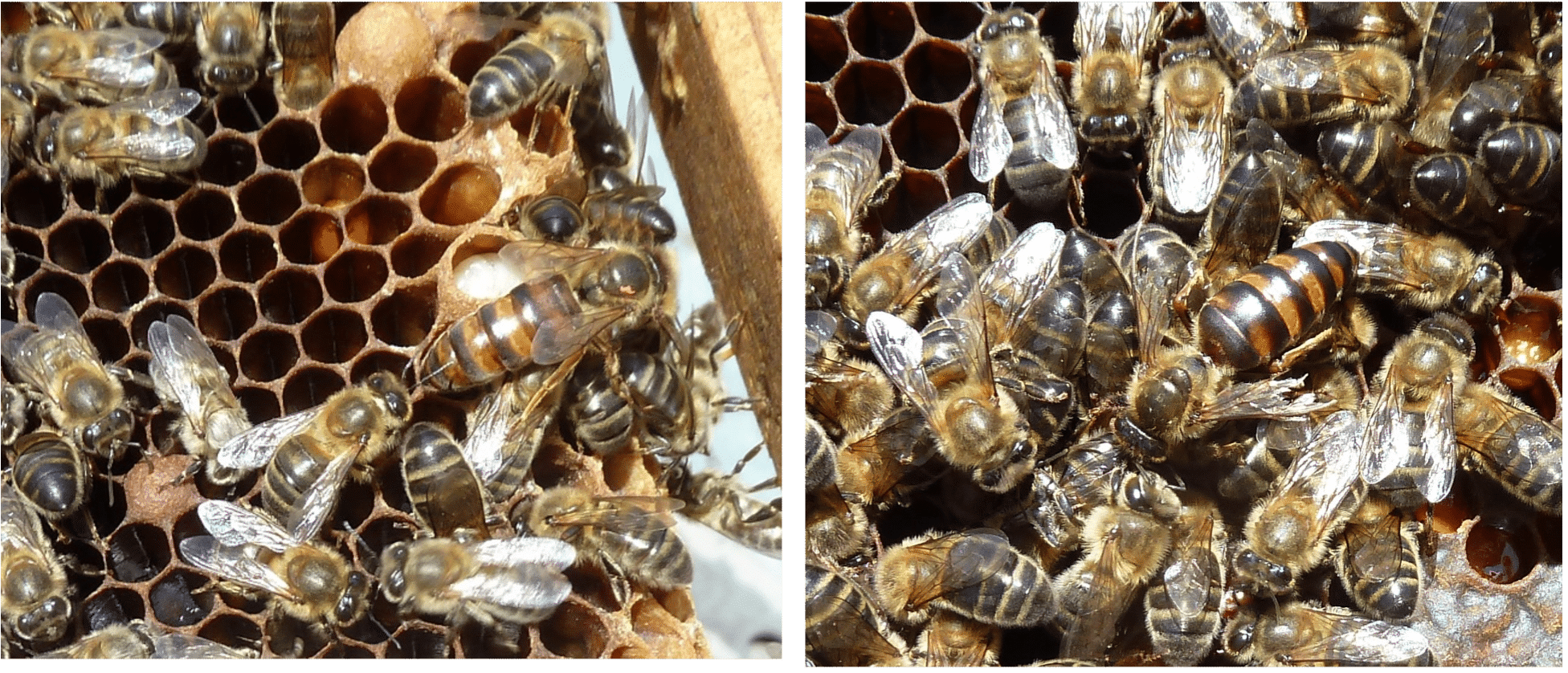
Colour also varies with subspecies. Iberian honey bees (Apis mellifera iberiensis) are typically dark, while Italian bees (A. m. ligustica) often show yellow bands. If yellow-banded workers start appearing in a previously dark colony, mating with drones from another line is one possible explanation. Colour alone cannot establish ancestry.
The queen bee’s life cycle
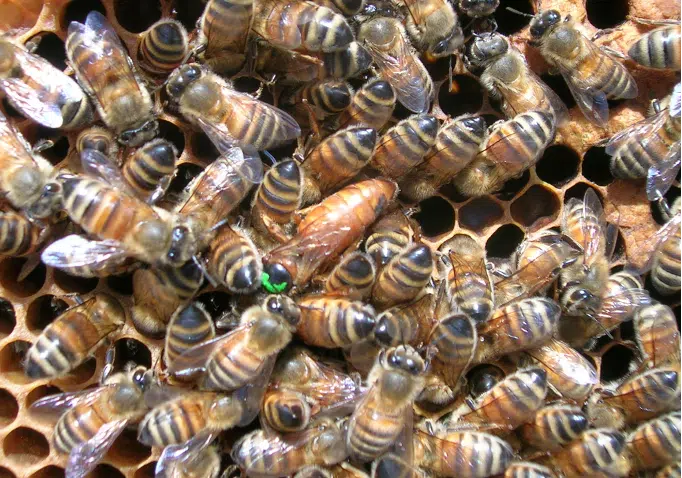
A queen usually emerges about 16 days after the egg is laid. A few days later she starts making short orientation flights to learn the landmarks around the hive.
| Timing | What happens |
|---|---|
| About day 16 from egg laying | The queen emerges from her cell. |
| Around days 18–19 | She begins orientation flights as she matures. |
| During the first three weeks after emergence | She makes mating flights when weather permits. |
| After mating | She begins to lay and usually stays in the hive unless she leaves with a swarm. |
Warm, clear weather and light winds favour mating flights, typically at around 20 °C or above. Around the middle of the day the queen flies to drone congregation areas. The drones can occupy an area some 100–200 m across at heights of roughly 5–40 m. They detect her pheromones and pursue her in flight.
Mating takes place in flight. Part of the drone’s reproductive organ tears away and remains briefly in the queen. The drone dies soon afterwards.

The mated queen generally begins laying in the centre of the nest, in the warmest part of the comb, and works outwards. She gauges the cells with her forelegs and usually lays fertilised eggs in worker cells and unfertilised eggs in drone cells. Laying follows the supply of nectar and pollen. In our part of Spain it peaks in spring, eases in summer and can rise again in autumn.
How long does a queen bee live, and when should you replace her?
In a managed apiary without annual requeening, a queen often lives for two or three years. Laying performance can decline before the end of her life, with consequences for colony strength.
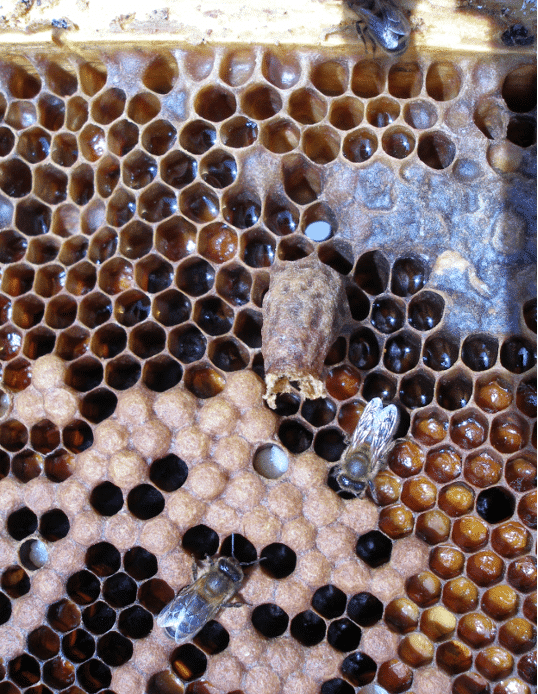
A poorly mated queen may exhaust her supply of stored sperm and begin laying only drone eggs. Workers can rear a replacement only while suitable female brood remains. If replacement fails, the beekeeper may find a drone-laying colony.
Some beekeepers choose annual requeening for more predictable performance. Success also depends on how you introduce a mated queen to her new colony.
Marking queens and reading the international colour code
A small coloured dot on the thorax makes a queen easier to find and indicates the year she was reared. The international sequence follows the last digit of the year and repeats every five years.
| Colour | Years ending in | Examples |
|---|---|---|
| White | 1 and 6 | 2026, 2031 |
| Yellow | 2 and 7 | 2027, 2032 |
| Red | 3 and 8 | 2028, 2033 |
| Green | 4 and 9 | 2029, 2034 |
| Blue | 5 and 0 | 2030, 2035 |
The mark can tell you more than the queen’s age. If you find an unmarked queen or a different colour from the one you recorded, the colony may have superseded its queen or reared a new one after swarming. A paint mark can also wear off, so check your records and the brood.
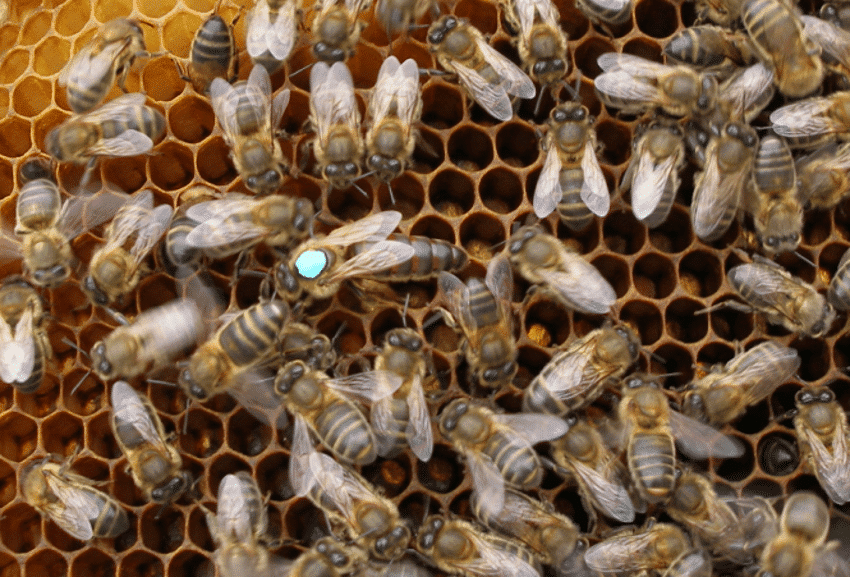
If you are new to marking queens, our queen-marking equipment includes pens, holders and numbered discs.
Selecting queens for breeding and hygienic behaviour
Breeders select lines for traits such as honey yield, royal jelly production or Varroa-sensitive hygiene (VSH), a trait associated with workers identifying and removing mite-infested brood.
As in other livestock breeding, disease resistance matters. Beekeepers can select for general hygienic behaviour and, more specifically, traits that help colonies cope with Varroa.
Renewing queens and selecting suitable stock can improve the performance of an apiary. If you would like to raise your own, start with our queen-rearing guide.
Frequently asked questions about queen bees
What does a queen bee do?
At peak laying she can produce up to 2,000 eggs a day. Her pheromones help keep the colony together, and she passes on genes to all her offspring. The workers decide when to rear a replacement.
How can I recognise a queen bee?
Look for a long abdomen extending beyond the wings, a larger thorax and steady movement. She has no pollen baskets. The quickest clue is often a ring of workers facing her as she moves over the comb.
How long does a queen bee live?
Two to three years is common in managed colonies that are not requeened annually. Laying performance often declines with age, so many beekeepers replace their queens every year or two.
Why does one female larva become a queen and another a worker?
Both develop from fertilised eggs. Nurse bees give a queen larva abundant royal jelly throughout her development, and it is this feeding regime that sets her on a different course. Female larvae less than three days old still have this potential.
How many times does a queen bee mate?
In our area a queen typically mates with about 15 to 20 drones over a series of flights during her first three weeks. She stores sperm in her spermatheca and normally uses this supply for the rest of her life.
Can a queen bee sting?
Yes. She can usually withdraw her sting and use it again. It is mainly used against rival queens. A queen very rarely stings the beekeeper.
What colour is used to mark queens in 2026?
White. The five-year cycle is white for years ending in 1 or 6, yellow for 2 or 7, red for 3 or 8, green for 4 or 9 and blue for 5 or 0.
Further reading
- Where is the queen? Practical ways to find her on a busy comb.
- Supersedure queens and how bees replace a queen themselves.
- How to introduce a mated queen and check that she has been accepted.
- What to do with a drone-laying colony if queen replacement fails.


