
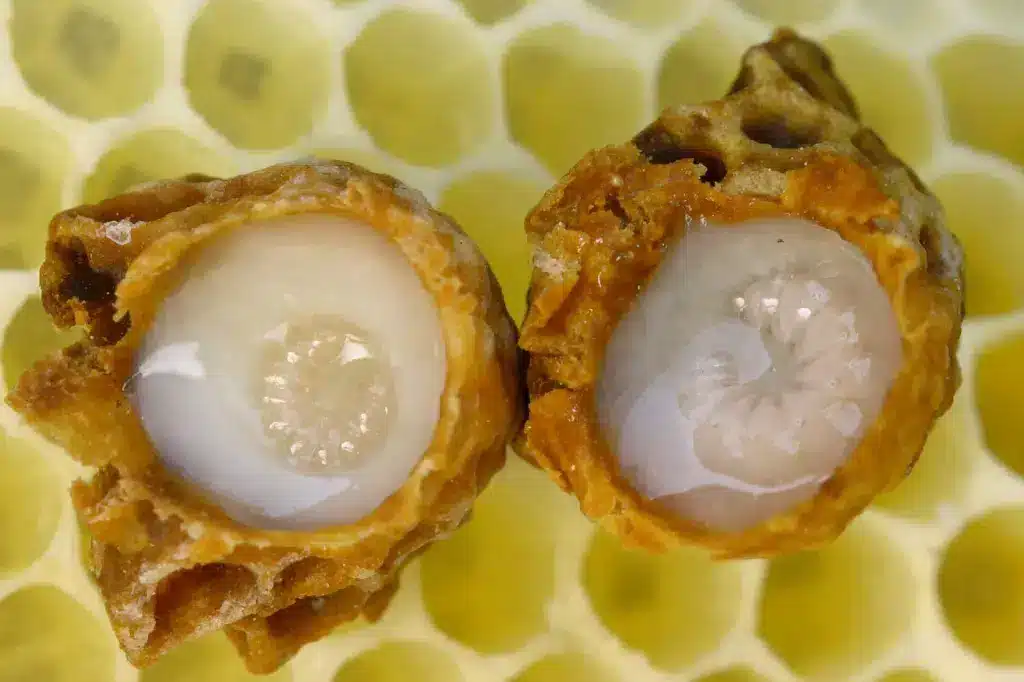
What is royal jelly?
Royal jelly is a secretion from the hypopharyngeal and mandibular glands of nurse bees. These young workers provide glandular food for developing larvae and the adult queen. Larvae being reared as queens receive abundant royal jelly throughout their larval development.
Worker larvae receive glandular food during their early development, whereas queens continue to receive royal jelly as adults.
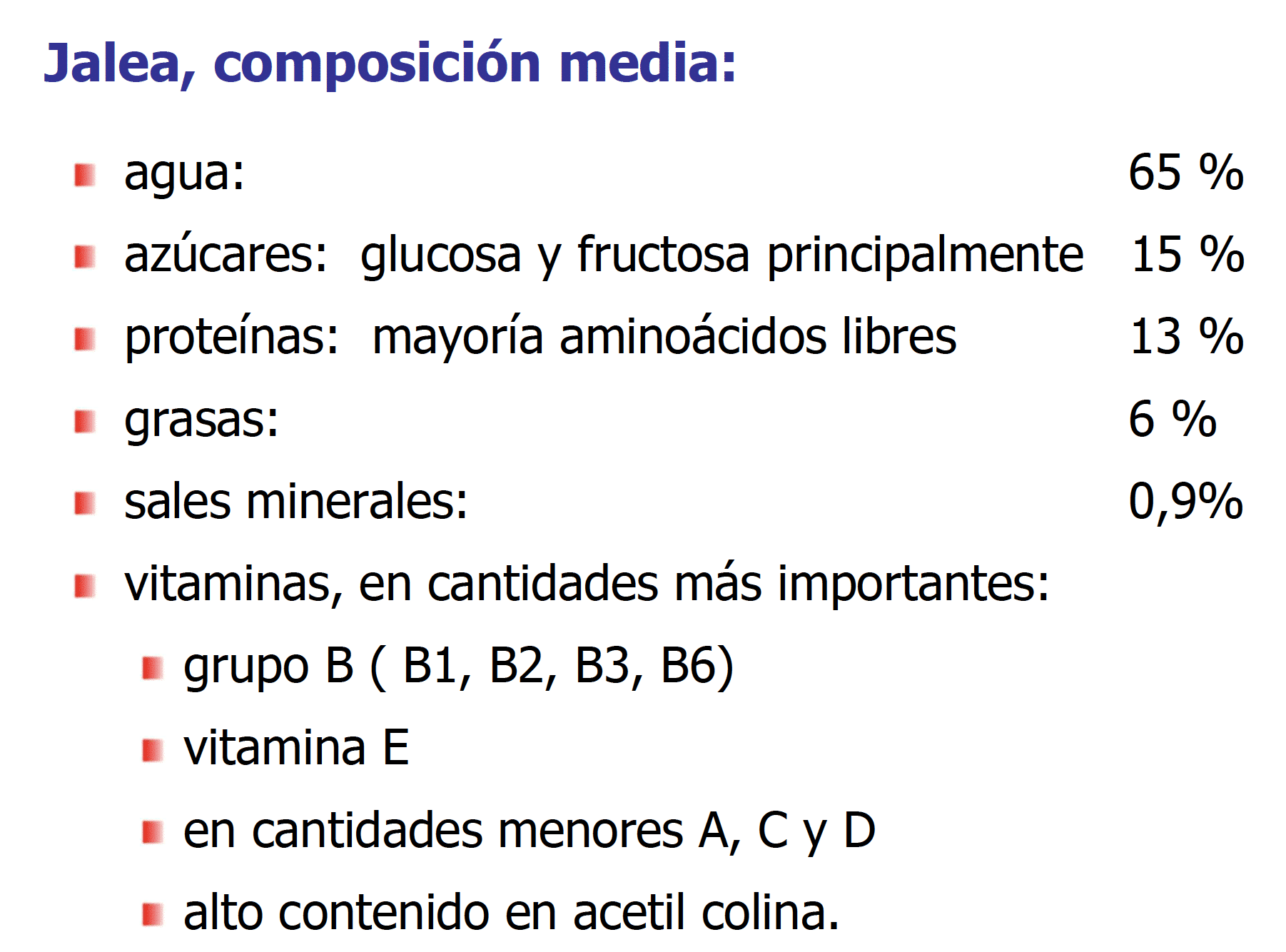
This secretion is characterised by its high moisture content, ranging between 60 and 70%, and is rich in sugars (10-16%) and proteins (12-15% crude protein), in addition to containing vitamins. Due to this composition, royal jelly is a delicate and perishable product, requiring proper storage to maintain its freshness and quality.
🔬 Physical and sensory profile
A gelatinous substance, partially soluble in water, with a density of 1.1 g/mL.
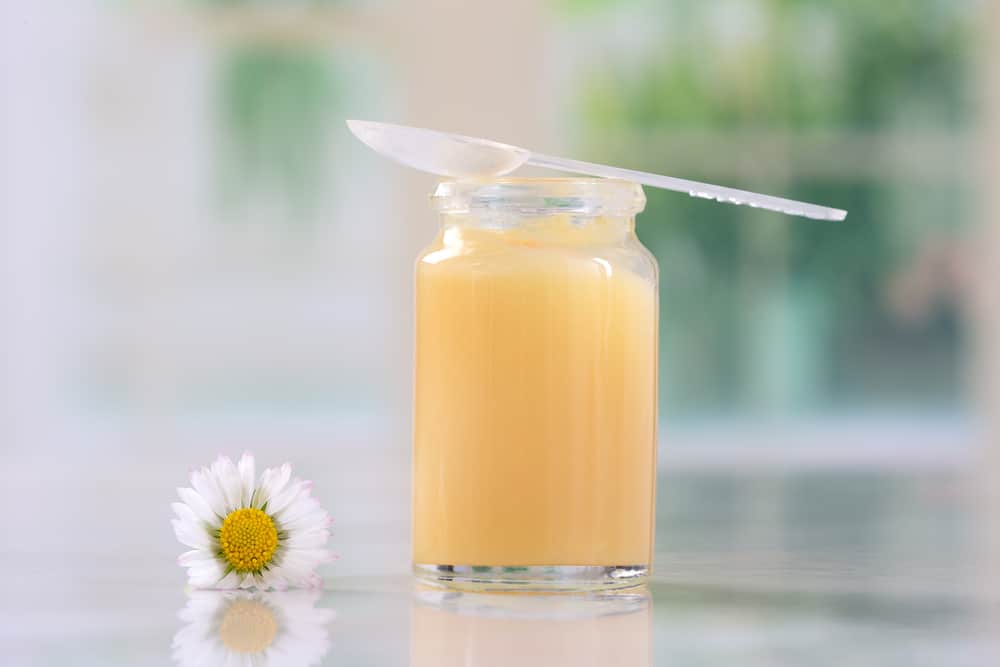
Colour creamy yellow initially, intensifying towards more yellow tones over time and storage.
Odour acidic and pungent; taste combining acidic and sweet notes. Poorly stored royal jelly may darken or develop a rancid flavour, reducing its commercial value.
Composition of royal jelly
Royal jelly is a complex secretion whose composition varies between batches. The following figures are indicative ranges for fresh royal jelly, not a complete product specification:
| Component | Proportion | Detail |
|---|---|---|
| Water | 60-70% | The main constituent. Moisture is one of the quality parameters. |
| Sugars | 10-16% | Primarily fructose, glucose and sucrose. |
| Crude protein | 12-15% | Up to 45% of dry weight. Proteins and peptides are the main nitrogenous compounds. |
| Lipids and fatty acids | — | Includes 10-HDA (10-hydroxy-2-decenoic acid), an unsaturated fatty acid, alongside other fatty acids. |
| Minerals | Minor proportion | Present in small quantities within the nutritional profile. |
| Vitamins | Minor proportion | The reported vitamin profile mainly includes water-soluble vitamins; concentrations vary. |
| Minor components | Trace amounts | Heterocyclic substances, nucleotides and organic acids. |
Ranges vary according to origin, hive management and batch storage.
Real uses: who buys royal jelly and why
Royal jelly has been marketed as a beekeeping product since the 1950s. For the beekeeper considering producing it, what matters is not the list of virtues circulating online, but who buys it, in what format, and what makes a batch worth a higher price.
🏭 Sales channels
- Cosmetics. It is used as an ingredient in creams, lotions and tonics. This is a market that purchases in volume and demands regular supply.
- Dietary supplements. Formulations packaged by third parties, usually in small formats.
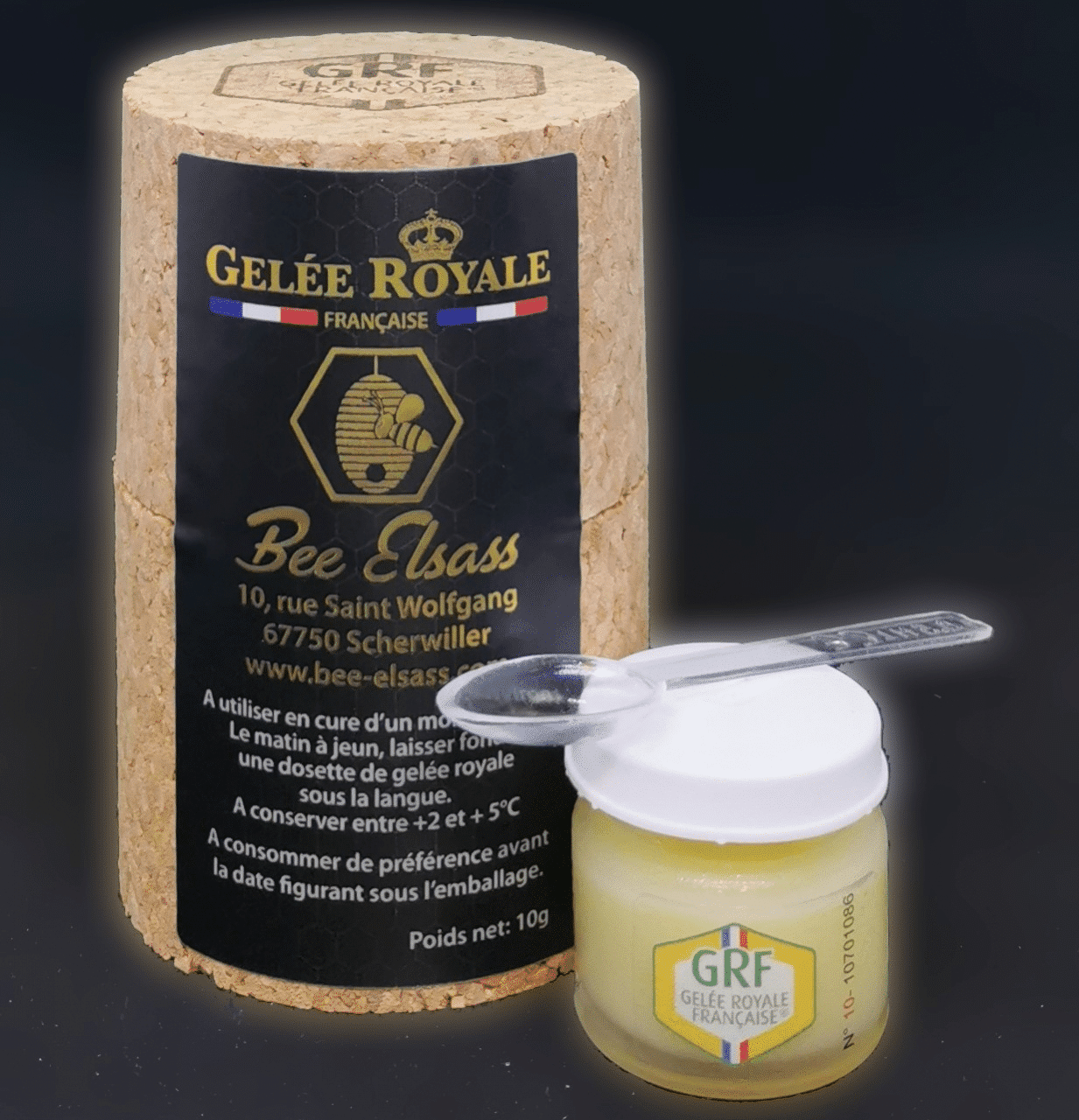
- Direct sale in fresh form. The beekeeper sells their own batch directly to the end consumer. Direct sales can achieve a higher price, but require effective communication and a reliable cold chain.
Why it is expensive
Royal jelly production is labour-intensive and requires well-managed colonies. Beekeepers use queen-rearing techniques, graft larvae carefully and maintain a strong population of nurse bees. It is also thermolabile and photosensitive, so it must be kept chilled in light-protective containers from the moment it is collected from the cells by suction.
💰 What makes a batch worth more
- 10-HDA content assessed alongside the other compositional criteria: it is an important quality marker, not a stand-alone proof of authenticity.
- Moisture and freshness assessment. Water content helps characterise the product; furosine can provide additional information about its storage history.
- Documented hygiene and traceability, supported by appropriate checks for residues and contaminants.
- Colour, aroma and flavour consistent with a well-preserved product, assessed together with its handling and storage records.
⚠️ Beware what you put on the label
Check any proposed nutrition or health claim against the EU rules and the European Commission’s register, including its conditions of use. A research paper is not, by itself, permission to make a health claim on a label, website or advertisement.
Research into royal jelly does not justify presenting the product as a treatment for disease. Keep marketing statements proportionate to the evidence and the applicable rules. Focus on composition, freshness, origin and traceability that you can substantiate.
How is the quality of royal jelly measured?
International standards are available: ISO 12824:2016 covers royal jelly specifications and quality testing, while ISO 24364:2023 addresses production. Quality assessment combines composition, hygienic production, storage history and the relevant buyer specification. Three commonly discussed analytical markers are outlined below.
| Marker | What it indicates |
|---|---|
| 10-HDA 10-hydroxy-2-decenoic acid | A characteristic fatty acid used in royal jelly quality assessment. Its concentration must be considered alongside other analytical results; a single 10-HDA result does not establish authenticity or purity. |
| Moisture | An important compositional parameter, assessed against the applicable specification. An unusual result warrants investigation, but does not on its own prove adulteration. |
| Furosine | A marker associated with the Maillard reaction that can help assess storage-related changes. Results are interpreted in the context of storage time and temperature. |
These markers are part of a broader assessment. Buyers may also request other compositional tests, hygiene information and traceability records.
Good hygiene, careful colony management and traceability support royal jelly quality. Organic certification, where relevant, is a separate production claim and does not replace checks on the finished product.
Introduction to royal jelly harvesting

The key is to have a thorough understanding of the variables involved in this process. One of them is the need for a deep knowledge of honey bee biology, since essentially the work involves queen larvae at an early stage of development. Great precision is required for tasks such as grafting larvae and the subsequent manipulations.
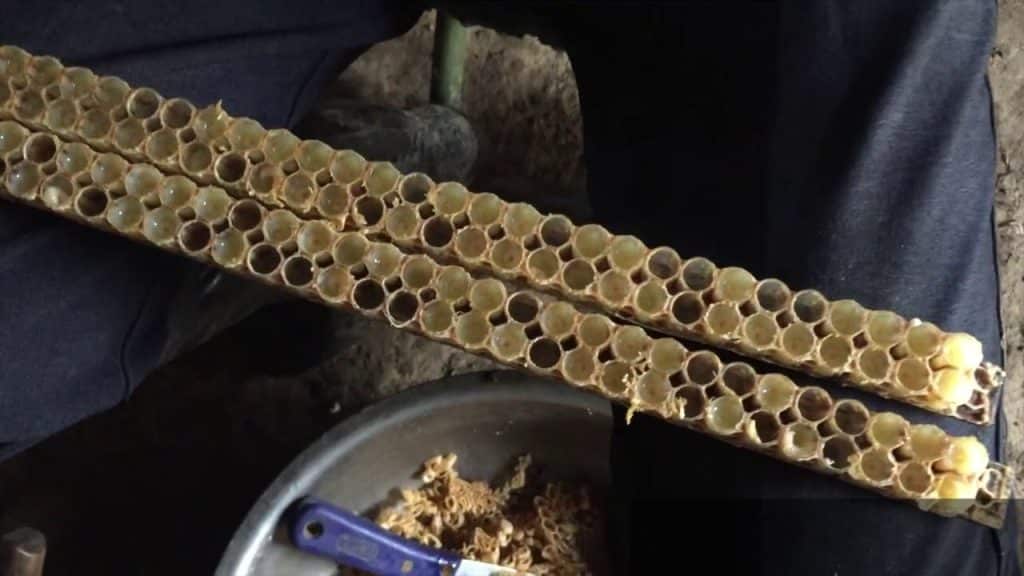
Put simply, royal jelly production requires the beekeeper to use queen-rearing techniques. When the concentration of royal jelly around the larvae reaches its peak, the next steps are to remove the larvae and extract the contents of the cells with a vacuum pump.
Another variable, as in any productive activity, is production costs in relation to market conditions and competitors. In this respect, for hives to produce royal jelly in abundance, they need very strong populations of nurse bees. One of the drawbacks when building the critical mass of nurse bees required is the ageing of these bees (as workers move from nursing to other tasks, the function of their hypopharyngeal glands changes: brood-food protein secretion gives way to enzymes involved in processing nectar into honey).
Requirements for production
This requirement implies that colonies must continuously have young bees, as already mentioned. There are two ways to achieve this:
| Option | How it works | What it requires |
|---|---|---|
| a) Queenless hives | They receive regular additions of emerging brood. | Access to donor colonies. |
| b) Queenright hives | With a queen excluder and an additional brood chamber for royal jelly production. | Careful, consistent management and appropriate handling. |
Production and its tools
🧰 Equipment checklist
- Strong hives, with abundant populations of young nurse bees.
- Grafting tool: a Chinese grafting tool or grafting needle, with optional lighting or magnification. Right- and left-handed designs are available; choose a tool that allows you to handle larvae accurately and comfortably.
- Queen-cell cups and cup holders.
- Suction pump for extracting the contents of the cell.
- Cooler and amber-coloured jars: royal jelly is thermolabile and photosensitive, so it must be protected from heat and light from the very first moment.
Learning to produce royal jelly takes patience, practice and attention to detail. Before investing in equipment, consider the market you intend to supply.
The royal jelly market
If we intend to produce royal jelly, we must first consider its market. There is an established market for royal jelly. In terms of competition, however, China is the world’s leading producer of royal jelly, and imported royal jelly is a significant competitive consideration. The historical figures below should not be read as current market shares.
| Market data | Figure |
|---|---|
| Estimated global annual production in the 1980s | ~700 tonnes |
| Estimated Chinese share in the same historical data | ~60% |
| Estimated Taiwanese share in the same historical data | ~20% |
These estimates come from historical data discussed in the FAO guide to value-added bee products. They describe the 1980s and are not a current market forecast.
Competing solely on price can be difficult. A clearly defined point of difference, such as documented origin, freshness or direct local supply, can help establish the value of your product.
Quality assurance, traceability and hygiene are important differentiators. The main problem is lack of information: if the consumer does not know the product’s origin or quality , price may become their main basis for comparison. Clear communication helps explain why a traceable, well-handled local product may command a different price.
📣 Communicating your product’s value
Building a customer base takes persistence, clear explanations and consistency. Decide how you will explain the qualities that distinguish your product.
Producing royal jelly requires a very high level of specialisation. Seek reliable training and assess advice critically. Start gradually, build experience and make the product’s value clear to customers.
Further reading: FAO: royal jelly composition and production; Ghosh et al. (2024): composition and quality assessment; Ueno et al. (2015): nurse-bee gland function; Marconi et al. (2002): furosine and freshness.

ISNI 0000 0005 1801 1100 | Joshua Ivars is the manager of LA TIENDA DEL APICULTOR and the author of this blog, where he shares technical and practical guidance for beekeepers. Drawing on extensive experience in the beekeeping sector, he offers advice and solutions based on beekeepers’ real needs, sharing his knowledge of equipment and essential beekeeping practices.


