

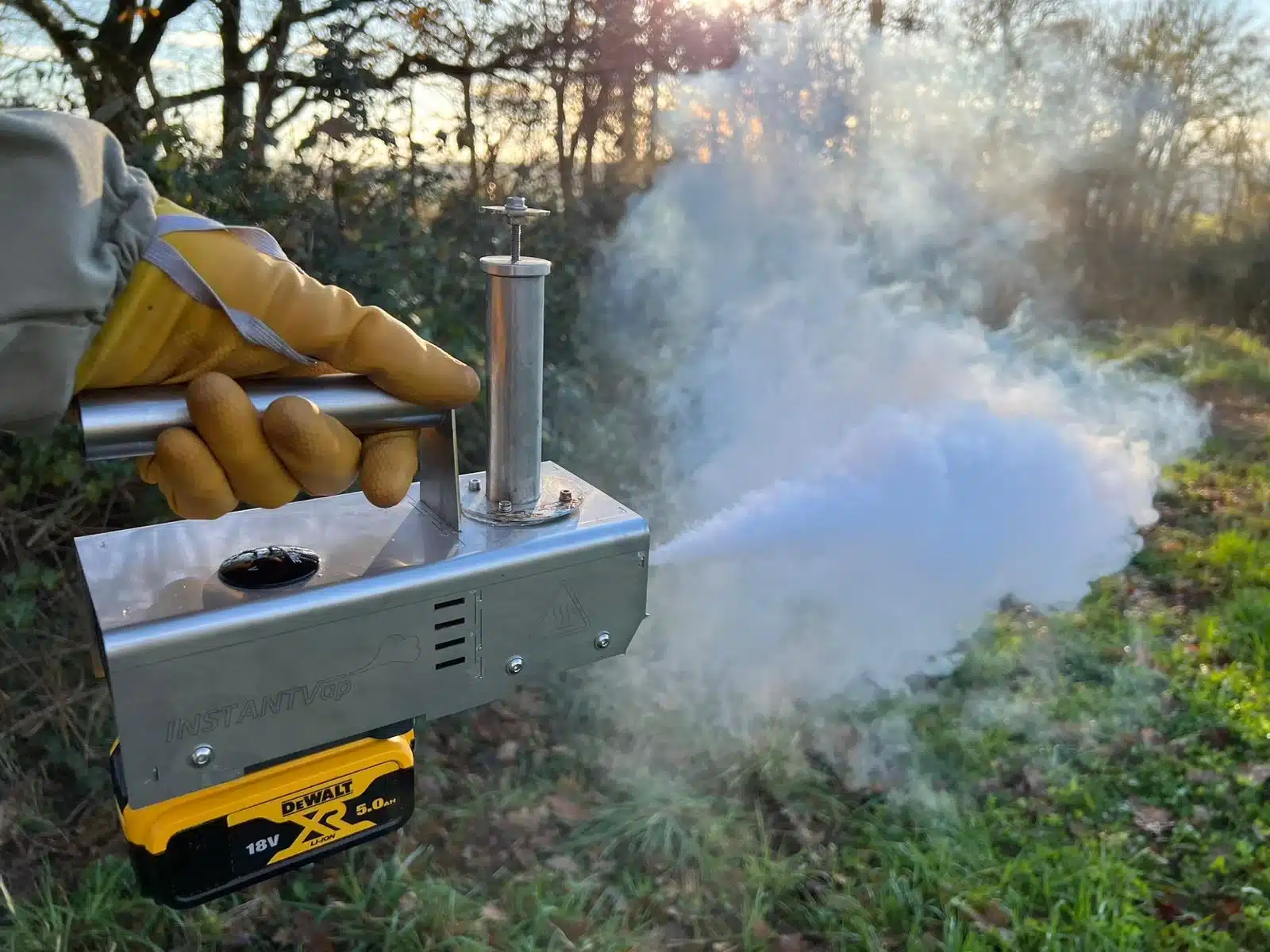
Some authorised oxalic acid medicines can be administered by vaporisation to control Varroa mites on adult bees. The treatment does not reliably reach mites protected in capped brood. Outcomes depend on the colony, the particular medicine and the way it is used. Start with the approved product information for the country where the bees are kept.
Four points to check first
Product-specific amount
2 g per colony, not per box, for both Spanish powders. Confirm it in the leaflet.
Device-specific settings
Use the instructions for the exact model and power supply.
Outdoor conditions
Use the temperature and brood conditions specified for the chosen medicine.
Brood status
Published trials report their best results in broodless colonies.
Oxalic acid from a vaporiser is hazardous if inhaled and can injure the eyes and skin. Use the protective equipment required by the medicine and device instructions. Do not operate where other people could be exposed.
Comparing two battery-powered vaporisers


Compare the complete setup: connector, battery, charger, protective equipment and the registered medicine’s instructions. The equipment alone does not establish a lawful treatment schedule.
Budget for the complete setup
- Check the medicine leaflet, compatibility and operator protection.
- Compare batteries, charging, transport and time between colonies.
In this guide
- Why vaporisation is used in Varroa management
- Conditions and operator protection
- What the field studies found
- Comparing vaporisers
- Practical checks before choosing equipment
Which formulations are authorised in Spain?
Spain has registered veterinary medicines whose product information includes evaporation or vaporisation. Authorisation applies to a particular formulation and route. Technical-grade oxalic acid is not an interchangeable veterinary medicine.
| Veterinary medicine | Spanish authorisation | Prescription status in the Spanish register | What the product information covers |
|---|---|---|---|
| Varroxal powder, 75 g pack | 4250 ESP | Non-prescription | The evaporation section covers broodless colonies in autumn or winter and specifies an outdoor temperature range of 2–10 °C. One 2 g sachet per colony as a single treatment. A second evaporation two weeks later is recommended only for heavily reinfested colonies or colonies with sealed brood in winter. |
| Api-Bioxal powder | 3886 ESP | Non-prescription | The Spanish product information includes vaporisation at 2 g per colony, once a year, and states that sublimation is not recommended in summer. |
| Api-Bioxal 44.2 mg/ml solution containing glycerol | 4045 ESP | Non-prescription | This is a liquid solution for trickling. Its authorisation does not include vaporisation. |
Follow the label for the pack and country in which you are using it. Overseas studies may involve a different formulation, authorisation or research protocol.
Why use oxalic acid vaporisation?
Oxalic acid is used in several authorised formulations and by different routes. Each has its own instructions. Vaporisation is one approach where a suitable medicine, compatible device and correct colony conditions coincide.
- Broodless colonies. Certain trials report reductions exceeding 95% in mites on adult bees under their study conditions. That is not a guaranteed result in every apiary.
- Different administration route. The bees are not wetted with a trickled liquid. The route still has colony effects and specific precautions.
- Harvest considerations. Observe the label’s restrictions on supers, the honey flow and withdrawal. A naturally occurring substance is not automatically suitable for use during a crop.
- Repeat treatment. Do not turn an experimental schedule into a routine. Repeat administration only where the particular label permits it and under the conditions it specifies.
Equipment, colony and weather considerations
- A temperature on a device display is a characteristic of that particular heater and controller. It cannot be copied between models or read as a universal temperature for the medicine.
- Use the quantity specified for the registered product and the colony to be treated. The mass of a particular medicine, its active ingredient and the capacity of an accessory are different specifications.
- Prevent exposure during handling and operation. Read both sets of instructions, use the specified respiratory, eye and hand protection and keep bystanders out of the working area.
- Studies at the University of Sussex Laboratory of Apiculture and Social Insects explored effects of conditions and administration route. Their research ranges do not take precedence over the authorised medicine label.
- Cold-weather clustering changes how bees are distributed in the hive. The permitted outside temperature is product-specific.
- In warmer weather, many foragers may be out of the hive. Check the label and the actual colony conditions before deciding whether the route is suitable.
- Consider the colony’s recent weather and condition. Avoid unnecessary disturbance and ask your bee health adviser where management and product requirements do not align.
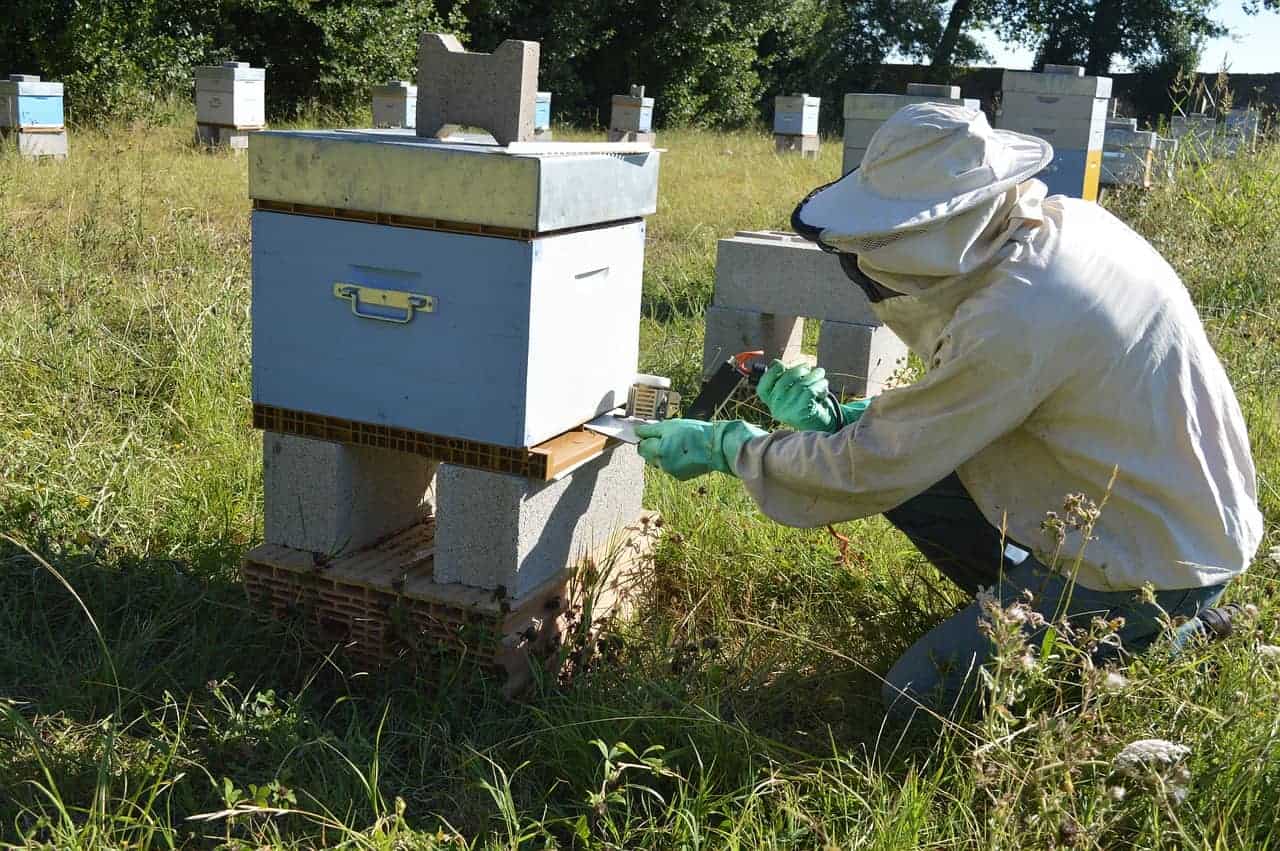
What research says about this approach
Published field studies and reports by researchers and practising beekeepers compare brood status, efficacy and colony effects. The experimental question is often narrower than the decision facing a beekeeper.
- In broodless colonies, some studies reported a large reduction in mites on adult bees after a single authorised-type application. The result depends on how infestation and efficacy were assessed.
- Mites inside capped cells remain a limitation. Studies of repeated vaporisation in colonies with brood have produced variable results. An experimental treatment schedule does not authorise its use in practice.
- Use the medicine’s leaflet for the amount and the device manufacturer’s instructions for the equipment. Figures in a trial or a comparison table apply to the equipment and conditions tested.
- Read each study’s queen, brood and colony survival outcomes alongside its mite results. A reassuring observation in one trial is not proof that higher or repeated exposures are safe.
Integrated programmes may include a managed brood break. Establish the actual brood status and use only an intervention allowed for that colony and jurisdiction.
Vaporisation and trickling can perform differently under different conditions. Brood status, the product, the place and the season all matter to a meaningful comparison.
Lithium compounds have been studied experimentally. Research findings are not a basis for treating food-producing colonies with an unauthorised substance.
Comparing vaporisers
The following models illustrate differences in power supply, control, metering and work rate. Any benchmark times or prices are historical examples from our original comparison. Check the current model, kit contents and instructions before ordering.
| Model | Power supply | Equipment control | Metering | Illustrative work cycle | Approximate historical price |
|---|---|---|---|---|---|
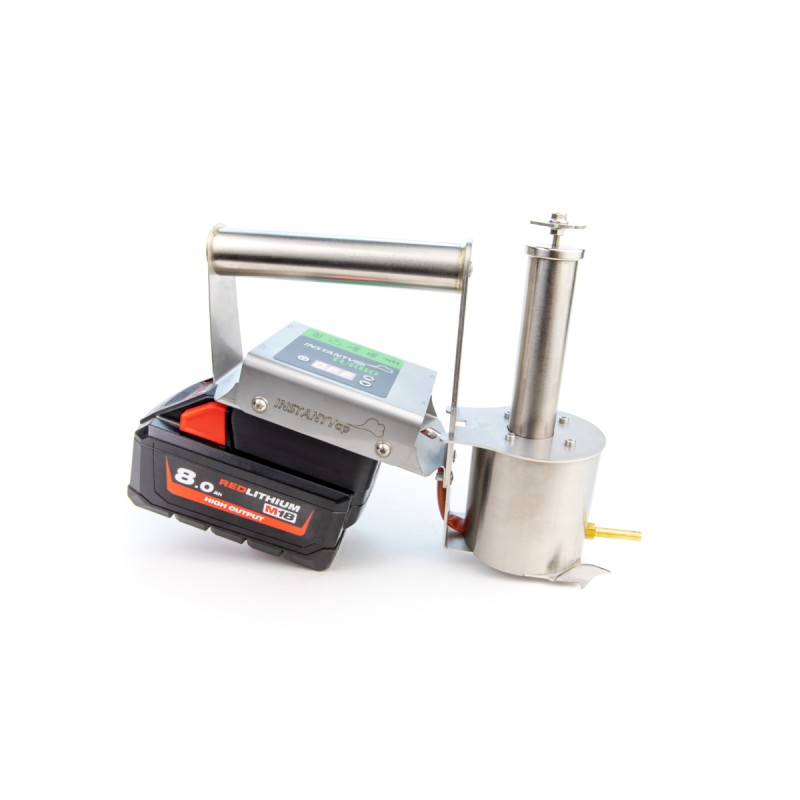
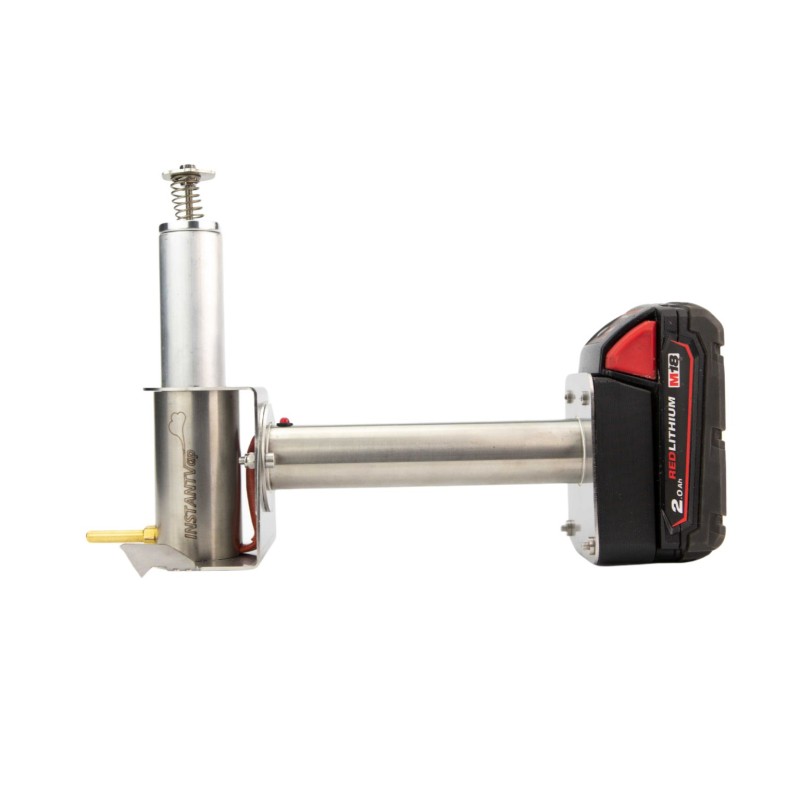
| InstantVap 18V Turbo | An 18–20 V tool-battery platform. Choose the matching connector and check the manufacturer’s battery requirements. Battery and charger are separate. | Adjustable control with a display. See the Turbo manual for the available settings. | Adjustable, tool-free metering accessory. | The manufacturer’s short bench-cycle figure excludes preparation, initial warm-up and moving between colonies. | About €399.50 in the source comparison |
| InstantVap 18V Original | Portable 18 V battery with a connector selected for the chosen battery platform. | Adjustable controller. Consult the Original model manual. | Adjustable metering plunger. | The comparison gives about 25 seconds for its example cycle, after initial warm-up. | About €382 |
| InstantVap 18V Compact | Portable 18 V battery; select the correct connector. | Dynamic electronic control on the model described. | Adjustable metering plunger. | The source quotes about 20–25 seconds for its example cycle. | About €364 |
| InstantVap 18V Lite | 18 V tool-battery platform. | Automatic control; use the Lite model instructions. | Adjustable metering accessory supplied with the version described. | The source cites a slower cycle, about 50–60 seconds in the manufacturer’s example. | About €249.95 in the source comparison |
| ProVap 220 | AC mains supply. A compatible field power source may be required. | Heater and model-specific temperature control. | Pre-measured cap or cup arrangement, depending on model. | The source quotes about 20 seconds for the example once the unit is ready. Setup adds time. | About €450 |
| Oxalika PRO, Italy | 12 V supply from a compatible portable or vehicle battery. | Thermostatically controlled heater. | Manual measuring accessory. | The example describes a warm-up period before the working cycle. | About €390 |
| Varrox, Switzerland | 12 V battery with connecting leads. | Heated pan. Follow the manufacturer’s controls and timing for this model. | Manual loading of the pan. The registered medicine determines the permitted amount. | The working cycle is measured in minutes, with additional handling and cooling time. | About €150 |
| Varrox Eddy, Switzerland | Integrated rechargeable lithium-ion battery. | Internal electronic control and automatic stop. | Removable, manually loaded cup. | Automatic cycle measured in minutes. Battery capacity between charges varies with conditions. | About €399 with battery in the source comparison |
Bench-cycle times are equipment figures, not treatment instructions. Include preparation, warm-up, moves and recharging in any comparison. Check the manufacturer’s materials for InstantVap Turbo and InstantVap Lite. The article’s quoted prices for these two units were checked on 9 November 2026; see the live product page for today’s price.
Choosing equipment for an apiary
- For a small number of colonies, compare the cost of the Lite with slower pan-type equipment. Take account of the power supply, handling time and protective equipment as well as the unit price.
- For a larger operation, repeated warm-up and journeys between hives affect the day as much as the quoted cycle time. Mains-powered equipment needs a compatible and safe supply in the field.
- Within the battery-powered range, the Turbo is intended for a faster workflow, while the Lite can suit smaller operations. Original and Compact offer other combinations. Check compatibility with the registered medicine and the exact device instructions.
- Plan battery capacity and recharging for the length of the working day. The Turbo source specifies at least 4 Ah and one connector platform per unit. Capacity varies with battery condition, outside temperature and actual use.
- For charging in a vehicle, check the compatibility and rating of the charger and its power supply. Include any separate equipment in the budget.
Why metering and control matter
A device with inconsistent metering or poorly documented control makes it difficult to follow a medicine’s instructions. Potential problems include the following.
- Excess exposure and harm to bees or the operator.
- Too little medicine delivered and inadequate mite control.
- An incompatible device and formulation or an improvised setting can give unreliable performance.
Choose documented, compatible equipment with a suitable measuring system and reliable control. Check effectiveness later with a recognised mite count.
Benefits and practical checks
Potential benefits
- Strong activity against exposed mites in suitable broodless colonies.
- Labelled options that fit particular points in an integrated annual programme.
- A product-specific route and clearly specified limits on repeat administration.
Practical checks
- Use the respiratory, eye, skin and hand protection specified in the label and prevent inhalation or bystander exposure.
- Check access, fit and compatibility with your hive. Follow the instructions for the particular medicine and device, and keep the entrance closed afterwards for as long as the label states (15 minutes for Api-Bioxal powder).
- Calculate from the registered medicine’s own instructions for a colony. Never infer a dose from the number of boxes or a device’s maximum capacity.
- Check the labelled outdoor temperature, season, brood status and harvest restrictions.
- Where a brood break is being considered as part of a wider plan, discuss timing and suitability with your bee health adviser.
Where vaporisation fits in the annual plan
Vaporisation is one option for exposed mites when the registered medicine, colony and operator conditions are right. Capped brood, inappropriate timing or poor metering can all reduce the practical value. Use monitoring before and after management and choose the equipment for the complete job.
Sources and further reading
- R. Oliver (2022), “Oxalic Acid Vaporization”, Scientific Beekeeping.
- H. Al Toufailia and colleagues (2015), Journal of Apicultural Research, 54(2), 108–120.
- Laboratory of Apiculture and Social Insects, University of Sussex: publications on oxalic acid and Varroa.
- E. Rademacher and M. Harz (2006), “Oxalic acid for the control of varroosis in honey bee colonies: a review”, Apidologie 37, 98–120.
- J. A. Berry and colleagues (2022), “Assessing Repeated Oxalic Acid Vaporization in Honey Bee (Hymenoptera: Apidae) Colonies for Control of the Ectoparasitic Mite Varroa destructor”, Journal of Insect Science 22(1), 15.
- Véto-pharma technical blog.
- Hive World, New Zealand (2021), guide to oxalic acid in Varroa management.
Frequently asked questions
Is oxalic acid vaporisation permitted in Spain?
Some Spanish veterinary medicines expressly include this route, including Varroxal and Api-Bioxal powder. Use only an authorised formulation under its own conditions. The liquid Api-Bioxal solution has a different route.
How do I find the correct amount for a colony?
Read section 3.9 of the current product information for the precise medicine and presentation. Do not transfer a quantity from a research study, another product or an accessory’s capacity.
What outside temperature is suitable?
The Spanish Varroxal information specifies 2–10 °C for its evaporation use in broodless colonies in autumn or winter. Another product or route may have different instructions.
Does vaporisation work behind a sealed brood capping?
It does not reliably reach mites in capped cells. Check colony conditions and the label, and consult the local programme about suitable alternatives. Do not improvise repeated treatments to compensate.
Can it be used while honey intended for harvest is present?
Follow the exact label, including its super and harvest restrictions and withdrawal instructions. A withdrawal time by itself does not establish permission to treat during a honey flow.
What protection is needed?
For vaporisation, wear at least an FFP3 respirator, safety goggles, chemical-resistant gloves and protective clothing, as the Spanish Varroxal label requires. Prevent inhalation and skin contact, keep others away and follow the product’s first-aid advice if exposed.
Which vaporiser should I buy?
Check that the medicine and device are compatible. Then compare reliable metering, power supply, battery or mains requirements, work capacity, protective equipment and support. Include separately sold chargers and batteries in the total.
Further reading
- Varroa destructor: identifying and managing the mite.
- Integrated Varroa management through the beekeeping year.
- Monitoring Varroa to guide decisions.
- Oxalic acid and glycerol formulations and how their application differs.
- Sublimators and vaporisers in the equipment range.
This is an editorial guide. The authorised product information and veterinary or official advice determine use. The equipment prices are historical examples from the source comparison.


