
If you are looking for an oxalic-acid-and-glycerine recipe for making towels, cloths or pieces of cardboard to control Varroa, the answer for Spain is clear: do not make it yourself. Bulk technical-grade oxalic acid is not a veterinary medicinal product and must not be introduced into the hive. The safe option is to choose an authorised formulation, follow its summary of product characteristics and then verify its efficacy.
The key point before treatment
The fact that a registered medicinal product contains oxalic acid and glycerol does not turn a homemade mixture into that medicinal product. The full formulation, carrier, release characteristics, dose, safety, residence time and conditions of use are all part of the marketing authorisation. Do not replace a registered strip with impregnated cardboard, paper, cloth or towel.
Reviewed on 27 July 2026 using the AEMPS summary of product characteristics and the MAPA Varroa control guide. Authorisations may change: always check the packaging and the current summary of product characteristics before applying any product.
Oxalic acid and glycerine: why a homemade formula is not equivalent
For years, experimental recipes combining oxalic acid with glycerine circulated to impregnate absorbent supports. The aim was to prolong contact of the active ingredient within the hive. The problem is not just getting the proportion right or wrong: when making the support at home, critical variables remain uncontrolled.
In a homemade mixture
- A homogeneous concentration is not guaranteed.
- The support may release the acid irregularly.
- There is no validated stability or shelf life.
- Exposure of bees, beekeeper, and hive products falls outside an evaluated protocol.
In an authorised medicinal product
- The formulation and composition are defined.
- The route, dosage, and withdrawal period are documented.
- Safety and efficacy are assessed under specific conditions.
- The package leaflet allows for traceable application and recording of treatment.
MAPA classifies the administration of bulk oxalic acid intended for other sectors as a fraudulent practice. The same guide warns of ineffective treatment, poisoning caused by uncontrolled doses, unwanted residues and reduced safety for the beekeeper.
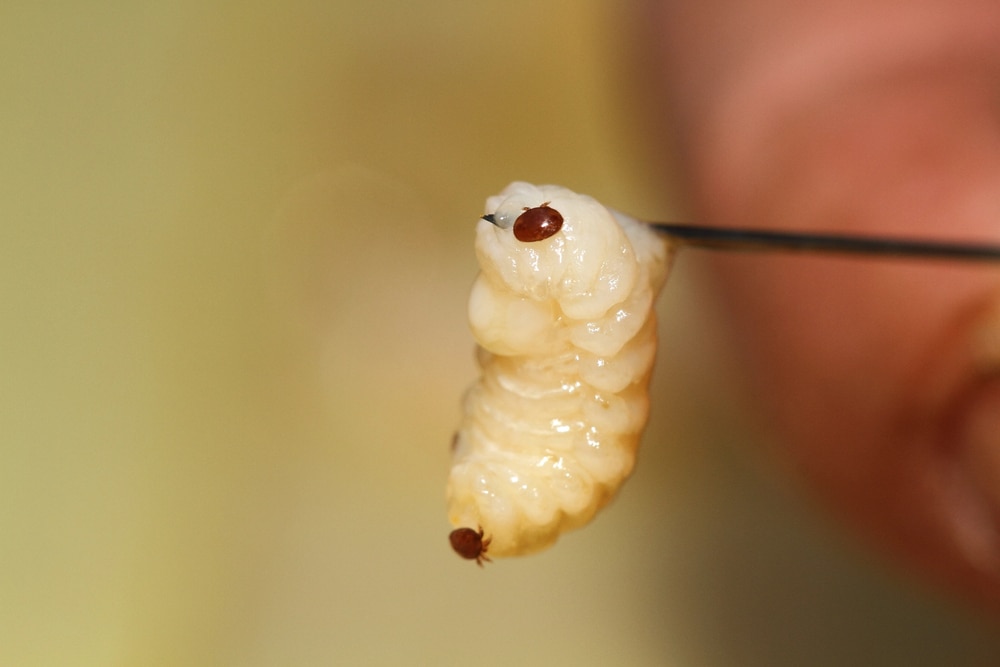
Is there an authorised strip containing oxalic acid and glycerol?
Yes. Calistrip Biox is a veterinary medicinal product authorised in Spain for treating Varroa infestation in bees, with marketing authorisation number 4306 ESP. Its summary of product characteristics lists oxalic acid dihydrate as the active substance and glycerol among the excipients, along with other components and a polypropylene support.
This clearly shows why you must not copy a formula: the authorised strip is not oxalic acid and glycerine poured onto any material. It is a complete pharmaceutical formulation, with its own characteristics and conditions of use. You can consult the official summary of product characteristics for Calistrip Biox on CIMA Vet.
Conditions that must not be overlooked
- Brood must be absent or present in minimal levels to achieve maximum efficacy.
- Strips must not be cut or reused.
- The summary of product characteristics states that strips must be removed after the specified six-week period.
- It must not be used with supers installed, nor during honey production or harvesting in that period.
- It must not be used simultaneously with other acaricides.
- All colonies in the apiary must be treated in a coordinated manner and monitored during and after treatment.
The definitive reference is always the package leaflet of the specific product. If the product, format, or summary has changed, apply the current version and consult the responsible veterinarian when appropriate.
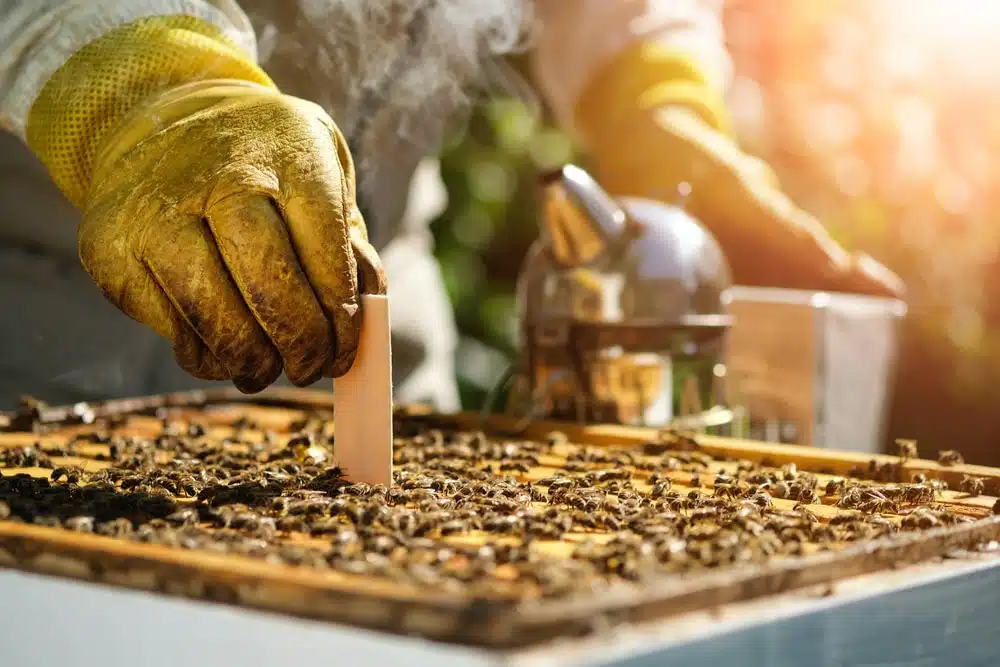
Glycerol does not turn a mixture into a medicinal product
Glycerol appears in various authorised veterinary formulations containing oxalic acid. In addition to the previously mentioned strip, CIMA Vet lists it, for example, in liquid formulations such as API-Bioxal solution and Oxybee. Each has a different pharmaceutical form and different instructions.
Therefore, finding two common ingredients does not allow product substitution or change of application route. It also does not authorise the use of technical oxalic acid sold for cleaning, wood restoration, or other uses. If a container does not identify a veterinary medicinal product, a registration number, and a product leaflet applicable to bees, it must not be used as a treatment inside the hive.
How to choose the right Varroa treatment
The best decision does not start with a recipe, but with the actual condition of the apiary. Integrated control organises work into five steps.
- Measure infestation before treatment. Visual inspection is not sufficient. Use a consistent diagnostic method and record the result. This Varroa diagnostic guide explains how to convert counts into a decision.
- Observe brood and the timing of the season. Oxalic acid acts by contact and does not reach mites protected under the capping. The amount of brood can significantly affect the outcome.
- Choose an authorised formulation for these conditions. Not all solutions, powders, or strips are applied in the same way. Check registration, target species, route, limitations, honey, and personal protection.
- Apply the full summary of product characteristics. Respect placement, duration, withdrawal, apiary coordination, and recording in the hive book. Do not improvise a regimen by combining fragments from several leaflets.
- Re-measure. A drop in mite count during treatment does not in itself prove that the final infestation level is safe. Check again at the end and monitor for possible re-infestation.
If you need to compare trickling, sublimation and authorised strips, consult our updated guide to using oxalic acid against Varroa. It explains the differences without presenting the technical-grade active substance as a recipe for veterinary treatment.
Safety for the beekeeper, bees, and honey
Oxalic acid can irritate the skin, eyes, and mucous membranes. Even with an authorised formulation, contact must be avoided and the recommended protective clothing and gloves must be worn. In case of accidental exposure, follow the instructions in the leaflet and seek medical attention if required, showing the container or label.
Food safety also depends on timing of use. ‘Zero days’ withdrawal period does not mean the rest of the summary can be ignored: a formulation may prohibit treatment with supers installed or during honey production and harvesting. Read all restrictions, not just a single isolated line.
Remove supports when required and dispose of residues through the systems established for veterinary medicinal products. Do not reuse, leave in the apiary, or pour excess product into wastewater.
Frequently asked questions about oxalic acid and glycerine
Can I make strips using oxalic acid, glycerine, and cardboard?
Not as a veterinary treatment in Spain. Using bulk oxalic acid on a homemade support falls outside an authorised formulation. The existence of a registered strip containing oxalic acid and glycerol does not legalise or validate its imitation.
Does a formula published in another country apply here?
Not necessarily. Authorisations and usage conditions are territorial. In Spain, check CIMA Vet and the commercially available packaging. Outside Spain, consult the official veterinary medicinal product register for the relevant country.
Is glycerine alone a treatment against Varroa?
No. In these formulations, it acts as an excipient, not as a substitute for the active ingredient nor as authorisation to prepare a mixture. The complete medicinal product is what is administered.
Can I cut a registered strip to fit my hive?
Only if the product information permits. In the case of Calistrip Biox, the technical data sheet states that strips may be folded along the pre-marked lines to adjust length, but must not be cut.
How long should an oxalic acid strip be left in place?
It depends on the exact product. For Calistrip Biox, the current valid technical data sheet indicates removal after six weeks. Do not extrapolate this duration to other products or leave a strip in place indefinitely.
Can treatment be carried out using honey supers in place?
It depends on the formulation and its data sheet. Calistrip Biox must not be used with honey supers installed and does not permit honey harvesting during the six-week treatment period. Always verify the specific restriction for the chosen product.
How do I know if the treatment has worked?
Through comparable measurements before and after. Record infestation levels, presence of brood, product used, batch number, date, conditions, and results. If levels remain dangerous, consult the veterinarian regarding application, reinfestations, and control strategy; do not compensate for failure by increasing dosage or repeating a mixture independently.
Official sources and update criteria
- AEMPS — Calistrip Biox technical data sheet, registration 4306 ESP.
- MAPA — Varroa infestation and integrated control.
- MAPA — technical guide for beekeepers on Varroa infestation and responsible use of medicinal products.
Summary: oxalic acid and glycerine may form part of authorised medicinal products, but this does not validate a home-made formulation. Diagnose, select a registered formulation, apply the full product information, and verify efficacy.

ISNI 0000 0005 1801 1100 | Joshua Ivars is the manager of LA TIENDA DEL APICULTOR and the author of this blog, where he shares technical and practical guidance for beekeepers. Drawing on extensive experience in the beekeeping sector, he offers advice and solutions based on beekeepers’ real needs, sharing his knowledge of equipment and essential beekeeping practices.


