 Apipasta with vitamins 15kg
 Beecomplet® Spring 14Kg
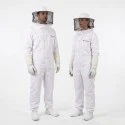 Beekeeper suit with round veil
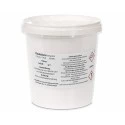 Oxalic acid 1kg
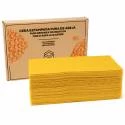 Beeswax Foundation 5kg
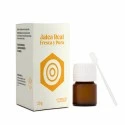 Fresh royal jelly 20g
 Classic honey jar 1kg comb-lines TO77 - Pack of 16 units
 Promotor L Apis 1 litre


 Share in WhatsApp
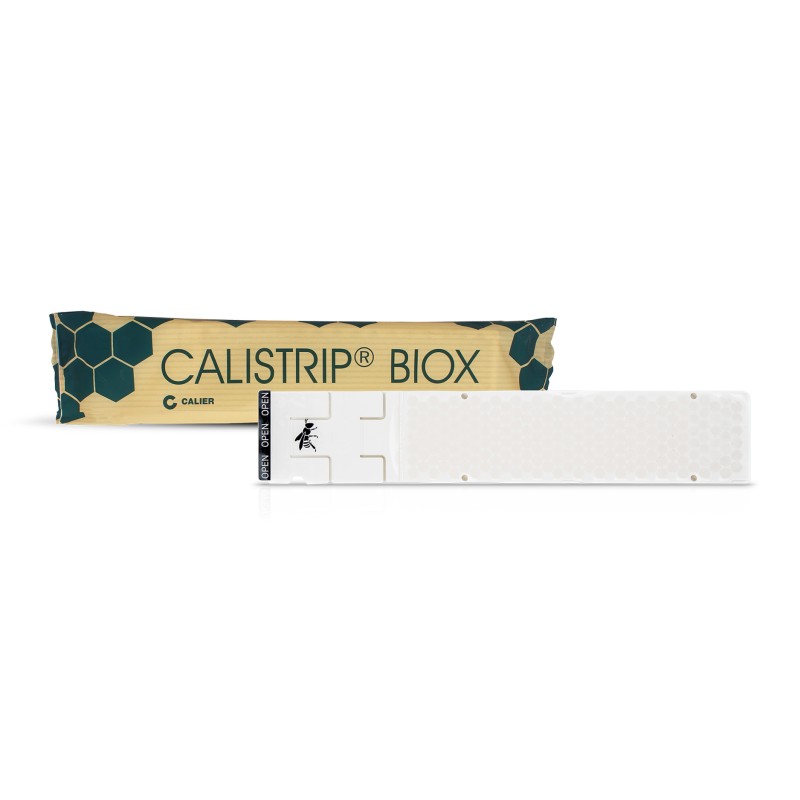
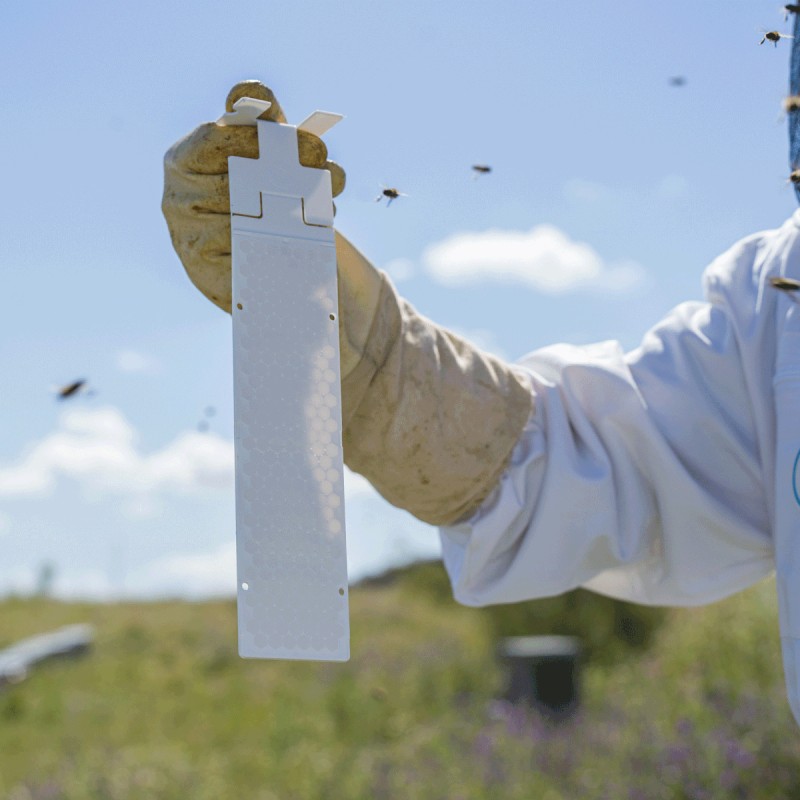
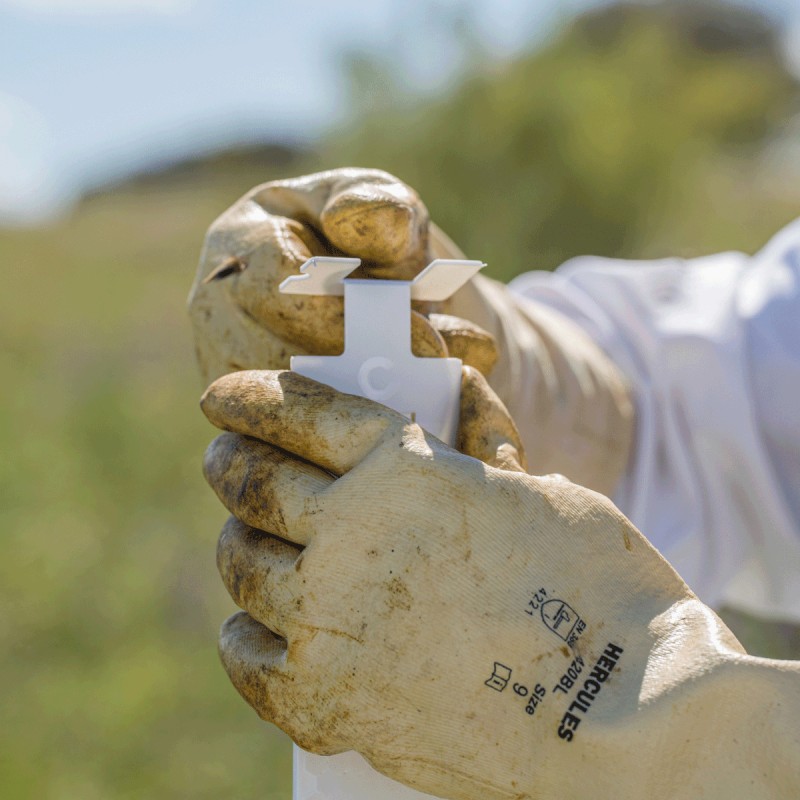
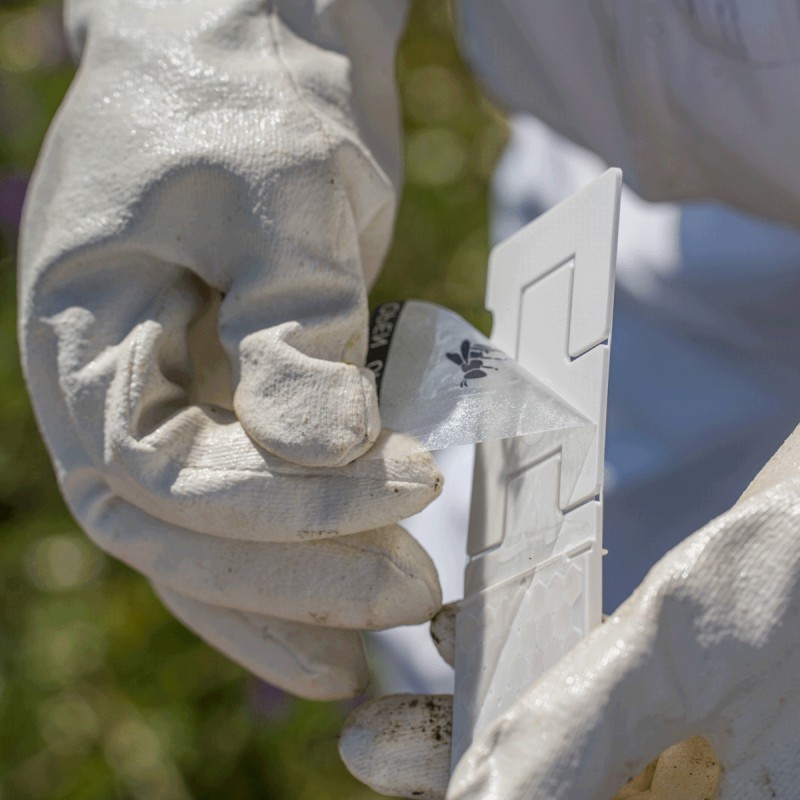
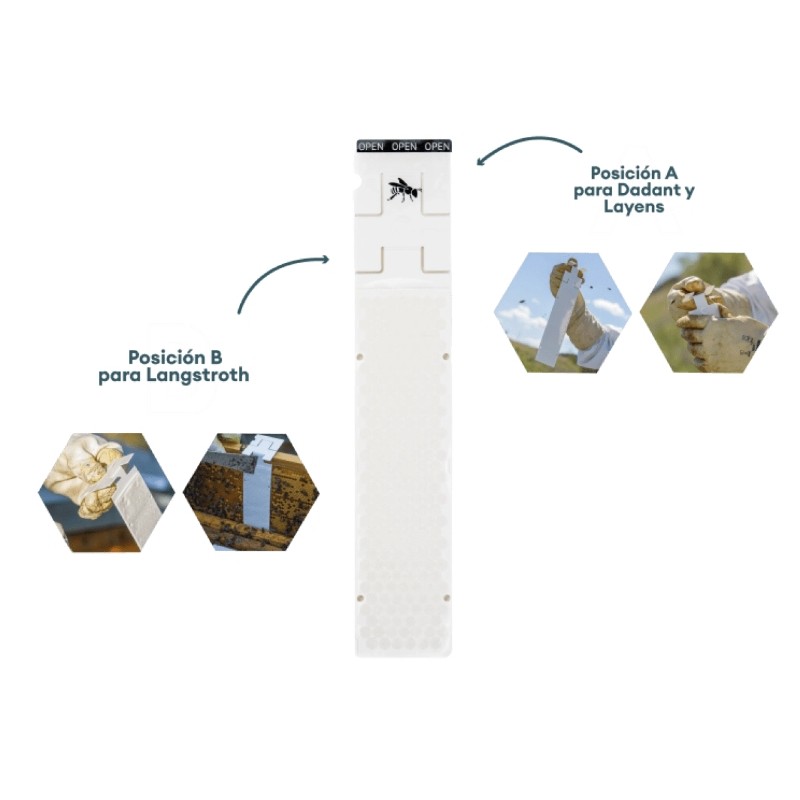
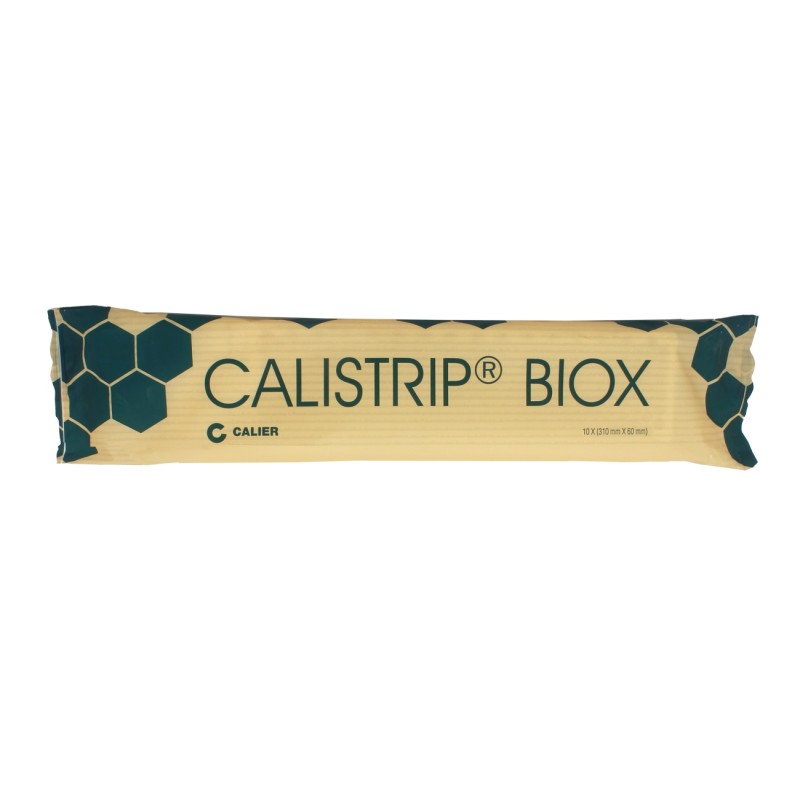
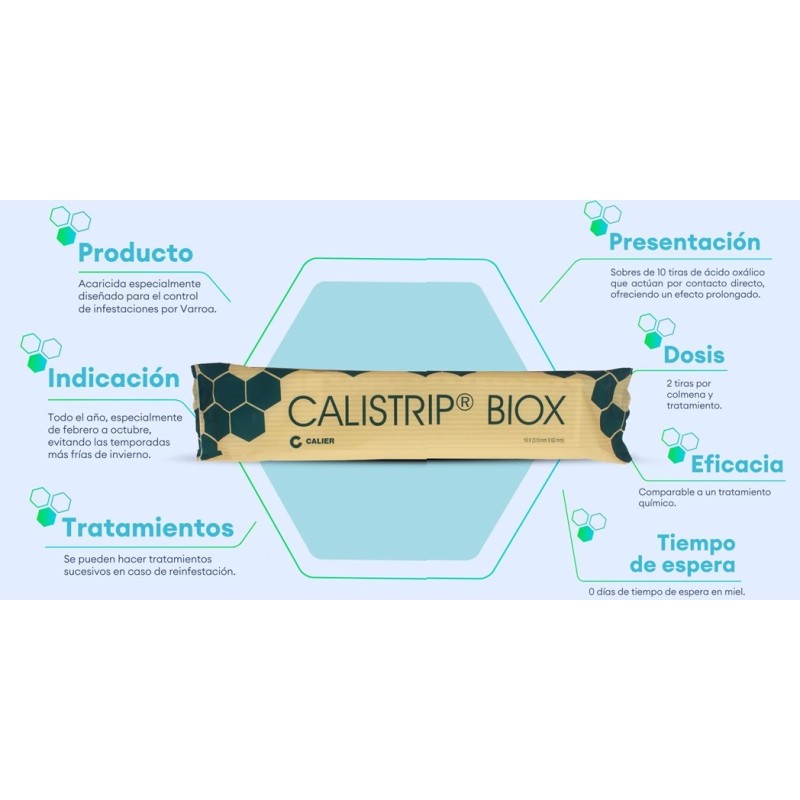
Each package contains 10 strips, enough to treat 5 hives, with a total of 12.88 g of oxalic acid dihydrate per hive. The strips are designed for easy handling, presenting a solid mixture of whitish to yellowish colour, with two tabs and marked fold lines.
Strips of oxalic acid dihydrate for the treatment of varroosis. Sachet of 10 strips, five hives. Veterinary medicine authorised in Spain, no. 4306 ESP.
The withdrawal period in honey is zero days, and that is often misread: it does not mean you may harvest during treatment. The summary of product characteristics forbids it expressly.
01 · WHEN TO APPLY IT
Oxalic acid does not penetrate the capped cell, so it does not reach the varroa inside the brood: that is why the SPC says to use it in the absence of brood or with brood at its lowest levels. And because it acts only by contact, it has to go in before the winter cluster forms, while the colony is still moving.
One point worth knowing: the dossier provides no clinical data for conditions other than autumn in southern Europe.
02 · HOW IT GOES IN
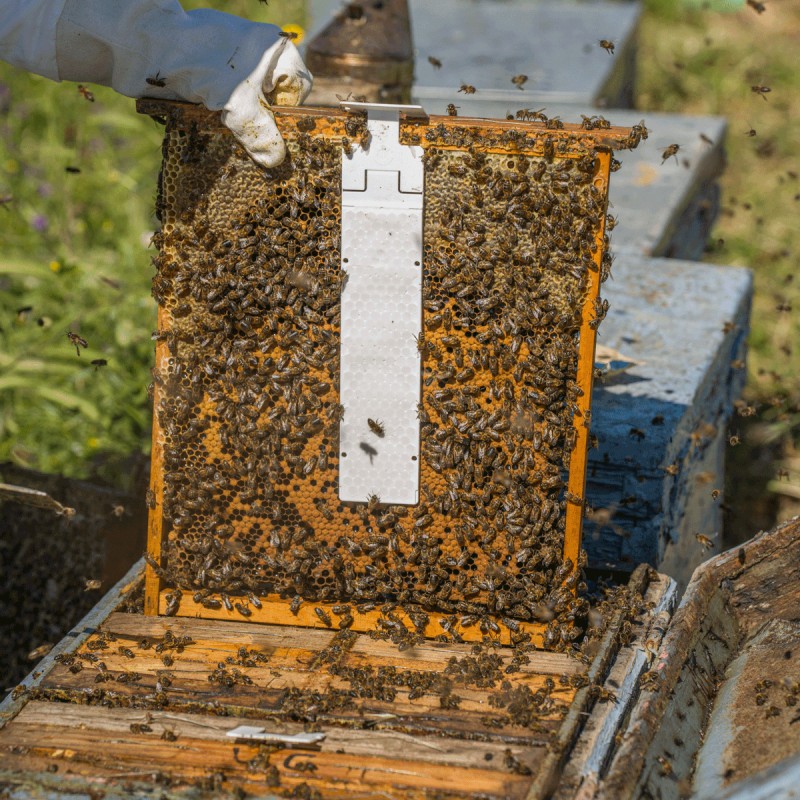
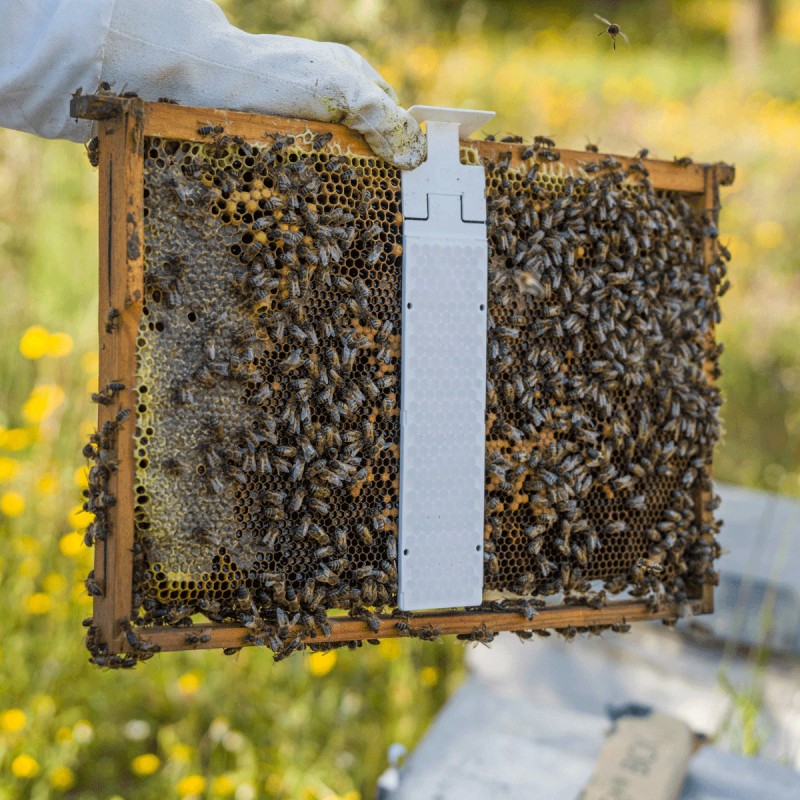
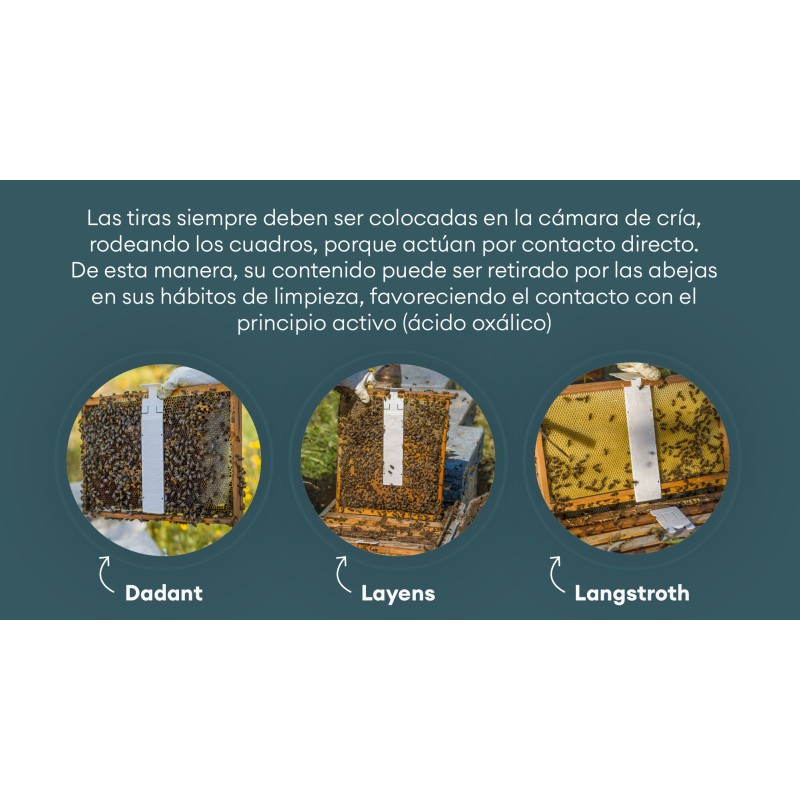
The authorised dose is two strips per hive — 12.88 g of oxalic acid dihydrate — hung between two food-storage frames, where the bees show most movement and with free access to both faces. The fold lines adjust them to long strips, about 30 cm, or short ones, about 25. And three rules the SPC states without qualification: do not cut them, do not reuse them and remove them after six weeks.
03 · THE HONEY
This is what gets misread most about this product. The declared withdrawal period for honey is zero days, but the same SPC adds three prohibitions: do not use during the honey production period, do not extract honey from the brood chamber and do not harvest during the six weeks of treatment.
And the one that sets your calendar: it cannot be used with the supers installed, because its effect in the presence of supers has not been studied. They come off before you start.
04 · HOW IT WORKS
It spreads through the colony by body contact and by trophallaxis. On the mechanism it is worth being straight: the SPC states that the mode of action against varroa is not well understood, that the effect is attributed in part to the mites' sensitivity to acid pH and that it is believed to immobilise calcium. On the kinetics there are figures: in the haemolymph the concentration falls by 80 % at 72 hours.
05 · PRECAUTIONS
It can irritate skin, eyes and mucous membranes: avoid contact and wear the clothing and gloves usual in beekeeping. On skin contact, wash with soap and water; in the eyes, with plenty of clean water, and if the irritation persists see a doctor, taking the leaflet.
In practice: treat every colony in the apiary at the same time, do not use it alongside another acaricide, and alternate in successive treatments with a varroacide of a different mode of action to slow resistance. The SPC also recommends a mesh floor of about 3 × 3 mm. Used strips go to a medicines take-back system, not in the bin.
06 · BEFORE YOU BUY
It is registered in Spain only, and we dispense it as a retail establishment for veterinary medicines, no. V-48-VC. It is not subject to veterinary prescription. Shelf life 18 months, and 6 months once the sachet is opened.
| ✓ FITS | Treatment of varroosis in Apis mellifera, without supers and with brood at its lowest, within an integrated control programme. |
| ✕ DOESN'T FIT | With supers installed, during honey production, in the winter cluster, or alongside another acaricide. |
| ⚠ NO SUBSTITUTE | For monitoring mite fall: efficacy varies between colonies and has to be measured. |
| Active substance | Oxalic acid dihydrate, 6.44 g per strip (equivalent to 4.6 g of oxalic acid) |
|---|---|
| Strip weight | 50.74 g |
| Sachet contents | 10 strips, for 5 hives |
| Target species | Bees (Apis mellifera) |
| Dosage | 2 strips per hive (12.88 g), for 6 weeks |
| Adjustable length | About 30 cm or about 25 cm, by fold lines |
| Withdrawal period | Honey: zero days. Do not harvest during treatment or use with supers |
| Contraindications | None described |
| Prescription | Not subject to veterinary prescription |
| Marketing authorisation holder | Laboratorios Calier, S.A. |
| Authorisation number | 4306 ESP |
| Shelf life | 18 months; 6 months after opening |
| Reference | 591086 |
Data sheet
Specific References

No. Calistrip® Biox must not be used while honey supers are installed: the package leaflet states that its effect in the presence of supers has not been studied. Remove the supers before starting treatment. With no supers on the hive, the authorised dose is two strips per hive for six weeks; do not harvest honey during treatment or extract honey from the brood chamber.
Sorry, no results found.
Write your question
Each package contains 10 strips, enough to treat 5 hives, with a total of 12.88 g of oxalic acid dihydrate per hive. The strips are designed for easy handling, presenting a solid mixture of whitish to yellowish colour, with two tabs and marked fold lines.
check_circle
check_circle