

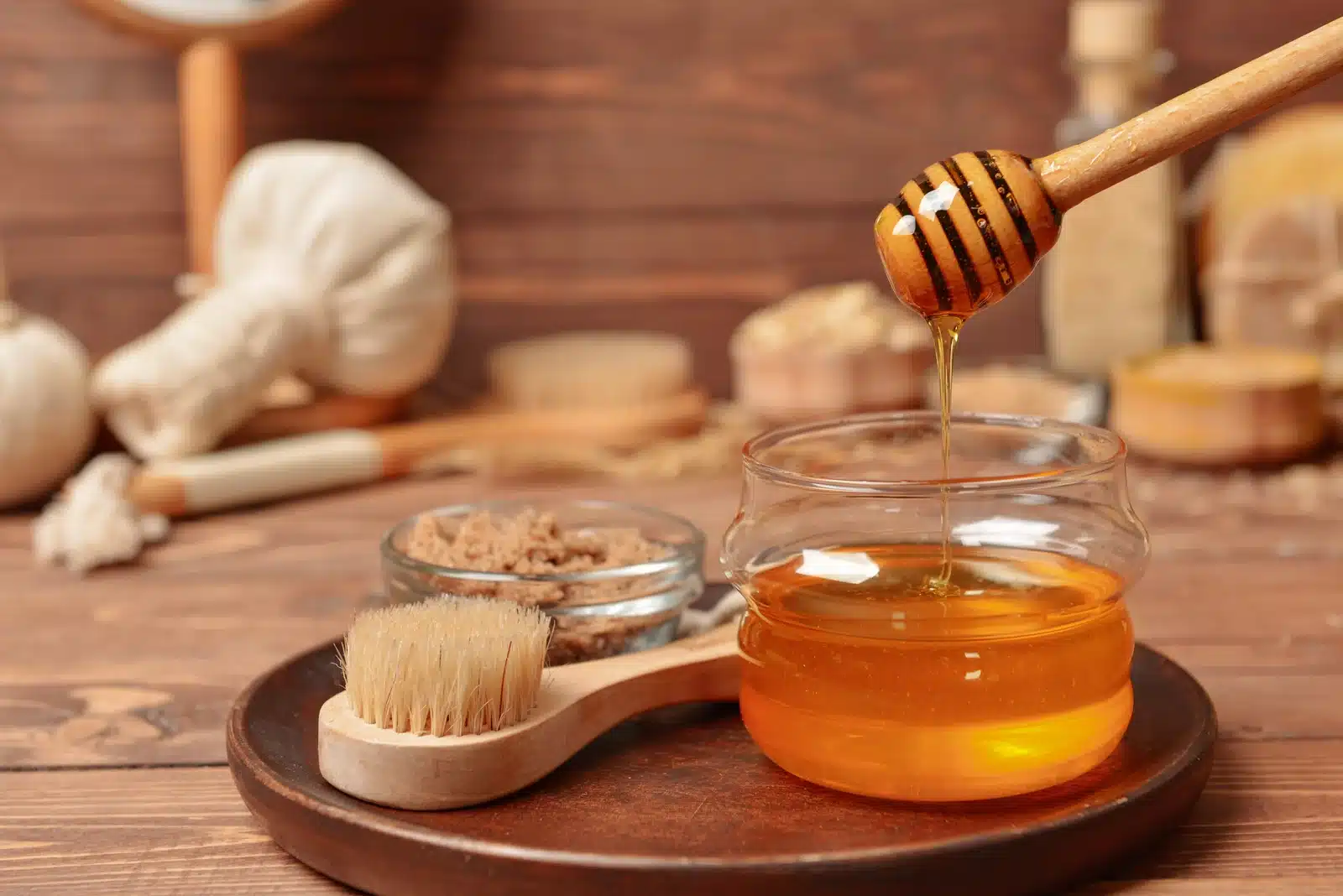
Beeswax gives a balm structure, honey can help a cream retain moisture, and propolis extract introduces a different set of compounds. They dissolve and behave differently. Understanding the ingredient and the format helps whether you make a small batch or buy a finished product.
Finished cosmetics to compare


Read each ingredient list, format and directions. The soap is a wash-off product and the lip balm is intended to stay on the lips.
Decide whether to formulate or buy a finished product
- Choose the intended use first, then compare ingredients and format.
- Keep a record of the complete formula if making a trial batch.
This guide explains the roles of the main ingredients, where they fit and what a cosmetic can reasonably promise.
From the Cova de l’Aranya to the bathroom shelf

A rock painting in the Cova de l’Aranya, near Bicorp in Valencia, shows a person gathering honey from a wild nest. Honey and wax also appear in historical ointments and beauty preparations, from ancient Egypt to European apothecaries.
That long history is one reason the ingredients still appeal. Modern formulation lets us ask three separate questions: what the raw material contains, how it performs in the laboratory and what the finished cosmetic actually does on human skin.
Antioxidant activity in a laboratory extract does not show that a cream containing it reduces wrinkles. The extract, concentration, rest of the formulation and evidence for the finished product all matter.
How cosmetics act on the skin
The outer layer of the skin helps retain water and forms a barrier. A cream may combine humectants that attract moisture, emollients that soften the surface and ingredients that leave a protective film. A cleanser should remove dirt without more disruption than the intended use requires.
Choose the format for the job. Dry hands after outdoor work, lips exposed to wind and easily irritated facial skin can call for very different textures.
What a cosmetic can claim
Under the EU Cosmetics Regulation, cosmetics have functions such as cleaning, perfuming, changing appearance, protecting or maintaining the external body in good condition and correcting body odour. If a product is presented as curing, treating or preventing a disease, it can no longer be sold as a cosmetic: it falls under medicinal products or medical devices, depending on what it is and how it acts.
Medical honey dressings are assessed for a specific purpose and use controlled medical-grade materials. An ordinary jar of honey or a homemade cream is a different product. The preparations in this series are for cosmetic care of intact skin. Seek clinical advice about wounds or skin disease.
The hive ingredients, one by one

| Ingredient | Why a formulator uses it | Questions to resolve |
|---|---|---|
| Honey | Its humectant properties and character as a hive ingredient | It belongs in the water phase. Too much can leave a sticky finish. |
| Beeswax | Firmness, a protective film and texture | The proportion strongly affects hardness and how the product spreads. |
| Propolis | Extracts with distinctive compositions | Which extract, its solubility, colour, smell and contact-allergy considerations. |
| Pollen | Characterised extracts used in skin care | How it was extracted, how it is preserved and what its documentation covers. |
| Royal jelly | An ingredient studied in particular formulations | Preparation, stability and evidence for the finished product. |
Honey as a humectant
Honey’s sugars attract and hold water. In a cream, their effect works alongside the other humectants and the oil phase. Adding more honey can eventually make the product sticky and more difficult to stabilise.
Honey does not dissolve in oil or wax and can separate into droplets in a balm. Its low water availability helps preserve honey in its own jar. Once diluted in a cream, it cannot replace an appropriate preservation system.
Beeswax and texture
Beeswax can turn oil into a firmer balm, as ingredient manufacturer Koster Keunen explains. Oils, butters, packaging and temperature also affect the result. A proportion that works in a jar can be too soft for a stick. In a water-based cream, beeswax provides body but does not take the place of a suitable emulsifier.
Before using wax from your own hives, understand how it is melted and cleaned and what sterilisation can achieve. Neither process removes acaricide residues. Cappings or clean super comb are sensible starting sources, but cosmetic use still calls for traceability, specifications and appropriate tests.
Compare three proportions in our guide to choosing beeswax for cosmetics before preparing an ointment.
Propolis: identify the extract
Alcohol tinctures, glycerine extracts and aqueous extracts do not have interchangeable compositions. Kubiliene and colleagues (2015) compared several preparations and found that the method and solvent changed the phenolic content. Before incorporating propolis, identify the extract and its cosmetic instructions. We also explain how a propolis tincture is made.
Propolis can cause contact allergy. In a British study of 2,828 dermatology patients undergoing patch testing, 1.9% tested positive for propolis. That percentage describes the clinical group studied, not the general population. Avoid it if you have a known allergy. Rajpara and colleagues, 2009.
Pollen and royal jelly: specify the preparation
Whole pollen and a filtered, characterised cosmetic extract are very different materials. Source and handling matter, as our pollen production and storage guide explains. Nutritional composition as food does not establish an effect on skin.
In a small 2025 trial, a cream containing a particular enzyme-treated royal jelly extract improved one measured crow’s-foot wrinkle outcome compared with the vehicle on the other side of the face. The extract manufacturer funded the study. Its result applies to the preparation tested.
Our guide to creams with honey, pollen and royal jelly discusses the formula and what can be inferred from that trial.
Choosing a cosmetic format

An anhydrous balm combines oils, butters and waxes. It can leave a protective film on a small dry area such as the lips or knuckles.
A cream or lotion is usually an emulsion. A suitable emulsifier helps keep its water and oil phases together. The finished feel can be light or rich.
A toner is largely water and contains water-soluble ingredients. An alcoholic propolis tincture can turn cloudy on dilution because some resins are poorly soluble in water.
Melt-and-pour soap uses a ready-made base with its own working temperature and limits on additives.
Choose the format first. A simple wax balm is generally easier to formulate than a water-based emulsion containing several extracts.
Six guides in the collection
Choose what you would like to make or understand
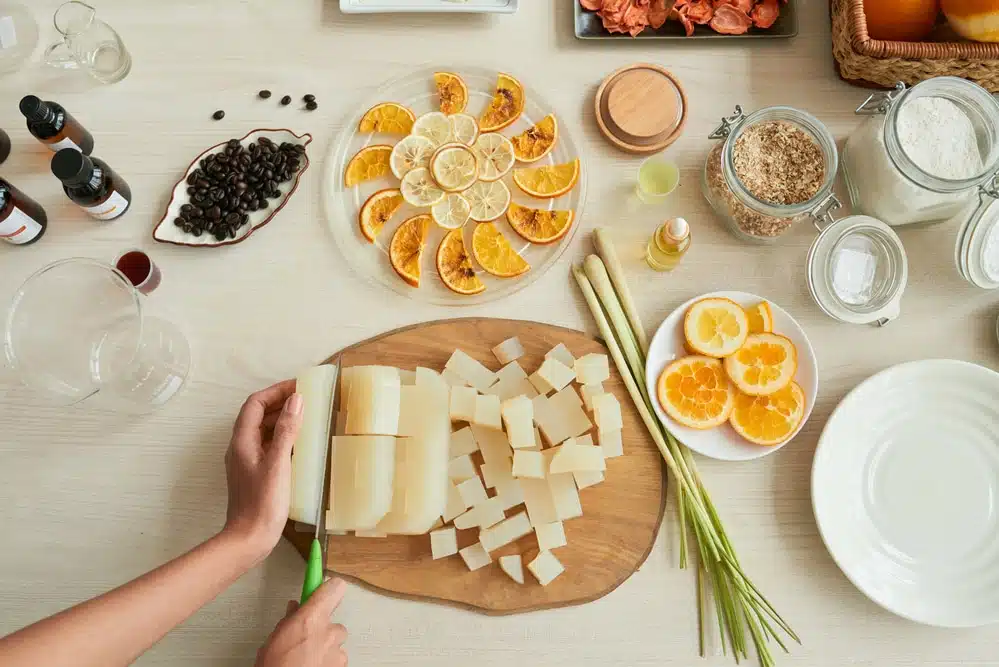
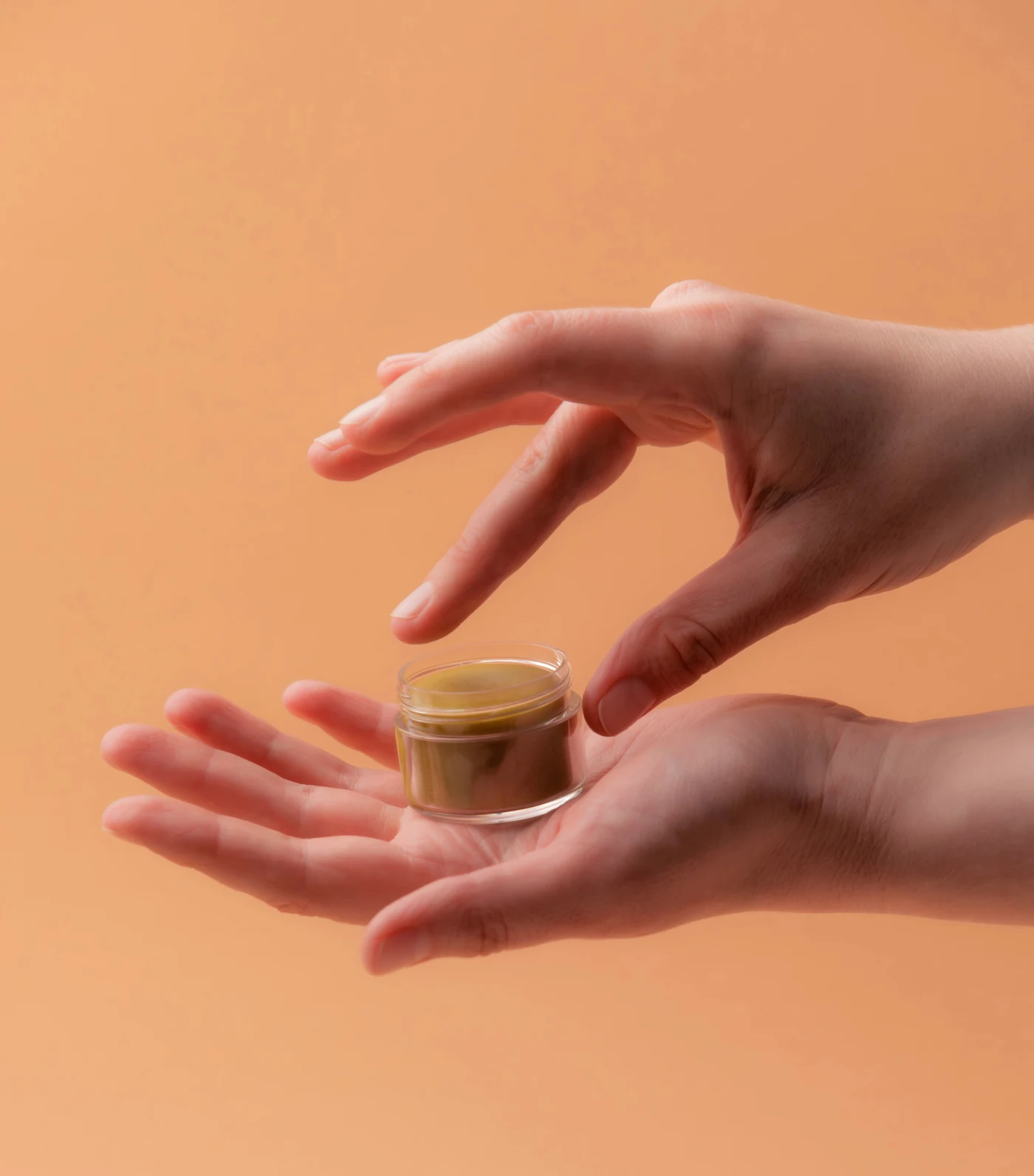
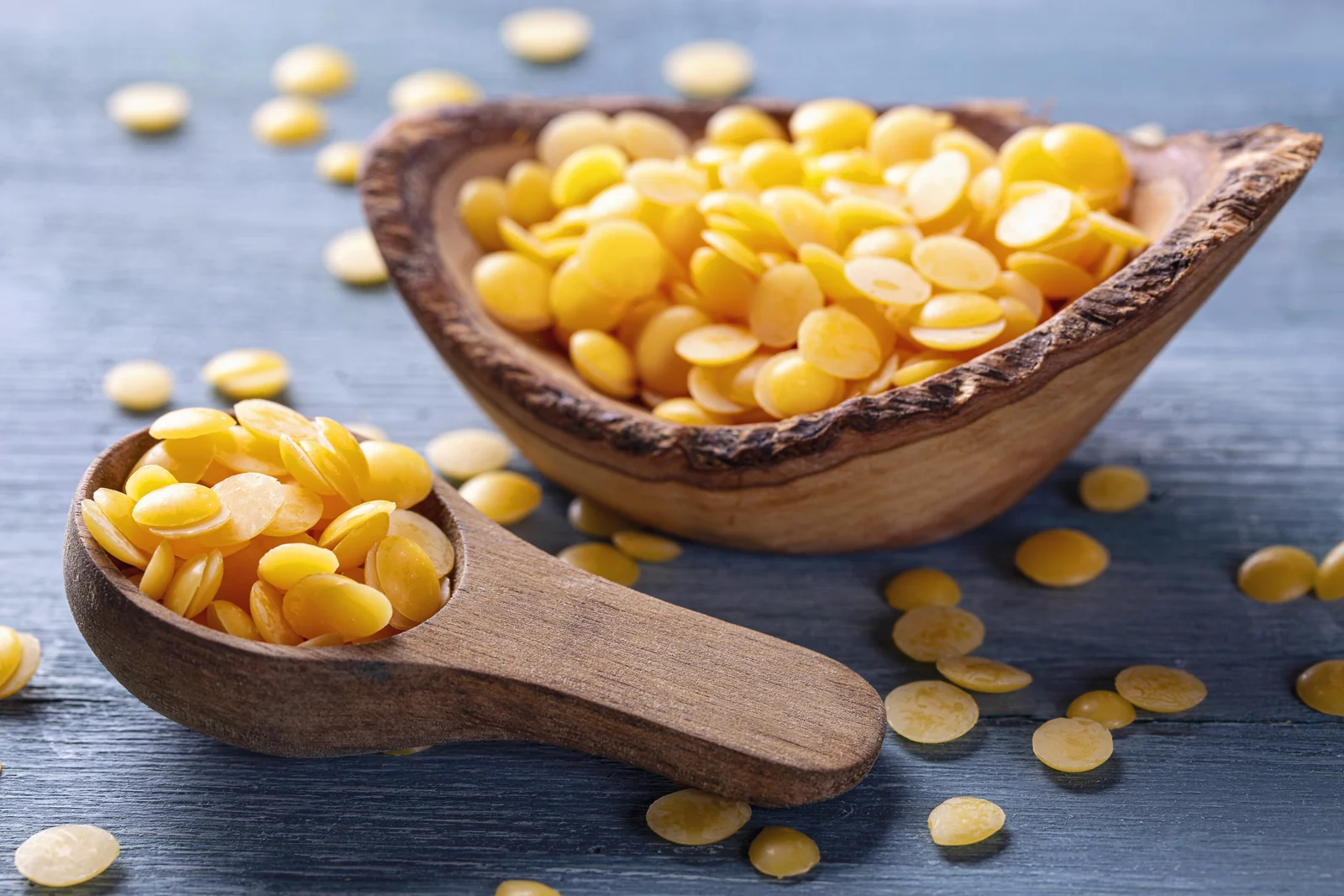
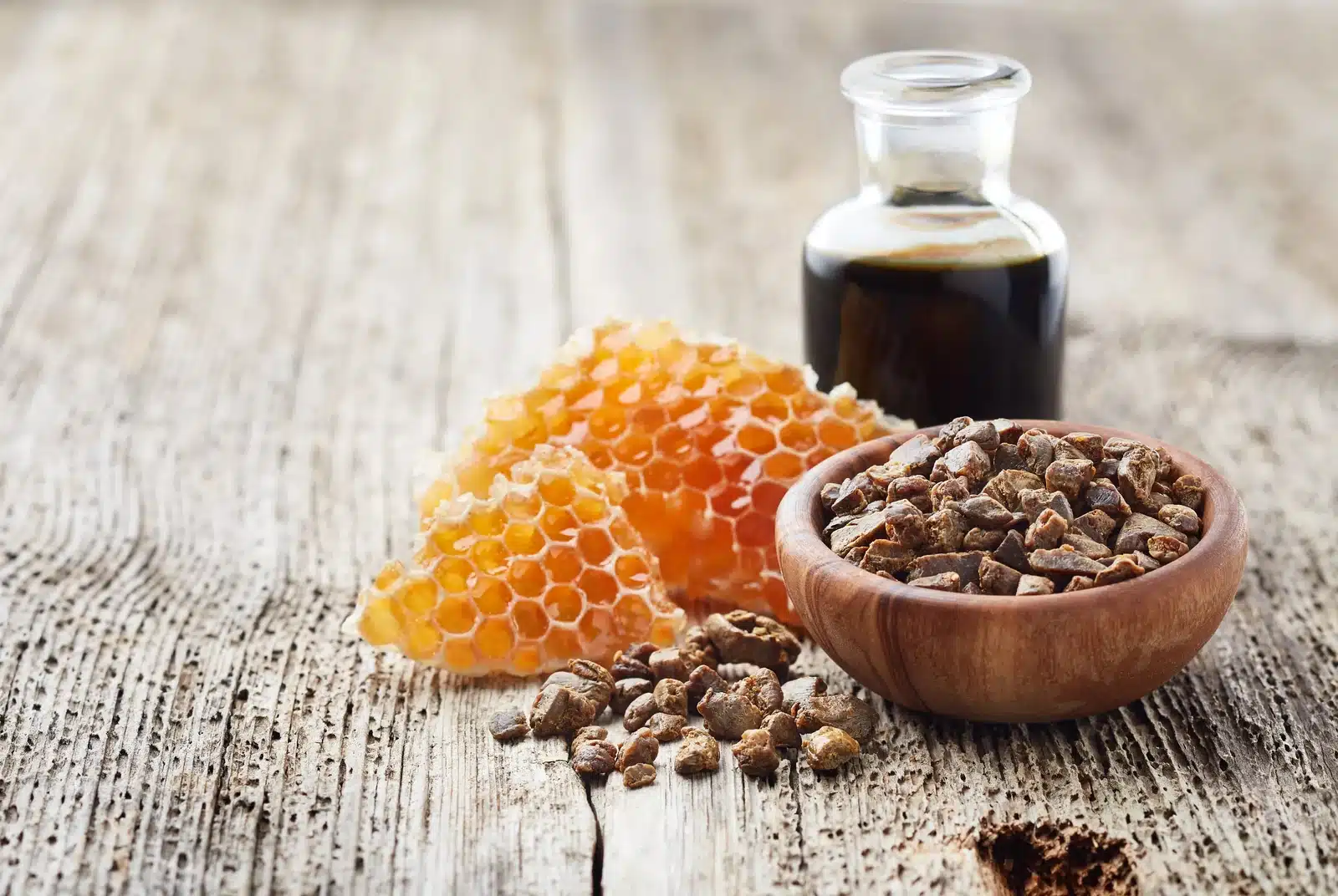
Illustrative photographs. Each guide describes its materials, procedure and limitations.
Making cosmetics with hive ingredients
Start with a few clearly identified raw materials, a scale and a batch record. Use clean, dry utensils, monitor temperature and make a small quantity. Percentages must add up to 100. In a formula expressed by weight, weigh the liquids as well as the solids.
Water-containing formulas require extra decisions: pH, a suitable preservation system, packaging and stability. A recipe that merely says “a few drops of preservative” does not provide enough information to reproduce it responsibly.
Practical guides in the collection
- Melt-and-pour honey soap with pollen and propolis.
- A beeswax and oil ointment: comparing three proportions.
- Beeswax candles, another use for the same raw material.
To compare finished formats and ingredients, browse the La Tienda del Apicultor cosmetics range.
In our shop
Ready-to-use cosmetics with hive ingredients
Compare the format, ingredients and directions for each product.

Honey and beeswax soap
A 100 g honeycomb-shaped bar with honey and beeswax, ready to use.
View product and price →
Honey, beeswax and lemon hand cream, 75 ml
A 75 ml tube for hand care. See the product page for the full ingredients.
View product and price →
Propolis lip balm
Lip balm stick with propolis, wax and honey. Check the ingredients and directions.
View product and price →Frequently asked questions
Which hive products are used in cosmetics?
Mainly honey, beeswax, propolis, pollen and royal jelly. Wax provides structure, honey can act as a humectant and extracts have uses that depend on how they were prepared and on the rest of the formula.
Can a honey cosmetic be used to treat a wound?
A cosmetic is not a wound treatment. Medical honey dressings are a separate category made and assessed for a specific clinical use. Ask a healthcare professional about a wound.
Can beeswax act as the emulsifier?
It can thicken the product, but beeswax alone will not reliably stabilise a typical cream containing water and oil. Choose an emulsifier suitable for the complete formulation.
Can a quick home test rule out propolis allergy?
No. Contact allergy can appear hours or days after exposure. Stop using a product that causes a reaction and seek professional advice if symptoms persist or recur. See DermNet’s guide to contact allergy to propolis.
Can I sell or give away homemade cosmetics?
The EU Cosmetics Regulation covers supply as part of a commercial activity, whether paid or free, so business samples, gifts with an order and giveaways at a fair may qualify. Requirements include a responsible person, safety assessment, product information file, notification and labelling. A private gift to a family member is a different context. In either case the formula still needs to be suitable for its intended use.


