
At a glance
Yellow broom honey
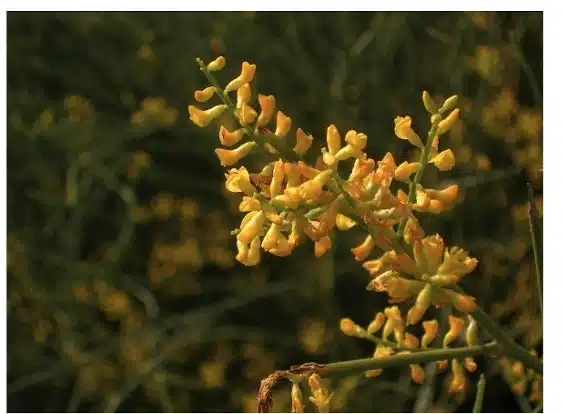
Retama sphaerocarpa
Colour
Amber to dark amberat least 70 mm Pfund
Aroma
Intense, flour-likeflour with a floral background
Taste
Sweet and savourywith slight astringency
Crystallisation
Very slow, fine crystalsoften stays liquid
Season
Summerflowering from May to July
Region
Southern La ManchaExtremadura and Andalusia
Pollen reference
35%a substantial pollen contribution
Conductivity
up to 0.70 mS/cmhigh for a blossom honey
In the Iberian guide, yellow broom stands out for a dominant aroma that recalls freshly milled flour, with flowers in the background.
Legumes can leave a flour-like trace in rosemary (in Spanish), acacia and albaida honey (in Spanish). In yellow broom honey this note comes to the fore. The guide leads its aroma description with it.
Reading and tasting yellow broom honey

This Spanish-language field guide compares botanical origin, tasting and laboratory findings. Use the profile together with the traceability of the lot.
Describe the flour-like aroma
- Record the intensity and how long the aroma lasts.
- Compare the impression with the colour and declared origin of the lot.
A honey that evokes flour and bread
The aroma is intense and moderately persistent, with floral notes behind the impression of flour. It becomes stronger on the palate. A slight drying sensation follows, a relatively uncommon feature in these honey profiles.
Yellow broom belongs to the pea family. It shares that flour-like nuance with other legumes, but at a quite different intensity. In acacia honey, for example, it is usually much subtler.
Colour
Amber to dark amber, from 70 mm Pfund, with no upper limit given in the guide. It is much darker than the other pale legume honeys commonly used for comparison.
Yellow broom honey on the Pfund scale
The two dark bands, with no stated maximum. Acacia and albaida, from the same plant family, are at the opposite end of the scale. The colours on screen are illustrative. A laboratory measures the actual value.
Aroma, taste and texture
Sensory profile
Our interpretation of the descriptions in the Guía de mieles monoflorales ibéricas. Here the bitterness and acidity row represents the slight astringency described in the guide.
Aroma
The flour-like aroma is intense and moderately persistent, with underlying floral notes. It grows as you taste the honey.
Taste
The sweetness is accompanied by salty notes and a slight astringency. Astringency is the drying feeling familiar from a tannic wine. It is felt as texture.
Crystallisation
Crystallisation is very slow, with fine grains when they form. Like acacia and oak honeydew honey, yellow broom honey may remain liquid for months.
Interpreting the laboratory profile
| Parameter | Reference in the guide | How to interpret it |
|---|---|---|
| Colour | at least 70 mm Pfund | Amber to dark amber, with no stated maximum. A pale colour falls outside the profile. |
| Moisture | up to 18% | Fermentation risk increases above the guide value. The general EU limit for blossom honey is 20%. |
| Fructose and glucose combined | at least 60% | A characteristic of blossom honey. This figure on its own cannot exclude added syrup. |
| Sucrose | up to 5% | One of the sugars reported in the analysis. |
| Electrical conductivity | up to 0.70 mS/cm | High for a blossom honey, more than twice the limit for rosemary. Read it alongside the dark colour and salty note. |
| Free acidity | up to 50 meq/kg | Can rise with fermentation or extended storage. |
| HMF | up to 40 mg/kg | HMF increases with heat and time in storage. |
| Diastase activity | at least 8 Schade units | Indicator of enzyme activity, which can decline with heat. |
| Retama pollen | at least 35% | The plant contributes appreciable pollen. The percentage refers to the pollen counted. |
Reference ranges from the Guía de mieles monoflorales ibéricas, fourth edition (2023). These characterise the variety. Spanish statutory limits are set by Royal Decree 1049/2003 as amended by Royal Decree 68/2025, including a general maximum of 20% moisture and 40 mg/kg HMF, subject to the exceptions in the legislation.
Other pollen in yellow broom honey
- Other meadow legumes
- Viper’s bugloss
- Sunflower
- Eucalyptus
- Rockroses (Cistaceae)
Growing areas and harvest season
In Spain the guide identifies southern Castile-La Mancha, Extremadura and Andalusia, with a summer harvest. This drought-tolerant shrub flowers across dryland and open dehesa woodland when many other flows are already over.
Yellow broom honey flow
FloweringFlowering and harvest
The guide places the main harvest in summer. It is one of the last usable flows before dryland pastures lose their remaining bloom.
How to recognise yellow broom honey
- 1Look for the aroma of flour. This is the leading note, with floral tones in the background.
- 2Dark, from 70 mm Pfund upwards. A pale legume honey would fall outside this profile.
- 3Notice the astringency. The mouth feels slightly dry after tasting.
- 4A salty undertone. Marked bitterness is more typical of heather or chestnut.
- 5It often stays liquid. It crystallises very slowly with fine grains.
For a broader view, see how to assess honey quality and our guide to Spanish honey labelling requirements.
Composition and health claims
Health claims on food are regulated in the EU. The distinguishing features here are its floral origin, conductivity and sensory profile.
These characteristics matter when tasting or using the honey.
- The dominant flour-like note is unusual among the honey profiles in the guide.
- Conductivity can reach 0.70 mS/cm, comparatively high for a blossom honey.
- Its long-lasting fluidity makes it easy to pour or measure without warming.
- Try it with bread, mature cheese or marinades. The flour-like aroma and salty note lend themselves to savoury pairings.
Who should take particular care?
Children under 12 months. Do not give honey to infants under one year. It can contain spores of Clostridium botulinum that may cause infant botulism. This applies to all types of honey.
Diabetes. honey is a source of sugars. This also applies to natural and monofloral honeys when planning a diet.
Known allergy. Anyone with a diagnosed allergy to honey or bee products should consult their clinician if unsure what is safe for them.
Frequently asked questions
What does yellow broom honey taste like?
The taste is sweet with salty notes and a slightly drying finish. Its intense, moderately persistent aroma recalls flour with a floral background. The flour-like note becomes more noticeable on the palate.
Why does it smell of flour?
The guide also finds flour-like notes in honeys influenced by other members of the pea family. In acacia or rosemary honey with a contribution from legumes, it may be only a trace. In yellow broom honey, it leads.
Why has my yellow broom honey stayed liquid?
The guide describes very slow crystallisation and fine grains. A jar remaining liquid for months is consistent with the profile. Fluidity alone cannot tell you whether it has been heated or filtered.
Where is it harvested in Spain?
In southern Castile-La Mancha, Extremadura and Andalusia. It is a summer honey of dryland and dehesa woodland, providing one of the later flows before the countryside dries out.
Who should take particular care?
Never give honey to a baby under 12 months because of the risk of infant botulism. People with diabetes should count its sugars in their diet. Anyone with a diagnosed allergy to hive products should seek individual medical advice.
Where to buy yellow broom honey
We do not currently stock yellow broom honey. It is a limited crop in favourable years in the dry south-west. Ask beekeepers in Extremadura, western Andalusia or southern La Mancha. For another dark honey with a strong character, our range includes raw heather honey.
Sources
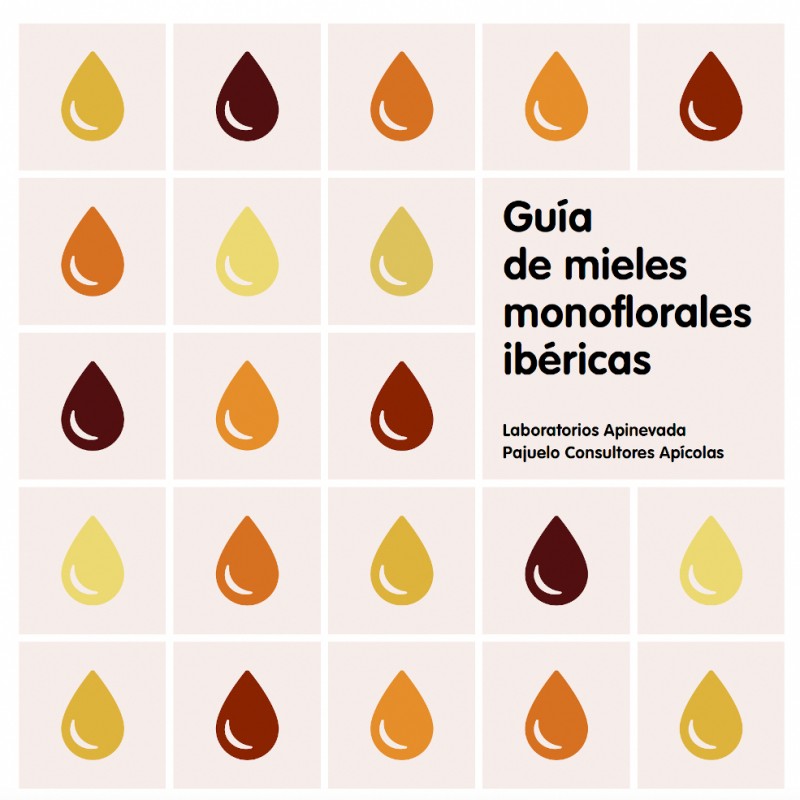
The reference ranges come from the fourth edition (June 2023) of the Guía de mieles monoflorales ibéricas by J. Orantes, F. Gonell, C. Torres and A. Gómez-Pajuelo, published by Laboratorios Apinevada and Pajuelo Consultores Apícolas. Their work draws on a series reaching back to 1980 and more than 3,600 analyses a year across the two laboratories. The printed guide in Spanish is available in our shop.
See our series on Iberian honeys. Acacia and albaida honey (in Spanish) carry a subtler flour-like note, while heather honey offers a useful comparison for colour.


