


At a glance
Loquat honey
Eriobotrya japonica
Colour
Light amber50–90 mm Pfund
Aroma
Fruityreminiscent of loquat
Taste
Sweet, occasionally bitterwith slight astringency
Crystallisation
Rapid and coarsesometimes uneven
Season
Autumnthe tree blooms late in the year
Region
Alicante and Granadaloquat orchards
Pollen reference
30%a substantial pollen contribution
Conductivity
up to 0.60 mS/cmmoderate to high
Loquat turns the usual orchard calendar around. It flowers as many other plants are going quiet and bears fruit the following spring. Its honey is an autumn harvest.
Most fruit trees in this series bloom in spring. Almond is early, apple comes later and citrus typically flowers around April. The loquat’s autumn blossom lets beekeepers harvest an orchard honey unusually late in the Iberian season.
Reading and tasting loquat honey


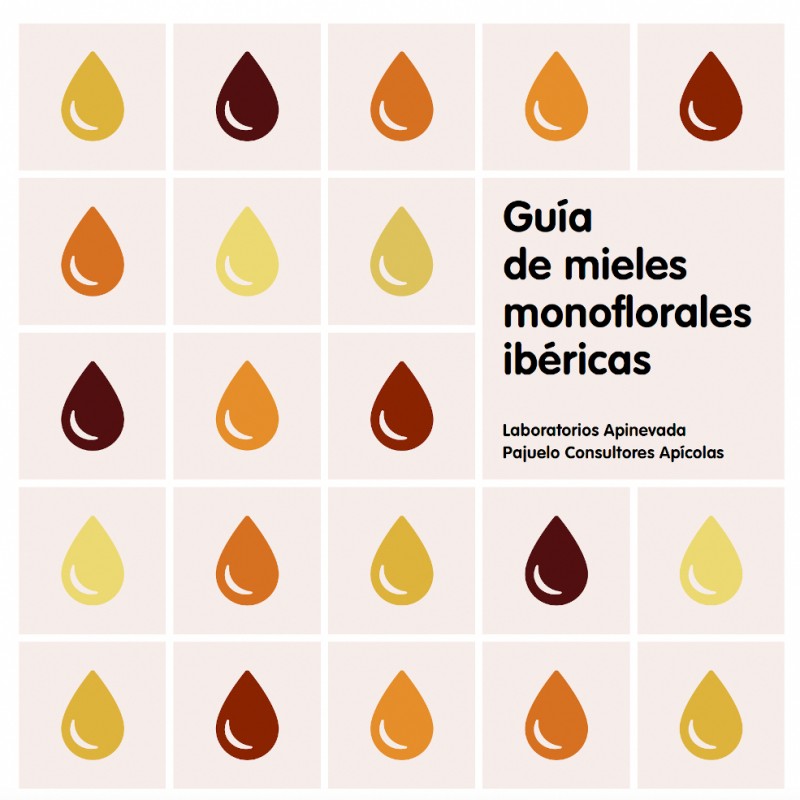
This Spanish-language field guide compares botanical origin, tasting and laboratory findings. Use the profile together with the traceability of the lot.
Link the tasting notes to the harvest
- Record the origin, lot and harvest date if given.
- Compare the fruit notes with texture and storage history.
A honey that recalls the fruit
Many honeys give few obvious clues to the fruit or foliage of their plant. Avocado blossom honey can be nearly black, and eucalyptus honey lacks the familiar scent of the leaves. The loquat profile, however, explicitly mentions an aroma reminiscent of the fruit.
Floral aroma with fruit notes reminiscent of the loquat itself.
The guide also describes blackberry honey as distinctly fruity.
Colour
The guide describes an amber honey in a range of 50–90 mm Pfund. Both a lower and an upper value are given.
Loquat honey on the Pfund scale
In the middle-to-darker range, with both limits specified. Usually darker than citrus honey and lighter than the darkest honeydews. On-screen colours are illustrative. A laboratory measures the actual value.
Aroma, taste and texture
Sensory profile
Our interpretation of the descriptions in the Guía de mieles monoflorales ibéricas. The bitterness and acidity row here covers occasional bitterness and slight astringency.
Aroma
A floral aroma carries fruit notes reminiscent of loquat itself. This is a particularly useful clue in a comparative tasting.
Taste
Sweet, occasionally with a bitter note and a slight drying sensation on the palate. Yellow broom honey offers another example of this sort of astringency.
Crystallisation
It crystallises rapidly, sometimes with coarse grains and an uneven set. The guide notes that moisture can reach or exceed 18.5% in susceptible samples. Avocado and strawberry tree honey can also show moisture-related irregularities.
An uneven set or separate layers call for a look at moisture and storage. Keep the jar tightly closed. Honey with higher moisture is more susceptible to fermentation. See our guide to moisture in honey.
Interpreting the laboratory profile
| Parameter | Reference in the guide | How to interpret it |
|---|---|---|
| Colour | 50–90 mm Pfund | Amber, with a lower and upper guide value. A reading outside the range warrants checking the floral mix. |
| Moisture | up to 18.5% | Half a percentage point above the guide’s usual reference. Some lots can have relatively high moisture. |
| Fructose and glucose combined | at least 60% | A characteristic of blossom honey. This figure on its own cannot exclude added syrup. |
| Sucrose | up to 5% | One of the sugars reported in the analysis. |
| Electrical conductivity | up to 0.60 mS/cm | Moderate to high. Consider the reading alongside colour and the occasional bitter note. |
| Free acidity | up to 50 meq/kg | Worth checking when the moisture content is high. |
| HMF | up to 40 mg/kg | HMF increases with heat and time in storage. |
| Diastase activity | at least 8 Schade units | Indicator of enzyme activity, which can decline with heat. |
| Eriobotrya pollen | at least 30% | The plant contributes appreciable pollen. The percentage refers to the pollen counted. |
Reference ranges from the Guía de mieles monoflorales ibéricas, fourth edition (2023). These characterise the variety. Spanish statutory limits are set by Royal Decree 1049/2003 as amended by Royal Decree 68/2025, including a general maximum of 20% moisture and 40 mg/kg HMF, subject to the exceptions in the legislation.
Other pollen in loquat honey
- Legumes
- White wall-rocket
- Mint family
- Daisy family (Asteraceae)
- Heather
Growing areas and harvest season
The guide lists Alicante and Granada, including the orchards around Callosa d’en Sarrià and on the Granada coast. The autumn flow is brief and geographically restricted, which helps explain why this honey can be difficult to find elsewhere.
Loquat honey flow
FloweringFlowering and harvest
The guide places the main harvest in autumn. Along with strawberry tree honey and certain honeydew honeys, it is one of the latest harvests. Few fruit trees offer such a late flow.
How to recognise loquat honey
- 1Look for loquat fruit notes. The Iberian guide compares the aroma directly with the fruit.
- 2Amber, 50–90 mm Pfund. The profile gives both limits. Outside them, examine the accompanying flora and the lot history.
- 3Notice the astringency. A slightly drying finish belongs to the profile.
- 4A hint of bitterness can occur. It is described in some samples.
- 5An uneven set can occur. Relatively high moisture can contribute to this behaviour.
For a broader view, see how to assess honey quality and our guide to Spanish honey labelling requirements.
Composition and health claims
Health claims on food are regulated in the EU. The distinguishing features here are its floral origin, conductivity and sensory profile.
These characteristics matter when tasting or using the honey.
- It is one of the guide’s few autumn harvests, alongside strawberry tree honey and some honeydew honeys.
- The guide explicitly compares its aroma to the fruit of the same plant.
- The Spanish production areas identified are the loquat-growing districts of Alicante and Granada.
- Try it with fresh cheese and fruit. Its faintly bitter edge can also suit a vinaigrette.
Who should take particular care?
Children under 12 months. Do not give honey to infants under one year. It can contain spores of Clostridium botulinum that may cause infant botulism. This applies to all types of honey.
Diabetes. honey is a source of sugars. This also applies to natural and monofloral honeys when planning a diet.
Known allergy. Anyone with a diagnosed allergy to honey or bee products should consult their clinician if unsure what is safe for them.
Frequently asked questions
When is loquat honey harvested?
In autumn. Unlike most orchard trees in this series, loquat flowers in autumn and bears fruit in spring. Its nectar flow therefore falls near the end of the Iberian beekeeping season.
Does loquat honey taste like the fruit?
Its aroma can recall the fruit. The guide describes floral and fruity notes reminiscent of loquat. That direct comparison is unusual among the honeys in the series.
Why has my loquat honey set unevenly?
The guide notes rapid, sometimes coarse crystallisation, often alongside high moisture. Some samples can reach or exceed 18.5%. Keep the jar closed, and check a lot for fermentation if there are signs beyond texture alone.
Where is it harvested in Spain?
The guide identifies the loquat orchards of Alicante and Granada. The short, localised flow makes supplies harder to find beyond the producing districts.
Who should take particular care?
Never give honey to a baby under 12 months because of the risk of infant botulism. People with diabetes should count its sugars in their diet. Anyone with a diagnosed allergy to hive products should seek individual medical advice.
Where to buy loquat honey
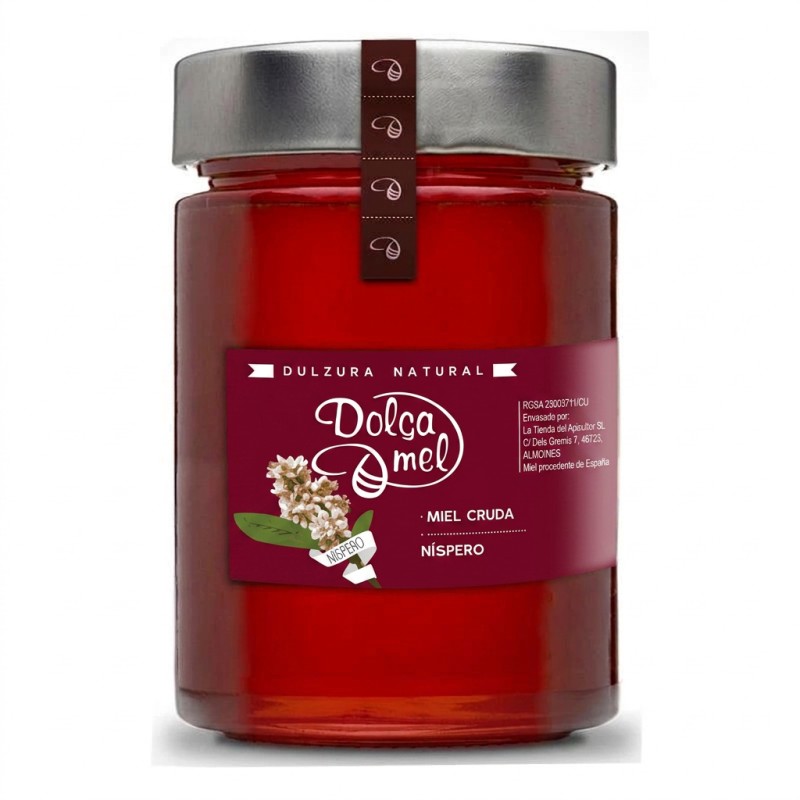
Buying from a beekeeper makes it easier to trace the harvest to its orchard and season. Our shop offers raw loquat honey harvested in Spain.
Sources
The reference ranges come from the fourth edition (June 2023) of the Guía de mieles monoflorales ibéricas by J. Orantes, F. Gonell, C. Torres and A. Gómez-Pajuelo, published by Laboratorios Apinevada and Pajuelo Consultores Apícolas. Their work draws on a series reaching back to 1980 and more than 3,600 analyses a year across the two laboratories. The printed guide in Spanish is available in our shop.
Explore our series on Iberian honeys. Compare the fruity aroma with blackberry honey, the moisture-sensitive set with avocado and strawberry tree honey, and the orchard setting with orange blossom honey.


