
Quick summary
- “Bee honey” is not a category opposed to blossom honey. Blossom honey and honeydew honey are both made by bees. The useful distinction is the source the bees collect: floral nectar, or honeydew from plant secretions and plant-sucking insects.
- Spanish and EU honey standards distinguish blossom or nectar honey from honeydew honey. The rules also set composition and labelling requirements. Electrical conductivity helps characterise honey, but its exceptions mean it cannot identify botanical origin on its own.
- Choose a flavour, not a hierarchy. Some blossom honeys are delicate; others, such as chestnut or heather, are strong and dark. Honeydew honeys often have malty or woody notes. None of these colours or flavours automatically means better quality.
- Look for traceability and clear labelling. Check the harvest country, producer or packer, batch and botanical claim. Crystallisation is normal, but it is not an authenticity test. Water and flame “tests” cannot establish purity either.
Comparative table: what each term really means
| Term | What it really means | Examples |
| Bee honey | Colloquial term. All authentic honey is made by bees; it is not a separate legal category. | Any honey from the list below |
| Flower honey (from nectar) | Honey derived from floral nectar. Can be monofloral or multifloral. | Rosemary, orange blossom, thyme, wildflower |
| Honeydew honey | Honey derived from plant secretions or excretions of sucking insects. Not derived from floral nectar. | Holm oak, oak, spruce, “forest honey” |
| Monofloral honey | One single botanical source predominates, and the honey exhibits its corresponding organoleptic, physicochemical and microscopic profile. | Rosemary, chestnut, eucalyptus, heather |
| Multifloral or wildflower honey | Natural blend of nectars from many flowering plants. Profile varies according to landscape and season. | Mountain wildflower, coastal wildflower |
Bee honey, blossom honey and honeydew honey: the real difference
If you are wondering how “bee honey” differs from “flower honey”, the short answer is that blossom honey is bee honey. In the Spanish standard implementing EU honey rules, honey is the product that Apis mellifera bees make by collecting, transforming, dehydrating and ripening nectar or honeydew. Here we are discussing those honeys; “bee honey” is not a separate grade.
Terms such as “pure bee honey”, “wildflower honey” and “forest honey” may appear side by side on jars, but they describe different things. “Bee honey” says nothing about the floral source. Blossom, monofloral, multifloral and honeydew are more useful when you want to understand the honey’s origin and likely flavour.
The regulation itself makes this clear by classifying honeys “by origin” into two major groups:
- Blossom honey or nectar honey: derived from floral nectar. This includes both monofloral honeys (where one floral source predominates: rosemary, orange blossom, thyme, eucalyptus, chestnut, heather, etc.) and multifloral or wildflower honeys (a blend of nectars from many wild or cultivated flowers).
- Honeydew honey: honey derived mainly from the excretions of plant-sucking insects or secretions of living plant parts. Woodland sources may include oak, holm oak, spruce and pine. “Forest honey” is a market description often used for honeydew honey or nectar–honeydew blends; the wording alone does not prove the composition.
And there is a third layer the reader must understand, equally important: the degree of botanical dominance. A honey is monofloral when it originates predominantly or entirely from one specific source and exhibits the corresponding organoleptic, physicochemical and microscopic properties; it is multifloral or polyfloral when it blends many nectar flows and its profile is more variable. “Blossom honey” is therefore not a variety: it is a broad family within which orange blossoms, rosemary, thyme, heather, eucalyptus and many other very different flowers coexist.
Once these terms are clear, the differences between the honeys themselves are much easier to understand.
How each type of honey is produced
Making honey is a collective effort. Foragers bring the raw material back to the colony; other worker bees help process it and reduce its water content before it is stored.
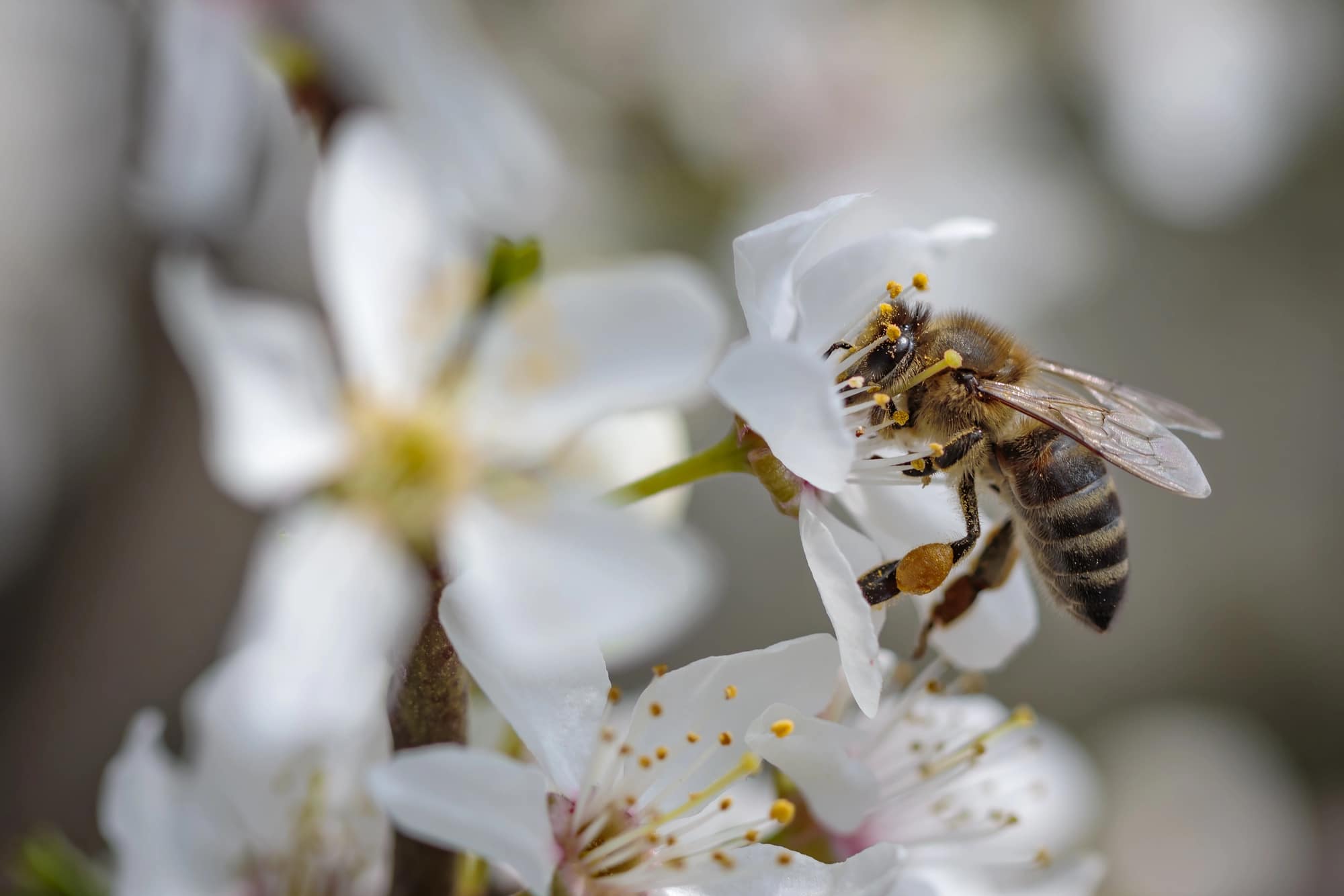
- Collection by foragers. A forager gathers nectar or honeydew with its proboscis and carries it in its crop, often called the honey stomach. This storage organ is distinct from the digestive stomach.
- Enzyme addition. Bees add substances of their own as they handle and exchange the liquid. Invertase helps convert sucrose into glucose and fructose; glucose oxidase contributes to gluconic acid formation. These changes help explain honey’s composition, but do not turn a jar of honey into a medicine.
- Water removal. Receiver bees manipulate the liquid, and evaporation continues in the comb with ventilation from the colony. Incoming nectar is much wetter than finished honey, although its concentration varies. The general Spanish moisture limit for marketed honey is 20%, with specified exceptions, including ling heather (Calluna) honey.
- Capping. Bees seal stored honey cells with wax cappings. Capping is a useful harvesting clue, not a substitute for measuring moisture: capped comb is not an absolute guarantee that every batch will store without fermenting.
- Harvesting and extraction. The beekeeper removes suitable honey frames, uncaps them and extracts the honey. Settling and appropriate straining remove wax fragments and other foreign material before bottling. Hygienic handling and moisture checks remain important whatever the botanical origin.
The main difference is therefore the raw material, not a different species of bee or an entirely different ripening process. Floral nectaries supply nectar. Honeydew may come from plant-sucking insects feeding on trees, or from secretions of living plant parts. For example, pine honeydew production in parts of the eastern Mediterranean is associated with Marchalina hellenica. The exact source depends on the local plants, insects and conditions; it should not be inferred from the word “forest” alone.
Blossom honey production follows local flowering and nectar flows. Honeydew flows have their own timing, influenced by the source organisms and weather. Some important woodland flows occur in summer, but “all honeydew is harvested in late summer” is not a reliable rule.
It is also important to distinguish origin from presentation. A honey may be sold extracted (centrifuged), in comb, pressed, or drained; these categories describe how it was obtained, not whether it is floral or honeydew.
Main differences in taste, aroma and colour
Botanical origin influences colour, aroma, taste and physical behaviour, but the two broad families overlap. A sensory profile is a useful guide; laboratory and traceability evidence are needed to substantiate an origin claim.
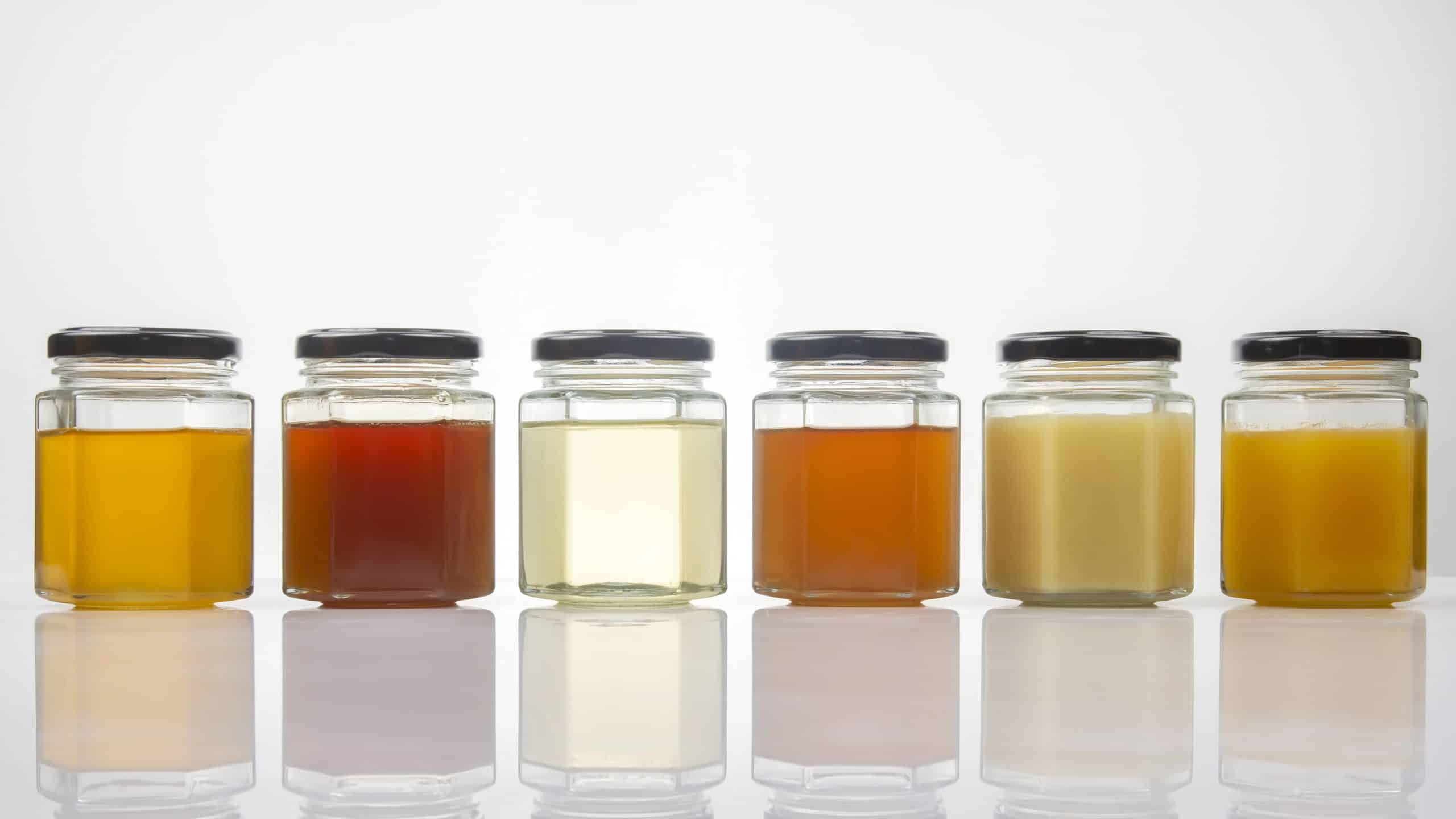
Colour. Honey colour can be assessed on the Pfund scale, from very pale to dark amber. Acacia, rosemary and orange blossom honeys are often light, while chestnut, heather and many honeydew honeys are darker. Botanical mixtures, age and storage can affect the result. Dark blossom honey does not become honeydew honey simply because of its colour.
Composition and electrical conductivity. Conductivity reflects dissolved constituents, including mineral salts and acids. The Spanish standard generally requires at least 0.8 mS/cm for honeydew honey, chestnut honey and their mixtures, with specified botanical exceptions. Other honeys generally have a maximum of 0.8 mS/cm. Exceptions include Erica, Calluna, eucalyptus, lime, strawberry tree, Leptospermum and Melaleuca. Chestnut is itself a blossom honey: a high reading does not, by itself, prove honeydew origin.
Sugars and crystallisation. Glucose and fructose are the main sugars, but their proportions, water content and other sugars vary. Many glucose-rich honeys set readily; acacia and some chestnut honeys tend to remain liquid longer. Honeydew honey is variable, and some batches can set firmly. Temperature, existing crystals and storage history also matter, so a variety name cannot promise a crystallisation date.
Aroma and taste. These are typical tasting notes, not fixed specifications for every jar:
- Rosemary (Salvia rosmarinus): often pale and mild, with delicate floral notes and a rounded sweetness.
- Orange blossom (Citrus spp.): commonly floral and fragrant, with a recognisable blossom character and sometimes a lightly acidic finish. Pollen representation varies, so a single pollen percentage should not be treated as a universal legal test for this variety.
- Thyme (Thymus spp.): often aromatic and persistent, with herbal or phenolic notes and noticeable acidity. Identification combines sensory and analytical evidence, not one generic pollen threshold.
- Eucalyptus (Eucalyptus spp.): amber, balsamic, slightly woody, with a characteristic scent of the tree.
- Heather (Erica spp.) and ling heather (Calluna vulgaris): often full-flavoured, with earthy, malty or bitter notes. These are not interchangeable varieties. Ling heather honey is particularly known for its gel-like texture; crystallisation behaviour varies between heathers and batches.
- Chestnut (Castanea sativa): often amber to dark, with woody notes and a distinctive bitter finish. It commonly crystallises slowly, but colour and texture alone cannot authenticate it.
- Holm oak and other oak honeydew honeys: often dark and full-flavoured, with woody, malty or liquorice-like notes. Texture and crystallisation vary with the honeydew source and accompanying nectar.
- Multifloral or wildflower honey: a variable combination of floral sources reflecting the landscape and season. Many batches are balanced and versatile, but multifloral does not necessarily mean mild or identical from year to year.
A botanical name on the label must be justified by predominant or exclusive origin and the corresponding sensory, physicochemical and microscopic characteristics. Pollen analysis is valuable, but plants do not all contribute pollen to honey in the same proportions. A specialist should interpret it alongside the other evidence.
Properties of each honey type
Here honesty is required. Much myth and exaggerated marketing circulates about honey. Before discussing properties, it is important to separate what we know from what is claimed without sufficient evidence.
Composition and health claims: what the evidence means
Composition. Honey is mainly sugars and water, with smaller quantities of organic acids, enzymes, minerals, amino acids and plant-derived compounds. Fructose and glucose normally dominate, but a single average recipe does not describe every variety. The small amounts of vitamins and minerals in an ordinary serving do not make honey a replacement for nutrient-rich foods.
The composition rules reflect this variation: fructose plus glucose must total at least 60 g/100 g in blossom honey, or 45 g/100 g in honeydew honey and its blends with blossom honey. The standard also specifies limits for water, sucrose and other parameters, including botanical exceptions.
Light and dark honey. Colour can be associated with differences in mineral and phenolic composition, but it is not a nutritional score. An antioxidant result measured in a laboratory is not evidence that eating one honey will prevent disease or improve health more than another. Neither pale nor dark honey deserves a blanket “better” label.
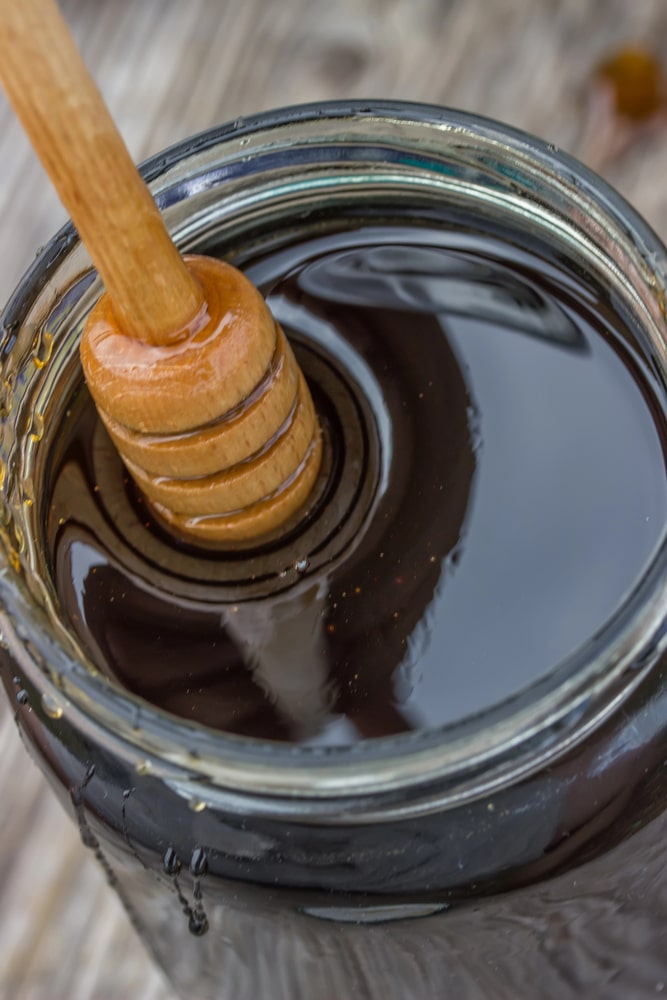
Honeydew honey and minerals. Many honeydew honeys have a more mineral-rich profile than pale blossom honeys, which contributes to their analytical and sensory character. That remains a difference between foods, not a reason to eat more sugar to obtain minerals. Judge the jar by its documented origin, condition and flavour, not by a medicinal promise.
Health claims require evidence. In its 2010 assessment of three honey-related claims, EFSA found that a causal relationship had not been established for the proposed respiratory, energy and immune/metabolic effects. That opinion does not support statements that ordinary honey “boosts immunity” or provides a special metabolic benefit. Food marketing claims must comply with the relevant authorisation rules.
Cough relief is a narrower question. NICE guidance on acute cough describes limited evidence of some symptom relief from honey in people older than one year. This is not proof that a particular floral variety treats an infection, nor a substitute for medical advice if a child is unwell. Honey must not be given before 12 months.
Honey is still a source of free sugars. The WHO includes the sugars naturally present in honey in its free-sugar recommendations: less than 10% of daily energy, with further benefit from reducing intake to 5% or less. For a 2,000 kcal diet, those amounts are about 50 g and 25 g of free sugars from all sources, not grams of honey. Honey’s flavour and minor constituents do not make it a sugar-free or unrestricted alternative for someone managing blood glucose.
Choosing honey for everyday food
The most useful framing is not “which is best”, but which profile suits you best.
For everyday uses such as toast, yoghurt, tea and baking, try a multifloral honey or a mild rosemary or orange blossom honey. Eucalyptus offers a more balsamic character. Taste the actual batch: floral names are useful guides, but they do not guarantee identical flavour or intensity.
For more distinctive pairings, try thyme with mature cheese, heather with wholegrain bread or berry desserts, chestnut with dark chocolate or blue cheese, and oak honeydew with a sheep’s milk cheese or vinaigrette. These are tasting suggestions, not rules. Start with a little and let the honey complement the food.
Harvest volumes and prices change with flowering, weather and the season. A national production figure or a bulk price from an earlier year cannot tell you whether a particular jar is good value today. Compare similar varieties and pack sizes, and ask the seller about origin and handling.
How to choose good honey according to use
Here is where theory becomes smart purchasing. Five things to consider before adding a jar to your trolley.
Factors to consider before buying honey
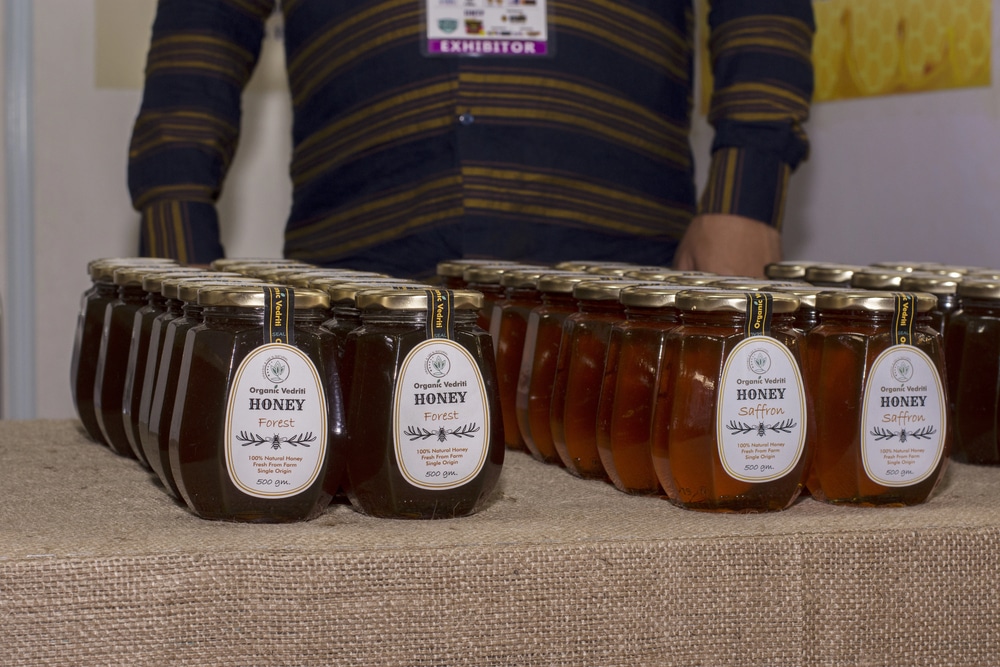
- Origin and labelling. In Spain, the harvest country must be declared. Under the rules effective from 14 June 2026, blends must identify each harvest country and its percentage, in descending weight order in the principal field of vision. There are provisions for very small packs and a transition for stock marketed or labelled before that date: it may sell through, but not beyond the 18-month transitional period. Read the complete label; a compliant blend is not inherently inferior or fraudulent.
- Monofloral or multifloral. Choose according to the flavour you want and the evidence supporting the botanical description. Multifloral honey can be an excellent everyday choice. Monofloral and honeydew honeys offer more specific profiles, but their names are not automatic quality grades.
- Producer and traceability. Look for an identifiable operator, batch details and a clear harvest origin. A beekeeper, cooperative, specialist shop or supermarket can sell properly traceable honey. “Packed in Spain” is not the same statement as “harvested in Spain”, and neither the sales channel nor a country name proves authenticity on its own.
- Protected origin schemes. Spanish examples include PDO Miel de La Alcarria, Miel de Granada and Miel de Tenerife, and PGI Miel de Galicia and Miel de Asturias. PDO and PGI correspond to the Spanish abbreviations DOP and IGP. Each protected name has its own specification and controls; consult the Ministry of Agriculture’s quality-schemes information for the relevant product. Certification supports the stated origin and specification, not a universal ranking of taste or health value.
- Price. Compare the price per kilogram, variety, pack size, origin and seller’s information. Packaging and distribution costs differ, and a low price is not proof of adulteration. An unusually cheap offer may justify questions, but authenticity requires evidence rather than a fixed retail-price threshold.
How to identify high-quality honey
Honey fraud is a real control issue. In the EU’s 2021–2022 “From the Hives” action, reported in 2023, 147 of 320 imported-honey samples were flagged as suspicious for markers of added sugars. Suspicion is not the same as confirmed fraud in every sample. The Commission explicitly warns against extrapolating those results to the whole honey market. The older survey used a different sampling and testing framework, so the two percentages alone do not establish a market-wide trend.
Useful quality checks and their limits:
- Crystallisation. Setting is a normal physical change, not proof of purity, freshness or absence of heating. Liquid honey is not automatically suspect either. If you prefer it liquid, use controlled indirect warming and minimise both temperature and time; no single temperature guarantees zero quality change. For more detail, see our guide to checking honey purity and quality.
- Pollen. Pollen is a natural component of honey, not a separately added ingredient. Microscopic analysis can help assess botanical and geographical origin. Visible specks, or the mere presence of pollen, do not establish authenticity or show exactly how the honey was processed.
- Filtration. Removing foreign material is different from deliberately stripping out honey’s characteristic constituents. From 14 June 2026, Spanish rules place honey whose processing significantly removes pollen in the industrial or baker’s-honey category, subject to transitional stock provisions. That category must carry its specific designation and a nearby “for cooking only” statement. It is incorrect to say that it can never be sold to a final consumer; it must not be presented simply as ordinary table honey.
- HMF and diastase. These laboratory indicators help assess heating and storage. The general limits are HMF no more than 40 mg/kg and diastase activity at least 8 on the Schade scale. Declared tropical-origin honey and relevant blends have an 80 mg/kg HMF limit. Naturally low-enzyme honey may have a diastase minimum of 3 only when HMF is no more than 15 mg/kg. Industrial honey is treated separately. A result must be interpreted in context; one low HMF value does not prove every aspect of authenticity.
- Electrical conductivity. This supports botanical characterisation alongside other tests. Because chestnut honey and several botanical exceptions overlap with honeydew values, crossing 0.8 mS/cm is not a stand-alone “forest honey” test.
Common honey myths:
- “A water test proves purity.” It does not. Dissolving speed and sediment depend on temperature, moisture, crystals and particles. Neither rapid dissolving nor a residue establishes whether sugar syrup has been added.
- “If it burns, it is pure.” A flame test does not authenticate honey and creates an unnecessary burn or fire risk. Do not use it.
- “Supermarket honey is always fake.” Honey from any sales channel can comply with the rules. The useful questions concern the product’s identity, traceability, composition and labelling, not a blanket assumption about supermarkets, imported honey or local producers.
- “Raw honey is always better.” “Raw” is not a separate category in the Spanish honey standard cited above. Ask the producer what handling and temperature practices the term describes; it is not a guarantee of purity, hygiene or superior health effects. Whatever the processing, do not give honey to babies under 12 months, including in food, drinks, formula or on a dummy, because of infant botulism risk.
To find your own preference, taste a small amount of two or three contrasting honeys: perhaps a pale rosemary, a stronger chestnut or heather, and an oak honeydew. Use separate spoons and compare aroma, sweetness, bitterness and texture. The useful difference is not “bee honey versus flower honey”, but the plants, landscapes and handling behind each jar.
Frequently asked questions
Is flower honey a type of bee honey?
Yes. Blossom or flower honey is made by bees from nectar. “Bee honey” is not an opposing category or a separate grade.
Which is better, flower honey or honeydew honey?
Neither is universally better. Blossom honeys range from delicate to strong; honeydew honeys often have woody or malty notes. Choose by flavour and use, and check traceability.
Is dark honey of lower quality?
No. Colour is influenced by botanical origin and handling. Dark honey is not automatically better or worse, and colour alone does not prove purity or a health benefit.
Is crystallised honey bad?
Not simply because it has set. Crystallisation is normal, but is not an authenticity test. Gentle indirect warming can soften honey; minimise heating time and avoid overheating.
Which honey should I buy for everyday use?
Try a traceable multifloral honey, or a mild rosemary or orange blossom honey if you prefer delicate flavours. Taste the batch rather than relying only on its name.
Can babies consume honey?
Do not give honey to babies under 12 months because of infant botulism risk. This applies regardless of whether it is raw or processed, including honey added to food, drinks or a dummy.

ISNI 0000 0005 1801 1100 | Joshua Ivars is the manager of LA TIENDA DEL APICULTOR and the author of this blog, where he shares technical and practical guidance for beekeepers. Drawing on extensive experience in the beekeeping sector, he offers advice and solutions based on beekeepers’ real needs, sharing his knowledge of equipment and essential beekeeping practices.


