 Apipasta with vitamins 15kg
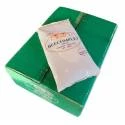 Beecomplet® Spring 14Kg
 Beekeeper suit with round veil
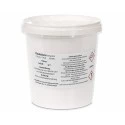 Oxalic acid 1kg
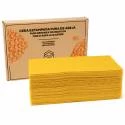 Beeswax Foundation 5kg
 Fresh royal jelly 20g
 Classic honey jar 1kg comb-lines TO77 - Pack of 16 units
 Promotor L Apis 1 litre

 Share in WhatsApp
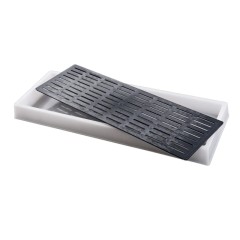
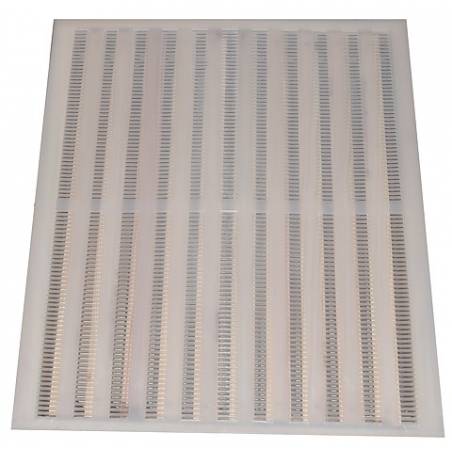
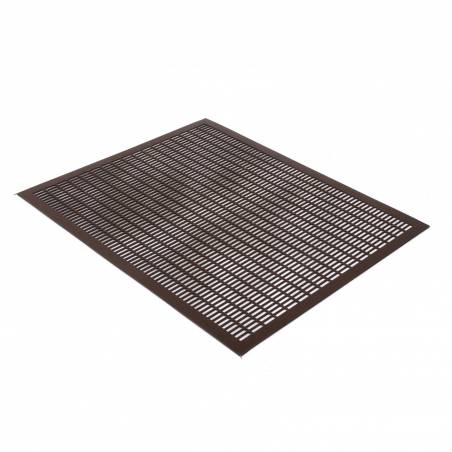
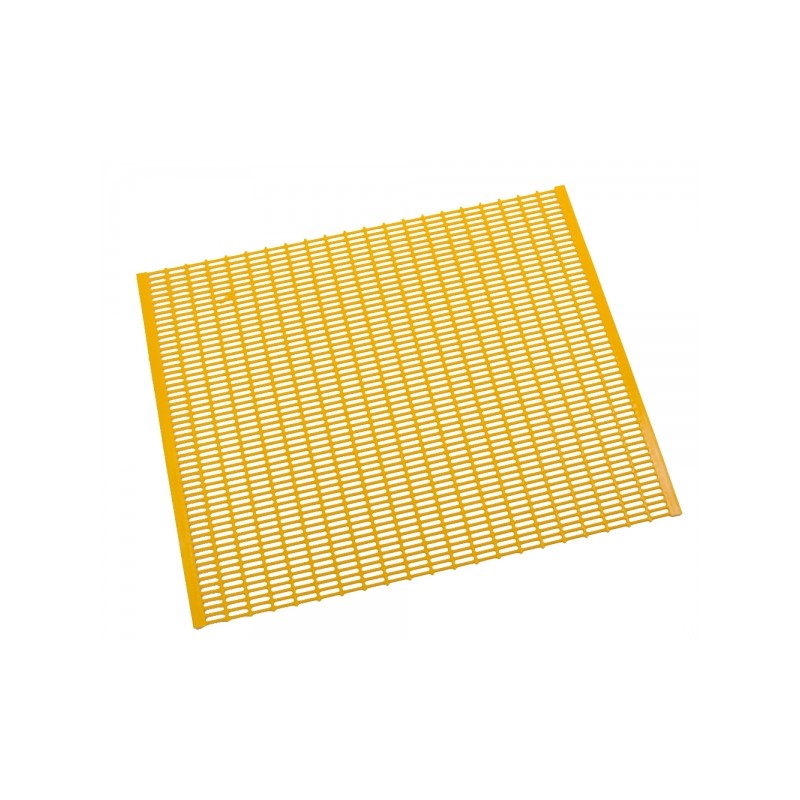
Plastic queen excluder cut to 370 × 510 mm, the size of the brood area of a Layens hive set up to work with a super.
It is the light, low-cost option in that size: the same calibrated grid that keeps the queen away from the honey, in plastic instead of metal. A classic Layens, with no super, does not use an excluder.
01 · WHAT IT IS FOR
An excluder works by one dimension alone: the slot lets the foraging worker through and not the queen, whose abdomen is far wider — nor the drone, because of his thorax. Our metal excluders work in the region of 4.14 to 4.3 mm, and that is the order of magnitude we are talking about: a wider gap lets the queen up, a narrower one holds the workers back and costs you crop. Placed between the brood box and the space above, the result is the one you want: the queen stays below laying and only honey goes up, with no brood among the harvest combs.
02 · COMPATIBILITY
A conventional Layens works horizontally: brood and honey share the one body and there is nothing to separate. This part makes sense once the box has been prepared to take a super — frames with a rebated top bar, side hinges removed and a body on top — and then the 370 × 510 mm cover the brood area. Since everyone makes those changes their own way, measure the real opening of your set-up before ordering: what has to be covered is the whole interior, and the excluder rests on the rebate, it does not clip in.
03 · PLASTIC OR METAL
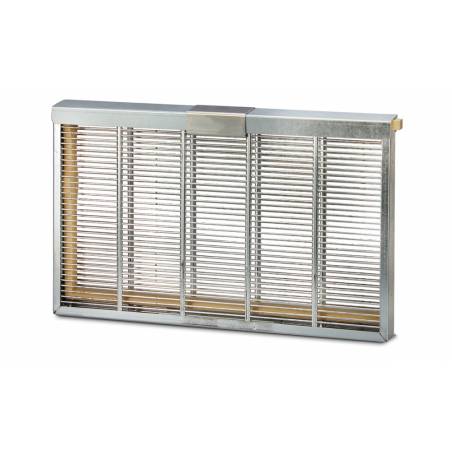
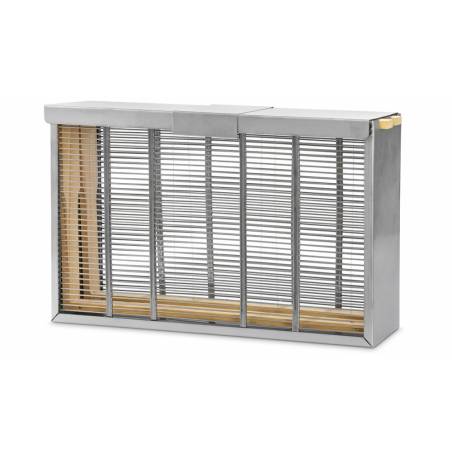
The difference between the two materials in this same size is real and worth having before you choose. Plastic is lighter, cheaper and does not rust; in exchange, with years and heat it can bow, and a grid that does not sit flat leaves a gap at the side — which is exactly where the queen goes up. Galvanised metal keeps its flatness and takes cleaning with a hive tool or a flame season after season. Add that this one is cut by hand: offer it up before closing, check that it rests flat all round and that it is not trapped by the roof.
04 · BEFORE YOU BUY
It goes on when the flow starts, as you add the super, and before closing you have to be sure the queen is below: an excluder fitted with the queen upstairs achieves precisely the opposite of what you want. At each inspection, scrape off with the hive tool the bridges of wax and propolis that narrow the slots, and do not leave drones above with no way out.
| ✓ FITS | A modified Layens with a super whose brood opening measures 370 × 510 mm or less. |
| ✕ DOESN’T FIT | A classic Layens with no super, and Langstroth or Dadant hives, which use the ten-frame size. |
| ⚠ NOT INCLUDED | A wooden frame. This is bare grid: it rests on the top bars and the bees propolise it against them. |
| Reference | EXCLULAYENS |
|---|---|
| Material | Plastic, unframed grid |
| Dimensions | 370 × 510 mm |
| Finish | Cut by hand from sheet |
| Fitting | Rests on the rebate of the body; does not clip in |
| Compatibility | Modified Layens with super, if the brood opening allows it |
Data sheet

check_circle
check_circle