 Apipasta with vitamins 15kg
 Beecomplet® Spring 14Kg
 Beekeeper suit with round veil
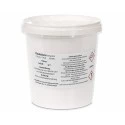 Oxalic acid 1kg
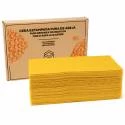 Beeswax Foundation 5kg
 Fresh royal jelly 20g
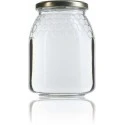 Classic honey jar 1kg comb-lines TO77 - Pack of 16 units
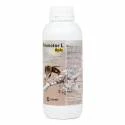 Promotor L Apis 1 litre


 Share in WhatsApp
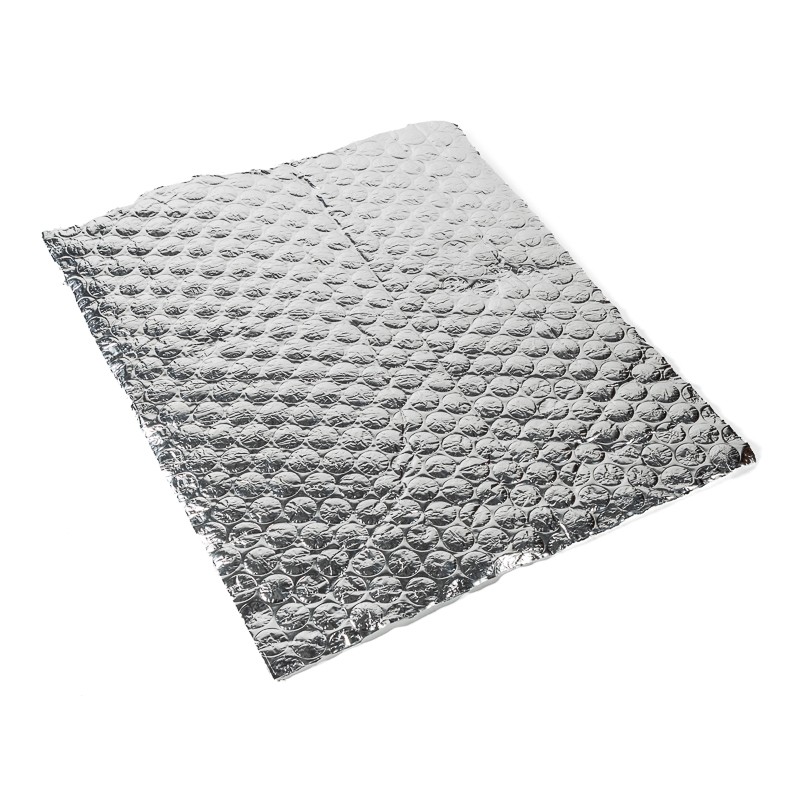
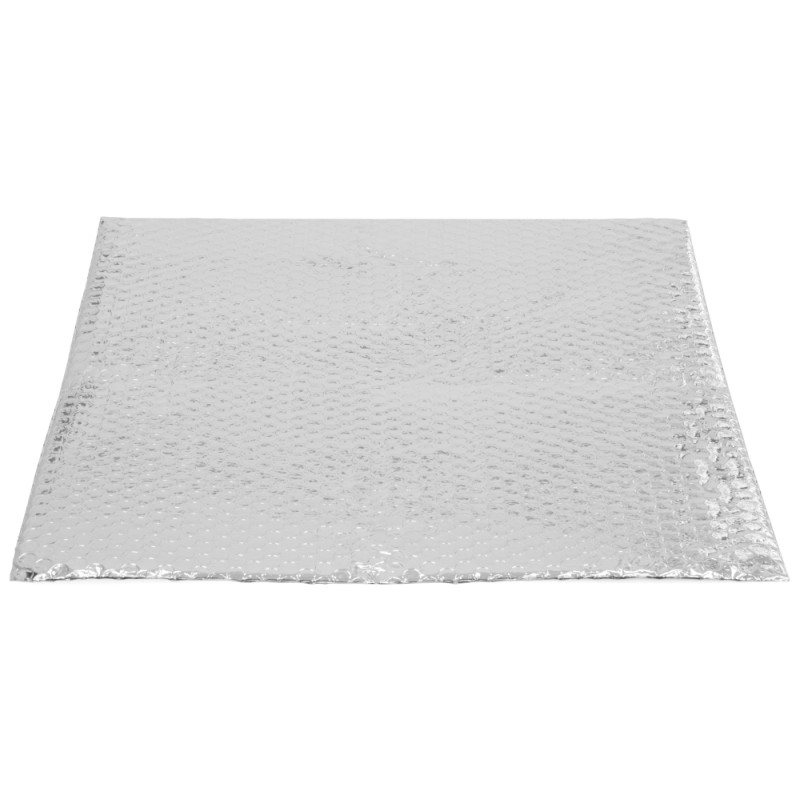
8 mm THREE-LAYER BUBBLE | 500 × 430 mm SHEET SIZE |
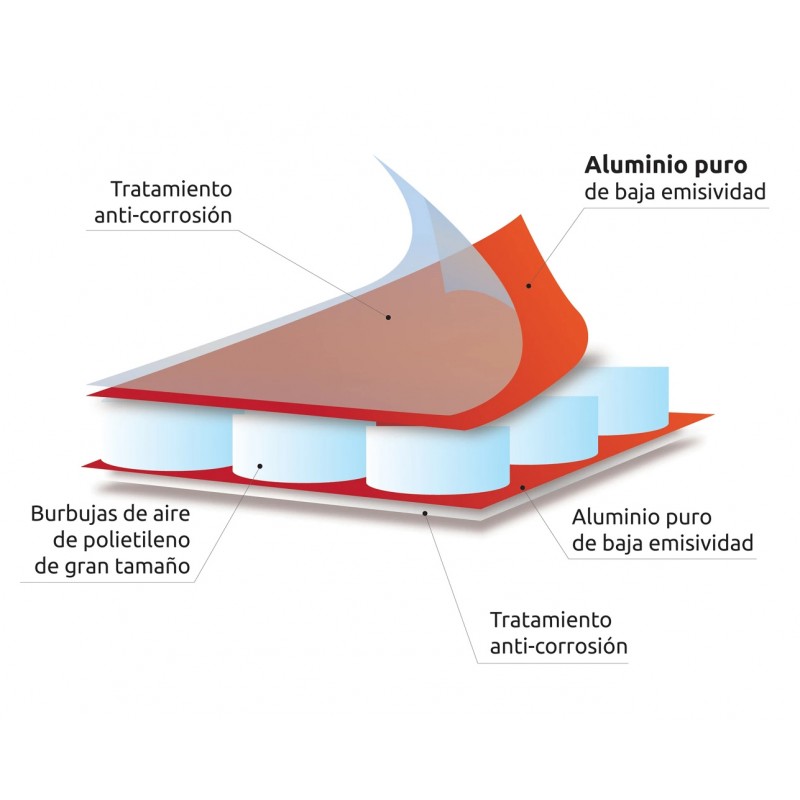
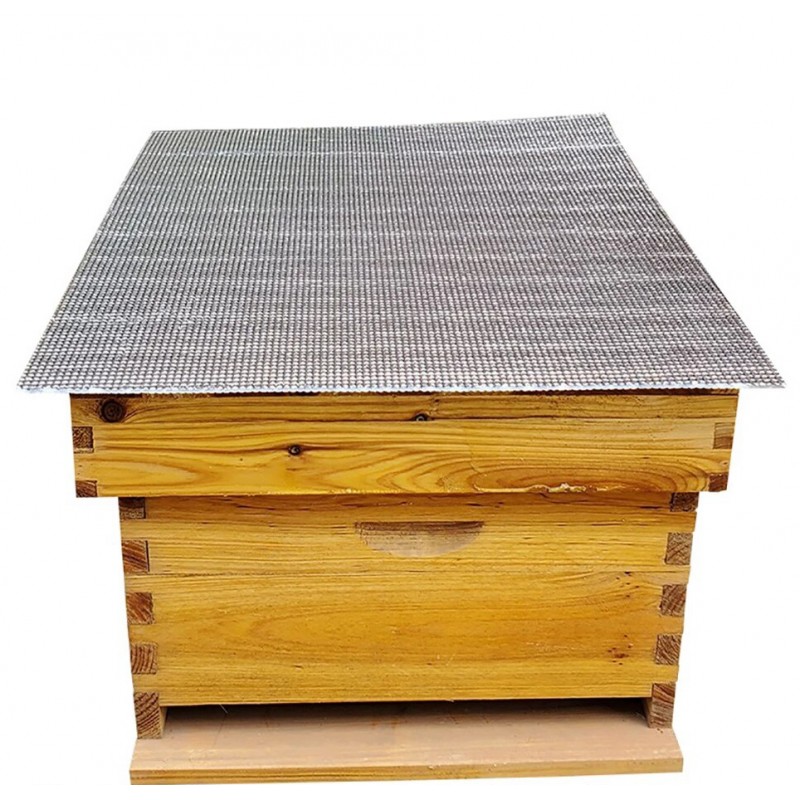
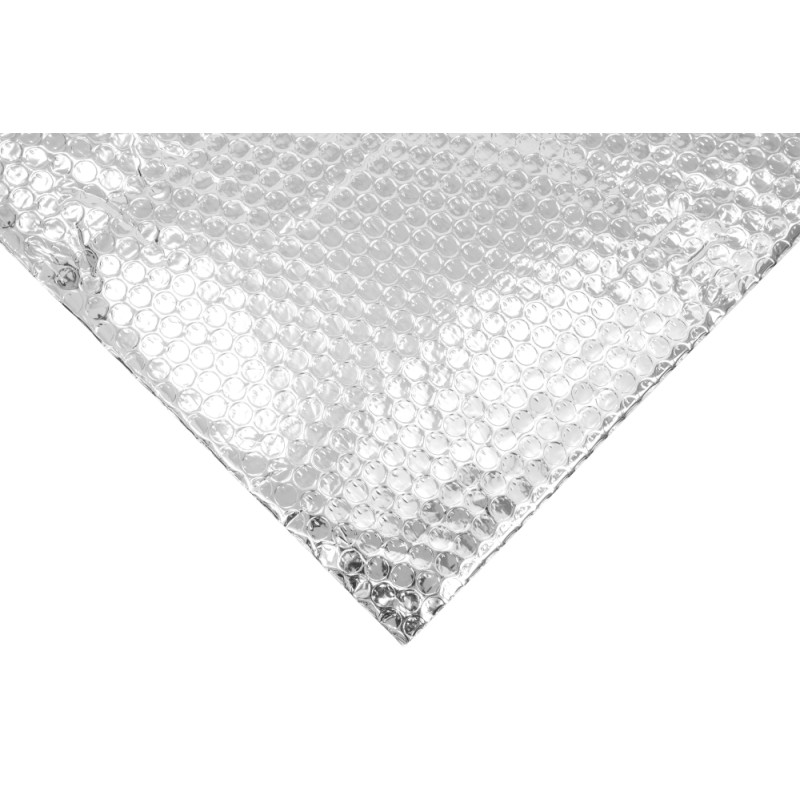
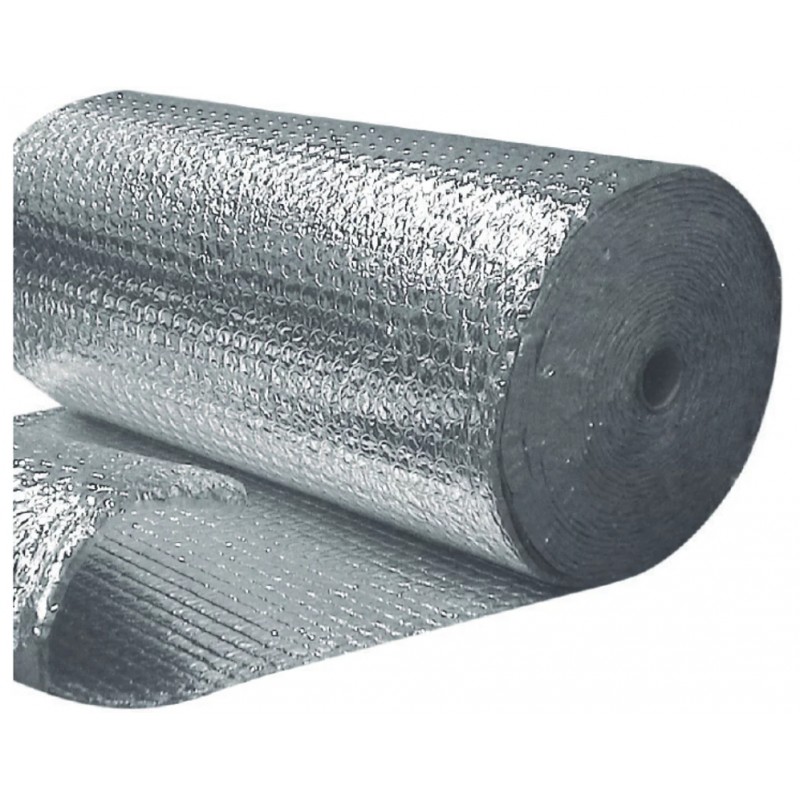
Insulating sheet, aluminium on both faces with a polyethylene bubble core, to lay over the frames or under the roof. 8 mm that work by reflection, not by thickness.
If you expect the insulation of a 5 cm board, this is not it. It does something else, and under a metal roof that something else is exactly what is needed.
01 · WHERE THE HEAT GOES
Heat escapes a hive three ways: conduction through the walls, convection through air currents and radiation. The metal roof is the weak point in all three — in winter it radiates the cluster's heat out to the night sky, and in summer the reverse, it heats in the sun and sends that back down. A reflective material does not fight this with thickness: it fights it with low emissivity. The aluminium on both faces returns radiation the way it came, and the polyethylene bubble in between breaks the conduction bridge between the two skins. That is why 8 mm of reflective sheet and 8 mm of foam are not comparable: they address different loss paths.
02 · WHERE IT GOES
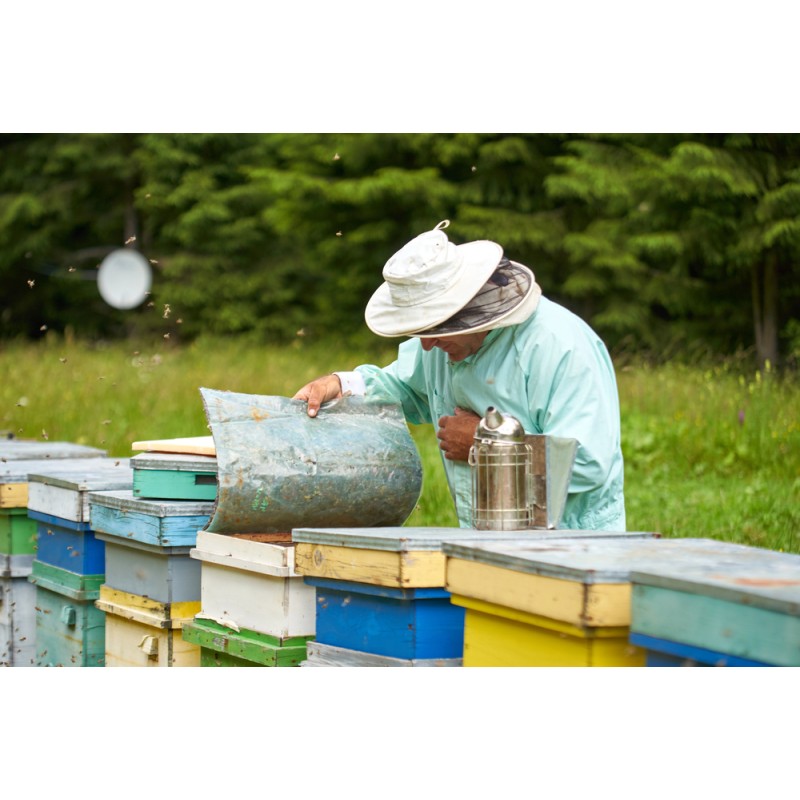
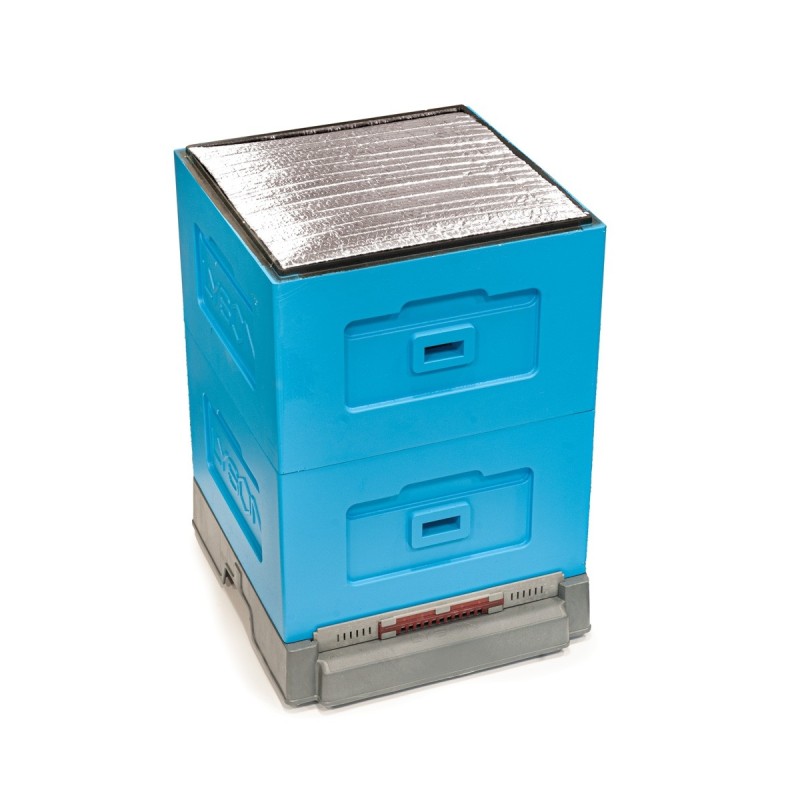
The usual place is directly on the frames, instead of the cloth quilt or the sheet of newspaper. It also sits on the crown board, and if you are feeding it goes above the feeder, never below: the sheet must not block access to the syrup. Inside it performs better than on top of the roof, but if you fix it to the metal roof leave an air gap between sheet and metal — a reflector pressed against the hot surface conducts instead of reflecting, and loses half its point.
03 · HOW IT BEHAVES IN THE HIVE
Against cloth or paper it has an advantage you notice by the second winter: it absorbs no moisture — no mineral fibre, no cellulose — and does not mat down, so it neither loses properties nor grows mould. Bees propolise the edges but do not chew it, and the material holds up. That said: it is a thin sheet and it can tear if you yank it when well propolised — lift it with the hive tool from one edge, like any crown board. And it comes sized to the opening, 500 × 430 mm: it sits flush, it does not overlap the box rims.
04 · BEFORE YOU BUY
The factory size fits the opening of Langstroth and Dadant hives and Nicot-type plastic covers. For any other format — Layens, home-built hives, shallow supers — cut it with scissors: measure your internal opening and compare it with the sheet's 500 × 430 mm before ordering. Sold by the unit, not by the roll.
| ✓ FITS | Hives with an uninsulated metal roof, and hard winters or extreme summers. |
| ✕ IT IS NOT | A thickness insulator: if you want thermal resistance by depth, this does not give it. |
| ⚠ MEASURE FIRST | 500 × 430 mm flush. Other formats by trimming; it does not overlap the box. |
| LTA reference | 10200911 |
|---|---|
| Structure | Three layers: aluminium · polyethylene bubble · aluminium |
| Thickness | 8 mm |
| Size | 500 × 430 mm |
| Weight | 390 g |
| Treatment | Anti-corrosion and flame retardant |
| Moisture absorption | 0 % — no mineral fibres |
| Water resistance | EN 12086 |
| Heat and humidity resistance | ASTM C 1258-94 |
| Fungal resistance | ASTM C 1338-00 / HR |
| Stated compatibility | Langstroth, Dadant and Nicot-type plastic covers |
| Other formats | Trim with scissors |
Data sheet