 Apipasta with vitamins 15kg
 Beecomplet® Spring 14Kg
 Beekeeper suit with round veil
 Oxalic acid 1kg
 Beeswax Foundation 5kg
 Fresh royal jelly 20g
 Classic honey jar 1kg comb-lines TO77 - Pack of 16 units
 Promotor L Apis 1 litre

 Share in WhatsApp
1 L LTA FORMAT | 10 ML PER 500 ML |
3 WEEKS | >12 °C MEAN TEMPERATURE |
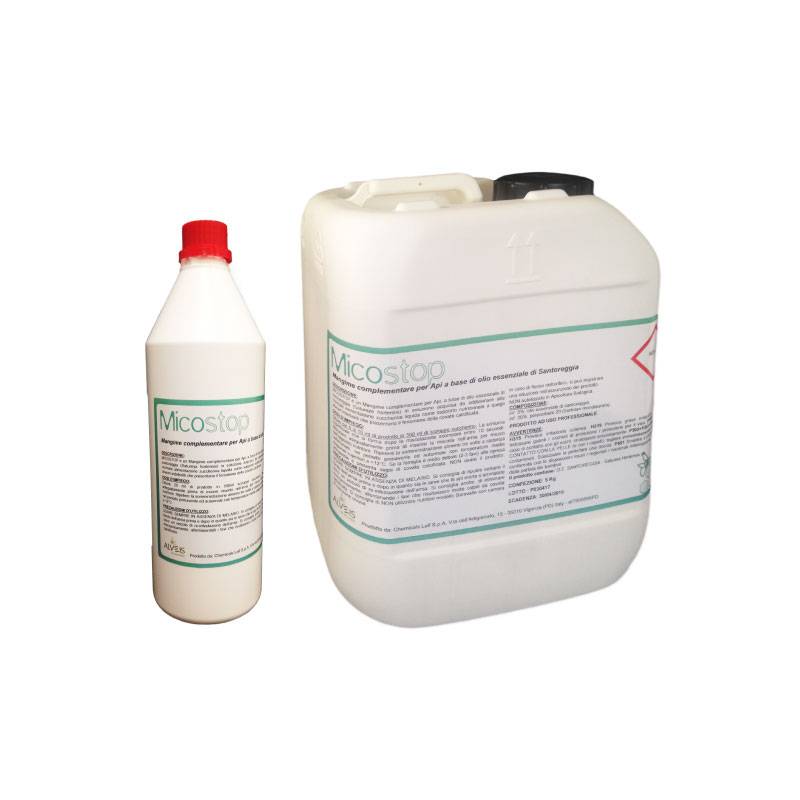
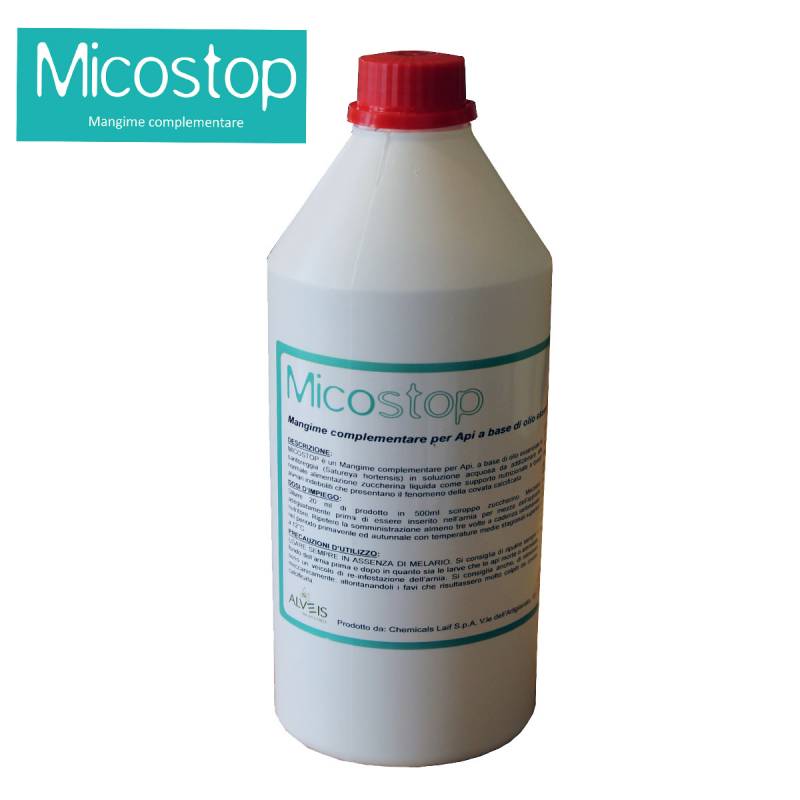
Micostop is a liquid complementary feed for honey bees, based on an aqueous solution containing summer savory essential oil (Satureja hortensis), for mixing with syrup during specific periods of nutritional support.
This listing is for the 1-litre format. It is presented as support for weak colonies and for maintaining appropriate hygienic behaviour; it is not a medicine, a fungicide or a guaranteed remedy for chalkbrood.
01 · CHECK WHETHER IT FITS
The stated windows are February/March before honey supers are added, or late summer with the supers absent. Mean seasonal temperature must be above 12 °C. Before making syrup, inspect food stores, incoming forage, colony strength, brood, damp and health: poor uptake can call for diagnosis and management rather than more supplement. The technical sheet advises against use at the spring restart where a family is very weak —only 2–3 combs— and also shows chalkbrood signs. Do not feed during a commercial nectar flow or while harvest supers are present. Uptake can fall during a flow, and supplementary feeding at that point can compromise the honey crop.
02 · MEASURE, MIX AND FEED
Check the label on the container received before measuring. The current official direction consulted is to dilute 10 ml of Micostop in 500 ml of sugar syrup per colony, mix thoroughly and place it in a feeder once a week for 3 weeks. Surface foam formed during mixing disappears within a few seconds. Use a graduated measure; do not pour the concentrate straight into the hive or double the next serving after a missed feed. Current guidance accepts cup or frame/pocket feeders fitted with an anti-drowning device and vacuum feeders. It specifically advises against a Baravalle feeder with a closed feed chamber, rather than banning every roof feeder. Monitor uptake and remove spoiled leftovers. If the physical label gives a different dose, stop and ask for confirmation: never average instructions from different revisions.
03 · PROTECT THE USER AND COLONY
The technical sheet classifies the concentrate as H315 —causes skin irritation— and H319 —causes serious eye irritation—. Wear gloves and eye or face protection when measuring and mixing, avoid splashes and keep it out of reach of children. After eye contact, rinse carefully with water; after skin or hair contact, remove contaminated clothing and wash as directed on the label. Dispose of product and container under local requirements. Retain the batch reference and container date until the product is finished. The stated best-use period is 2 years from packing, but the date and storage conditions printed on the actual unit take priority. The product has no own organic certification; consult the relevant certification body before use in an organic operation.
04 · BEFORE YOU BUY
Mummies or brood consistent with chalkbrood are not diagnosed or resolved by Micostop. Clean the hive floor before and after feeding, remove heavily affected combs, keep the hive dry and ventilated, and do not move material to another colony. Review strength, stores, queen and hygienic behaviour; recurrence may warrant requeening from hygienic stock. Laboratory results with essential oils do not justify a promise of field efficacy. Cure, prevention, population growth and honey yield are not guaranteed: this is a nutritional feeding programme within complete colony management, not a stand-alone solution.
| SUITABLE | A colony able to feed, without honey supers, above a mean seasonal temperature of 12 °C. |
| DO NOT USE | With harvest supers or in a very weak 2–3-comb family showing chalkbrood signs. |
| LABEL PREVAILS | Confirm dose, composition, batch and date; never combine instructions from different revisions. |
| Product | Micostop · complementary feed for honey bees |
|---|---|
| LTA reference | 120177 · product 360 |
| Listing format | 1 litre / 1000 ml |
| Stated base | Aqueous solution with summer savory essential oil · Satureja hortensis |
| Exact composition | Use the unit label; emulsifier code omitted because online documents conflict |
| Current dose | 10 ml of product in 500 ml of syrup per colony |
| Frequency | Once weekly for 3 weeks · at least 3 administrations |
| Theoretical yield | 100 servings of 10 ml · 33 full programmes plus one serving |
| Temperature | Mean seasonal temperature above 12 °C |
| Timing | February/March before supers or late summer without supers |
| Honey crop | Do not use with harvest supers or during a commercial nectar flow |
| Feeders | Cup or pocket with anti-drowning device; vacuum feeder; avoid closed-chamber Baravalle |
| Very weak colony | Do not use in spring in a 2–3-comb family showing chalkbrood signs |
| Safety | H315 + H319 · gloves and eye/face protection |
| Organic | No own organic certification; ask the certification body |
| Best-use period | 2 years from packing as stated; actual container date prevails |
| Status | Nutritional support; not a medicine or substitute for diagnosis, hygiene or ventilation |

check_circle
check_circle