 Apipasta with vitamins 15kg
 Beecomplet® Spring 14Kg
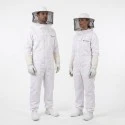 Beekeeper suit with round veil
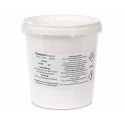 Oxalic acid 1kg
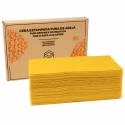 Beeswax Foundation 5kg
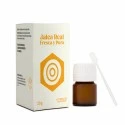 Fresh royal jelly 20g
 Classic honey jar 1kg comb-lines TO77 - Pack of 16 units
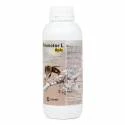 Promotor L Apis 1 litre
- Out of stock


 Share in WhatsApp
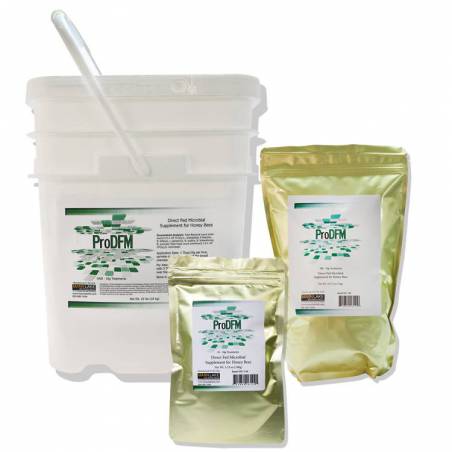
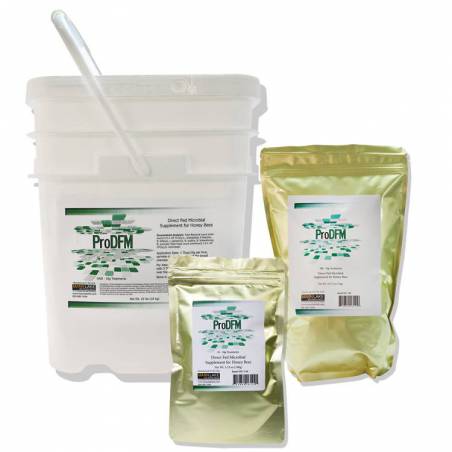
Professional 10 kg format of beneficial microorganisms to dust over the frames: 1,000 applications of 10 grams.
First things first, so there is no misunderstanding. It is not a veterinary medicine and it does not replace one. It does not treat or prevent disease, and a health diagnosis is a matter for the veterinary services. It is a supply of microorganisms, and that is how it is handled.
01 · WHAT IT IS AND HOW TO APPLY IT
You dust 10 grams — a tablespoon — over the top of the brood chamber frames, straight onto the top bars. To spread it better, mix those 10 g with about 30 g of icing sugar and dust the mixture.
The 10 kg tub gives 1,000 applications, so the cost per hive per time is in cents. It is a commercial format, not a hobby one: applied in spring and autumn (every 4 months if the hives are moved for wintering), it covers several hundred hives.
02 · TWO WEEKS AFTER A TREATMENT
The health treatments applied in a hive, varroa control among them, do not discriminate: they wipe out what has just been added as well. So at least two weeks have to pass after a treatment for varroa, foulbrood or nosema, or an essential oil treatment (lemongrass, for example), before applying it.
Applying it the same day one of those treatments comes off is throwing the product away. That calendar detail matters more than the dose.
03 · WHEN, ACROSS THE YEAR
The usual windows are spring and autumn, preparing for wintering, which is when the colony changes gear. If the hives are moved for wintering, it is applied every four months.
It is not an emergency product: it makes sense inside a calendar, not as a reaction.
04 · THEY ARE LIVING ORGANISMS
A microbial supply is only worth anything if it reaches the hive alive. Heat, direct light and damp are its enemies, so the container is kept closed, cool and in the dark, and not left in the van in the sun between apiaries.
It goes on dry or with icing sugar, which is how it is meant to be used.
05 · BEFORE YOU BUY
A commercial format with one calendar rule.
| ✓ FITS | Operations applying 10 g a hive in spring and autumn (every 4 months if the hives are moved for wintering): the tub gives 1,000 applications. |
| ⚠ WAIT TWO WEEKS | After a treatment for varroa, foulbrood or nosema, or an essential oil treatment (lemongrass, for example), at least two weeks have to pass. |
| ✕ IT IS NOT A MEDICINE | It does not treat or prevent disease. For a health diagnosis, the veterinary services. |
| Type | Supply of microorganisms for hives, powder |
|---|---|
| Format | 10 kg |
| Yield | 1,000 applications of 10 g |
| Dose | 10 g a hive (one tablespoon) |
| Application | Dusted over the top bars of the brood frames |
| Alternative | 10 g mixed with about 30 g of icing sugar |
| Frequency | Spring and autumn; every 4 months if the hives are moved for wintering |
| Interval after a treatment | At least 2 weeks after treatments for varroa, foulbrood or nosema, or essential oil treatments (lemongrass, for example) |
| Storage | Closed container, cool and out of direct light |
| Reference | PDF1012 |
1 file available
Write your question
check_circle
check_circle