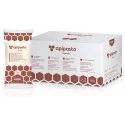
 Apipasta with vitamins 15kg
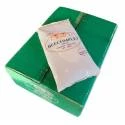 Beecomplet® Spring 14Kg
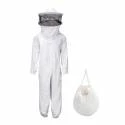 Beekeeper suit with round veil
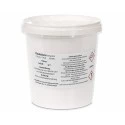 Oxalic acid 1kg
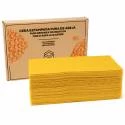 Beeswax Foundation 5kg
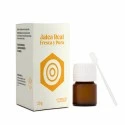 Fresh royal jelly 20g
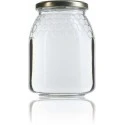 Classic honey jar 1kg comb-lines TO77 - Pack of 16 units
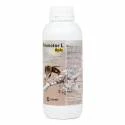 Promotor L 1 liter


 Compartir en WhatsApp
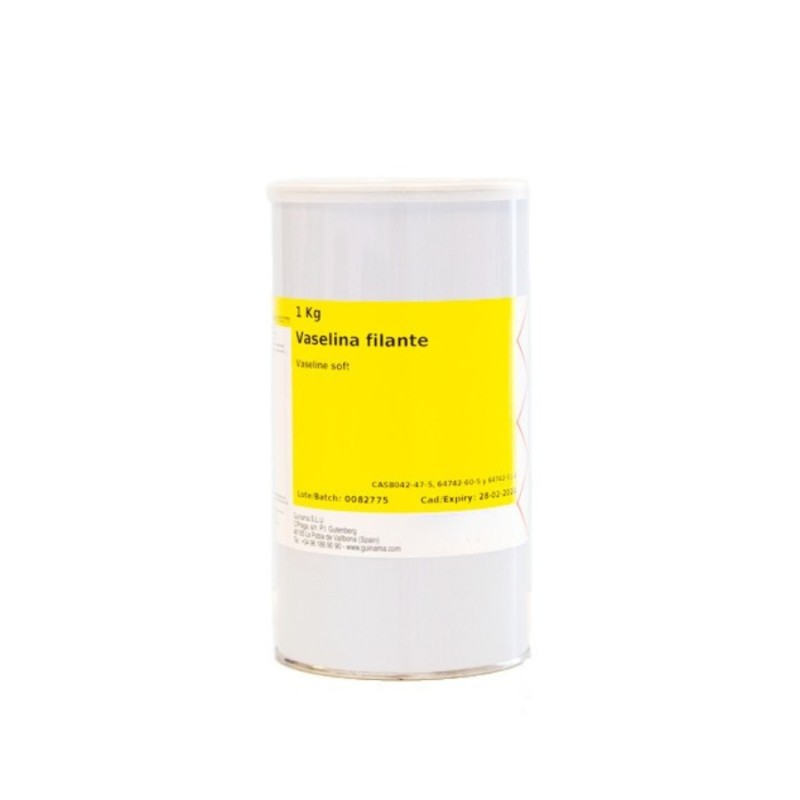
Petroleum jelly for multiple beekeeping purposes, meets the most stringent pharmaceutical and food standards. Format 1kg.
If you take varroa monitoring seriously, you know that real diagnosis starts on the inspection tray. And you also know how frustrating it is to use products that run, soften with heat or let mites drift all over the board. If you want reliable counts and a true picture of how the infestation is distributed in the brood nest, you need a jelly that stays where you put it.
This stringy petroleum jelly is a high-density, very sticky and stable jelly, designed specifically for varroa monitoring and use in beekeeping traps. Unlike liquid jelly, here the goal is not flow but stability: it should stay fixed on the tray for weeks without running, even if the hive is slightly tilted or goes through moderate temperature changes.
Its main job is straightforward:
• Varroa monitoring: spread in a thin layer over the tray of a screened bottom board, it holds the mites exactly where they fall. That lets you carry out daily or weekly counts you can trust and, if you divide the tray into sectors, analyse how the infestation is distributed in the brood area (heavier on one side, centre, colder edges, etc.). In this role, stringy jelly easily outperforms anything that is too runny.
In everyday beekeeping it’s also a strong ally in pest control:
• Traps for Aethina tumida: applied to the trays of Beetleblaster-style traps or similar designs, it captures small hive beetles that fall in or hide along ridges and slots.
• Ant barrier: spread on the legs of hive stands and benches, it forms a sticky, long-lasting film. Because it is denser than liquid jelly, it can last for weeks without dripping, which is especially useful in areas with heavy Argentine ant pressure.
• Traps for Asian hornet (Vespa velutina): in some selective trap designs it is applied around access points to make it harder for hornets to escape once inside, boosting trap efficiency.
It also does a good job looking after your equipment:
• Protecting threads and closures: on metal threads, lid latches, ripener taps and other joints, it helps prevent rust and propolis “welding” parts together. Later disassembly for cleaning or inspection becomes much easier.
• Smoker gaskets: on rubber or leather bellows seals it improves the seal and extends service life by reducing drying and cracking.
• Temporary sealing: handy for plugging small cracks or gaps in hive bodies while you wait for a proper repair. Bees usually don’t cover it with propolis, so you can come back later and fix the box without chiselling off permanent patches.
It is supplied in a 1 kg pack, aimed at beekeepers who run systematic varroa monitoring and routinely use bottom boards and traps across several apiaries.
Recommended in beekeeping as a purely physical barrier and capture medium. It is not intended for consumption or internal use. Always apply as a thin, even layer using a spatula, brush or gloved hand, depending on the application.
Specific References
Petroleum jelly for multiple beekeeping purposes, meets the most stringent pharmaceutical and food standards. Format 1kg.