 Apipasta with vitamins 15kg
 Beecomplet® Spring 14Kg
 Beekeeper suit with round veil
 Oxalic acid 1kg
 Beeswax Foundation 5kg
 Fresh royal jelly 20g
 Classic honey jar 1kg comb-lines TO77 - Pack of 16 units
 Promotor L Apis 1 litre
- Out of stock

 Share in WhatsApp
430 × 500 mm OUTER SIZE | 15 mm THICKNESS |
24 h QUEENLESS BEFORE GRAFTING | 17 days TO A FINISHED CELL |
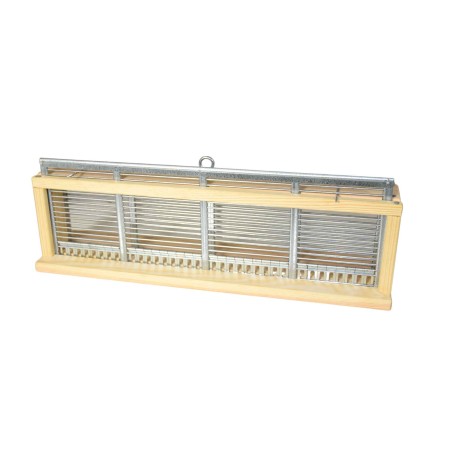
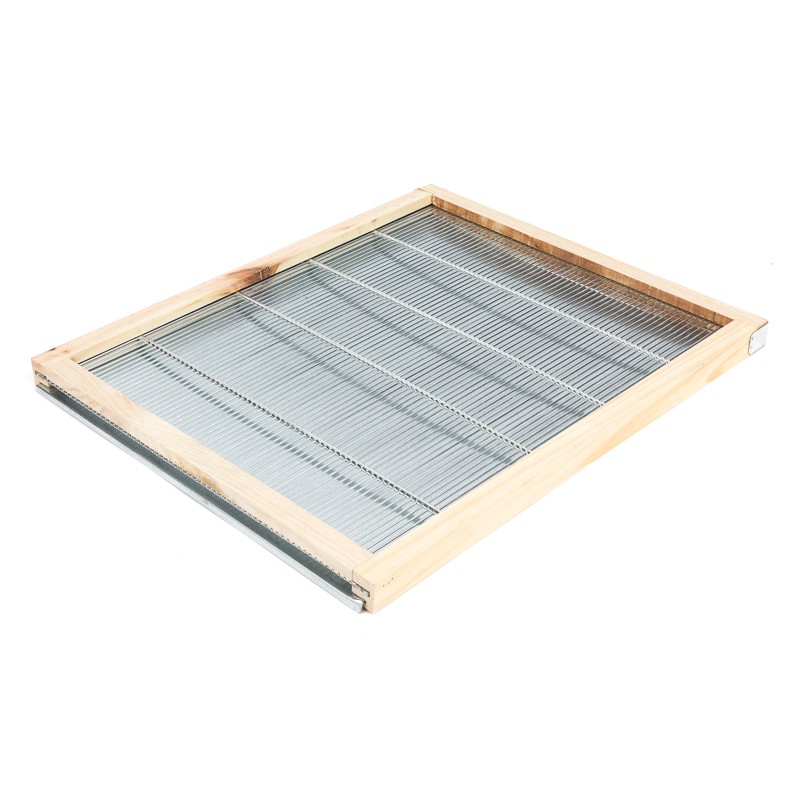
Cloake board of 430 × 500 mm: a pine frame with the queen excluder built in and a solid sheet that slides in through a side runner. It goes between the brood box and the super of a 10-frame Dadant Blatt.
With the sheet in, the box above gets no queen pheromone and behaves like a queenless colony; with the sheet out it is one colony with a queen again. Starter and finisher in the same hive, with no second apiary and no frames to shuffle.
01 · HOW IT WORKS
The excluder is welded steel wire with cross bars, mounted over the opening in the frame; the galvanised sheet runs underneath, in a runner in the side rail. Sheet in: no pheromone reaches the top, that part feels queenless and draws the cells you give it. Sheet out: the excluder still keeps the queen below, but the two storeys become one queenright colony, which feeds the cells better than a queenless one. That is Harry Cloake's invention.
02 · THE STEP PEOPLE GET WRONG
What fills the starter is not the sheet: it is the entrance. You turn the brood box, not the super, so its entrance faces the rear, and then close it. Foragers come back to the usual front, meet the board's entrance and go straight into the top box. Without that turn there is no crowding above and acceptance suffers. For the first days, mark the new entrance or prop a batten against it as a ramp: the board is 15 mm thick and leaves no landing board.
03 · THE CALENDAR
Day 1, board in without the sheet and open brood above to draw the nurse bees. Day 2, turn the brood box and close its entrance. Day 6, the sheet goes in and the cell bar frame goes up so the bees get used to it. Day 7, graft with larvae under 36 h old: those 24 queenless hours are the mechanism; grafting the same day the sheet goes in is the expensive mistake. Day 8, check acceptance, pull the sheet out and close the board's entrance, not the lower one. Day 12, sealed cells to the incubator or into protectors; day 17, into the mating nucs. The cycle needs season: mature drones and a nectar flow.
04 · BEFORE YOU BUY
It fits 10-frame Dadant Blatt and nothing else: our Dadant brood boxes and supers measure 43 × 50 cm, the same footprint. It does not fit Langstroth: our Langstroth boxes measure 42.2-42.4 × 50.8-51 cm, so the board overhangs on one side and leaves a gap on the other; nor a 6-frame Dadant nuc, nor Layens. And the sheet cannot be replaced by a cut-down excluder: its job is to cut off the pheromone, and an excluder lets it through.
| ✓ FITS | Doolittle queen rearing on 10-frame Dadant Blatt, with starter and finisher in the same hive. |
| ✕ DOESN'T FIT | Langstroth, 6-frame Dadant nucs, Layens or any other format: the frame is 430 × 500 mm and cannot be adapted. |
| Reference | CLK9332 |
|---|---|
| Outer size | 430 × 500 mm |
| Thickness | 15 mm |
| Hive format | Dadant Blatt, 10 frames |
| Frame | Pine |
| Queen excluder | Welded steel wire with cross bars, built into the frame |
| Dividing sheet | Galvanised sheet, slides in on a side runner under the grid |
| Entrance | Its own, in the edge of the board |
| Supplied as | 1 unit · board with its sheet |
| Method | Doolittle · mother-starter-finisher |
Data sheet

check_circle
check_circle