
-
Beehives
- Complete beehive
- Accessories
-
Nuc hives
- Nucs by format
- With bees & mating
- Spare parts
-
Bee equipment
- For the apiary
- For the beekeeper
-
Clothing
- Clothing Accessories
-
Beeswax
-
Pure beeswax
- Beeswax and foundation
- Beeswax foundations
- Melting and rolling beewax
-
Pure beeswax
-
Bee feed
- Accessories and source materials
- Utensils
-
Bee health
- Varroa Treatments
- Diseases control
- Nutraceuticals
-
Extraction and bottling
- Before extraction
- Honey extraction
- After extraction
-
Bee pollen
- Harvest
- Indicted
-
Honey packaging
- Flasks per utility
- Flasks by size
- Other packaging
 Apipasta with vitamins 15kg
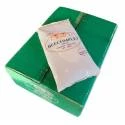 Beecomplet® Spring 14Kg
 Beekeeper suit with round veil
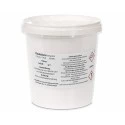 Oxalic acid 1kg
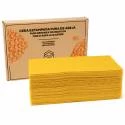 Beeswax Foundation 5kg
 Fresh royal jelly 20g
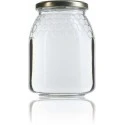 Classic honey jar 1kg comb-lines TO77 - Pack of 16 units
 Promotor L Apis 1 litre
Honey Gravity Clarifiers
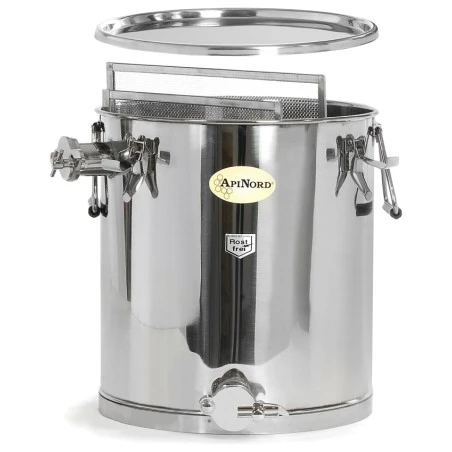
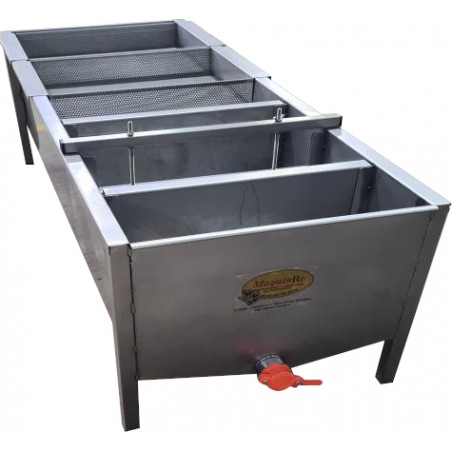
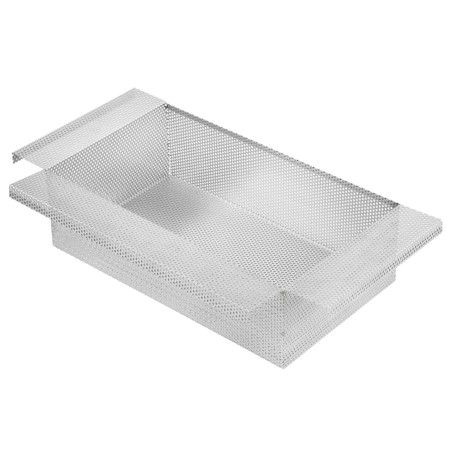
Round settling tanks of 25 and 50 kg with pre-filter and filter, 35 kg filtering ripeners, settling benches and sieve inserts. From €119 to €3,629.
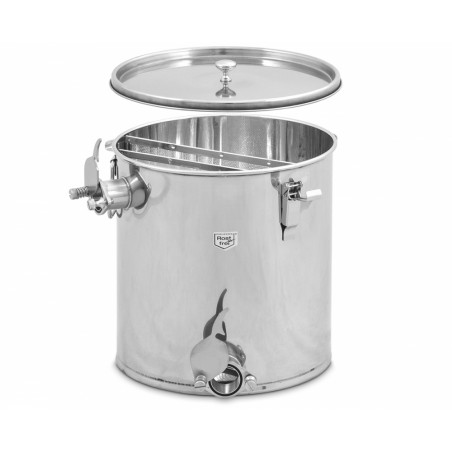
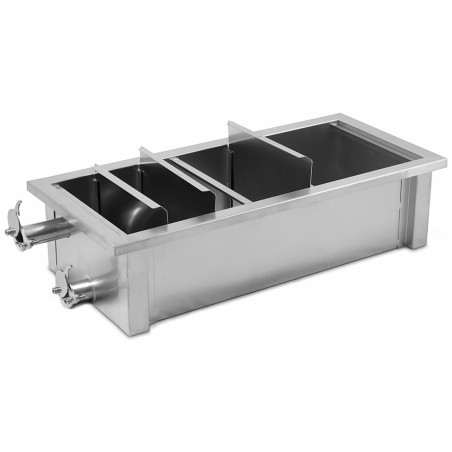
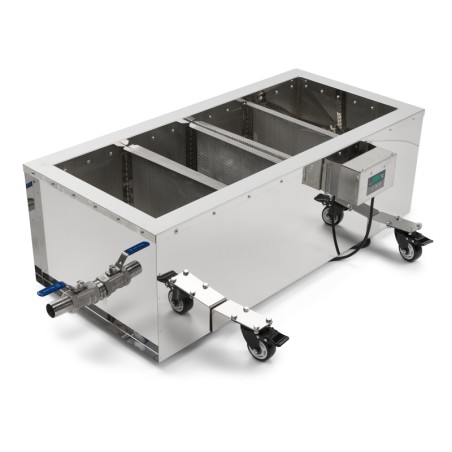
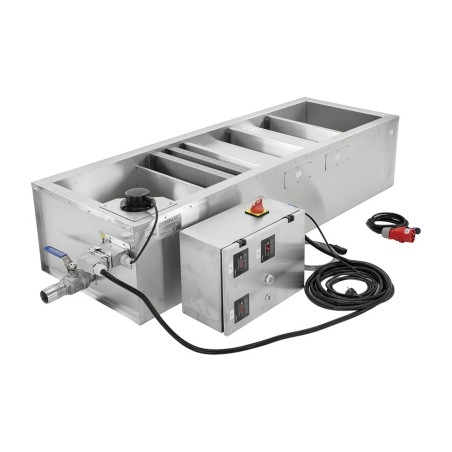
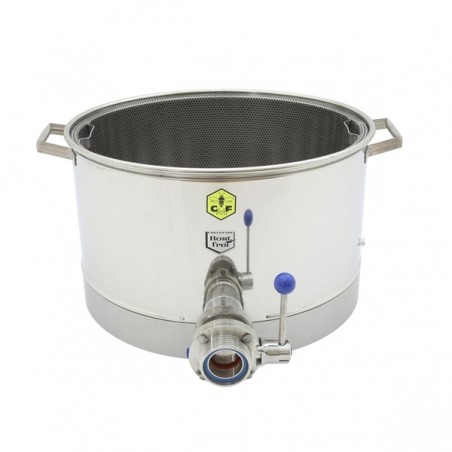
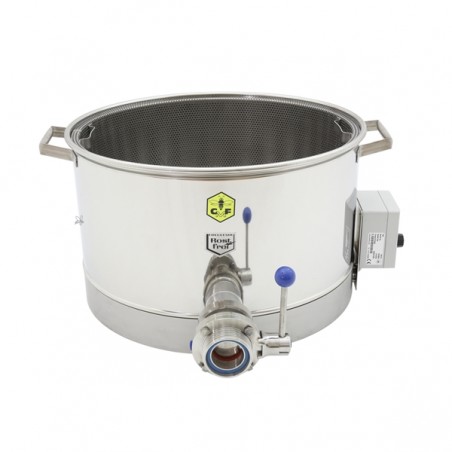
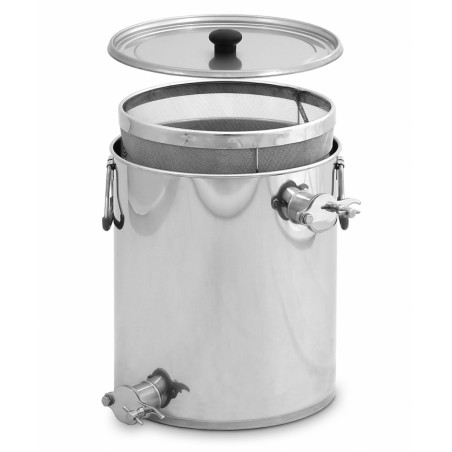

A settling tank does not fix damp honey
It separates by density and by time: whatever is lighter than honey — air, wax, debris — rises and forms the foam on top, which is why the tap sits at the bottom. What it does not do is change the moisture. If honey goes in at 19 %, it comes out at 19 %. That is decided earlier, at harvest: capped frames and, if needed, dehumidifying the room. Reaching the settling tank hoping it will correct that figure is arriving too late.
What does decide the result is patience. Honey is viscous and bubbles rise slowly: it takes days, not hours. Bottling in a hurry is reason number one for foam in a jar's neck, and that foam is not a fault of the honey, it is yours. Warming speeds things up because it lowers viscosity, but overheating raises HMF and takes the aromas with it: that is why heated tanks are there to hold gentle, controlled warmth, not to go faster on temperature.
Honey Gravity Clarifiers
Honey leaves the extractor with air bubbles, wax debris and capping particles. The settling tank deals with that, but it is worth understanding how.
What it actually does
It separates by density and by time. Everything lighter than honey — air, wax, debris — rises and forms the foam on top. Clean honey stays below, which is why the tap is at the bottom. The pre-filter and filter catch the coarse material on the way in.
What it does not do: a settling tank does not filter by magic, nor does it correct badly harvested honey. If it goes in with high moisture, it comes out with high moisture.
Time is the ingredient
It takes days, not hours. Honey is viscous and bubbles rise slowly; with two days' rest the difference from bottling straight away is visible in the jar. Bottling in a hurry is reason number one for foam in a jar's neck.
Temperature
Warming the honey speeds settling because it lowers viscosity. But overheating degrades it: HMF rises and aromas are lost. Heated settling tanks exist precisely to hold a gentle, controlled warmth, not to accelerate by temperature.
Choosing the capacity
By what you harvest in a day, not what you harvest in a year. If you extract 40 kg in a session, a 25 kg tank forces you to stop. And look at the tap: guillotine or ball, and dismountable for cleaning.
Ripeners are in ripeners; separate filters in honey filters.
How long must honey rest in the settling tank?
Days, not hours. Honey is viscous and air bubbles rise slowly; after two days' rest the difference from bottling straight away is visible in the jar. Bottling in a hurry is reason number one for foam in the neck.
Warming speeds it up because it lowers viscosity, but overheating raises HMF and takes the aromas with it. And note: a settling tank does not change moisture. If honey goes in at 19 %, it comes out at 19 %.