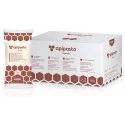
 Apipasta with vitamins 15kg
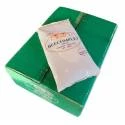 Beecomplet® Spring 14Kg
 Beekeeper suit with round veil
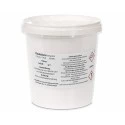 Oxalic acid 1kg
 Beeswax Foundation 5kg
 Fresh royal jelly 20g
 Classic honey jar 1kg comb-lines TO77 - Pack of 16 units
 Promotor L Apis 1 litre
- -€3.00
- Made in 🇫🇷


 Share in WhatsApp
110 CELLS PER PLATE | 6-24 h LARVA AGE |
8 mm MINIMUM BEE SPACE | 65 °C MAXIMUM IN WAX |
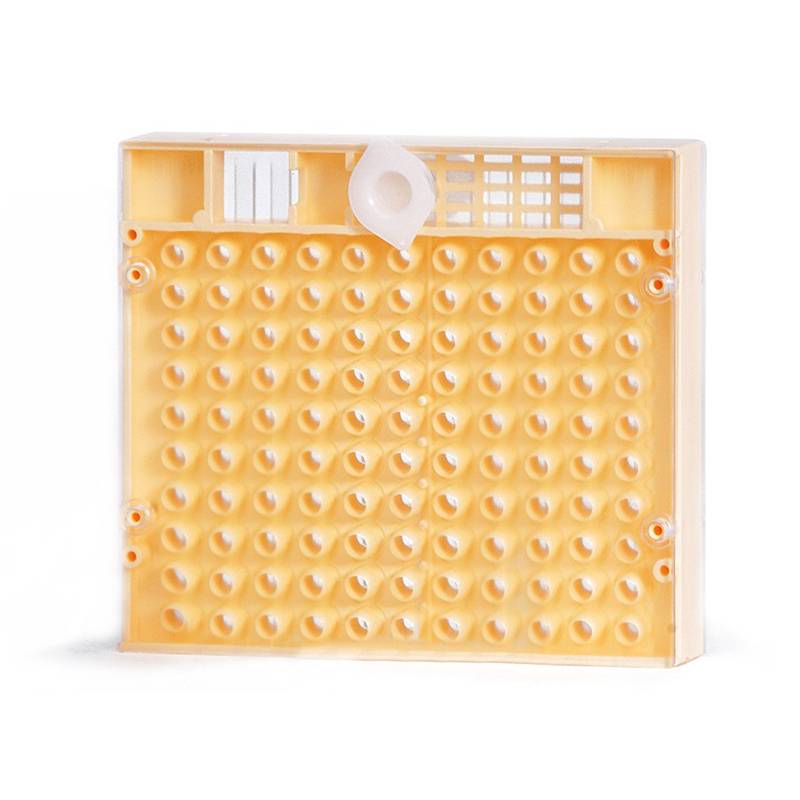
Queen rearing system in which the queen herself lays inside the cell cups, so there is no grafting to do.
Grafting is the step that puts off almost everyone starting out: lifting a larva under 24 hours old, ideally 12, with a grafting tool without turning it over or leaving it dry. The Cupularve skips it. You confine the queen over a plate of 110 cells and she lays straight into each cup: what you move afterwards is the cup, never the larva.
01 · THE METHOD
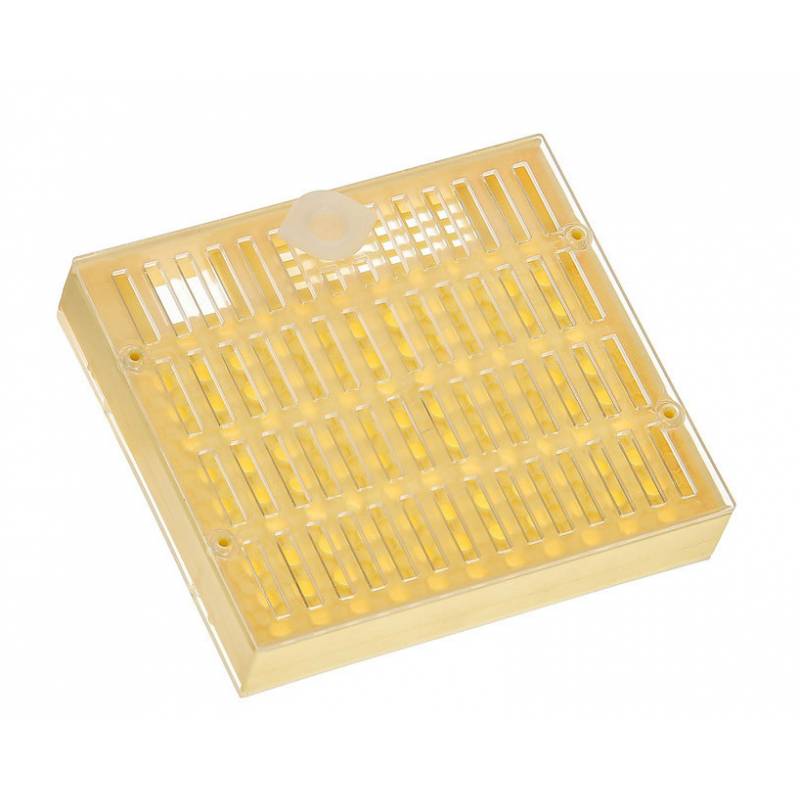
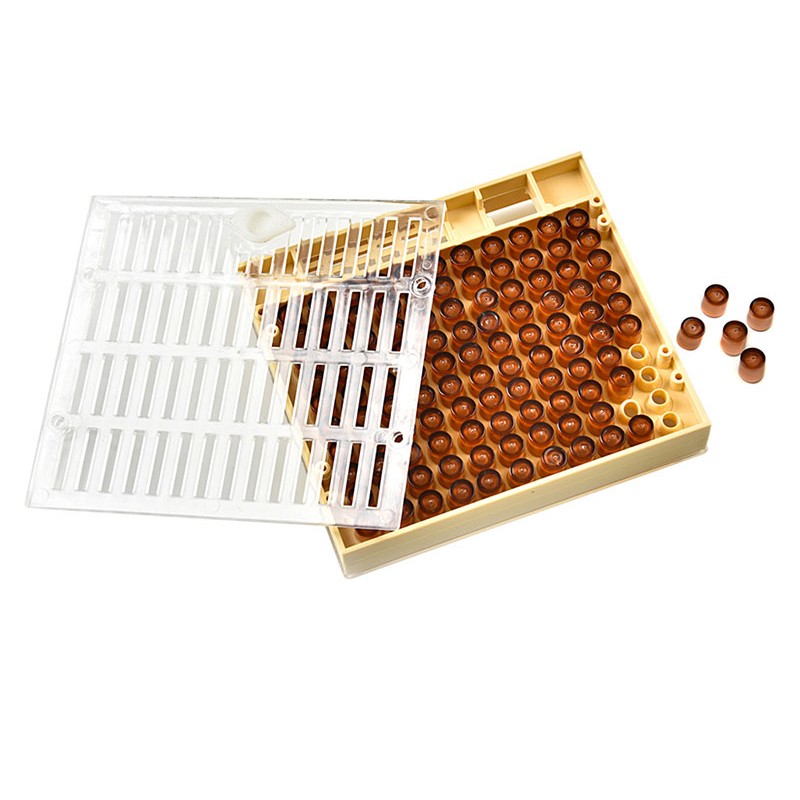
The plate holds 110 cells that take as many plastic cup holders, held from behind by a backing plate. Two covers go on top: the queen excluder, which lets the workers through but keeps the queen on the plate, and the closing cover. Confined there, the queen lays inside the cups. Once the larva is 6 to 24 hours old you unclip its cup and move it to the cell bar frame in the finisher colony. That is the whole change, and it is a big one: the larva is never touched.
02 · ASSEMBLY
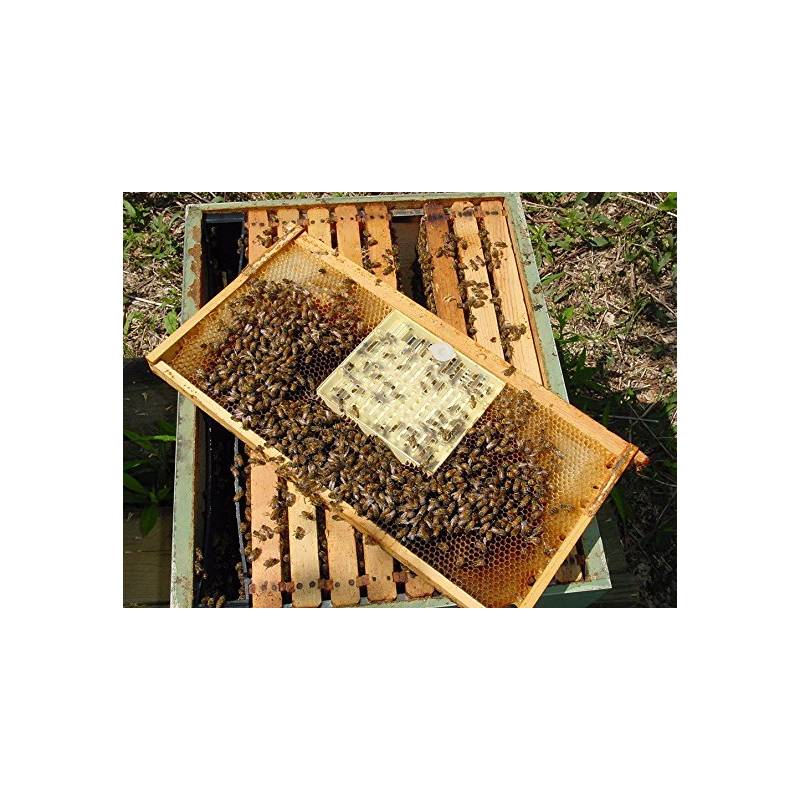
Cut a rectangle the size of the plate out of a comb of brood, in the middle of the frame, and fix the Cupularve with two wood screws. Fit the cups before mounting it and smear honey into the cells — that is what gets the workers to adopt and clean it. It pays to leave it in the middle of the brood weeks before you need it, without the excluder: it picks up the colony's scent and the queen goes in to lay far sooner on the day it matters. And always leave it with its cups in, because the bees fill an empty cell with brace comb.
03 · THE LAYING
Nicot recommends feeding the colony four days before confining the queen and through the laying. The queen goes into her compartment, closed with the B1 cap or with a good plug of honey-and-sugar paste if you would rather the workers free her themselves after 24 hours. With a strong colony, decent temperature and the plate right in the middle of the brood, the maker takes the laying as done on that first day; with less population or poor weather it drags on, so check before counting the batch as started. After that it is the usual calendar: a queen takes about 16 days from the egg, and the cells are protected before the first one emerges.
04 · LIMITS
Taking out the grafting removes one source of error, not the rest. Queens are still made by the nurse bees, the pollen and a strong colony, and they need mature drones in the air when they fly to mate. Nor does it fix rearing from an aggressive or diseased colony: you would only be multiplying that. Two warnings that come with the plastic: leave a bee space of at least 8 mm so the workers can move over the plate, and if you put it in wax do not go above 65 °C — from 75 °C it starts to deform.
05 · BEFORE YOU BUY
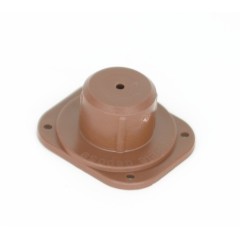
What arrives is the plate assembly: the 110 cells with their backing plate, the queen excluder cover and the closing cover, in a piece of 13 × 14.6 × 4 cm weighing 164 g. It is the original NICOT Cupularve.
| ✓ FITS | NICOT CNE3 cell cups, which are the ones that go in the plate, and cell bar frames for the finishing stage. |
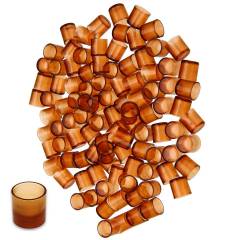
| ⚠ NOT INCLUDED | The 110 cell cups: they are bought separately and you need them from day one, because the plate is not mounted with empty cells. It does not carry the cell bar frame or the queen cell protectors either. |
| Method | Queen rearing without grafting: the queen herself lays inside the cups |
|---|---|
| Cells | 110, with rear backing plate |
| Included | Cell plate, backing plate, queen excluder cover and closing cover |
| Not included | The 110 CNE3 cell cups, the cell bar frame and the queen cell protectors |
| Assembly | Cut into a comb of brood and fixed with two wood screws |
| Larva age | The cup is moved with the larva 6 to 24 hours old |
| Bee space | Minimum 8 mm so the workers can move over the plate |
| Temperature | Maximum 65 °C in wax; deforms from 75 °C |
| Dimensions | 13 × 14.6 × 4 cm |
| Weight | 164 g |
Data sheet
1 file available
Write your question