 Apipasta with vitamins 15kg
 Beecomplet® Spring 14Kg
 Beekeeper suit with round veil
 Oxalic acid 1kg
 Beeswax Foundation 5kg
 Fresh royal jelly 20g
 Classic honey jar 1kg comb-lines TO77 - Pack of 16 units
 Promotor L Apis 1 litre


 Share in WhatsApp
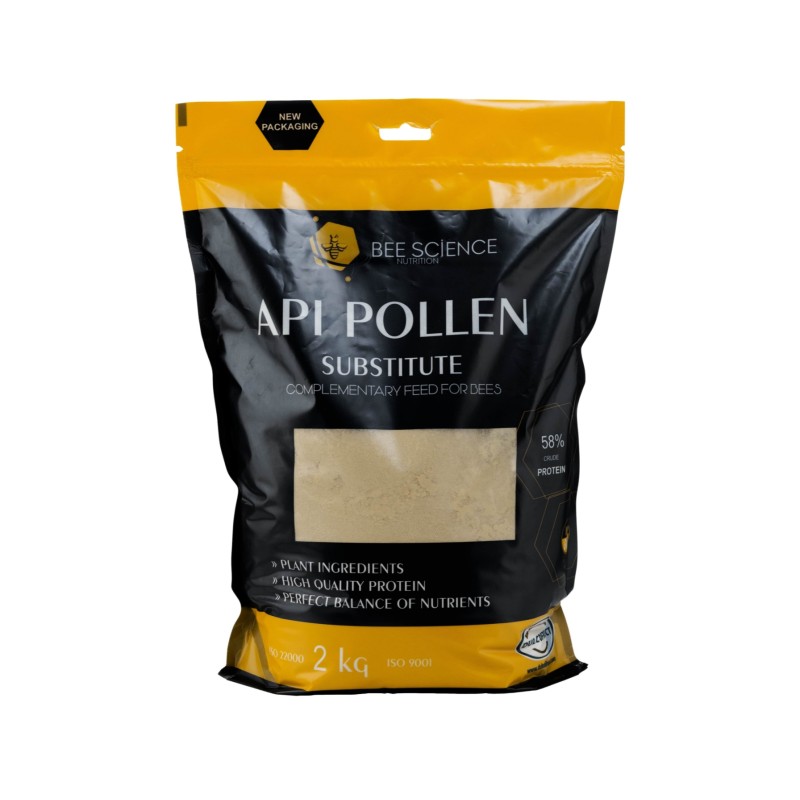
58 % CRUDE PROTEIN | 2 · 10 · 75 kg PACK SIZES |
700 g PER HIVE, DRY | 5.7 kg OF PASTE PER KILO |
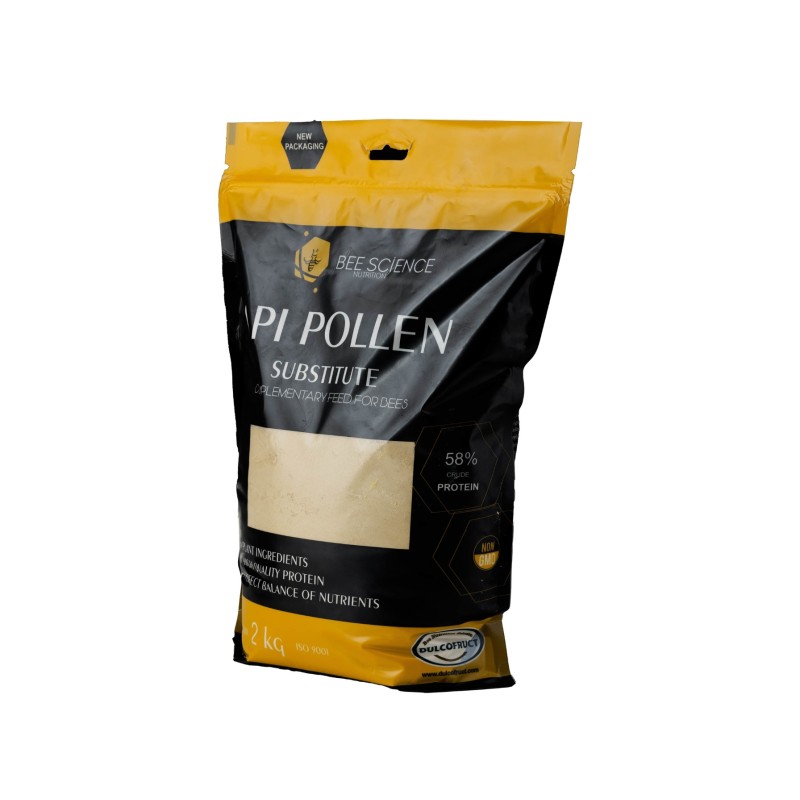
Powdered pollen substitute at 58 % crude protein, from soy and yeast: fed dry or worked into syrup as a paste.
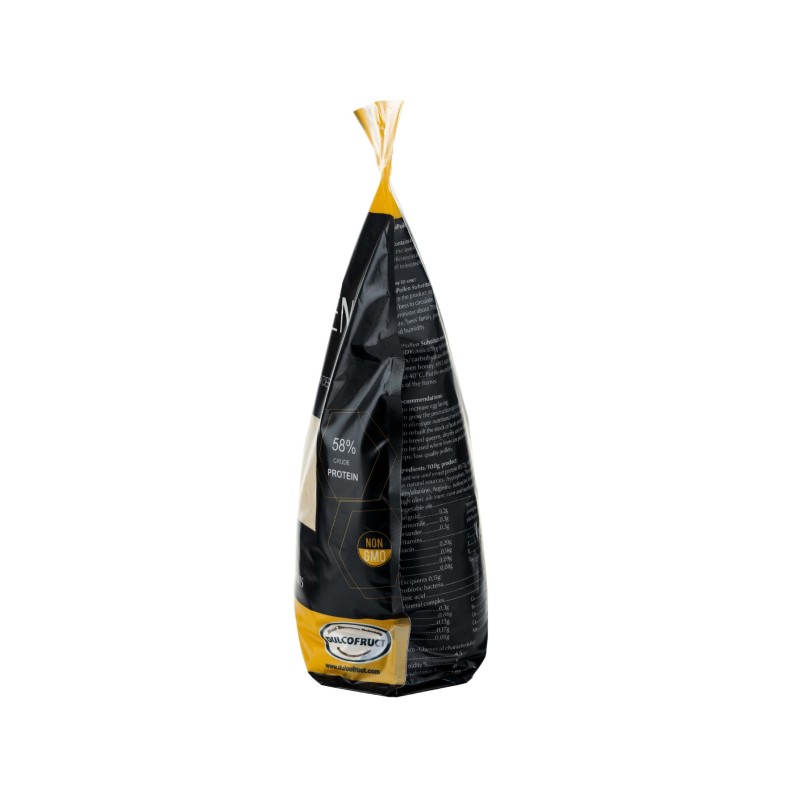
58 % crude protein and no natural pollen, in a 2 kg bag or a 10 kg sack. With the ten essential amino acids, ten vitamins, a mineral complex and probiotic bacteria.
01 · NO POLLEN, AND THAT IS THE POINT
A substitute contains no natural pollen, and half the reason to use one is right there: pollen collected in someone else's apiary can carry that apiary's spores and viruses. A plant-based substitute closes that route. The other half is consistency: field pollen varies in protein and amino acids with the flora, and in a monoculture or a poor flow it can fall short exactly when the colony needs to raise brood.
02 · THE TWO WAYS TO FEED IT
As a powder: about 700 g per hive in a perforated container the bees can move through, sheltered from wind and damp. It only makes sense at flying temperatures. As a paste: 175 g of ApiPollen per 825 g of syrup, blended at no more than 40 °C, with the paste in a perforated bag over the frames — the route that reaches the nurse bees without them leaving. Hence the arithmetic: a kilo of powder gives 5.7 kg of paste.
03 · WHAT ELSE IS IN IT
The protein fraction is soy and yeast (89.72 % of the formula) and brings the ten essential amino acids — tryptophan, threonine, methionine, histidine, phenylalanine, arginine, isoleucine, valine, lysine and leucine — which is what decides whether a protein is any use: the one that runs short sets the ceiling. It also carries high-oleic oils, plant oils of calendula, chamomile, coriander, yarrow, lemongrass and artichoke, 1.28 % vitamins, a mineral complex and probiotic bacteria. Non-GMO raw materials.
04 · WHICH SIZE DO I NEED?
| 2 kg bag | About 3 hives fed dry, or 11 kg of paste. Handle and zip closure: open it, feed what you need and close it again without decanting. |
|---|---|
| 10 kg sack | About 14 hives fed dry, or 57 kg of paste. Comes with a dosing cup. The obvious step up once you are past the back-garden apiary. |
05 · BEFORE YOU BUY
Store between −5 and +24 °C, out of the sun and with the container closed; shelf life 12 months. And the protein rule: you supply it when pollen is not enough — late summer, early spring, monoculture — not all year round, and do not leave it in the hive when there is no brood.
| ✓ FITS | Monocultures, poor-pollen flows, queen rearing and rebuilding the fat body. |
| ⚠ DO NOT LEAVE IT | In the hive when there is no brood. And it does not replace syrup: it is protein, not carbohydrate. |
| LTA reference | — |
|---|---|
| Product | Powdered pollen substitute · complementary feed |
| Crude protein | 58 % |
| Protein source | Plant protein from soy and yeast (89.72 %) |
| Amino acids | Tryptophan, threonine, methionine, histidine, phenylalanine, arginine, isoleucine, valine, lysine and leucine |
| Vitamins | 1.28 % · calcium pantothenate, niacin, A, B1, B2, B6, B12, C, D3 and E |
| Minerals | 1 % · K, Mg, Zn, P, Na, Cu, Fe, Ca, Co and Mn |
| Other | High-oleic oils 6 % · plant oils 1.7 % (calendula, chamomile, coriander, yarrow, lemongrass, artichoke) · probiotic bacteria 0.1 % · citric acid 0.05 % |
| Contains no | Natural pollen · non-GMO raw materials |
| Dry dose | ≈ 700 g per hive |
| Paste formula | 175 g of powder per 825 g of syrup, max. 40 °C |
| Coverage | 2 kg: 3 hives or 11 kg of paste · 10 kg: 14 hives or 57 kg |
| Packaging | 2 kg bag · 10 kg sack · 75 kg sack |
| Storage | Between −5 and +24 °C, out of direct sun, container closed · 12 months |
2 files available
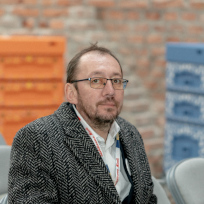
Bees are not just remarkable creatures; they are also essential to global agriculture and biodiversity. However, their health is increasingly threatened by environmental changes, pesticide exposure, and declining floral resources. Based on my research and experience, one of the key factors in maintaining strong and resilient bee colonies is ensuring they have access to a balanced and efficient nutritional source.
This is where Apipollen Substitute comes into play. Alongside the talented team in the R&D department, I worked tirelessly to develop a product that not only meets the nutritional needs of bees but is also practical and reliable for beekeepers.
Together, we can build a healthier future for bees, ensuring their survival and prosperity for generations to come.