 Apipasta with vitamins 15kg
 Beecomplet® Spring 14Kg
 Beekeeper suit with round veil
 Oxalic acid 1kg
 Beeswax Foundation 5kg
 Fresh royal jelly 20g
 Classic honey jar 1kg comb-lines TO77 - Pack of 16 units
 Promotor L Apis 1 litre
- Out of stock


 Share in WhatsApp
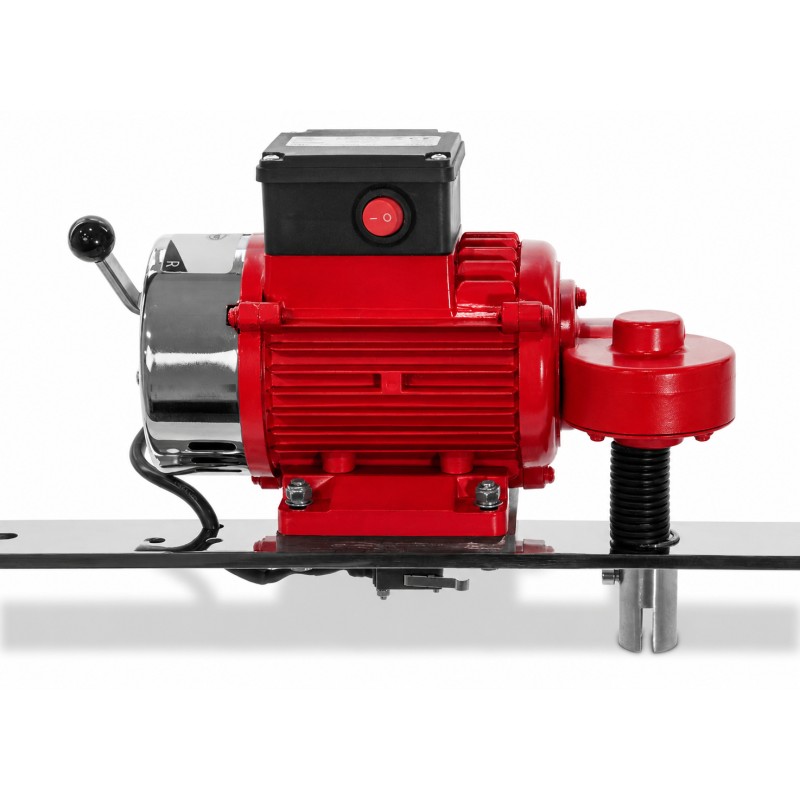
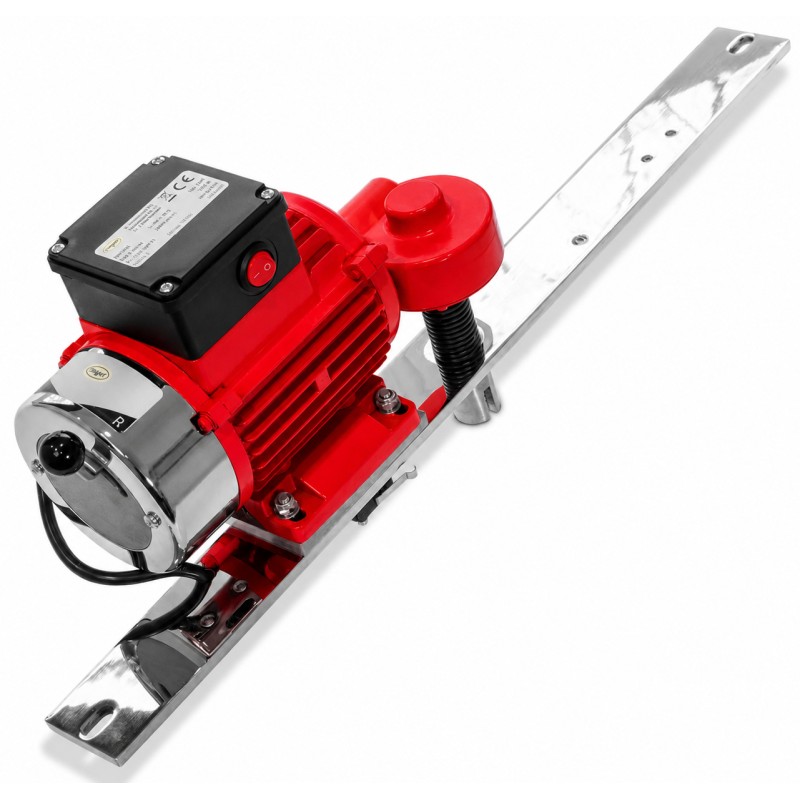
Motorise your manual honey extractor without replacing it: direct motor-shaft-to-cage-shaft coupling, no pulleys or belts. Progressive speed lever with reversible rotation. Four power ratings — 80, 110, 180 and 250 W — to match your extractor. Coupling bush, mounting plate and crossbar sold separately: you configure your own setup.
80–250 W POWER OPTIONS | 230 V SINGLE-PHASE, 50 Hz |
0.6 mm MAX. PLAY | Ø 10–14 mm COUPLING SHAFT |
Motorise your manual extractor without replacing it: this variable-speed motor couples directly from the motor shaft to the cage shaft and turns a hand-cranked extractor into an electric one, with adjustable speed and rotation in both directions.
Four power ratings: 80, 110, 180 and 250 W.
01 · SPEED
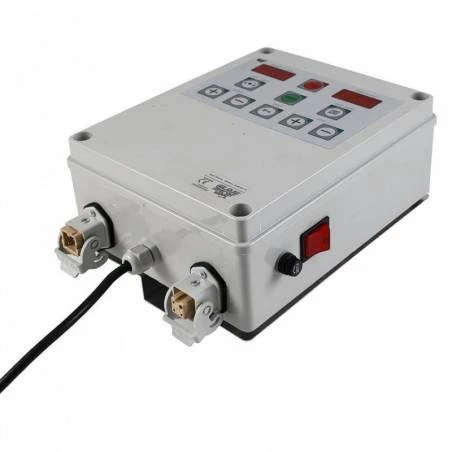
A single lever controls everything: push it one way for clockwise rotation, the other way for anticlockwise, and the travel sets the speed. The progressive start from zero protects the comb: sudden full-speed starts are what blow out new wax or freshly uncapped frames. If your extractor has self-reversing cages, reversing the rotation flips them so you can spin the second side without opening the lid. To stop, always bring the lever back to zero — never reverse it to brake — then switch off at the button.
02 · DRIVE
Drive goes straight from the motor shaft to the cage shaft through a pinned coupling bush. No belts to re-tension, no gears to grease: less wear and a clean, quiet spin. Fits most crossbars of conventional manual honey extractors.
03 · POWER
80 W — small extractors of 2 to 3 frames, ideal with light frames: supers (National or Langstroth).
110 W — medium extractors of 3 to 6 frames, with any frame type: Commercial brood, Dadant, Layens.
180 W and 250 W — larger extractors and heavier duty, with torque to spare for dense honeys such as heather.
04 · ASSEMBLY
Two clearances decide whether the motor runs free or strained: the play between the cage shaft and the coupling must be under 0.6 mm (loosen the two M8 bolts on the plate, centre, re-tighten), and there must be a 0.5–1 mm gap between the motor shaft and the cage shaft — if there isn't, raise the motor with two Ø 8 mm washers between crossbar and plate. Five minutes that prevent vibration and premature wear.
05 · BEFORE YOU BUY
| ✓ FITS | Fits most crossbars of conventional manual honey extractors |
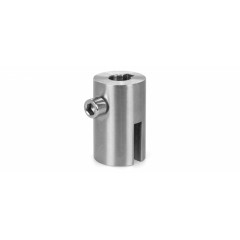
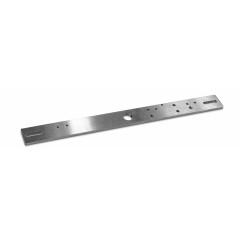
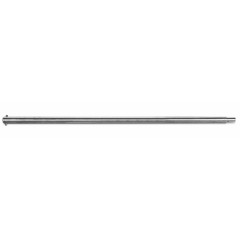
| ⚠ NOT INCLUDED | The photos show the full assembly — you are buying the motor only. In the photos the motor is shown installed with dust-protection bellows on the shaft, coupling bush, crossbar and shaft: that is an example of the finished assembly, not the contents of the box. This product includes the motor with its control only. Every extractor is different: the remaining parts are bought separately, to suit your setup: — Coupling bush: Ø 10 mm for the 80 W motor, Ø 12 mm for the 110 W and Ø 14 mm for the 180 and 250 W. — Mounting plate to fix the motor to the crossbar. — Sturdy central crossbar: if the one that carried the manual drive is flimsy, replace it. — Bolts: two M8×30 (plate–crossbar) and four M6×20/25 (motor–plate), minimum. You will find all these parts in the accessories section of this page, except the dust bellows, which we do not sell. |
| Type | Variable speed motor for honey extractors |
|---|---|
| Power ratings | 80 W · 110 W · 180 W · 250 W |
| Power supply | Single-phase — standard 230 V / 50 Hz household socket, no three-phase supply needed |
| Control | Progressive speed lever with rotation reversal + on/off switch |
| Drive | Direct motor-shaft-to-cage-shaft coupling, no pulleys or gears |
| Coupling bush (not included) | Ø 10 mm (80 W) · Ø 12 mm (110 W) · Ø 14 mm (180 / 250 W) |
| Max. cage-shaft-to-coupling play | 0.6 mm |
| Compatibility | Fits most crossbars of conventional manual honey extractors |
Data sheet
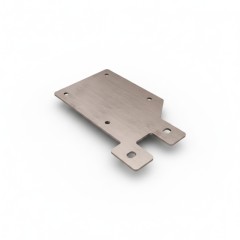
Choose the plate by measuring the centre-to-centre distance between the holes in the extractor crossbar: it is available in 62, 70 and 85 mm sizes. Measure this spacing before ordering. The plate is sold separately and uses M8 bolts to attach it to the crossbar and M6 bolts to secure the motor.
Sorry, no results found.
Write your question
Motorise your manual honey extractor without replacing it: direct motor-shaft-to-cage-shaft coupling, no pulleys or belts. Progressive speed lever with reversible rotation. Four power ratings — 80, 110, 180 and 250 W — to match your extractor. Coupling bush, mounting plate and crossbar sold separately: you configure your own setup.