 Apipasta with vitamins 15kg
 Beecomplet® Spring 14Kg
 Beekeeper suit with round veil
 Oxalic acid 1kg
 Beeswax Foundation 5kg
 Fresh royal jelly 20g
 Classic honey jar 1kg comb-lines TO77 - Pack of 16 units
 Promotor L Apis 1 litre

 Share in WhatsApp
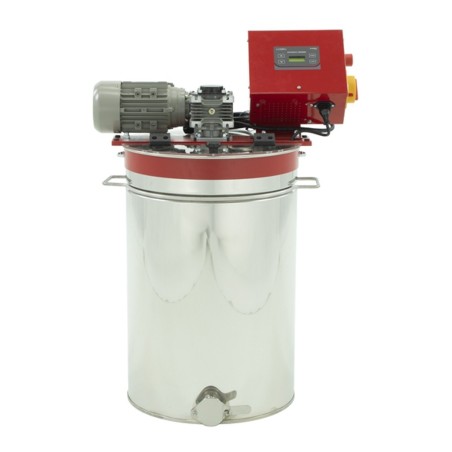
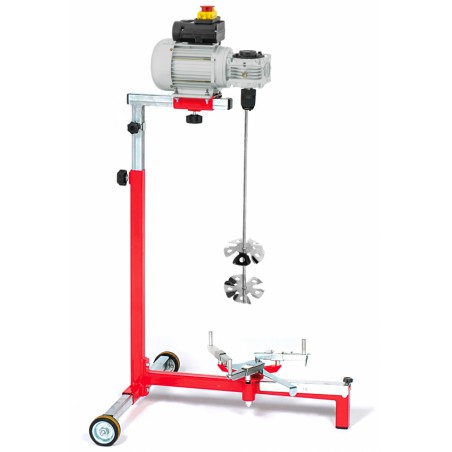
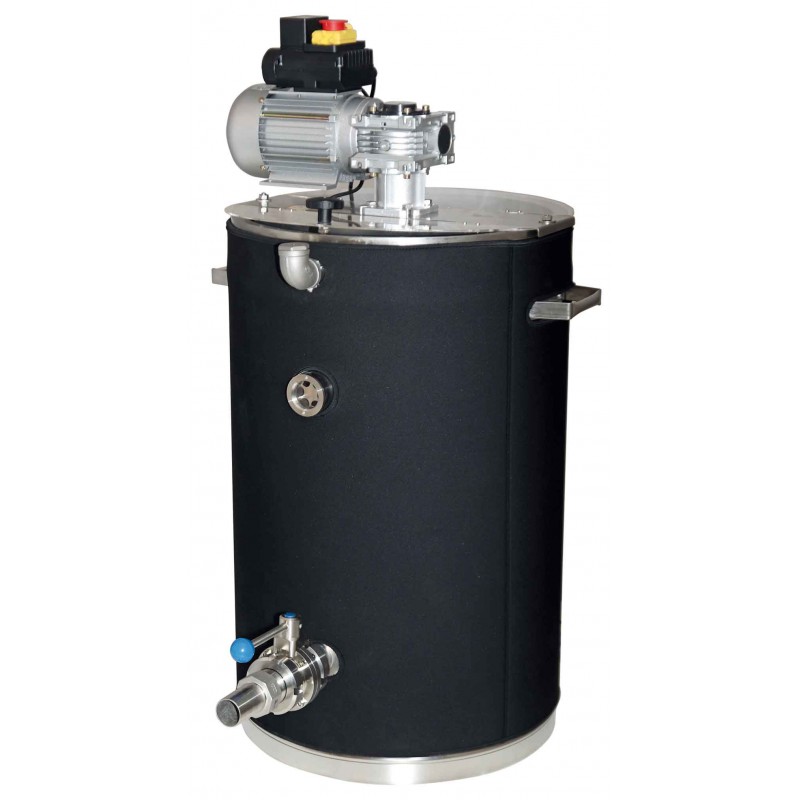
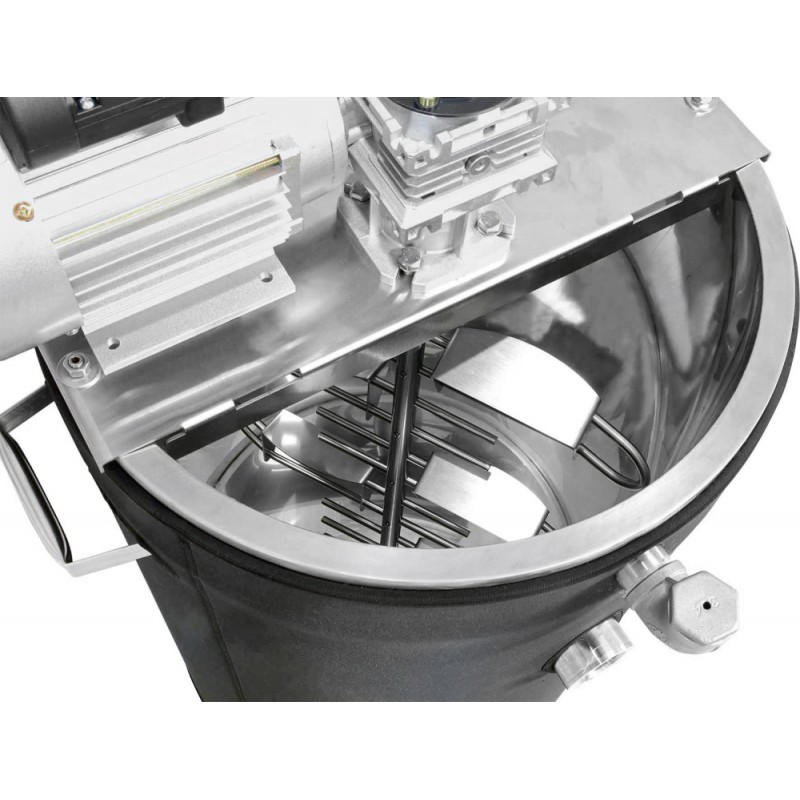
Machine for creamed honey and honey homogenization. Double-walled, stainless steel, 100 kg capacity.
Honey is seeded at 16-24 °C. Any warmer and you erase the microcrystals you have just added, and the grain comes out coarse — exactly what you were trying to avoid.
100 kg honey creamer with a double wall and water jacket, three double-segment arms at 33 rpm, a 1,000 W element with thermostat and a DN 40 discharge valve. 103 cm tall × 50 across. Domestic 230 V plug.
01 · SEED AT 16-24 DEGREES
Creaming is not beating hard: it is crystallising fine on purpose. You add 5-10 % of honey already creamed with a fine grain, and those microcrystals act as a template for the whole mass to copy instead of granulating however it likes.
The delicate point is temperature. If the base honey is warm, you dissolve the microcrystals you have just put in and lose control of the grain.
| Step | What you do |
|---|---|
| 1 · Temper | Warm just enough to work it and dissolve any large crystals |
| 2 · Cool | Bring the honey to 16-24 °C |
| 3 · Seed | Add 5-10 % of fine-grained honey |
| 4 · Homogenise | 15-20 minutes, no more |
| 5 · Crystallise | Once jarred, at 10-14 °C |
| 6 · Store | Finished product, around 16-18 °C |
The whole process takes one to two weeks, sometimes up to four. Every honey is different: run a small test before the full batch.
02 · IT IS NOT A BLOCK CRUSHER
Starting the motor with cold, hard honey is what wrecks most machines. Before switching on, fill the jacket and temper until it works soft — 25-30 °C only if it comes in very hard, then let it drop to seeding temperature.
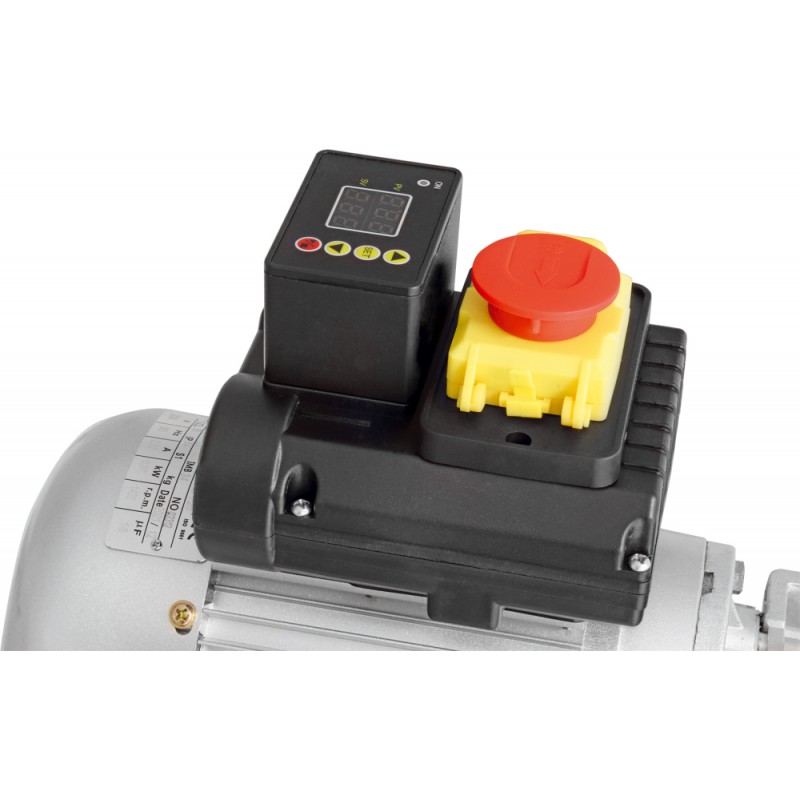
The honey must cover at least one whole stirring arm. With less, the system strains. And if the machine stops by itself, that is the overload protection: wait a few minutes and press the reset on the power unit.
03 · FIFTEEN AND SIXTY
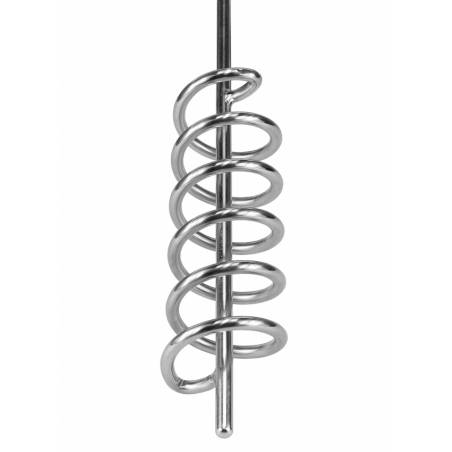
The three arms turn at 33 rpm, and that is deliberately slow: they break crystals by controlled friction without folding in air. A drill with a paddle makes foam; this leaves a dense, glossy honey.
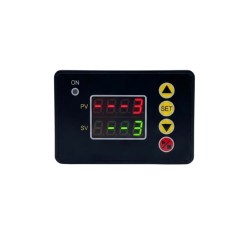
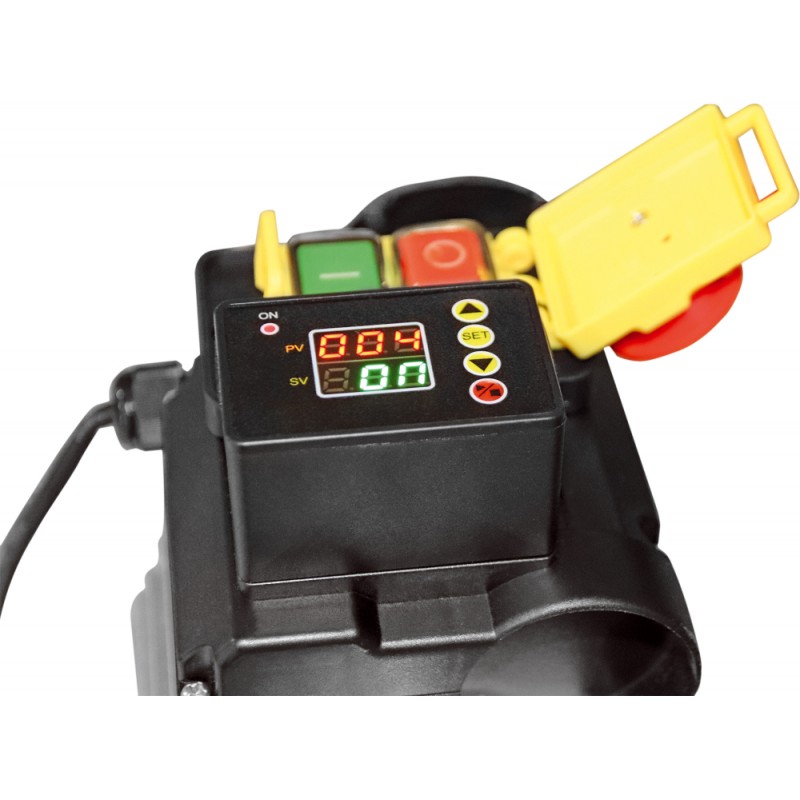
Use the timer to work in cycles of 15 minutes running and 60 resting, especially with hard honey or in a warm room. Run continuously and the friction itself heats the honey and spoils the texture — and raises the HMF, which carries a legal limit.
04 · THE JACKET TAKES 32 LITRES
The double wall is filled with about 32 litres of distilled water: no thermal oil needed, and that way no scale builds up on the element. Mind the sum — a 25-litre container does not cover it.
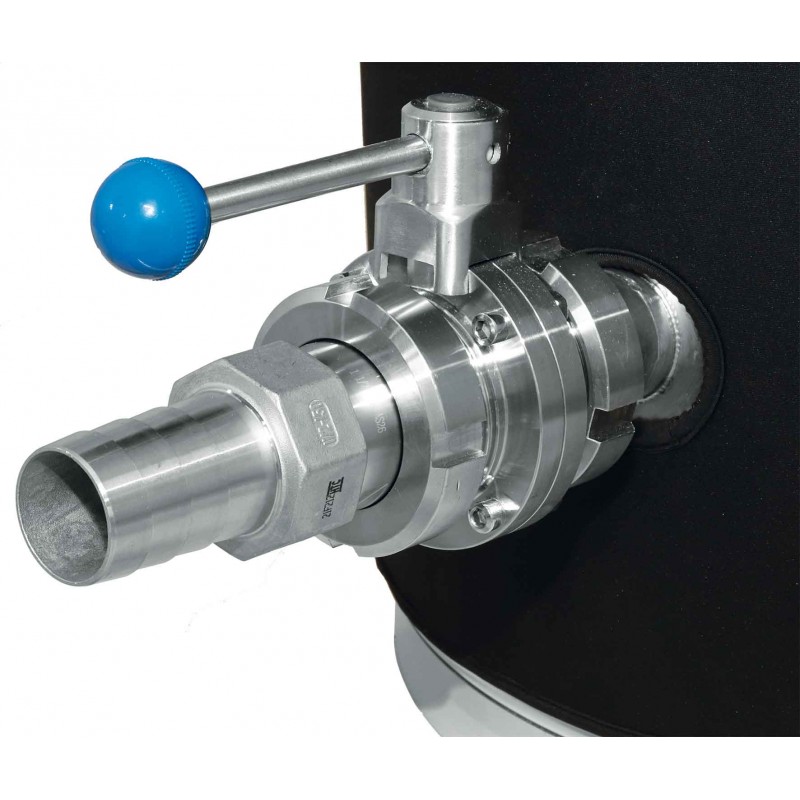
The thermostat is adjustable from 30 to 110 °C and the floor slopes towards a DN 40 valve — that is a 40 mm bore — so it empties to the last drop without tilting the tank and takes a 40 mm hose straight to filling.
It runs on 230 V with a maximum draw of 1,250 W. Even so it carries an element and a motor: earthed socket, no extension leads or power strips, and never left running unattended.
05 · SELL IT IN WINTER
A well-made creamed honey makes use of exactly the honeys that give trouble — rape, sunflower, clover — the ones that granulate on their own with a coarse grain.
But heat undoes the work: it melts the microcrystals and separates phases in the jar. Sell in autumn, winter and spring, or with transport and storage under controlled temperature.
One note: a honey with fine particles — pollen, micro-wax — crystallises sooner and with more nuclei. For a very fine cream, filtering or settling first improves uniformity.
06 · BEFORE YOU BUY
This is the heated creamer:
| ✓ FITS | Mid-sized production wanting to cream and homogenise lots up to 100 kg. |
| ✕ DOESN'T FIT | Small production: too much machine. |
| ⚠ NOT INCLUDED | The seed honey or the distilled water for the jacket. |
| Product | Heated honey mixer-creamer |
|---|---|
| Capacity | 100 kg |
| Motor | 250 W / 230 V geared, 33 rpm |
| Stirring | 3 arms × 2 segments, food-grade stainless steel |
| Heating | 1,000 W element, thermostat 30-110 °C |
| Jacket | Double wall, about 32 litres of distilled water |
| Discharge | DN 40 valve, sloping floor, 40 mm adapter included |
| Automation | Timer and overload protection with reset |
| Maximum draw | 1,250 W |
| Dimensions | 103 cm tall × 50 cm across |
| Includes | Insulating cover, hose adapter and manual |
| Warranty | 24 months |
| Reference | BR-32885 |
1 file available
Machine for creamed honey and honey homogenization. Double-walled, stainless steel, 100 kg capacity.
check_circle
check_circle