 Apipasta with vitamins 15kg
 Beecomplet® Spring 14Kg
 Beekeeper suit with round veil
 Oxalic acid 1kg
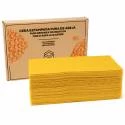 Beeswax Foundation 5kg
 Fresh royal jelly 20g
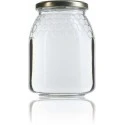 Classic honey jar 1kg comb-lines TO77 - Pack of 16 units
 Promotor L Apis 1 litre

 Share in WhatsApp
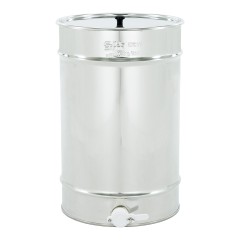
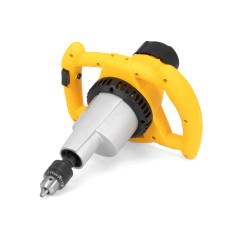
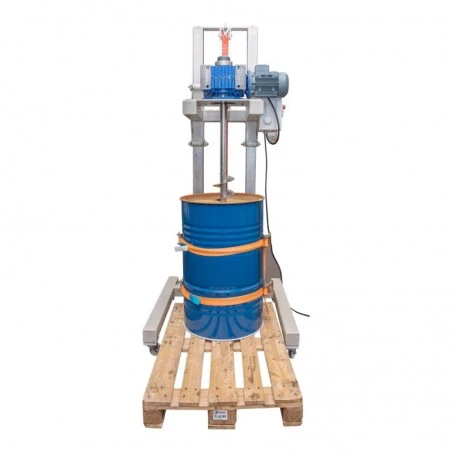
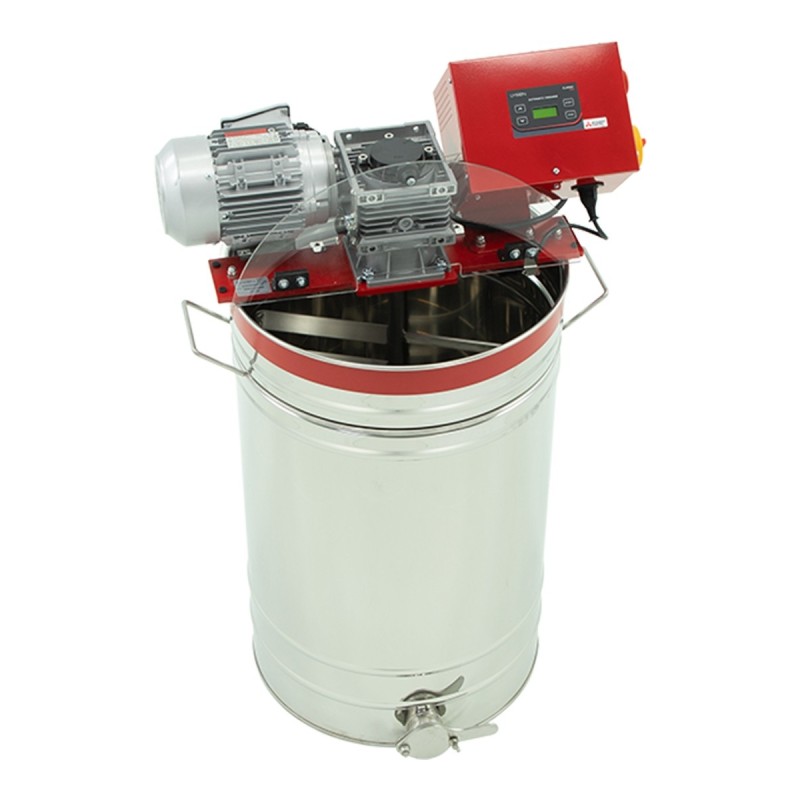
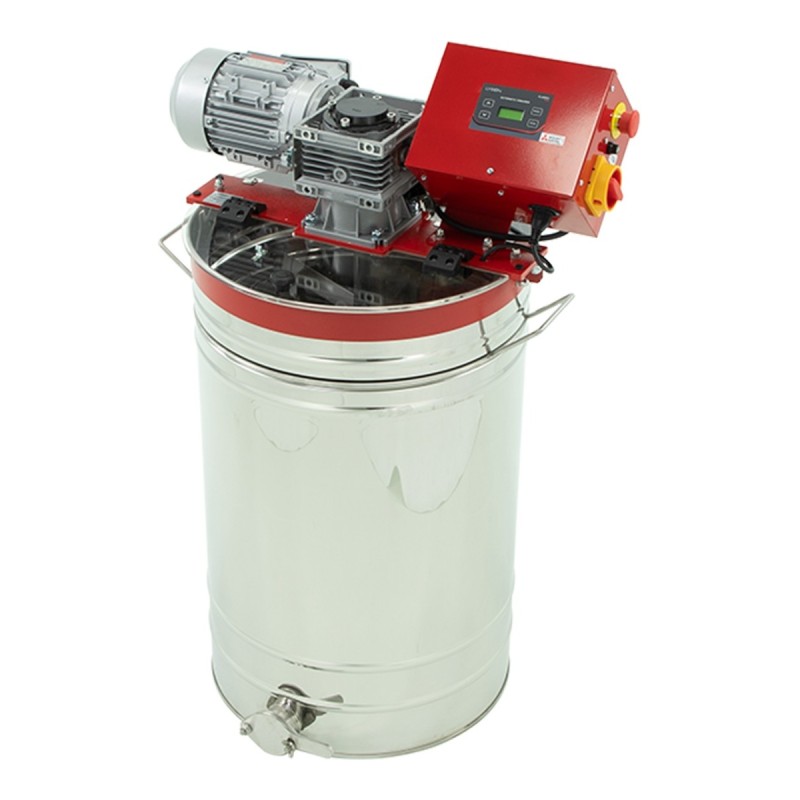
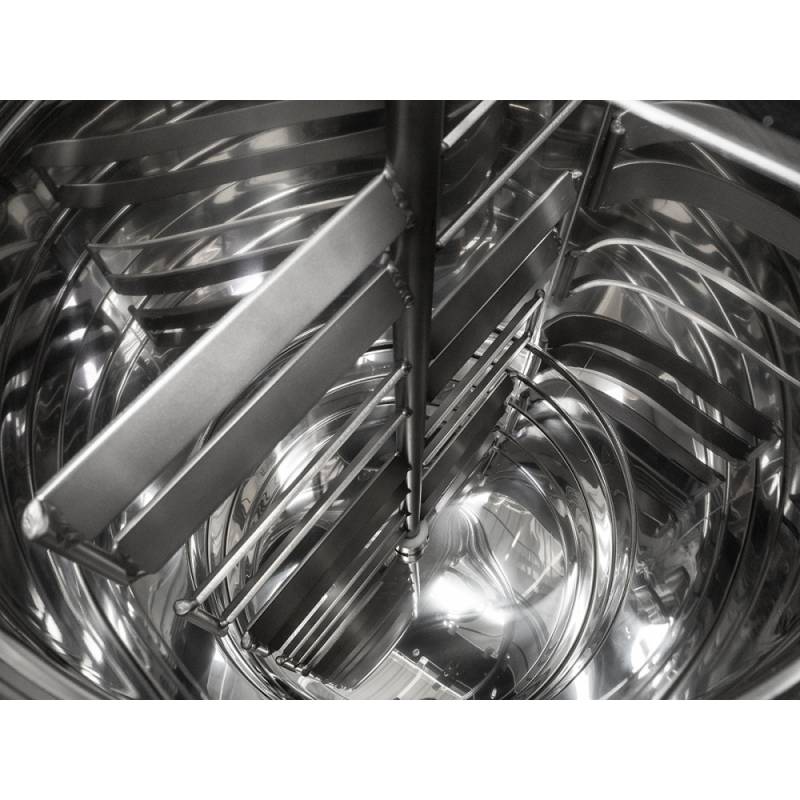
Cold honey creamer of 210 kg in stainless steel, with acid-resistant propellers, a 230 V 1,100 W motor and digital control of stirring time, interval and speed.
It has no heating, and that is the decision. Creaming cold means giving up speed in exchange for not touching the honey's HMF.
01 · COLD: NOT ONE DEGREE MORE
Creaming is crystallising on purpose and with a fine grain: you seed liquid honey with honey already creamed, stir in bursts over days, and the crystal stays small — which is what gives the spreadable texture that never turns gritty.
Heated machines do that job faster because heat drops the viscosity. This one does not. Above 40 °C honey starts paying for it in HMF, a legal parameter and the first thing a demanding buyer looks at. If the honey is sold on quality, cold is not a limitation: it is the argument.
02 · YOU SET THE TIMES
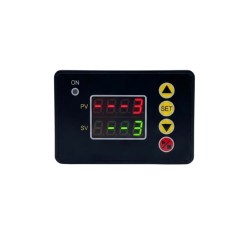
The control unit is digital and adjustable in three things: stirring time, resting interval between stirs, and propeller speed. It does not come with closed factory recipes — the operator defines the cycles and the machine keeps them.
That is what real creaming needs, because the process is intermittent: a few minutes of propeller and several hours of rest, repeated for days. Stirring non-stop works air into the honey and warms it by friction, which is exactly the opposite of the point.
03 · THE WORKSHOP DOES HALF THE WORK
With no heating, the room temperature becomes part of the machine. Honey crystallises fastest around 14 °C: above that the crystal is slow and grows coarse; well below it, the honey thickens so much that the propeller struggles and the process stalls.
Anyone with a temperate workshop or a room that holds that range gets everything this machine promises. Anyone creaming in a room at 25 °C in summer should count on more days.
04 · 210 KG IS 256 KG ON THE FLOOR
The body weighs around 46 kg empty; with 210 kg of honey inside that is over 250 kg resting on one spot. It stands 105 cm tall (80 cm the vessel) and 71 cm wide, so it takes little floor and loads it heavily.
Decide where it lives before you fill it, because once full it does not move by hand. The catalogue has trolleys and wheeled stands made for ripeners and creamers.
05 · WHICH CREAMER
The cold range runs from 50 to 210 kg, and this is the largest. Below it sit the 50, 70 and 100 kg machines, same principle and less volume per batch.
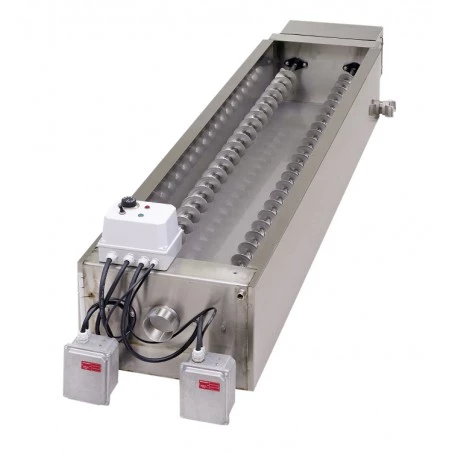
The other branch of the catalogue is the heated machines, which gain time and lose the advantage of cold. The question is not which is the better machine, but what you are asking of the honey when it comes out.
06 · BEFORE YOU BUY
Think about where it will stand and at what temperature. Working cold, the room is part of the process.
| ✓ RIGHT FIT | Creaming batches of up to 210 kg without heating the honey, on your own cycles. |
| ✕ WRONG FIT | Liquefying crystallised honey: that takes a heated machine. |
| ⚠ NOT INCLUDED | Trolley or wheeled stand: full, it is over 250 kg. |
| Reference | W20080B_Z |
|---|---|
| Brand | Lyson |
| Capacity | 210 kg of honey |
| Material | Stainless steel; acid-resistant propellers |
| Motor | 230 V, 1,100 W |
| Control | Digital, adjustable in time, interval and speed |
| Panel | Electrical, start-stop |
| Heating | None — it works cold |
| Overall height | 105 cm |
| Vessel height | 80 cm |
| Width | 71 cm |
| Empty weight | Around 46 kg |
1 file available
check_circle
check_circle