 Apipasta with vitamins 15kg
 Beecomplet® Spring 14Kg
 Beekeeper suit with round veil
 Oxalic acid 1kg
 Beeswax Foundation 5kg
 Fresh royal jelly 20g
 Classic honey jar 1kg comb-lines TO77 - Pack of 16 units
 Promotor L Apis 1 litre

 Share in WhatsApp
In creamed honey the enemy is not the lump: it is the air. Which is why what matters here is the low speed, not the 1,200 watts.
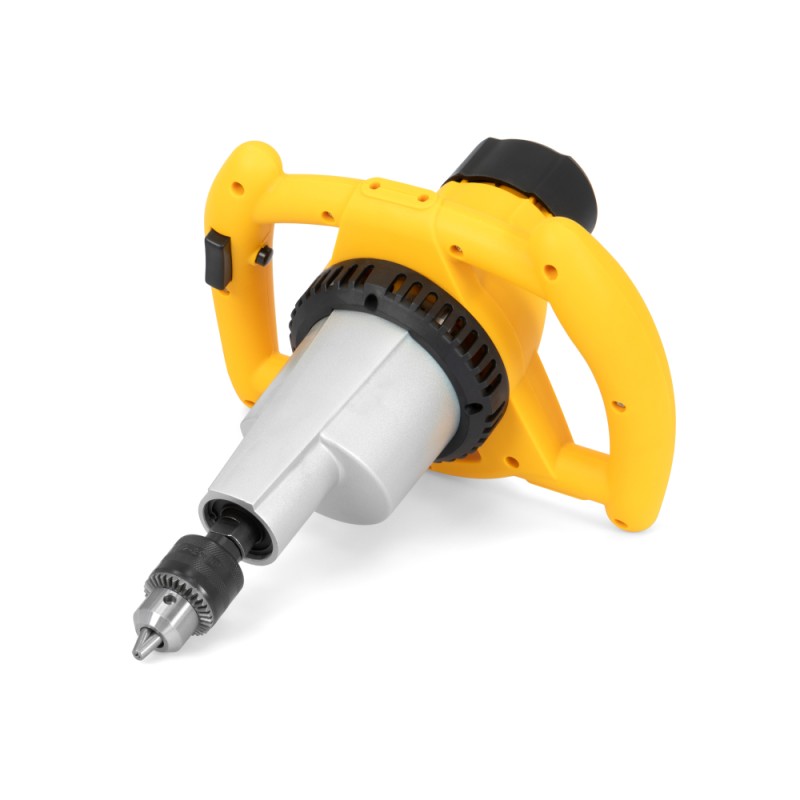
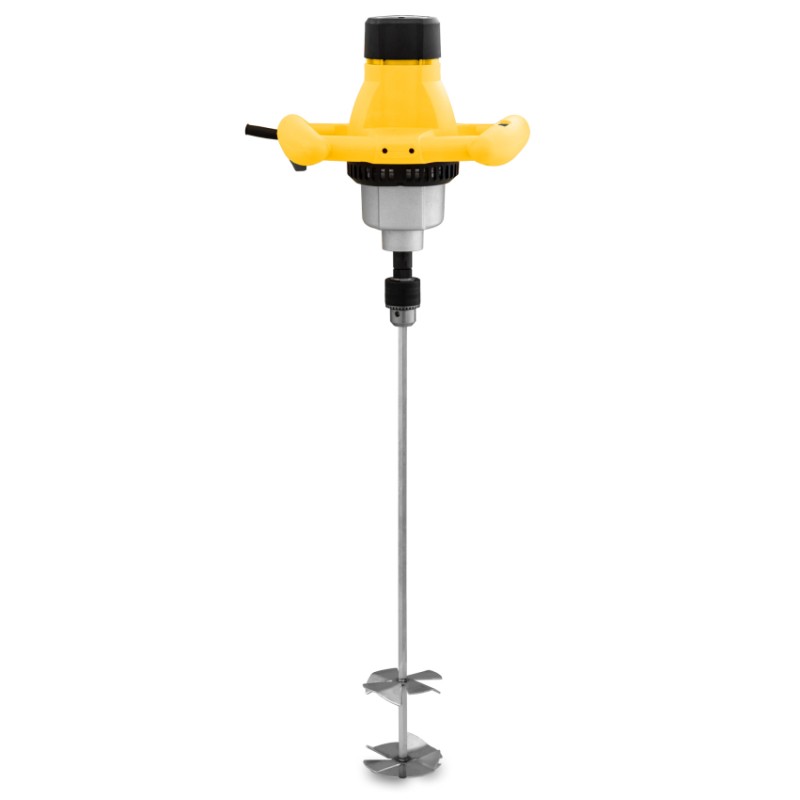
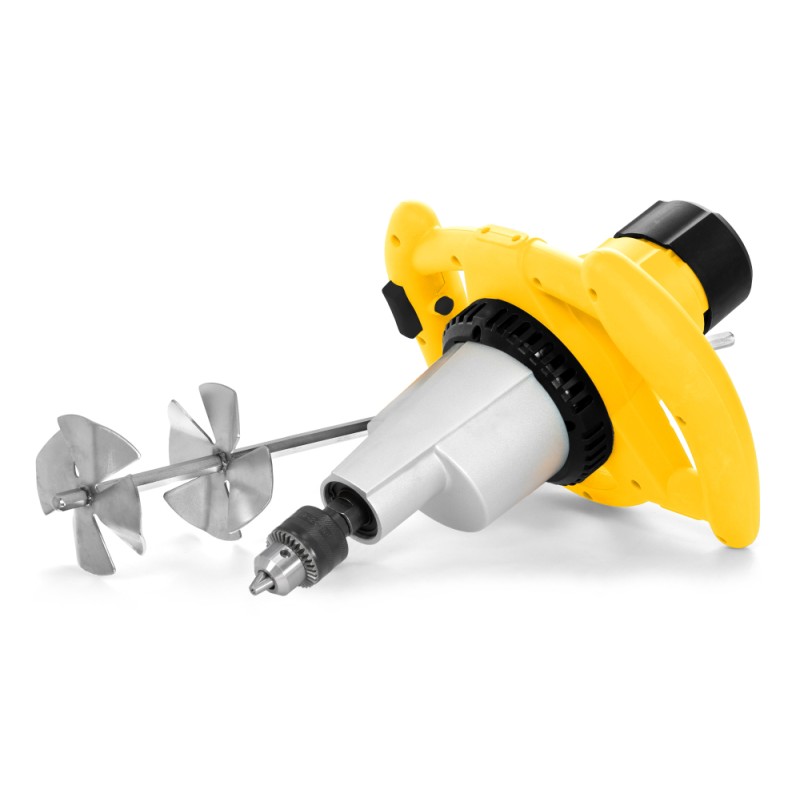
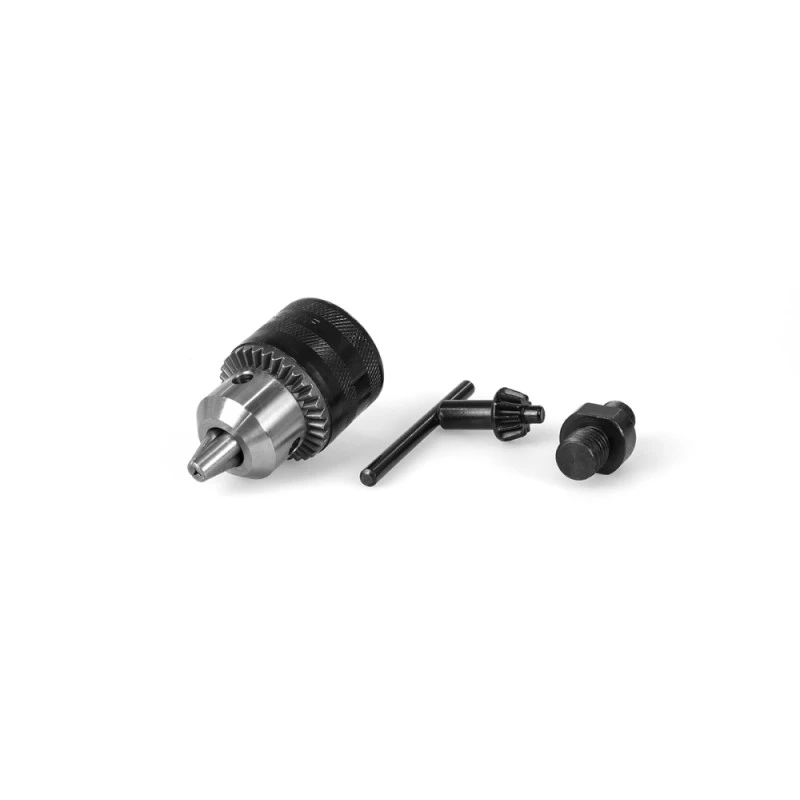
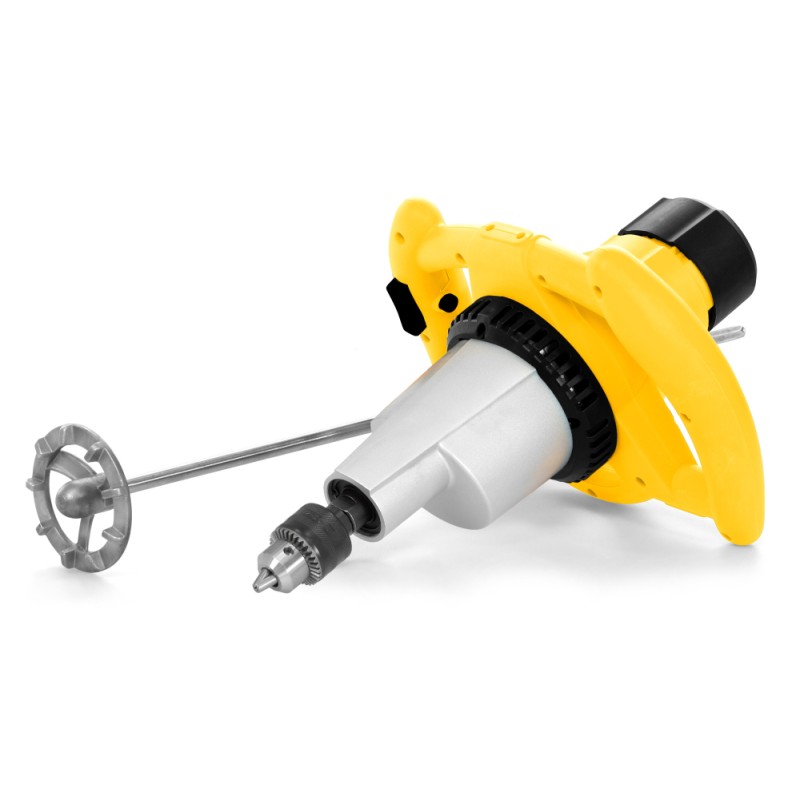
Hand-held electric mixer of 1,200 W at 230 V, with two adjustable speeds and a body suitable for food use. It takes paddles with shafts up to 13 mm.
01 · THE TWO SPEEDS
The first runs from 100 to 400 rpm and is the one really used for creaming: it turns slowly, spreads the fine crystal and works in little air. The second goes up to 150-700 rpm and is there for dense honeys or for homogenising a batch.
Within each gear the control is continuous, so the intensity follows the viscosity in front of you instead of jumping in steps.
02 · THE CREAMED HONEY PROCESS
Creaming is not beating until it turns pale: it is making fine crystal and spreading it. The order that works is this:
| Step | What you do | Reference |
|---|---|---|
| 1 · Melt | Run the honey through a heater to break up coarse crystal | 40 °C |
| 2 · Rest | Wait in the tank until the honey turns opaque | Crystallisation starts |
| 3 · Mix | Mix for 20 minutes, repeating every 12 hours | Low speed |
| 4 · Chamber | Hold in a heated chamber | 39 °C · 20 hours |
| 5 · Settle | Let the bubbles rise before jarring | 39 °C · 8 hours |
The step nearly everyone skips is the last one. Without those eight hours of settling, the air you worked in stays there and the jar turns up with white foam on the surface.
03 · HANDLING IT
It weighs a kilo and a half and is held in both hands, which is what gives control when the propeller bites in a hard honey. With a full bucket at low speed it works comfortably; at high speed with little liquid, it splashes.
And one maker's rule worth keeping: keep the paddle five centimetres from the rim of the container, especially in plastic buckets. Touching the wall scores the plastic and throws the shaft off balance.
04 · WHAT IT DOES NOT HAVE
Worth knowing before you buy, because the maker's sheet does not say it: there is no reverse. It turns one way and there is no button to change it. For mixing honey you do not need one, but if you were counting on it to free a jammed propeller, it is not there.
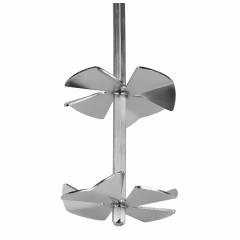
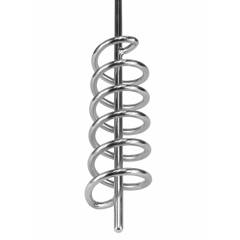
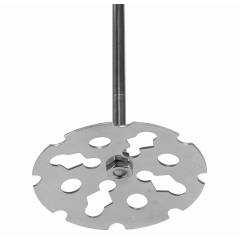
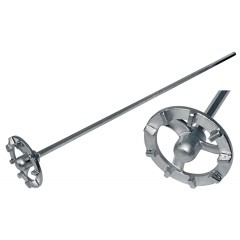
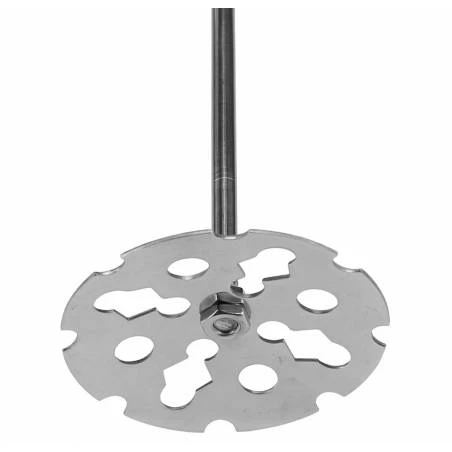
The chuck takes shafts up to 13 mm, so paddles, propellers and spirals are chosen separately to suit the bucket and the volume.
05 · BEFORE YOU BUY
It is a hand mixer, not a fixed one:
| ✓ FITS | Creaming and homogenising in buckets and tanks, with the paddle you choose. |
| ✕ DOESN'T FIT | Continuous production of large volumes: that calls for a fixed mixer on a stand. |
| ⚠ NOT INCLUDED | The paddle: blades, propellers and spirals go separately. |
| Product | Hand-held electric honey mixer |
|---|---|
| Supply | 230 V · 50 Hz |
| Power | 1,200 W |
| Speed 1 | 100-400 rpm, adjustable |
| Speed 2 | 150-700 rpm, adjustable |
| Rotation | One direction, no reverse |
| Chuck | Shafts up to 13 mm |
| Grip | Two-handed |
| Weight | 1.5 kg |
| Reference | HOLT-5761-BR-32900 |

check_circle
check_circle