 Apipasta with vitamins 15kg
 Beecomplet® Spring 14Kg
 Beekeeper suit with round veil
 Oxalic acid 1kg
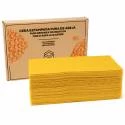 Beeswax Foundation 5kg
 Fresh royal jelly 20g
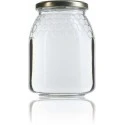 Classic honey jar 1kg comb-lines TO77 - Pack of 16 units
 Promotor L Apis 1 litre

 Share in WhatsApp
300 kg OF HONEY; MINIMUM 100 FOR IT TO CIRCULATE | 6 kW OF HEATING IN THE 72 L JACKET, AT 400 V |
24 RPM OF THE SCREW WITH BOTTOM RAKE, 550 W | DN50 DISC VALVE AT THE OUTLET |
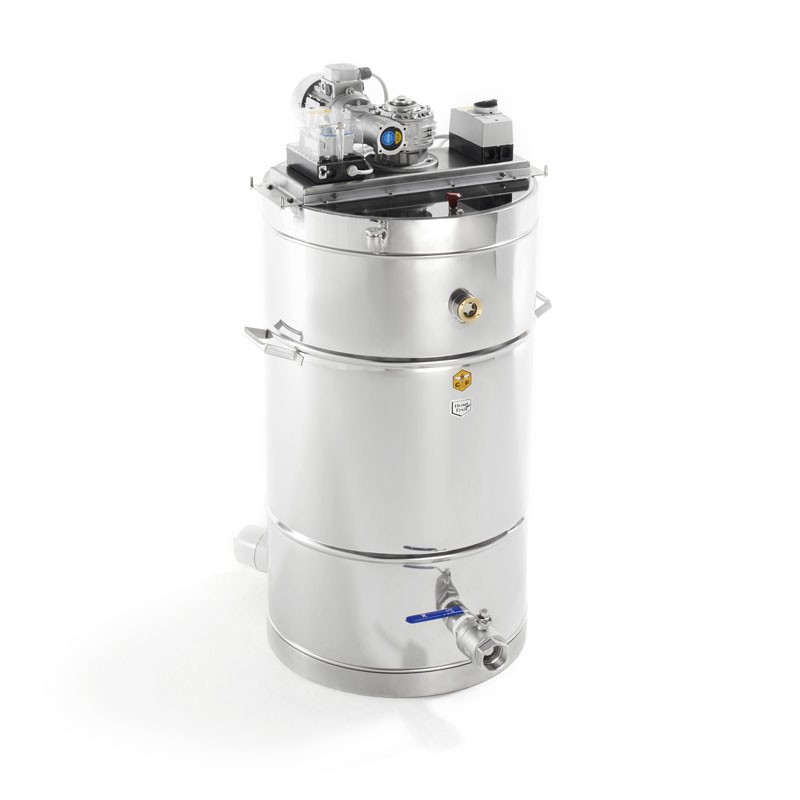
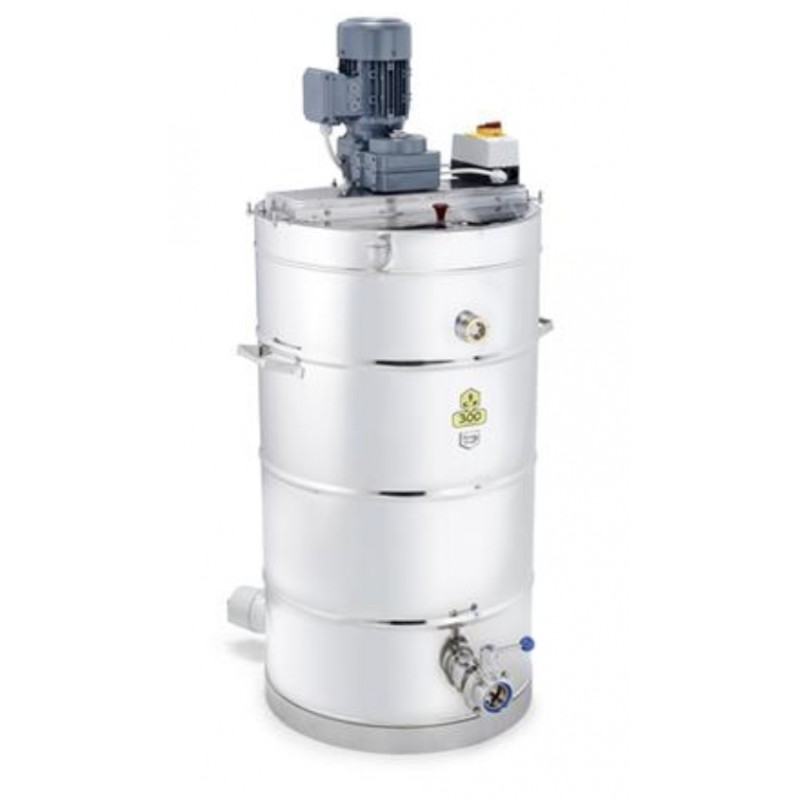
Carl Fritz 300 kg honey homogeniser and creamer with heated double wall: stainless tank of Ø 55 cm inside and 114 high, helical screw with bottom rake at about 24 rpm driven by a 550 W gear motor at 400 V, 72-litre jacket with 6 kW heating at 400 V and a DN50 disc valve at the outlet. It blends batches, melts cold honey and makes creamed honey at controlled temperature; 88 kg. Three-phase, no timer as standard.
Beating honey with a mixer puts air and heat where they do not belong: here a screw moves it bottom to top at 24 turns a minute, and the jacket keeps it at the temperature each job asks for.
01 · WHAT FOR
Three jobs with one machine. Homogenise harvests or blend varieties for a constant profile: with the jacket at 25-30 °C the honey flows and three half-hour cycles with rests between them leave a batch of even colour and texture, without raising HMF. Melt honey from buckets arriving cold or crystallised, without a warming room. And make creamed honey: work at 20-22 °C with short stirring cycles several times a day, with fine-grained seed honey or without, until the colour evens through the mass; bottle as soon as it ends and it sets in the jars.
02 · THE MACHINE
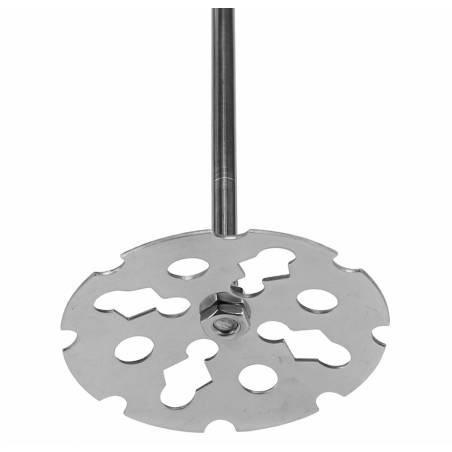
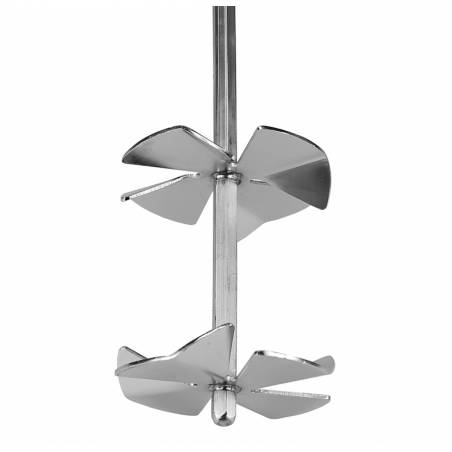
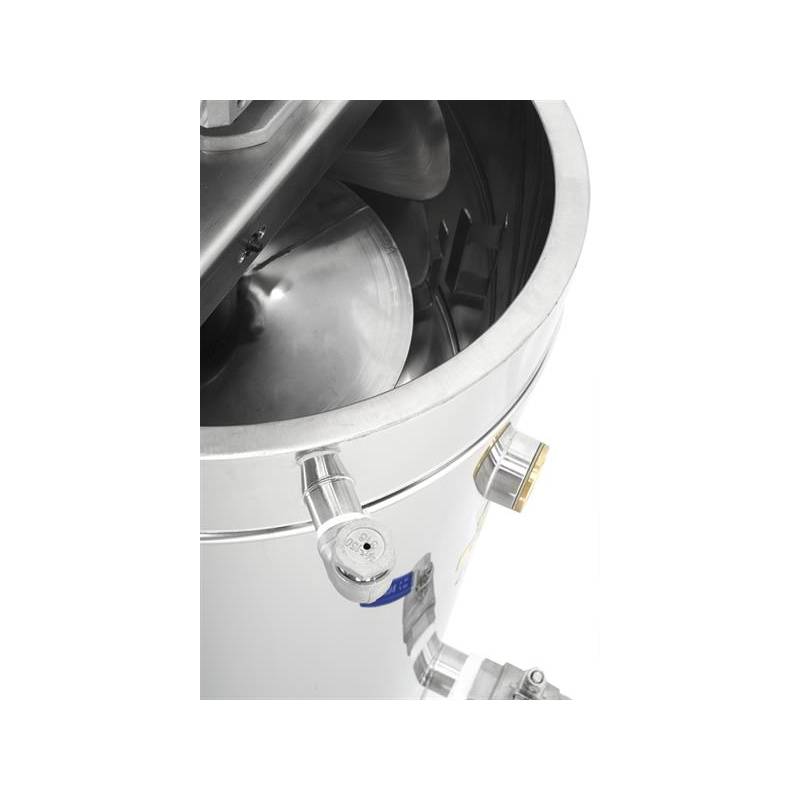
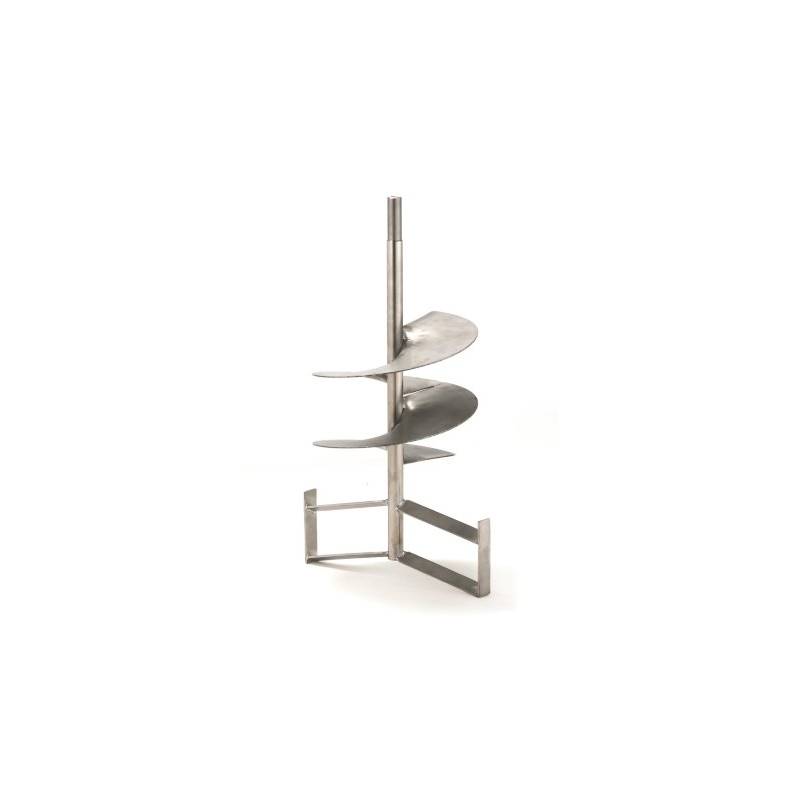
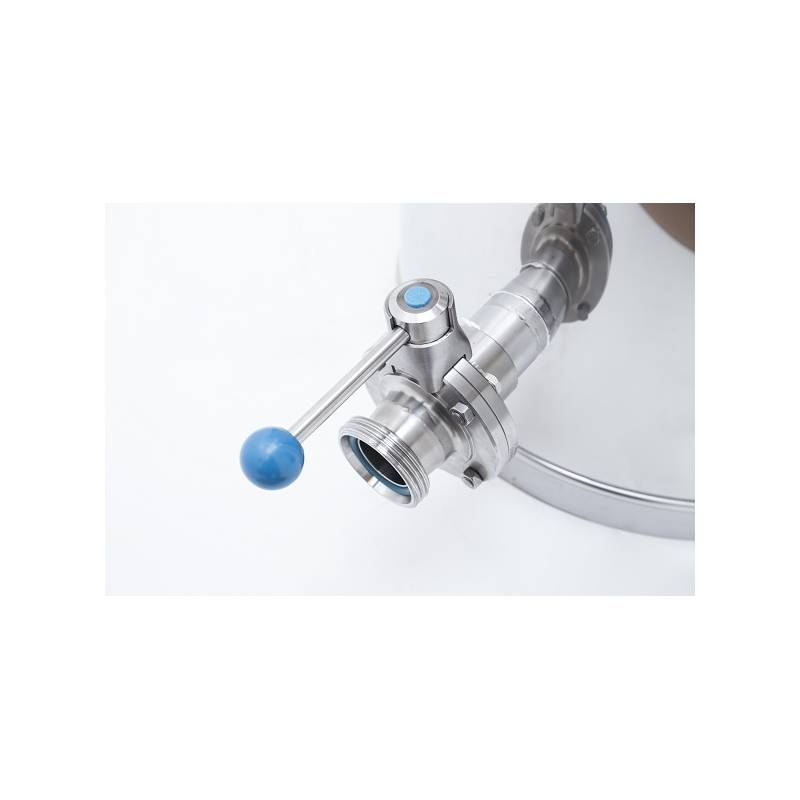
The helical screw pushes the honey from the bottom upwards and creates a current that mixes the whole tank; the bottom rake, shaped to the conical floor, sweeps the low walls so no honey crystallises stuck and no pockets remain. It turns at about 24 rpm, slow enough not to work in bubbles, driven by a flat 550 W gear motor at 400 V. The double wall, about 72 litres, is filled with filtered or demineralised water and heated by a 6 kW element at 400 V. The tank is stainless with a seamlessly welded floor; the outlet is a DN50 dairy-thread connection with a screw-on disc valve.
03 · WHAT COMES AND WHAT DOES NOT
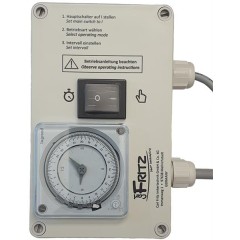
It is the question that reaches this product’s mailbox most: the machine is supplied without timer and without speed control, and the speed is fixed. For stirring cycles without standing by, Carl Fritz sells separately the 400 V programming clock (3097, its reference 5092100), with ten-minute minimum intervals; it is the part worth ordering in the same order. Minimum fill is 100 kg, a third of the tank, so the screw stays covered and the honey circulates; for smaller batches there are the 100 and 50 kg creamers (474, 1226) and the heated 100 kg one (1954).
04 · HOW TO WORK
Before blending, every honey is brought to the same temperature: cold freshly extracted honey is warmed to 20-25 °C or the blend comes out uneven. For creaming, the trade reference is finely crystallised seed honey, in the order of 5-10 % depending on the method, and a steady temperature around 14 °C so it sets fine; Carl Fritz states the seed can be lower with this machine. Stirring is done in cycles, not continuously: neither honey nor motor like it.
05 · BEFORE YOU BUY
The machine is supplied with motor, screw with rake and DN50 valve; timer (3097), trolley and seed come separately.
| ✓ FITS | Packers and cooperatives blending batches of up to 300 kg, melting bucket honey and making creamed honey at controlled temperature, with three-phase in the room. |
| ✕ DOESN’T FIT | Anyone without 400 V or moving batches under 100 kg: 50 and 100 kg creamers (1226, 474, 1954). |
| ⚠ NOT INCLUDED | Timer, trolley or seed honey. |
⚠ PRECAUTIONS
Three-phase 400 V connection for motor and heating: an electrician installs it. The jacket is filled with water before switching on the element and is never heated dry. Honey always above the screw: minimum 100 kg. Do not exceed 40 °C in the jacket to melt: HMF rises and aromas are lost.
| Reference | 5822300 (Carl Fritz) |
|---|---|
| Capacity | 300 kg of honey; minimum 100 kg |
| Tank | Stainless, Ø 55 cm inside, 60 outside; 114 cm high, 157 with motor; seamlessly welded floor |
| Stirring | Helical screw with bottom rake, about 24 rpm; no end bearing |
| Motor | Flat 550 W gear motor, 400 V three-phase |
| Heating | Double wall of about 72 L, 6 kW element at 400 V |
| Outlet | DN50, dairy thread, screw-on disc valve |
| Working temperatures | 25-30 °C to blend; 20-22 °C to cream (Carl Fritz) |
| Weight | 88 kg; 110 packed |
| Not included | Timer 3097 (5092100), speed control, trolley |
| Siblings | Creamers 50 kg 1226, 100 kg 474, heated 100 kg 1954 |
check_circle
check_circle