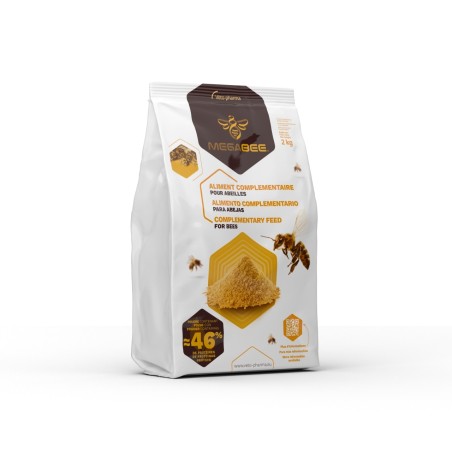
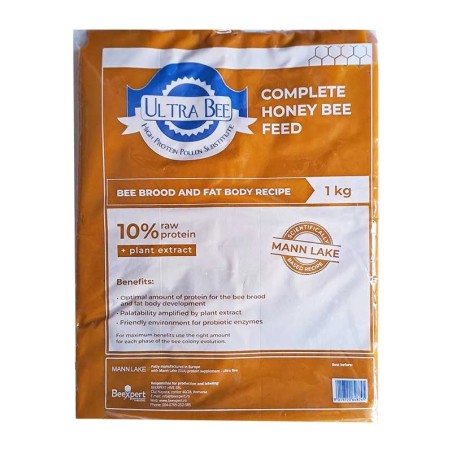
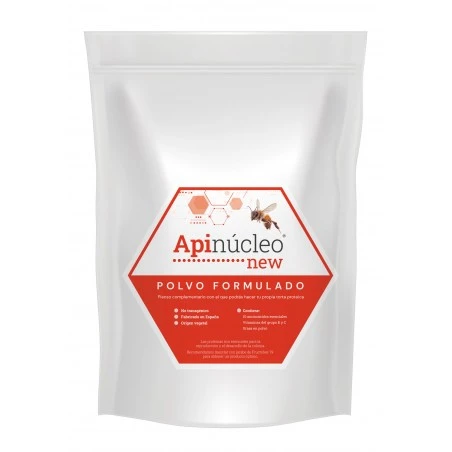
Apipasta with vitamins 15kg
 Beecomplet® Spring 14Kg
 Beekeeper suit with round veil
 Oxalic acid 99% 1kg
 Beeswax Foundation 5kg
 Fresh royal jelly 20g
 Classic honey jar 1kg comb-lines TO77 - Pack of 16 units
 Promotor L Apis 1 litre




 Share in WhatsApp
50 % MINIMUM CRUDE PROTEIN | 3.3 kg OF PATTY PER KILO |
680 g PER COLONY, DRY | 0 POLLEN AND ANIMAL ORIGIN |
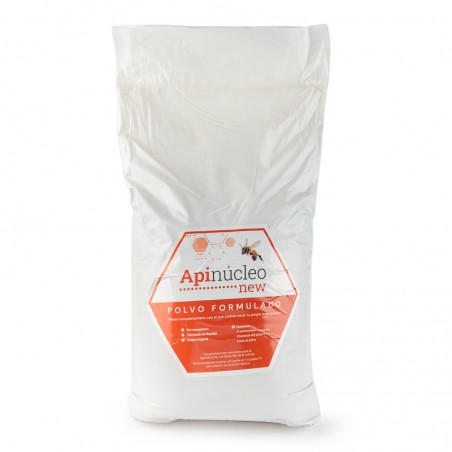
Powdered pollen substitute at 50 % minimum crude protein: the raw material patties are formulated from, or fed dry when there is flying weather.
Plant protein from maize, soy and deactivated brewer's yeast, with vegetables, canola oil and a vitamin package. No natural pollen and no ingredients of animal origin. An 18.14 kg sack.
01 · WHAT THE 50 % MEANS
This figure is not to be compared with that of a ready-made patty. The 50 % is the protein of the powder, of the ingredient before mixing; a patty formulated from it lands around 15 %, because it also carries syrup and sugar. Both figures are correct and measure different things — flour and bread. If you want to open and lay, look for the patty; if you want to formulate yourself and control the ratio, this sack is it.
02 · THE SACK ARITHMETIC
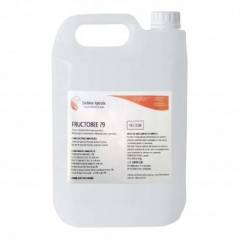
The maker's formula is 6.8 kg of powder + 6.5 L of glucose/fructose syrup + 5.4 kg of sugar, giving about 22.7 kg of patty. That is 3.3 kg of patty per kilo of powder: the 18.14 kg sack yields some 60 kg of patty, around 132 portions of 454 g. Fed dry at the 680 g per colony per season the maker recommends, the same sack covers about 27 colonies; in practice the share-out is uneven, because fed dry, each colony takes what it wants. Those two numbers are what actually decide which format pays.
03 · DRY OR AS A PATTY
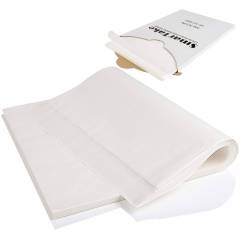
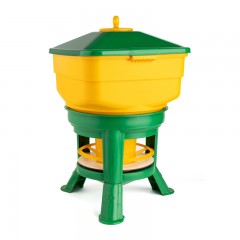
As a powder it goes in an outdoor feeder sheltered from rain and wind, breaking up the crust every day, and it only makes sense at foraging temperatures: the bee has to go out for it. Expect an uneven take-up (some colonies take it by the bucketful, others in the same apiary do not even look at it), and in autumn, for raising winter bees, patty is the better route. As a patty it goes straight onto the central frames, with no crown board in between, between two sheets of baking paper with four or five cuts and the holes facing down. There the nurse bees reach it without leaving the hive, and they are the ones that turn it into jelly for the larvae: that is why the patty is the way to keep the brood going when no pollen is coming in. Whether the colony then grows depends on the weather and on nectar coming in. Portions of 454 g to 1.4 kg depending on colony size.
04 · BEFORE YOU BUY
It is hygroscopic: keep the sack closed, use dry utensils and close it again as soon as you measure, because it cakes with ambient moisture. And the rule for protein: you supply it when pollen is not enough — late summer for the winter bees, early spring before fresh pollen comes in, or after a split — not all year round. If varied pollen is coming in, this is surplus.
| ✓ FITS | Formulating your own patties with a known protein, or feeding dry when they can fly. |
| ⚠ HYGROSCOPIC | Sack closed and utensils dry: it cakes with ambient moisture. |
| LTA reference | FD-161 |
|---|---|
| Type | Powdered pollen substitute · raw material for formulating |
| Crude protein | Minimum 50 % |
| Other analytics | Fat min. 6 % · moisture max. 5 % · ash max. 7 % · fibre max. 3 % · sodium max. 1 % |
| Composition | Plant proteins (maize, soy, deactivated brewer's yeast), carrot, celery, beetroot, parsley, lettuce, watercress and spinach, canola oil, sodium chloride |
| Additives | Vitamins A, D3, E, C, K3, B2, B6, folic acid and biotin · zinc sulphate · lemongrass essential oil |
| Does not contain | Natural pollen or products of animal origin |
| Dry dose | ≈ 680 g per colony |
| Patty formula | 6.8 kg powder + 6.5 L glucose/fructose syrup + 5.4 kg sugar |
| Packaging | 18.14 kg sack |
| Storage | Hygroscopic: cool, dry and tightly closed |
Para ver el vídeo, acepta las cookies de estadística.
Specific References
1 file available

UltraBee is, without a doubt, the best protein on the market. And it’s not just my opinion, the hives prove it. It’s the only protein capable of producing drones even out of season. That says it all.
Write your question